Why Small Bathrooms Demand Smarter Planning
Don’t let small bathrooms feel cluttered. With Smart Bathroom Ideas well planned and executed, they can feel functional and pleasant before you buy the tiles or choose the tapware.
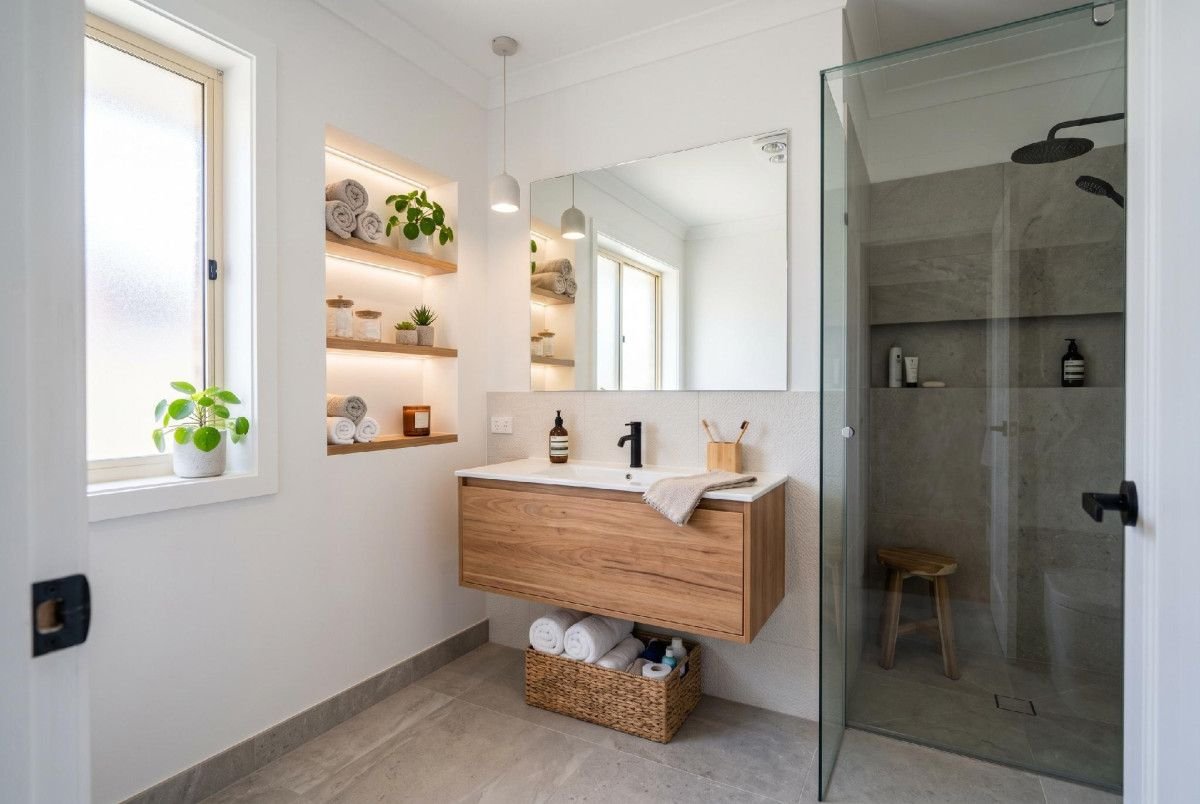
The average ensuite bathroom is 2.4 m², with the average main bathroom usually sitting between 4–5 m². Those aren’t huge dimensions, not even when you think about a standard 700 mm deep toilet pan, a 600 mm vanity and a shower needing adequate clearance and building regulation compliance. There must be a minimum clear circulation space from the front edge of a toilet pan of 1200 mm by 900 mm, plus the door opening to the bathroom must be a clear width not less than 820 mm. Buying fixtures before planning the layout of the bathroom is the most common pitfall. Consider, for instance, that a standard shower recess 900 mm × 900 mm alone can easily take up close to a fifth of the total space of a small bathroom before the door has even been factored into the design. You are better off saving every centimetre possible, or not paying for a renovation to fix it.
Layout Tricks That Make Small Bathrooms Feel Bigger
Start with the layout — door position, wet area, shower placement — get those locked in first before anything else.
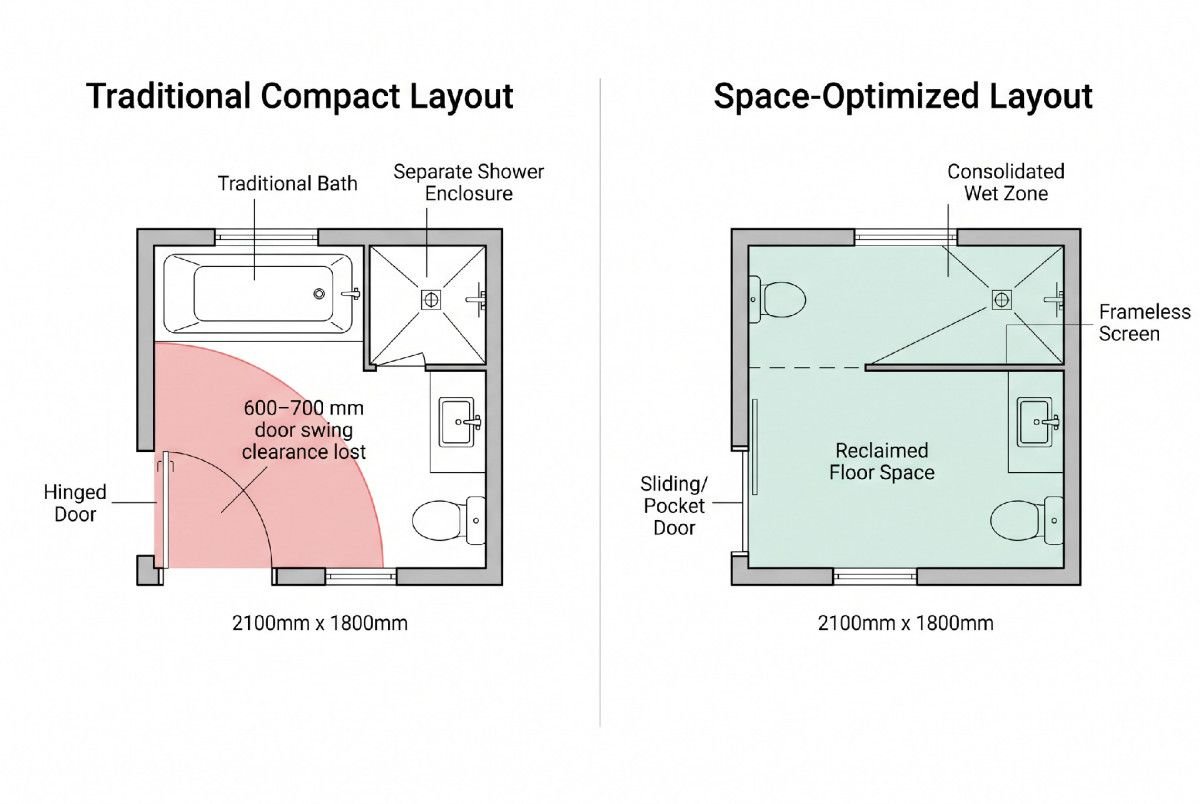
Swap a hinged door for a sliding or pocket style — tight bathrooms open right up, and the cost’s usually pretty reasonable. Think about what 820 mm of hinged door actually costs you. Each swing claims a clearance arc of 600–700 mm — that’s 700 mm of floor gone, just like that. Parts and labour for a door swap won’t break the bank — and you reclaim floor space the same day.
Another good planning trick before you finalise your bathroom layout is consolidation of the wet zone. Shower-area walls need to be waterproofed to not less than 1800 mm above the floor substrate. If you can consolidate all wet zones, the reduced waterproofing area saves on labour. Having the shower in a corner and keeping all wet surfaces to one area is both a building code-savvy and budget-savvy way to keep costs low.
When looking at the shower — a frameless walk-in shower screen rather than a hinged screen door can eliminate the door-swing clearance entirely. This makes even a compact 800 mm × 800 mm shower feel open and airy — and it removes the need to plan clearance for a swinging door.
Storage Solutions That Don’t Eat Your Floor Space
Floor plan done? Turn to storage next.
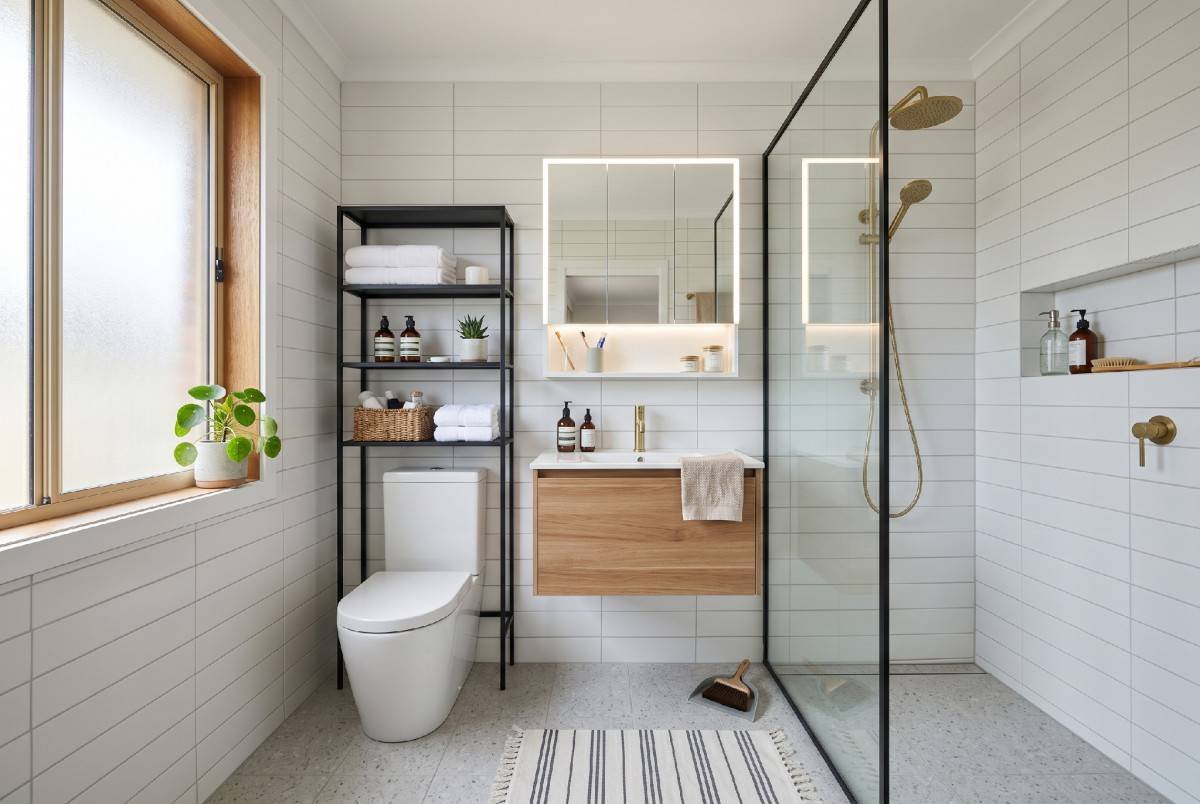
One of the smartest things you can do is install recessed shampoo niches. These niches are usually built between wall studs at 300 mm wide by 900 mm tall, they add zero projection into the room and are relatively inexpensive to tile. Check stud positions before a single tile goes up — and any niche cut into the shower wet zone has to comply with waterproofing requirements, full stop.
A mirrored shaving cabinet is another space-conscious feature worth considering. Most models range from 450 mm to 750 mm wide. An LED shaving cabinet must be installed by a licensed electrician, as it involves hardwired electrical work in a wet area.
Over-toilet shelving units are a cost-effective storage option that requires no carpentry and can accommodate a good number of items.
Budget-Friendly Fixtures and Fittings Worth Buying
Once you have addressed storage, your fixture and fitting decisions will impact your total project cost — both initial outlay and ongoing costs — and it helps to know where the value lies.
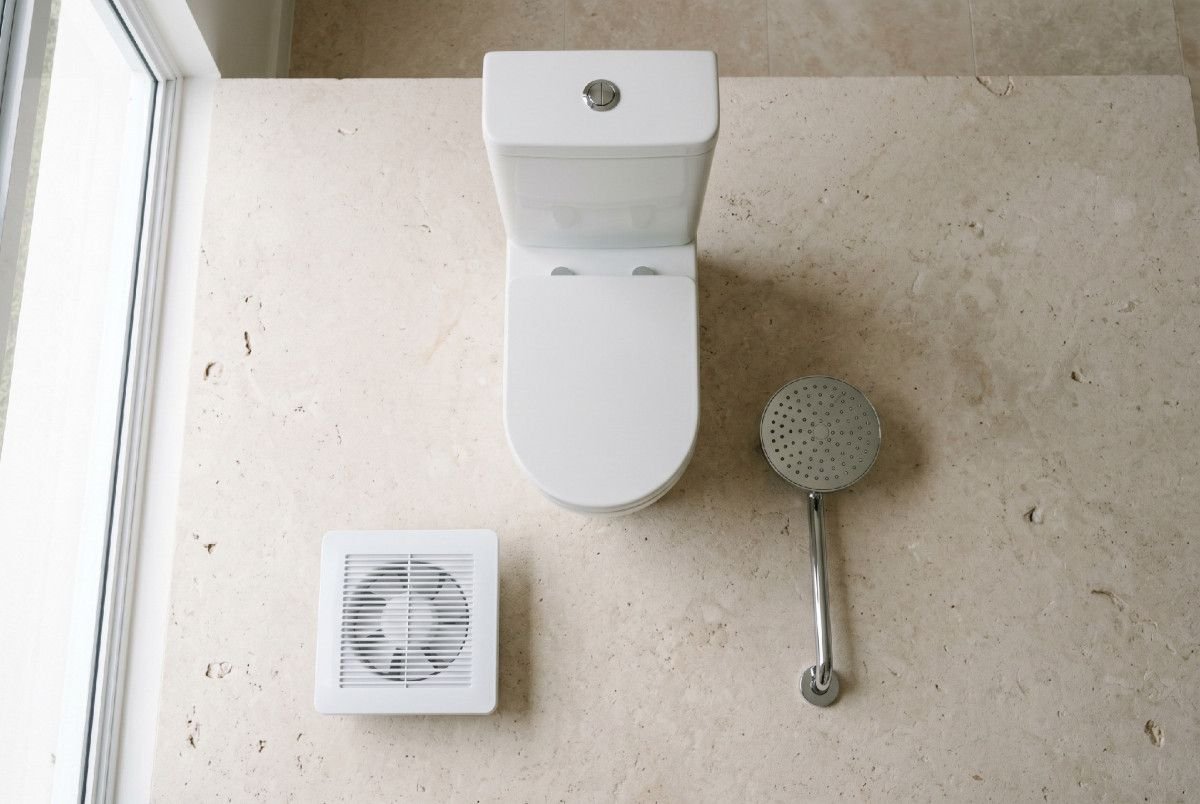
Ensure all plumbing fixtures are certified to your local plumbing standards. A water-efficient showerhead can save money on water bills over time. Back-to-wall suites range, their smaller profile helps reduce visual clutter in tight spaces — but ventilation is just as important as the fixtures you choose.
An exhaust fan with a minimum extraction performance of 25 L/s is mandatory — this is the minimum airflow required to prevent condensation build-up, which degrades surfaces and cabinets over time. You will often save money purchasing online rather than through a showroom, but verify cabinet construction materials before buying.
Choosing a Vanity for a Small Bathroom on a Tight Budget
Given that the vanity occupies a significant portion of floor area in a small bathroom, finding the correct size and style of cabinet matters.
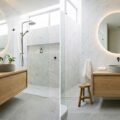
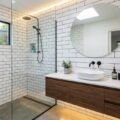
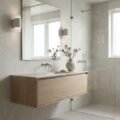
A wall-hung vanity is worth considering: the visual floor space it creates and the ease of cleaning underneath is transformative for bathrooms under 4 m². Wall-hung units also require 50–80 mm of additional clearance on the hinge side to accommodate soft-close hinges. PVC wall-hung units range from 400–600 mm in width, making them a budget-friendly option — PVC does not absorb moisture and will not rot. Mid-range options can be constructed from moisture-resistant MDF or plywood.
Corner vanity units utilise diagonal areas that most households leave empty because standard vanities won’t fit. They generally require 300 mm of clear space on each side of the basin and return usable wall space to the shower and toilet area. Selecting the bench top material is a separate decision from the vanity cabinet: ceramic and stone resin tops are durable, while laminate is typically the lowest-cost option provided any cut-outs for the basin and tap are adequately sealed.
Many vanities are supplied without a mixer tap, so budget for that separately and measure your selected basin width before purchasing to confirm it suits the cabinet. When searching for the cheapest bathroom vanity, a PVC wall-hung unit between 400–600 mm wide is the most cost-effective starting point. These Smart Bathroom Ideas — from layout planning through to vanity selection — help you prioritise correctly from the outset and avoid costly mistakes.