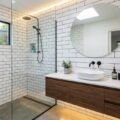
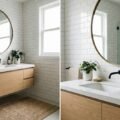
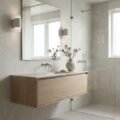
The challenge of the “micro-bath” is one that many homeowners face, particularly in urban environments where every square inch is at a premium. When you are looking for remodel tiny bathroom ideas, it is easy to feel restricted by the physical boundaries of a 3×5 or 5×5 space. However, small square footage does not mean you have to sacrifice style, comfort, or luxury, says Windsor Management Company. With the right design strategies and innovative fixtures, even the most cramped bathroom can be transformed into a functional and visually stunning sanctuary. This guide explores fifteen brilliant ideas to help you maximize your tiny bathroom in 2026.
Space-Saving Fixtures and Smart Layouts
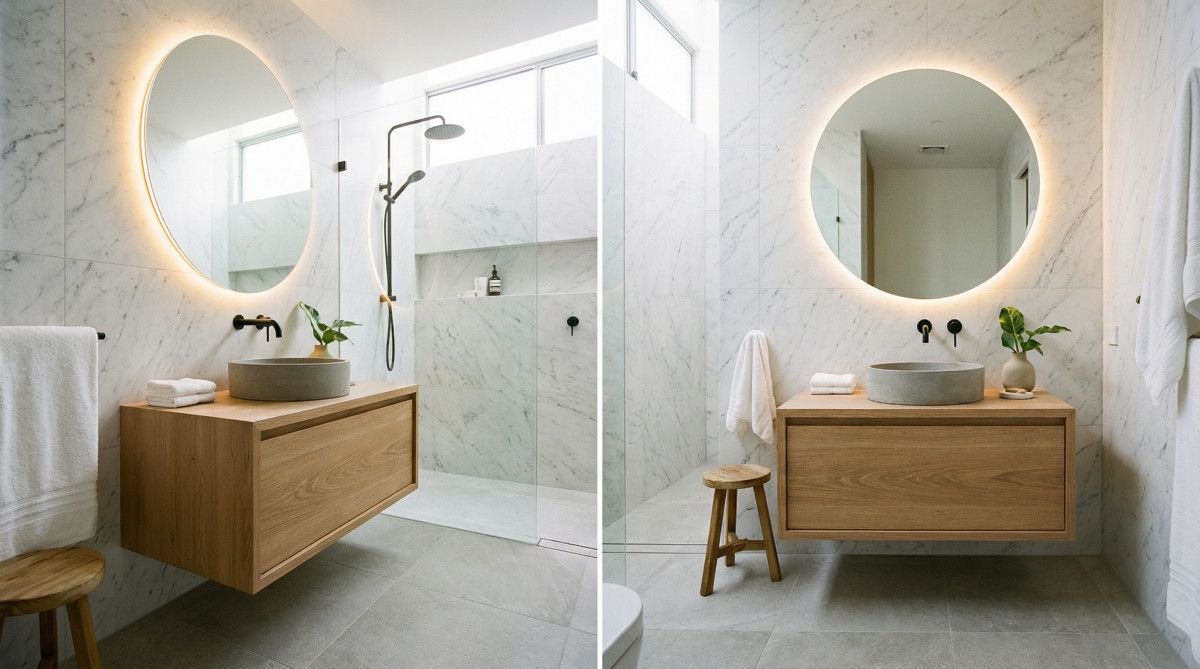
Maximizing a tiny bathroom requires prioritizing wall-mounted fixtures and compact footprints. By replacing traditional floor-standing vanities with floating models and opting for corner-placed elements, you can reclaim valuable floor area. These strategic layout changes create an open, airy feel that visually expands even the most cramped 3×5 or 5×5 spaces.
The foundation of any successful tiny bathroom remodel is the selection of space-saving fixtures that do not compromise on utility. A floating vanity is a game-changer in this regard, as it exposes the floor underneath, immediately making the room feel larger. According to the National Kitchen & Bath Association (2025), wall-mounted vanities and toilets are among the top requested features for small space renovations due to their ability to provide a clean, modern aesthetic while freeing up physical space.
Floating Vanities and Wall-Hung Toilets
Wall-hung toilets are another essential component for micro-baths. By concealing the tank inside the wall, you can save up to ten inches of depth compared to a standard floor-mounted unit. This extra clearance can be the difference between a cramped walkway and a comfortable movement path. When paired with a sleek, minimalist floating vanity, the entire floor plane remains unobstructed, which is a key psychological trick to make a small room feel significantly more expansive.
Corner Sinks and Showers
In many tiny bathrooms, the corners are underutilized or completely wasted. Installing a corner sink or a neo-angle shower can dramatically improve the flow of the room. These fixtures are specifically designed to tuck into tight angles, leaving the center of the bathroom open for better accessibility. This layout is particularly effective in powder rooms or secondary guest baths where every inch of maneuverability is critical for user comfort.
The Power of Pocket Doors
One of the most overlooked space-stealers in a small bathroom is the traditional swinging door. A standard door requires approximately nine to twelve square feet of clearance to open and close, which is often a significant portion of a tiny bathroom’s total area. Replacing a swinging door with a pocket door or a sleek sliding barn door eliminates this requirement entirely. This simple architectural change allows you to place fixtures or storage units in areas that were previously blocked by the door’s swing path.
| Fixture Type | Space Saved (Approx.) | Visual Impact |
|---|---|---|
| Floating Vanity | 2-4 sq. ft. of floor | High – creates openness |
| Wall-Hung Toilet | 8-10 inches of depth | High – minimalist look |
| Pocket Door | 9-12 sq. ft. of clearance | Maximum – improves flow |
| Corner Sink | 3-5 sq. ft. of corner space | Medium – functional gain |
Visual Expansion Techniques with Color and Tile
Visual expansion in a tiny bathroom is best achieved through a monochromatic light color palette and large-format tiling. Using oversized tiles with minimal grout lines reduces visual clutter, while light-reflective surfaces like polished marble or glossy ceramic bounce light around the room. This combination effectively tricks the eye into perceiving a much larger environment.
The choice of color and tile is perhaps the most significant factor in how large or small a tiny bathroom feels. In a space with limited square footage, the goal is to create a seamless visual flow that does not interrupt the eye. According to Houzz (2025), a monochromatic light color scheme can make a small bathroom feel up to 25% larger by minimizing the contrast between different surfaces. This approach is particularly effective when the wall tile, paint, and flooring are all within the same color family, such as soft whites, pale grays, or light beiges.
Large-Format Tiles vs. Mosaics
One of the most common mistakes in a tiny bathroom remodel is using small mosaic tiles for large surfaces. While mosaics can be beautiful as accents, they create a grid of grout lines that can look busy and cluttered in a small space. Large-format tiles, such as 12×24 or 24×24 inches, minimize the number of grout lines, resulting in a cleaner, more continuous surface. This lack of visual interruption is a key psychological tool that helps the eye travel smoothly across the room, making the bathroom feel more expansive.
Monochromatic Color Schemes
A monochromatic color palette is not limited to white. Using different shades and textures of the same color can add depth and interest without creating visual boundaries. For example, a light gray marble floor paired with soft gray subway tiles and a slightly darker gray vanity can create a sophisticated and cohesive look. This approach is especially effective in windowless bathrooms, where a light color scheme can help maximize whatever artificial lighting is available.
Glass Shower Enclosures
Replacing a traditional shower curtain or a frosted glass door with a clear, frameless glass enclosure is one of the most impactful visual expansion techniques. A shower curtain creates a visual wall that cuts the bathroom in half, while clear glass allows the eye to see all the way to the back of the shower. This simple change effectively adds the square footage of the shower back into the perceived area of the room. According to Architectural Digest (2025), frameless glass doors are a staple of modern small bathroom design because they eliminate bulky hardware that can further clutter the space.
Innovative Storage Solutions for Micro-Spaces
Effective storage in a tiny bathroom relies on utilizing vertical real estate and recessed architectural features. Instead of bulky cabinets, homeowners should install floor-to-ceiling shelving and recessed shower niches that sit flush with the wall. These solutions provide ample space for essentials without encroaching on the limited physical walking path of the room.
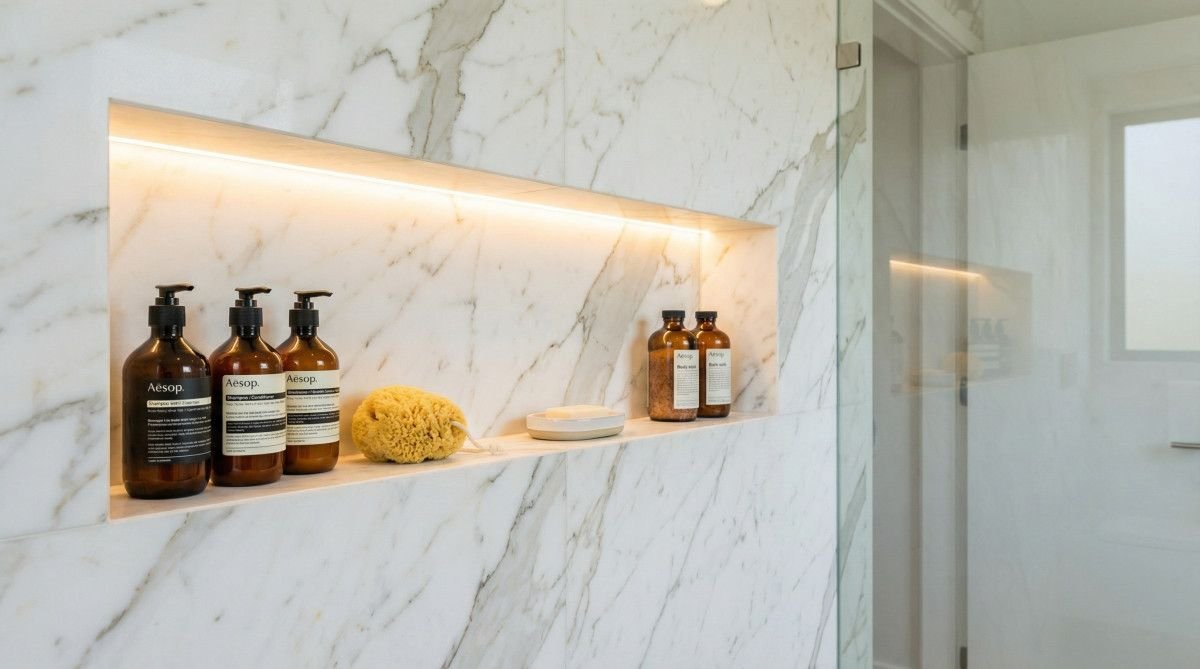
Storage is the most significant challenge in a tiny bathroom remodel. In a space where every square inch is precious, a traditional floor-standing cabinet can quickly become a bottleneck. The key to successful storage in a micro-bath is to think vertically and recessed. According to the American Society of Interior Designers (2025), vertical storage is the most efficient way to maximize square footage in a small bathroom, as it draws the eye upward and keeps the floor area clear.
Recessed Shower Niches and Medicine Cabinets
Recessed niches and medicine cabinets are a must-have for any tiny bathroom. By building storage into the wall cavity, you can create a flush surface that does not protrude into the room. A recessed shower niche provides a dedicated space for shampoo and soap without the need for bulky shower caddies that can rust or fall. Similarly, a recessed medicine cabinet can provide ample storage for toiletries while maintaining a clean, minimalist look.
Floor-to-Ceiling Vertical Shelving
Floor-to-ceiling vertical shelving is another highly effective storage solution for micro-spaces. Tall, narrow cabinets or open shelving that extends to the ceiling can provide a surprising amount of storage for towels, toilet paper, and other essentials. This approach is particularly effective when the shelving is integrated into a corner or placed behind a door. By using the full height of the room, you can maximize storage without taking up valuable floor space.
Over-the-Toilet Storage Units
Over-the-toilet storage units are a classic solution for tiny bathrooms, but they have come a long way in terms of design. Modern units are often sleek and minimalist, with a mix of open and closed storage to keep the room looking tidy. This area of the bathroom is often underutilized, making it the perfect spot for extra storage. When choosing an over-the-toilet unit, look for one that matches the style of the rest of the room to ensure a cohesive look.
2026 Tech and Sustainable Trends for Remodel Tiny Bathroom Ideas
The 2026 tiny bathroom remodel landscape is defined by smart, multi-functional technology and sustainable materials. Compact smart bidets and digital thermostatic valves save space while enhancing luxury, while recycled glass surfaces and low-flow fixtures address environmental concerns. These modern upgrades ensure that even the smallest bathrooms remain functional, efficient, and forward-thinking.
As technology continues to evolve, even the most compact bathrooms are benefiting from smart and sustainable innovations. In 2026, the integration of smart home features is no longer limited to large master suites. According to the International Living Future Institute (2025), the trend towards “micro-luxury” is driving the demand for high-tech fixtures that are specifically designed for small spaces. These innovations not only save space but also improve the overall user experience and reduce the environmental footprint of the home.
Smart Technology in Micro-Spaces
One of the most impactful technological advancements for tiny bathrooms is the smart bidet toilet. By combining the functionality of a toilet and a bidet into a single, compact unit, you can eliminate the need for a separate fixture and save valuable floor space. Digital thermostatic valves are another space-saving innovation, as they allow for precise temperature control from a single, wall-mounted interface. This eliminates the need for bulky shower valves and handles, creating a cleaner and more streamlined look in the shower.
Sustainable and Eco-Friendly Materials
Sustainability is a key consideration for many homeowners in 2026. In a tiny bathroom remodel, the use of recycled glass surfaces and low-flow fixtures can significantly reduce the environmental impact of the project. Recycled glass tiles are not only eco-friendly but also highly reflective, which helps to visually expand the space. Low-flow faucets and showerheads are another essential component of a sustainable tiny bathroom, as they reduce water consumption without sacrificing performance.
FAQ Section
How can I make my tiny bathroom look luxurious?
Making a tiny bathroom look luxurious is achieved through high-quality materials and thoughtful lighting. Using natural stone like marble for countertops or shower walls immediately elevates the space. Additionally, incorporating layered lighting, such as recessed ceiling lights combined with wall sconces or LED-backlit mirrors, creates a high-end, spa-like atmosphere that belies the room’s small footprint.
What is the best layout for a very small bathroom?
The best layout for a very small bathroom is one that keeps the center of the room clear and utilizes corners. A “one-wall” layout, where all the plumbing fixtures are lined up along a single wall, is often the most efficient for narrow spaces. For square rooms, placing a corner sink and a corner shower can maximize the available floor area and improve the overall flow and accessibility of the space.
How do I remodel a small bathroom on a budget?
Remodeling a small bathroom on a budget requires prioritizing high-impact changes over complete structural overhauls. Painting the walls a fresh, light color and updating the hardware on the vanity can make a significant difference for a low cost. Refinishing an existing bathtub instead of replacing it and using peel-and-stick vinyl tiles over old flooring are other effective ways to achieve a new look without a major investment.
What are the 2026 bathroom trends for small spaces?
The 2026 bathroom trends for small spaces focus on “micro-luxury” and multi-functional technology. This includes the use of compact smart bidets, digital shower controls, and integrated LED lighting. Sustainable materials like recycled glass and low-VOC finishes are also highly popular. Visually, the trend is toward warm minimalism, using natural textures like light wood and stone to create a cozy yet uncloruttered environment.
Can I fit a bathtub in a tiny bathroom?
Yes, it is possible to fit a bathtub in a tiny bathroom by choosing a compact or “soaking” model. Many manufacturers now offer tubs that are as short as 48 inches but feature deeper basins for a full-body soak. Alternatively, a Japanese-style soaking tub has a much smaller footprint but is significantly deeper, allowing for a luxurious bathing experience in a fraction of the space required by a traditional alcove tub.
Conclusion
Remodeling a tiny bathroom presents a unique set of challenges, but it also offers an opportunity for incredible creativity and innovation. By focusing on space-saving fixtures, visual expansion techniques, and smart storage solutions, you can transform even the smallest bath into a functional and stylish sanctuary. Whether you are incorporating the latest 2026 technology or sticking to timeless design principles, the key is to prioritize efficiency and flow. With thoughtful planning and a focus on quality over quantity, your micro-bath can become one of the most beloved and luxurious rooms in your home.
References
- National Kitchen & Bath Association (2025). “Small Bathroom Trends Report.”
- Houzz (2025). “2026 Bathroom Design Trends.”
- Architectural Digest (2025). “The Best Small Bathroom Ideas.”
- American Society of Interior Designers (2025). “Maximizing Small Spaces.”
- International Living Future Institute (2025). “Sustainable Home Design.”