Five installation errors cause most AC problems. The most common air conditioning installation problems trace back to wrong sizing, poor placement, refrigerant mistakes, electrical shortcuts, and a skipped final check, each leaving a recognizable symptom: short cycling, weak cooling, tripped breakers, or water indoors.
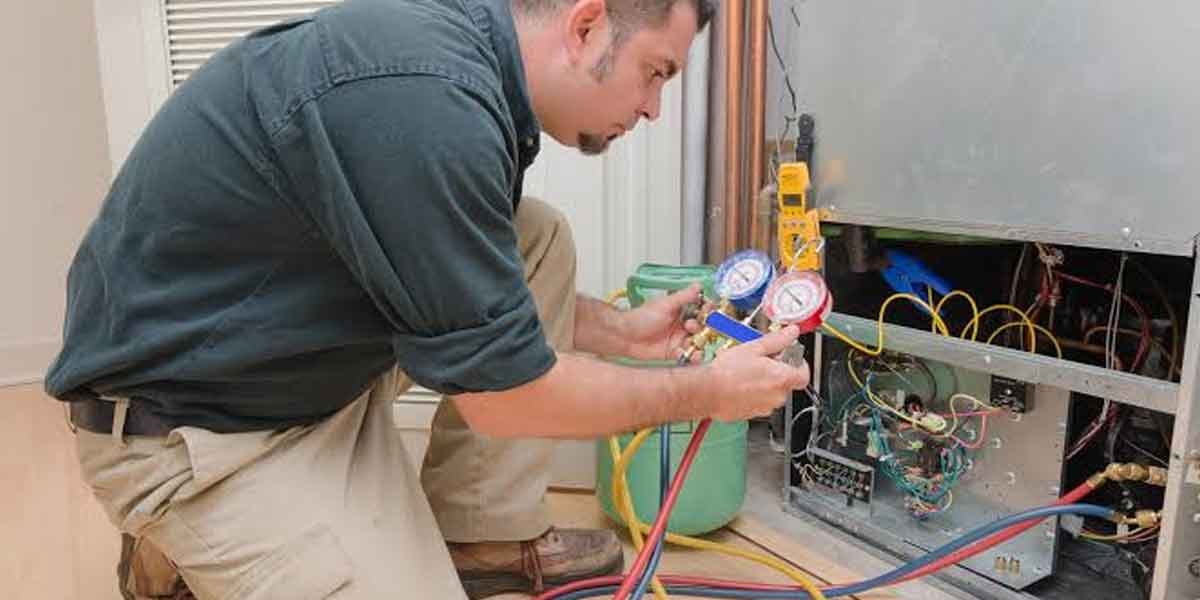
The sections below map each symptom to its likely cause, separate the checks a homeowner can safely run from the work a licensed HVAC professional must do, and apply to systems within their first few years of operation, when installation faults surface.
Refrigerant and live-electrical work are never DIY tasks.
On an older system that simply wore out, the failure pattern looks different.
Common Air Conditioning Installation Problems by Symptom
Installation faults announce themselves in five symptom groups: short cycling, weak cooling, tripped breakers, water indoors, and a thermostat that reads wrong. Each maps to a handful of likely causes, and most are visible to a homeowner before a technician arrives.
| Symptom | Likely cause | Urgency | Safe homeowner check | Professional stop point |
|---|---|---|---|---|
| Short cycling (runs 2–3 minutes, stops, repeats) | Oversized unit; thermostat near a vent or heat source | High: wears the compressor | Time a full run cycle; check thermostat placement | Load calculation; refrigerant work |
| Weak cooling or warm rooms | Undersized unit; leaky ducts; blocked airflow; low refrigerant | Medium | Check the filter, open registers, clear condenser clearance | Refrigerant charge check; duct leakage test |
| Breaker trips right after startup | Undersized breaker or wiring; loose connection | High: fire risk | None. Do not open the panel. | Full electrical inspection |
| Water indoors or near the air handler | Clogged condensate line; missing P-trap; unleveled unit | Medium to high | Watch the drain line exit during a run | Drain repair; moisture and mold check |
| Frozen evaporator coil | Low refrigerant; restricted airflow; wrong charge | Medium | Check the filter; let the coil thaw before testing | Refrigerant and airflow diagnostics |
| Thermostat reads the wrong temperature | Sunlight, drafts, or a warm appliance near the thermostat | Low | Move the thermostat or remove the heat source | Wiring or relocation work |
Once a fault is confirmed, the repair that follows is a different category of work, and the failures a bad install triggers down the road are worth knowing before you decide who calls whom: the running breakdowns show up as the common ac repair problems documented separately.
In practice, this often means one contractor fixes what a previous one installed.
Wrong Sizing: the Oversized Unit Is Usually Worse
An oversized AC cools the house fast, shuts off before it removes humidity, and short-cycles; the constant restarts wear the compressor. Undersizing runs the system continuously and drives up energy bills.
Short cycling refers to a compressor that starts and stops in short bursts instead of running in steady cycles. The damage is cumulative: every restart draws locked-rotor current, and the compressor is the most expensive part in the system. On a 95-degree afternoon the unit runs for three minutes, pauses for five, and repeats all day. The house never quite feels dry.
Counterintuitively, the oversized unit is the costlier mistake.
A system that is too large cools the air quickly but never runs long enough to condense water out of it, so the rooms feel cold and clammy at the same time.
Correct sizing comes from a load calculation such as ACCA’s Manual J, which accounts for insulation, window area, and local climate rather than floor area alone.
Right-sizing also decides whether repair or replacement makes financial sense.
If the installed system is fundamentally mismatched, the honest answer is usually replacement, and the air conditioning installation cost comparison belongs in that decision before you spend on partial fixes.
Thermostat Placement and Indoor Unit Position
A thermostat near sunlight, a supply vent, or a warm appliance reads the wrong temperature and makes the whole system run on bad data. The indoor unit also needs clearance around it for airflow and filter access; a unit wedged into a tight closet fails silently.
Many homeowners don’t realize the thermostat is the sensor the entire system obeys. If a vent blows directly on it, the AC shuts off while the rest of the house is still warm.
If it sits above an oven or a TV, it runs longer than needed. The fix is a move of a few feet, not a new unit.
The temperature split is the difference between the air temperature at the supply vent and at the return grille; a healthy split on a central AC is roughly 15–20°F. Measuring it with a simple thermometer catches weak airflow, duct leaks, and charge problems in one check, and it takes about five minutes.
Outdoor Unit Placement and Clearance
An outdoor condenser needs airflow on all sides. Units squeezed against a wall, under a deck, or inside overgrown shrubs run at higher pressures, work harder, and fail years early.
The condenser rejects heat through its sides and top. Restricting that airflow raises head pressure, and sustained high pressure is one of the faster ways to kill a compressor.
Clear at least a couple of feet on the service side and keep shrubs and grass away from the coil; that part is a safe, useful homeowner task.
Placement mistakes also show up in noise and vibration. A condenser set directly on the ground or against the house frame transfers rumble through the structure. Rubber isolation pads and a level base are installation details that cost little and prevent a lot of wear.
Refrigerant Mistakes and the Line Only a Pro Can Touch
Refrigerant faults, such as undercharge, overcharge, leaks, or uninsulated line sets, quietly destroy efficiency and can freeze the coil. Under EPA Section 608 rules, only technicians certified to handle refrigerants may open a sealed system.
Refrigerant does not wear out; it leaks. A system that cools fine for a season and then freezes is usually losing refrigerant, and topping it off without finding the leak is a temporary fix that repeats the bill. The Environmental Protection Agency’s Section 608 regulations require certification for anyone who handles refrigerants, and the pressurized lines carry real injury risk.
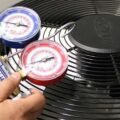
The safe homeowner checks stop at the outside of the copper lines: listen for hissing near the outdoor unit, look for oily residue on fittings, and check that the large suction line is insulated. Anything past that, including gauges, charging, or brazing, is the exact stop point for a licensed HVAC professional.
On paper this sounds simple, but the temptation to “add a little refrigerant” is how small leaks become compressor failures. Why does that matter? Because the compressor is the part you cannot cheaply replace.
Electrical Issues and When to Stop Touching Anything
Most installation-related electrical faults are undersized breakers, loose connections, or poor terminations, and the usual symptom is a breaker that trips within a minute of startup. Live electrical work is the hard stop for homeowners.
A breaker that trips in the first minute of a run is a wiring problem, not a thermostat problem. The install crew should have verified the breaker and conductor sizing against the nameplate on the condenser; when they skip that, the result is nuisance trips or, worse, an overheated connection.
Humming, flickering lights when the compressor starts, and a warm disconnect box are all signs to stop using the system and call a licensed electrician. There is no homeowner-safe version of this repair. The one observation worth making is whether the trips happen only at startup, because that pattern separates an electrical fault from a mechanical one for the technician who arrives.
Drainage Problems, Moisture, and the Mold That Follows
Condensate that cannot drain, whether from a missing P-trap, a clogged line, or an unleveled unit, becomes standing water in the air handler, which invites mold and indoor air problems. The drain line exit is the first place to check.
Every central AC pulls moisture out of the air, and a working system sends that water down the condensate line to a floor drain or outdoors. A P-trap is the curved section of condensate drain that holds water and stops air from being pulled back through the drain. When the trap or line is wrong, water backs up into the pan, and a full pan spills onto the ceiling or the floor below. Standing water in a ducted system feeds mold, and mold spores then ride the same airflow that cools the house.
If you already smell mustiness or suspect the air, the indoor air quality tests used at home are covered in a separate guide on how to test indoor air quality at home. The drain check itself is safe: during a cooling run, confirm water appears at the line exit, and clear the visible end of the line if it is blocked.
A 15-Minute Checklist to Verify a New Installation
Most installation faults are catchable within fifteen minutes: measure the temperature split, watch the run cycle, listen to the outdoor unit, and confirm the filter is in correctly. These checks take no tools beyond a thermometer.
- Measure the temperature split at the supply vent and return grille; expect roughly 15–20°F.
- Time one full run cycle; a steady cycle should last well beyond three minutes.
- Confirm the condensate line produces water during a cooling run.
- Confirm the filter is clean and oriented so the arrow points toward the blower; the correct method is in our guide on hvac filter how to install steps.
- Listen to the outdoor unit for hissing, rattling, or vibration that was not there on day one.
- Locate the breaker and disconnect box; confirm labels match and nothing feels warm.
Run this checklist in the first week, then again before the first cooling season. Most items are observations, and the ones that fail point straight at the installer while the labor warranty still applies.
The detailed steps for the filter task alone are in the separate guide on how to install hvac filters.
FAQ
What is the $5,000 rule for AC?
The $5,000 rule is an industry rule of thumb: when a repair estimate approaches half the cost of a replacement system, roughly $5,000 on a typical central AC, replacement usually makes more financial sense.
It is not a regulation or a fixed national figure, and local labor rates shift the number.
How can I check if my AC was installed correctly?
Measure the temperature split (expect 15–20°F), time the run cycle, confirm the condensate line drains, and check the filter direction.
A new unit that fails any of these four checks deserves a callback to the installer.
What causes the most common air conditioning installation problems?
Wrong sizing tops the list, followed by poor thermostat and condenser placement, refrigerant errors, skipped electrical verification, and no final test-out.
These five account for most common air conditioning installation problems reported in the first years of operation.
Can I fix a refrigerant problem myself?
No. EPA Section 608 requires certification to handle refrigerants, and the pressurized lines can cause serious injury.
Leak repair, charging, and brazing are jobs for a licensed HVAC professional.
A system that was sized, placed, and commissioned correctly is the cheapest kind to own, because the expensive failures start with installation shortcuts. Most common air conditioning installation problems are visible in the first weeks, and catching them then is a matter of twenty minutes and one thermometer.
The same topic family, from repairs to common ac repair problems, stays covered in the site’s broader Home Improvement guides.