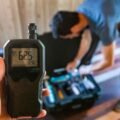
The indoor air quality testing cost for a standard whole-home panel in the US lands between $300 and $700, with single-contaminant screens starting near $125 and pre-sale or multi-pollutant suites running past $1,200. No national average is universal: the real price is the sum of auditable line items you can estimate before you call a lab. This cost model breaks down scope, labor, samples, lab fees, access, and regional variables, then walks through a fully worked calculation so you can price your own test.
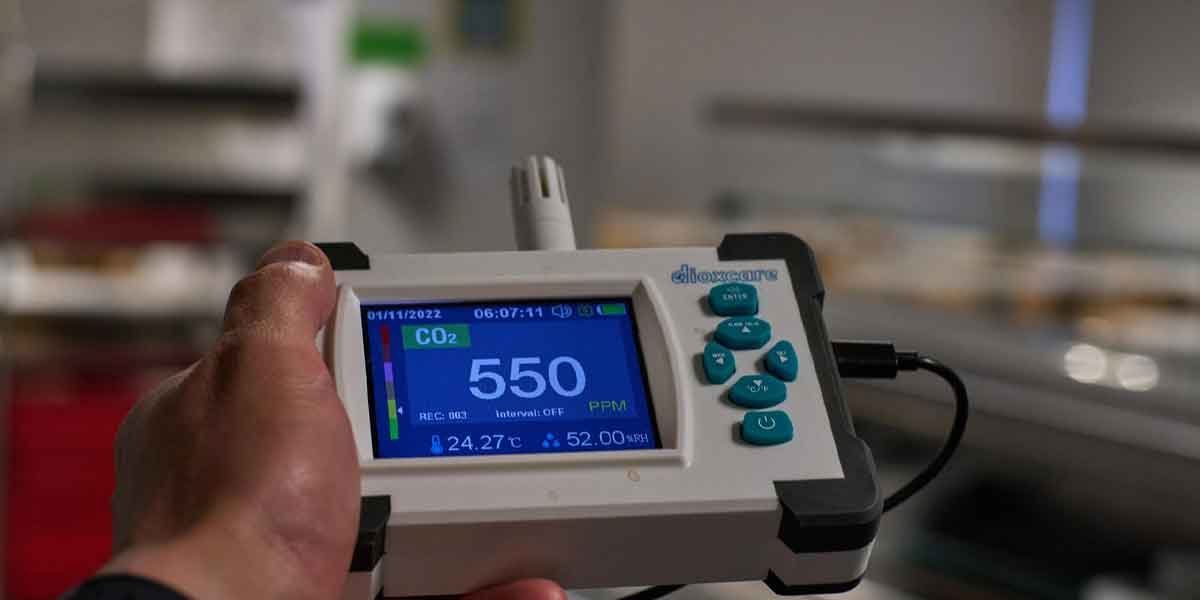
The model fits three situations: you have symptoms that clear when you leave the house, you are buying or selling, or a renovation or water event just happened. Routine testing of a healthy home with no trigger rarely changes anything.
What Actually Drives the Price of an Indoor Air Quality Test
Every quote is built from the same six line items: the visit fee, the number of samples, what the lab charges per sample, how hard each sample is to reach, and whether you pay for speed or a written interpretation. Add a regional multiplier and you have the price.
Field technicians bill a base visit fee, then each sample adds its own cost because the laboratory work is billed separately from the on-site collection. Scope means how many rooms and which contaminants. Access is the part most guides skip: a crawlspace or attic sample takes longer and costs more than a living-room sample. Efficiency works in your favor when one trip covers several samples, which is why whole-home panels beat adding tests one at a time.
| Line item | What it covers | Typical range (2026 market data) |
|---|---|---|
| Base visit fee | Technician travel, equipment setup, on-site consultation | $100–$250 |
| Per-sample collection | Air cassette, swab, or pump run per room or zone | $50–$150 each |
| Lab analysis | Microscope or chemical analysis of each sample | $30–$75 per sample |
| Written interpretation | Lab report plus a professional explanation of results | $0–$150 |
| Expedited results | 24–48 hour turnaround instead of 5–10 days | $75–$200 |
| Access surcharges | Crawlspace, attic, or hard-to-reach sampling points | $25–$100 per point |
Ask any lab for a breakdown before they book you. A quote that only says “air quality test, $450” is hiding which of these line items you are paying for, and the cheapest quote is usually the one with the narrowest scope written down in advance.
Indoor Air Quality Testing Cost by Contaminant
Prices split sharply by what you test for. Radon runs $125–$300, mold air sampling $240–$360 per sample, and a full VOC panel $200–$500, while carbon monoxide is nearly free to screen for. The contaminant list, not the house size, drives most of the spread.
| Contaminant | Professional test | DIY option | When it is worth paying for |
|---|---|---|---|
| Radon | $125–$300 | $10–$50 kit | Any home; EPA action level is 4 pCi/L |
| Mold (air sampling) | $240–$360 per sample | $30–$100 kit | Suspect mold you cannot see, after water damage |
| Mold (surface swab) | $180–$320 | $20–$75 | Visible stain you need identified |
| VOCs | $200–$500 | $50–$200 | Within 3–6 months of painting, flooring, or cabinetry |
| Asbestos | $200–$800 | Not recommended | Pre-1985 homes, before disturbing materials |
| Carbon monoxide | $20–$200 spot check | $20–$60 detector | Every level; detectors belong in every home |
| Allergen panel | $100–$300 | $30–$80 | Persistent allergy symptoms tied to being indoors |
Radon is the exception to the “professional only” rule. A short-term kit you place yourself and mail to a lab is a valid first screen, and the EPA’s radon guidance treats 4 pCi/L as the action level. Above that number, the next step is a follow-up test or a licensed mitigation contractor, not more guessing.
Mold is where homeowners overpay most. If you can see mold, the CDC guidance on mold sampling is blunt: air sampling is generally unnecessary once growth is visible, and the fix is removal plus fixing the moisture source. Air sampling earns its money only when mold is suspected behind a wall or under flooring and you need to confirm it before opening anything up.
Low, Typical, and High Scenarios
Three scenarios cover nearly every request. A single-contaminant screen costs $125–$300, a standard whole-home panel $300–$700, and a pre-sale or multi-pollutant suite $800–$1,500 or more. Pick the smallest scenario that answers your question.
| Scenario | Cost | What is included | Fits when |
|---|---|---|---|
| Low: single-contaminant screen | $125–$300 | Radon only, or one mold air sample, one room | One specific worry, no symptoms, budget-driven |
| Typical: whole-home panel | $300–$700 | 3–5 samples across rooms, 2–4 contaminant groups, written report | New home, unexplained symptoms, post-renovation |
| High: pre-sale or full-panel suite | $800–$1,500+ | Multiple rooms, mold + VOC + radon + allergens, expedited lab, expert interpretation | Transaction, legal or disclosure need, medically sensitive household |
The cheapest scenario is the right one more often than you expect. A radon-only screen answers a radon question; ordering a $1,200 allergen panel because you smelled a musty basement pays for tests the question did not ask.
Real-estate transactions push people into the high tier fast, and the wait is part of the cost:
“We’re in SW Florida. Our buyers just had their inspection yesterday and our realtor said everything looked good, they’re only waiting on results of an air quality test, not radon, just air quality. I’ve never done an air quality test during inspection so what would they be looking for and what possible problems would there be?”
– r/RealEstateAdvice, May 2026
When a buyer requests a test, the sample points, the lab, and the acceptable threshold should all be written into the contract before anyone pays.
Otherwise you can spend $900 on samples the buyer’s agent disputes.
A Worked Calculation: Pricing a Whole-Home Test
Here is how a realistic estimate is built. Take a 2,000 square foot home in a mid-cost metro: living room, master bedroom, and basement are the three sample zones, and the concern is a musty odor plus a recent basement water event.
- Base visit fee: $150
- Three mold air samples (one per zone): 3 × $120 = $360
- One outdoor control sample (needed to compare indoor vs. outdoor spore counts): $120
- Lab analysis, four samples: 4 × $45 = $180
- Written interpretation: $100
- Subtotal: $910
- Regional multiplier for a mid-cost metro (about 0.9–1.1): $910
That home lands near $900 because the mold concern forced four samples. Run the same math for a radon-only screen in the same house: $150 visit fee, one $40 lab sample, $20 interpretation, no multiplier drama, roughly $210 total.
The arithmetic exposes the lever that matters: sample count, not house size. A 4,000 square foot home with a single open floor plan can cost less than a 1,200 square foot split-level, because the split-level needs more sampling points and the access surcharges add up.
Regional Variables and Permits
Labor rates, travel time, and local licensing push the same test to different prices in different cities. High-cost metros typically run 40–60% above the national midpoints, and some states require licensed mold assessors or certified radon measurement professionals, which caps who can do the work and raises the floor price.
Check two things before comparing quotes: whether your state licenses the type of assessor you need, and whether the lab itself holds accreditation. A lower quote from an unlicensed sampler is not a bargain when a licensed report is what your contract, insurer, or health provider will ask for.
Ventilation and envelope quality also shift what a test finds. A house with poorly sealed ductwork or a recent install that was rushed can show particle readings that have nothing to do with a hidden mold problem, which is why a good technician checks the mechanical side before sampling. That mechanical context is where the common air conditioning installation problems and common ac repair problems guides on this site save you from testing the wrong question.
When to Skip the Test
Do not order a full panel out of vague unease. With no symptoms, no water history, no renovation, and no transaction on the table, a professional test rarely changes what you do next. Source control and ventilation are the first moves in most homes anyway.
Start with the cheap checks: a $20 radon kit, a carbon monoxide detector on every level, and a humidity look at the basement.
Radon kits are condition-sensitive. The $30 kit that sat in the basement for two weeks and ran with the windows open comes back with a reading nobody trusts, and the lab rejection slip costs you the mail-in fee plus a week of waiting.
If those come back clean and nothing has changed, testing the rest of the pollutant list is usually spending on reassurance, not information.
One honest caveat from the field: a test tells you what was in the air on the day it was sampled. It is a snapshot, not a guarantee, and a clean reading does not mean a hidden source cannot show up next month. Treat the test as one input, not the verdict.
DIY Kits vs. Professional Testing
DIY kits answer a narrow question for $10–$100; professional testing answers a broad one for $300–$700. The dividing line is whether the result needs to survive scrutiny from a lender, a seller, a doctor, or a contractor.
Use a kit for radon screening, a first-pass mold check, or baseline CO detection.
Go professional when the result has consequences: a transaction, a health concern that a physician asked you to investigate, or a water event where you need to know where the moisture is, not just that spores exist.
The full sequence of what to test, which tool fits each pollutant, and how to run the samples correctly is covered in the companion guide on how to test indoor air quality at home. If the test points at a mechanical cause, budget the fix before the repeat test: a new install runs what you would expect from any air conditioning installation cost job, and keeping the existing equipment healthy is mostly hvac maintenance cost discipline, not testing.
Indoor Air Quality Testing Cost FAQs
How much does a home air quality test cost?
Most whole-home indoor air quality testing runs $300–$700, with single-contaminant screens from $125 and full pre-sale panels past $1,200. Your quote depends on sample count, lab fees, access, and region.
Is indoor air quality testing worth it?
Yes when a trigger exists: symptoms that clear outside the home, a renovation, water damage, or a pending sale. Without any trigger, a full panel usually does not change the next step, and source control plus ventilation are the cheaper first moves.
What are signs of poor indoor air quality?
Recurring headaches, eye or throat irritation, and coughing that improve after you leave the home are the classic cluster. Musty odors, condensation on windows, and visible mold are the structural clues that point to a moisture problem rather than a chemical one.
Can I test indoor air quality myself?
Yes for radon, a first-pass mold check, and carbon monoxide. DIY kits run $10–$100 but rarely include lab analysis or a report that holds up in a transaction; use a professional service when the result has legal, medical, or contractual consequences.
Before you book, write your own estimate with the line-item worksheet above: visit fee, sample count, lab fees, access points, and your regional multiplier. The quote that matches that worksheet is the one worth paying, because you are buying a defined scope, not a vague test. For the wider cluster of cost and repair guides on this site, the Home Improvement guides collection is the starting point.