


A routine HVAC maintenance visit in most U.S. markets runs about $99 to $350, and yearly plans start around $139. But HVAC maintenance cost has no single national figure you can budget with; the number that matters for you is built from the visit scope, your local labor rate, the parts your system actually needs, and how accessible the equipment is.
This cost model works for homeowners and small-building owners who need a defensible planning number, not a quoted average. Work through it once and you can compare any contractor quote, decide between a plan and pay-per-visit, and know when a repair bill is worth questioning.
What Drives HVAC Maintenance Cost
Five variables set most of the price: what the visit covers, the local labor rate, parts needed, how hard the unit is to reach, and regional conditions. A sixth factor, permits, rarely applies to routine maintenance but can appear on commercial work.
Scope of the visit. A tune-up is a visit that follows a defined checklist: checking the thermostat, tightening electrical connections, measuring voltage and amps, lubricating moving parts, clearing the condensate drain, cleaning the coils, and checking the refrigerant level. Some companies advertise a low “tune-up” price and run a visual check only. Ask what the flat fee covers before booking.
Labor rates. Published technician rates cluster around $65 an hour, with commercial work often quoted at $75 to $150 an hour depending on certification and region. Scheduled maintenance labor runs 30 to 50 percent cheaper than emergency rates in vendor-published figures, so the same work costs less when it is planned.
Parts and materials. Filters, belts, capacitors, and contactors are the usual consumables. A capacitor swap can add $100 to $400 to the bill; a refrigerant recharge is a separate, EPA-regulated line item that needs a licensed technician.
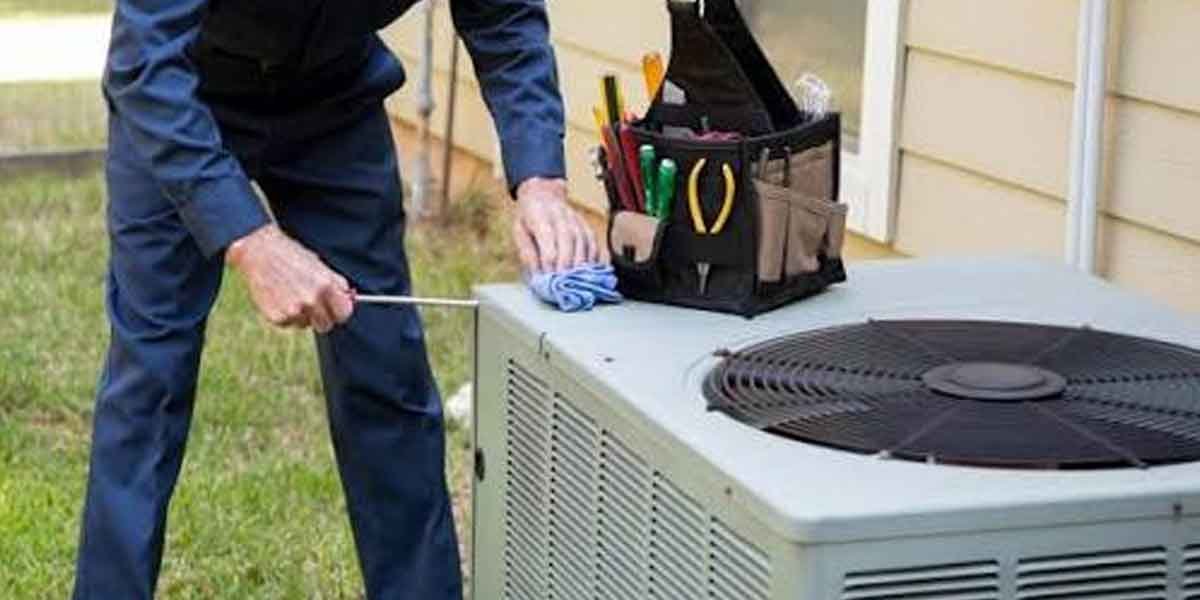
Access. A condenser unit shoved against the house with eight inches of clearance means the technician works sideways to reach the coil panel. That access fight shows up as labor time on the invoice.
Regional variables. Labor rates differ by metro area, and hot-humid climates can raise maintenance costs by 20 to 35 percent compared with temperate regions, according to industry-published planning figures. The same visit can vary by a wide margin between neighboring states.
System type. A single-speed central unit is cheap to service. Heat pumps, two-stage systems, and ducted commercial rooftop units take longer and cost more. Ductless mini splits have their own service rhythm, which a separate set of mini split systems maintenance tips covers in detail.
Published Cost Scenarios for One Visit
Published one-visit figures cluster around $99 to $350 for a routine tune-up, with $65 an hour a common labor rate and a wide regional spread. The numbers below are market data points, each with its own scope, not a national average you should adopt.
- Low end, market example: Home Depot advertises one-time maintenance calls from $99 for a standard AC, heat pump, or gas furnace tune-up.
- Typical, manufacturer-published: Trane puts a yearly air conditioner maintenance visit between $120 and $350, depending on location, market competition, system size, and whether you hold a maintenance agreement.
- Broader service range: Thumbtack’s own data shows AC service ranging from $170 to $752 for routine work, with most customers paying around $354, a low of $56, and a high of $2,190 when parts get involved.
Notice the overlap: the low end of one source is the high end of another because the scope differs. A $99 visit that skips coil cleaning and refrigerant checks is not the same product as a $300 visit that runs the full checklist.
Compare scopes, not sticker prices.
A Worked Cost Model You Can Recalculate
A defensible budget comes from three inputs: the visit scope you agree to, your local hourly labor rate, and your equipment’s age and access. Here is the calculation with real numbers, so you can redo it with your own figures.
Start with one full tune-up per year at two hours of technician time. At $65 an hour, that is $130 of labor. Add a standard filter at $15 and incidental materials at $10. The visit subtotal is $155.
Now apply the regional and access factors. In a temperate market with easy unit access, add nothing. In a hot-humid market, add 20 to 35 percent of labor, which is $26 to $46. For a cramped or rooftop unit, add half an hour of labor at $32.50. The same visit now lands between $213 and $233.
Run it as an annual plan instead. Scheduled labor runs 30 to 50 percent below emergency rates, so the two-hour visit bills at $130 when planned rather than $186 to $260 when the same work is an emergency call. Home Depot advertises a three-year plan at $139 a year, an example of how providers package that scheduled rate.
The model’s point is the structure. Swap in your own numbers and the math still works.
Write down your scope, multiply your local rate by the hours, add parts, apply your regional factor, and you have a number you can defend against any quote.
Maintenance Plans vs. Pay-Per-Visit
Plans cost more up front but shift labor risk to the contractor; pay-per-visit looks cheaper until an emergency call lands on the bill at a 30 to 50 percent rate premium. The table below maps the four common options against typical annual cost and what they include.
| Option | Typical annual cost | What you get | Best for |
|---|---|---|---|
| Pay-per-visit | $99 to $350 per visit | One tune-up, scope varies by company | New systems, uncertain ownership horizon |
| Basic plan | From $139 per year | One or two visits a year plus parts discounts | Homeowners who want a scheduled check and no surprises |
| Full-coverage plan | Varies by contractor | Two to four visits, priority response, discounted labor and parts | Older systems and high-use households |
| Commercial contract | From about $2.15 per square foot | Quarterly inspections, documentation, on-call response | Small buildings and facility teams |
A maintenance plan is a contract that bundles scheduled visits, priority response, and parts discounts, and it shifts labor risk to the contractor. The commercial figure comes from vendor-published planning data and swings with equipment age, climate zone, and building use. A 10- to 15-year-old system can need two to three times the maintenance budget of a system under five years old.
Pay-per-visit works while the system is young and you trust the contractor’s scope. A plan earns its fee once the unit is past warranty, because that is when a routine visit starts to look like a repair call and the scheduled-rate saving, the priority slot, and the parts discount all land on the same invoice. The break-even point differs by region and equipment, so the deciding question is not “which is cheaper” but “which one covers the failure mode I can’t absorb.” For most single-family owners with a system under eight years old, pay-per-visit is the cheaper bet.
The $5,000 Rule and Replacement Triggers
The $5,000 rule is a heuristic: when a repair estimate approaches $5,000 on a system past its tenth year, price the replacement before approving the repair. Contractors and owners use it as a decision trigger; it has no legal or code standing.
Run the math both ways before you authorize a big repair. Get a replacement quote, add the estimated maintenance and repair cost for keeping the old unit another three years, and compare totals. If the repair alone approaches $5,000 and the unit is older than ten years, the replacement often wins on cost alone.
Two related triggers matter. A system using R-22 refrigerant gets more expensive to service every year, since U.S. production of R-22 ended in 2020 and the remaining supply is recycled stock. And a repair estimate above half the replacement cost is the same signal wearing a different label. If the unit fails and you decide to replace it, the air conditioning installation cost guide lays out what the new system will actually run.
Audit What You Pay
You can audit a maintenance bill in about ten minutes by matching every line to the scope you agreed to and the checklist the technician should have run. Start before the work starts, not after the invoice arrives.
Ask the dispatcher for the checklist in writing when you book. On the day of the visit, note the start and end times. When the invoice arrives, compare every line against the checklist and the agreed rate, and question anything that was not discussed.
Three lines deserve extra attention. Coil cleaning should be included or quoted separately before work begins. A refrigerant recharge requires EPA-certified handling under Section 608 rules, so the charge should name the refrigerant and the pounds added, with the EPA rule governing the work. And a filter replacement is a small parts charge you can hvac filter how to install in minutes yourself.
Filter hygiene is also an indoor air quality issue, not just a mechanical one. If you suspect your air quality is the problem rather than the equipment, an indoor air quality testing cost assessment is a different budget line than maintenance.
The work itself should follow the ENERGY STAR maintenance checklist: thermostat accuracy, electrical connections, voltage and amp measurements, lubrication, condensate drain, coils, refrigerant level, and blower adjustment. Any visit that skips most of those steps is a cheaper visit that is not the same product.
HVAC Maintenance Cost: Common Questions
How often should the HVAC be serviced? At least once a year, with a spring cooling check and a fall heating check as the common two-visit rhythm for mixed climates. Commercial and high-use systems run quarterly or monthly depending on the environment and the warranty terms.
Is HVAC maintenance worth it? For most owners, yes, because a scheduled visit costs a fraction of an emergency call and catches failing parts while they are cheap to replace. The benefits of regular hvac maintenance are mostly about avoiding the $500 call that a $150 visit would have prevented.
How much is the average HVAC service call? Routine HVAC maintenance cost for a single call clusters between $99 and $350 in published figures, with labor near $65 an hour and parts extra. The average only matters as a sanity check; your local rate and scope decide your number.
Does HVAC maintenance cost more for commercial buildings? Yes, typically several times more per unit than residential, with vendor-published planning data starting around $2.15 per square foot annually before equipment age and climate factors.
Budget from your own three numbers, visit scope, local labor rate, and equipment age, and treat any quoted average as a starting point, not a ceiling or a floor. If you are comparing repair options on a system that keeps failing, check the Home Improvement guides for the full HVAC maintenance and replacement series.
You Might Also Like...
 Fixed Rate vs. Adjustable Mortgage: Understanding Your Options
 AC Repair Process: What a Technician Does to Get Your System Running
 Why Air Conditioner Compressor Not Working? The Usual Causes, Safe Checks, and the Signs It Is Time to Stop Troubleshooting
 6 Professional Garage Door Repair Companies Covering Houston
