Mini split systems maintenance tips come down to five recurring jobs: wash the reusable filters every two to four weeks, wipe the indoor casing and keep vents clear, flush the condensate drain line quarterly, clear debris around the outdoor unit seasonally, and book a professional tune-up once a year. Everything except the annual visit and any refrigerant or line-voltage electrical work is DIY-safe for an average homeowner.
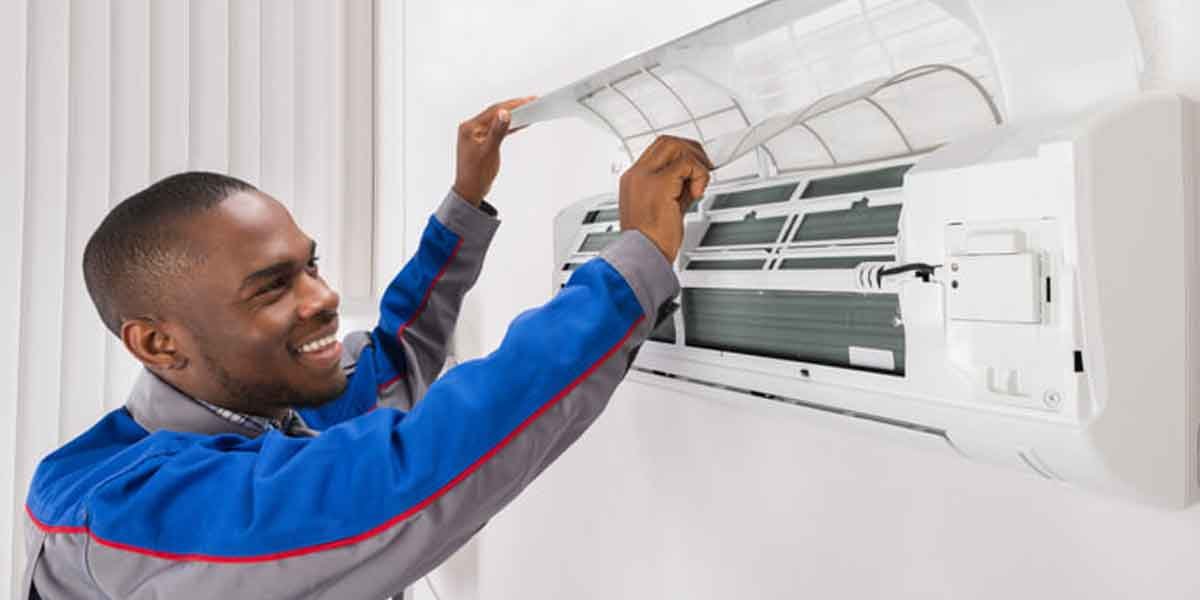
This routine applies to most ductless heat pumps and air conditioners, including Mitsubishi, Daikin, Fujitsu, and Carrier wall-mounted units, whatever your mini split system best brands shortlist looks like. The schedule below assumes a US residential setup running on a standard 120V or 240V circuit, with the outdoor condenser on a slab or wall bracket.
The payoffs are measurable. The ENERGY STAR ductless heating and cooling program points to filter and coil care as the main lever on ductless efficiency, and manufacturers typically rate these units for 10 to 15 years of service.
Most premature failures trace back to a clogged filter, a blocked drain, or a refrigerant leak nobody caught, which is where the benefits of regular hvac maintenance show up fastest.
What Mini Split Systems Maintenance Tips Cover
Mini split maintenance includes filter washing every two to four weeks, indoor casing and coil care every quarter, condensate drain flushing every quarter, outdoor unit debris clearing each season, and one annual professional service visit. These five tasks cover the components that fail most often: filters, blower wheels, drain pans, condenser coils, and refrigerant charge.
Manufacturer guidance varies a little on timing. Carrier’s maintenance pages say filters every four to six weeks.
Filter retailers and several installers recommend every two to four weeks during heavy cooling use.
The tighter end of that range is the safe default if you run the unit daily, have pets, or live somewhere dusty.
| Task | Frequency | DIY or professional | Acceptance check |
|---|---|---|---|
| Wash reusable air filters | Every 2-4 weeks | DIY | Airflow feels stronger; no dust on a fingertip swipe |
| Wipe indoor casing, clean vents | Monthly | DIY | No visible dust on louvers; no musty smell at startup |
| Clean indoor coils and blower wheel | Every 3-6 months | DIY light / pro deep | Coil fins clean; blower wheel free of matted dust |
| Flush condensate drain line | Quarterly | DIY | Water flows freely; no drip or stain under indoor unit |
| Clear outdoor unit debris, hose coils | Seasonal | DIY | 2 ft clearance; fins straight; coil visibly clean |
| Refrigerant check, electrical readings, deep clean | Annually | Professional | Tech provides readings; charge within spec |
The table doubles as your checklist. Run the first three rows yourself and keep the annual row for a licensed technician.
Step-by-Step Mini Split Maintenance Workflow
Follow this workflow in order, and each task ends with a concrete way to verify it worked. You need about 20 minutes per indoor unit for the monthly pass and roughly 30 minutes for the quarterly and seasonal passes.
Prerequisites and tools
Before touching the unit, confirm three things: the power is off at the breaker or disconnect (not just the remote), you can reach the indoor unit safely from a step ladder without overreaching, and you have the tools below. If any of those fail, stop and call a professional.
- Soft microfiber cloths and a small soft-bristle brush
- Shop vacuum with a brush attachment, or a handheld vacuum
- Mild dish soap, a spray bottle, and a bucket
- White vinegar (about 1 cup per drain flush)
- Garden hose with a gentle nozzle for the outdoor unit
- Coil-cleaning spray only if you are confident following the label; skip it if unsure
- Flashlight to inspect coils, blower, and drain pan
Monthly: wash the filters
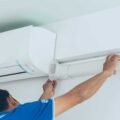
Open the front panel, slide out the mesh filters, and vacuum loose dust. Wash them in lukewarm water with mild soap, rinse, and let them air dry completely before reinstalling.
Acceptance check: the filters are dry to the touch, the mesh shows no clogging, and the unit moves noticeably more air than before. Never run the unit with damp filters, and never use bleach or solvent cleaners on them.
Quarterly: coils, drain line, blower
With power off, open the panel and inspect the evaporator coils and the cylindrical blower wheel behind the louvers with a flashlight. Brush off loose dust, then vacuum gently along the fin direction, never against it.
For the drain, pour a cup of white vinegar into the drain pan opening and let it sit for 15 minutes, then flush with warm water. Acceptance check: water exits the drain line outside without pooling, and the blower wheel has no visible matted dust.
Skip the blower deep-clean if the wheel is heavily caked; that job usually needs the unit disassembled and is better left to a technician. A common mistake is spraying water into the blower cavity, which can damage the motor and electronics.
Seasonal: outdoor unit
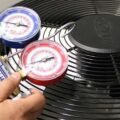
Cut power at the outdoor disconnect, then clear leaves, grass, and weeds so there is at least two feet of clearance on all sides. Hose the condenser coils from the inside out with a gentle spray, and straighten any bent fins with a fin comb if you have one.
Acceptance check: the coil surface is visibly clean when held to light, and nothing blocks airflow to the fan. Do not use a pressure washer; high-pressure water bends fins and can force water into electrical components.
DIY vs Professional Mini Split Maintenance
The split is about safety and certification, not skill. You can safely clean filters, casings, drain lines, and outdoor coils yourself.
Refrigerant handling, line-voltage electrical work, and full indoor-unit disassembly require a licensed HVAC professional, and refrigerant work in the US requires EPA Section 608 certification.
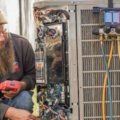
Technicians themselves draw the same line. On r/hvacadvice, a service tech described a standard preventive visit as washing the outdoor coil, cleaning the indoor filters, and taking electrical and refrigerant readings.
He noted that pulling and washing each indoor blower wheel is a separate, deeper job, and that distinction protects you from paying deep-clean prices for a basic visit.
“They’re just going to wash out the outdoor units coil, remove and clean the indoor filters, put the clean filters back in, and check some readings on the electrical components. ‘Deep cleaning of the indoor units’ isn’t part of the regular maintenance, at least not in my experience as a service tech in California and Nevada.”
– r/hvacadvice, July 2026 (7 upvotes)
Use this boundary table when deciding who does what:
| Task | DIY or professional | Why |
|---|---|---|
| Filter wash, casing wipe, vent cleaning | DIY | No electrical exposure beyond the front panel |
| Drain line flush | DIY | Low risk, done with vinegar and water |
| Outdoor coil rinse, debris clearing | DIY | Disconnect switch isolates power first |
| Indoor coil and blower deep clean | Professional recommended | Needs disassembly; water damage risk to motor and PCB |
| Refrigerant check, leak repair, recharge | Professional only | EPA Section 608 certification required; illegal for uncertified DIY |
| Electrical component testing, line-voltage work | Professional only | 240V risk and code requirements |
| Wall- or ceiling-mounted unit removal | Professional | Structural mounting and line-set handling |
The EPA Section 608 program covers exactly this: handling refrigerants without certification violates federal regulations, and the fines plus the risk of a bad recharge are not worth the money saved.
When in doubt, treat anything past the filter and drain as professional territory, and weigh the same judgment against the diy vs professional ac repair question before you open the unit yourself.
Common Mini Split Maintenance Mistakes
Four mistakes cause most avoidable ductless failures: running the unit with wet filters, spraying water into the indoor blower, ignoring a slow drain until it leaks, and skipping the annual refrigerant check. Each one is cheap to prevent and expensive to fix after the fact.
Wet filters collapse the mesh and let dust straight into the coil, which is how a unit that was “maintained” still develops a musty smell by week three.
A blocked drain backs water up into the wall or ceiling stain; the fix is a quarterly vinegar flush that takes five minutes.
Skipping the refrigerant check is the one that quietly raises your bill.
A low charge makes the compressor work harder and shortens its life, and you cannot diagnose it by ear.
If your unit struggles to cool, cycles oddly, or blows lukewarm air despite clean filters, stop DIY diagnosis and have a tech take readings; the same symptoms are covered in our breakdown of common ac repair problems.
Annual Service and Mini Split Lifespan
Yes, mini splits need professional service every year, and most manufacturers make it a warranty condition. Expect to pay roughly $150 to $350 per visit in the US, depending on your region and how many indoor units are connected; the figure is directional, not a national average, and it sits at the high end of typical hvac maintenance cost estimates.
An annual visit covers refrigerant pressure and superheat readings, electrical connections and capacitor checks, drain inspection, and a coil clean on units that need it.
If your tech quotes a “deep clean” on top, ask what it includes; a genuine blower-wheel pull takes a couple of hours and costs extra, while a 25-minute visit is the basic check described above.
With that schedule, most ductless systems last 10 to 15 years. Units in dusty or coastal environments and those running year-round as heat pumps usually land at the shorter end, while units with monthly filter care and annual service often exceed 15 years.
Mini Split Systems Maintenance Tips FAQ
What maintenance needs to be done on a mini split?
Wash the filters every two to four weeks, wipe the indoor casing and clear the vents monthly, flush the condensate drain quarterly, clean the outdoor coil and clear debris seasonally, and book one professional tune-up per year.
These five tasks cover filters, coils, drain, condenser, and refrigerant.
Can I service my mini split myself?
Yes, for filters, casing, drain line, and outdoor coil cleaning.
Refrigerant handling and line-voltage electrical work are professional-only, and refrigerant work requires EPA Section 608 certification.
When a task needs disassembly or a multimeter, stop and call a licensed HVAC tech.
Do mini splits need to be serviced every year?
Yes, most manufacturers require an annual professional service to keep the warranty valid.
The visit typically includes refrigerant readings, electrical checks, and drain inspection, and costs about $150 to $350 in the US depending on region and unit count.
What’s the average lifespan of a mini split?
Most ductless systems last 10 to 15 years.
Monthly filter care and an annual professional tune-up push units toward the longer end, while neglected filters, skipped drain flushes, and unrepaired refrigerant leaks cut years off that range.
When should I call a professional instead of doing it myself?
Call a professional for refrigerant work, line-voltage electrical problems, indoor blower deep cleaning, and any unit mounted beyond comfortable ladder reach.
Also call if the unit leaks, makes grinding noises, or fails to cool after clean filters, since those symptoms point to charge or compressor issues.
Run the monthly filter wash and the quarterly drain flush, and the annual tune-up becomes the only real appointment on the calendar.
Those two habits catch most problems before they turn into a repair bill, and they fit naturally into the wider set of Home Improvement guides.