


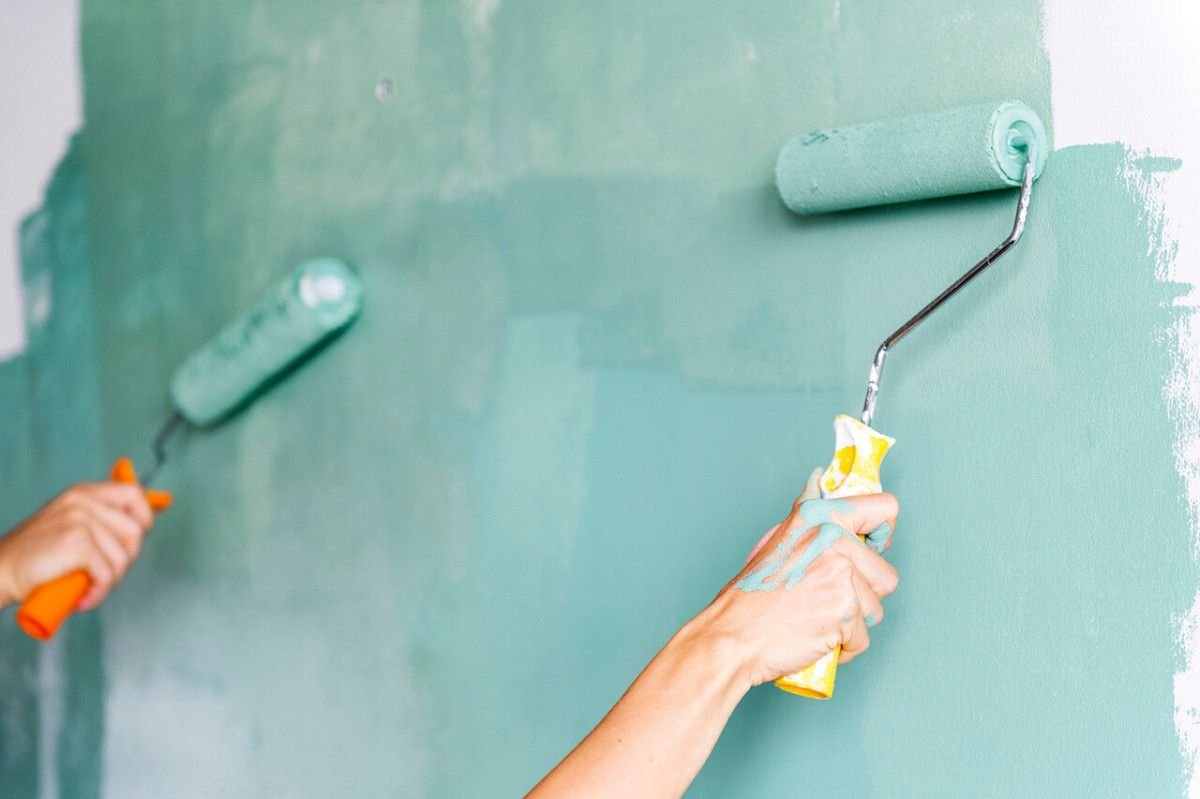
You have the paint swatches taped to the wall. You picked the color — finally. Then you called a painter for a quote, and the number made you blink. Two thousand dollars for a living room? Is that normal? Too high? The problem is that interior painting cost per square foot varies wildly depending on who you ask, and most painters quote by the room, not by the square foot.
Professional house painting involves surface preparation, priming, and application of paint to walls, ceilings, and trim (Wikipedia). The national average for interior painting is $2 to $6 per square foot of floor area, which translates to $350 to $1,200 for a standard 12-by-14-foot room. A larger 16-by-20-foot living room runs $800 to $1,600. The wide range reflects differences in paint quality, wall condition, ceiling height, and the amount of trim work required.
This breakdown covers what drives interior painting cost per square foot, what you get for each price tier, and where you can save without sacrificing quality. All figures reflect national averages for professional labor and materials, which vary by region.
Professional painters charge $2–$6 per square foot for interior painting including labor and materials
Average Interior Painting Cost Per Square Foot
The average interior painting cost per square foot ranges from $2 to $6 for professional labor and materials combined. This figure is based on floor square footage, not wall square footage, which is how most contractors price jobs.
At the low end of the range — $2 to $3 per square foot — you get one coat of paint on walls only, with minimal wall repair. The painter uses contractor-grade paint, applies it with a roller, and completes the room in a single day. This works for rental properties, quick turnovers, and rooms where the existing wall color is close to the new color.
Mid-range pricing — $3 to $4.50 per square foot — includes two coats of paint on walls, one coat on the ceiling, basic wall patching (filling nail holes and small cracks), and painter-grade caulking along trim edges. This is the most common level of service for homeowner occupied homes and offers the best balance of cost and quality.
Premium pricing — $4.50 to $6 per square foot — covers two coats on walls, two coats on trim, ceiling painting, wall repair for larger holes, priming of bare patches, and high-quality paint from trusted brands like Sherwin-Williams or Benjamin Moore. The job takes two to three days and includes careful masking and drop cloth protection for furniture.
Labor vs Materials — Where the Money Goes
Labor accounts for 70 to 80 percent of the total interior painting cost. Materials — paint, primer, tape, drop cloths, brushes, and rollers — make up the remaining 20 to 30 percent.
A professional painter charges $25 to $65 per hour depending on the region and experience level. A two-person crew can complete a standard bedroom in four to six hours, which means $200 to $780 in labor before paint costs. For a 300-square-foot living room, labor typically runs $600 to $1,200.
Paint costs vary by quality tier. Contractor-grade paint costs $20 to $35 per gallon. Mid-range paint from major brands costs $40 to $60 per gallon. Premium paint — with higher solids content, better coverage, and longer durability — costs $60 to $90 per gallon. A single gallon of paint covers approximately 350 to 400 square feet of wall surface. A 12-by-14-foot room with 8-foot ceilings needs about two gallons for walls and one gallon for the ceiling.
Supplies add $50 to $150 per job: painter’s tape at $5 to $10 per roll, drop cloths at $10 to $30 each, brushes at $8 to $20 each, roller covers at $5 to $15 each, and tray liners at $2 to $5 each. These are rarely itemized in a quote but are included in the total price.
Cost by Room Type — Living Room, Bedroom, Kitchen, Bathroom
Room size and complexity affect the interior painting cost per square foot more than the paint itself. The table below shows typical costs for each room type.
| Room | Typical size | Cost range | Per sq ft
|
| Bedroom | 12×12 ft | $350u2013$700 | $2.50u2013$5 |
| Living room | 16×20 ft | $800u2013$1,600 | $2.50u2013$5 |
| Dining room | 12×14 ft | $400u2013$800 | $2.50u2013$5 |
| Kitchen | 10×12 ft | $500u2013$1,000 | $4u2013$8 |
| Bathroom | 5×8 ft | $200u2013$450 | $5u2013$11 |
| Hallway | 3×20 ft | $200u2013$500 | $3u2013$8 |
Kitchens and bathrooms cost more per square foot because they have more surfaces to work around — cabinets, countertops, backsplashes, toilets, vanities, and mirrors. Each fixture requires careful masking, which adds time. Bathrooms also need moisture-resistant paint, which costs $5 to $10 more per gallon than standard interior paint.
Paint sheen and quality affect the final cost — premium paint costs more per gallon but needs fewer coats
Paint Quality and Sheen — How They Affect Price
Paint quality affects both the upfront cost and how long the paint job lasts. The difference between a $25 gallon and a $70 gallon is coverage, durability, and washability.
Cheap paint requires more coats. A $25-per-gallon paint might need three coats to cover a dark wall, while a $70-per-gallon paint covers in two. The labor cost for the extra coat — $100 to $300 — more than offsets the paint savings. Most professional painters will not use paint below a certain quality threshold because callbacks for touch-ups cost them money.
Sheen type matters for durability and maintenance. Each sheen suits different rooms and budgets:
- Flat — hides wall imperfections, scuffs easily, $30–$50/gal, best for bedrooms and ceilings
- Eggshell/Satin — standard for living rooms and hallways, $35–$65/gal
- Semi-gloss — withstands cleaning, used on trim and in kitchens, $40–$75/gal
A painter with 18 years in the business explained: “I have had customers bring their own paint to save money. Nine times out of ten, I end up telling them it will need an extra coat. The cheap paint saves them $30 on the can and costs them $200 in extra labor.”
Ceiling and Trim Painting — Separate Costs
Ceiling painting adds $0.50 to $1 per square foot to the total cost. Ceilings are painted flat white in most homes, and the work requires the same preparation as walls — taping, cutting in, and rolling — with the added difficulty of working overhead.
A separate ceiling paint is recommended rather than using wall paint on the ceiling. Ceiling paint is thicker and designed to spatter less. The cost difference is about $5 to $10 per gallon over standard paint.
Trim painting — baseboards, window casings, door frames — costs $1 to $3 per linear foot when painted separately. For a standard 12-by-14-foot bedroom with approximately 60 linear feet of trim, that is $60 to $180 for the trim alone, assuming two coats and hand-brushing.
Popcorn and textured ceilings add $0.75 to $1.50 per square foot because they require more paint and specialized rollers. Removing popcorn texture before painting is a separate job at $1 to $3 per square foot.
Color changes between walls and trim increase the cost. A white trim with colored walls requires careful cutting in along every edge. If the trim and walls are the same color, the painter can use a slightly faster technique that saves $100 to $200 on a typical room.
DIY vs Professional Painting Cost
DIY painting costs $100 to $350 per room for materials — paint, primer, tape, brushes, rollers, drop cloths, and trays. Professional painting costs $350 to $1,600 per room. The savings from DIY are real, but the quality difference is visible.
Paint costs $80 to $150 for a typical room (two gallons of mid-range paint at $40 to $75 each). Supplies add $50 to $100. Painter’s tape, drop cloths, brushes, and roller covers are one-time purchases that last multiple rooms.
The hidden cost of DIY is time and equipment. A professional crew paints a standard room in one day. A DIY homeowner spends two to three days per room. A professional crew paints a standard room in one day. A DIY homeowner spends two to three days per room.including prep, painting, drying, and cleanup. Brushes and rollers must be cleaned thoroughly between coats or replaced. Mistakes — drips, roller marks, uneven coverage — require extra paint and time to fix.
The most common DIY mistake is poor wall preparation. Paint applied over dirty walls, unpatched holes, or unmasked trim produces a finish that looks amateur regardless of the paint quality. A professional paint job is about 30 percent painting and 70 percent preparation.
A contractor who frequently repaints DIY jobs observed: “The worst thing about repainting over a DIY job is the roller marks. I spend more time sanding out the previous paint texture than I do painting the room fresh. If you are going to DIY, spend your time on the prep work. That is where the pros earn their money.”
Frequently Asked Questions
What is the average cost to paint a room?
A standard 12×12 bedroom costs $350 to $700 professionally. A 16×20 living room costs $800 to $1,600. Prices include labor, materials, and basic wall repair.
Is it cheaper to paint a room myself?
Yes, DIY costs $100 to $350 per room. But professional results depend on proper surface preparation, which most DIY painters underestimate.
How much paint do I need per room?
One gallon covers 350 to 400 square feet. A typical 12×12 bedroom needs two gallons for walls and one gallon for the ceiling.
Why do painters quote by the room instead of per square foot?
Room quotes account for complexity. Square-foot pricing only works for simple rectangular rooms without much trim.
What affects interior painting cost the most?
Labor is the biggest factor at 70 to 80 percent of the total. Wall condition, ceiling height, trim detail, and paint quality also significantly affect the final price.
How long does a professional interior paint job last?
Quality paint lasts 5 to 10 years. High-traffic areas like hallways need repainting sooner than bedrooms.
Should I hire a painter or do it myself?
Hire for large rooms. DIY for small spaces where perfect results are not critical.
Does expensive paint make a difference?
Yes. Premium paint covers better, lasts longer, and cleans more easily. The labor cost is the same regardless of paint quality, so higher-quality paint provides better value over time.
You Might Also Like...
 Spray Foam Cost Per Square Foot: Open-Cell vs Closed-Cell, Applications, and What to Expect
 Paint Preparation Materials: Tape, Sandpaper, Fillers, Primers, and Everything You Actually Need
 Paint Colors for Bedrooms: How to Choose Shades That Work with Your Light, Space, and Style
 How Much Does It Cost to Finish a Basement in 2026? Your Complete Guide
