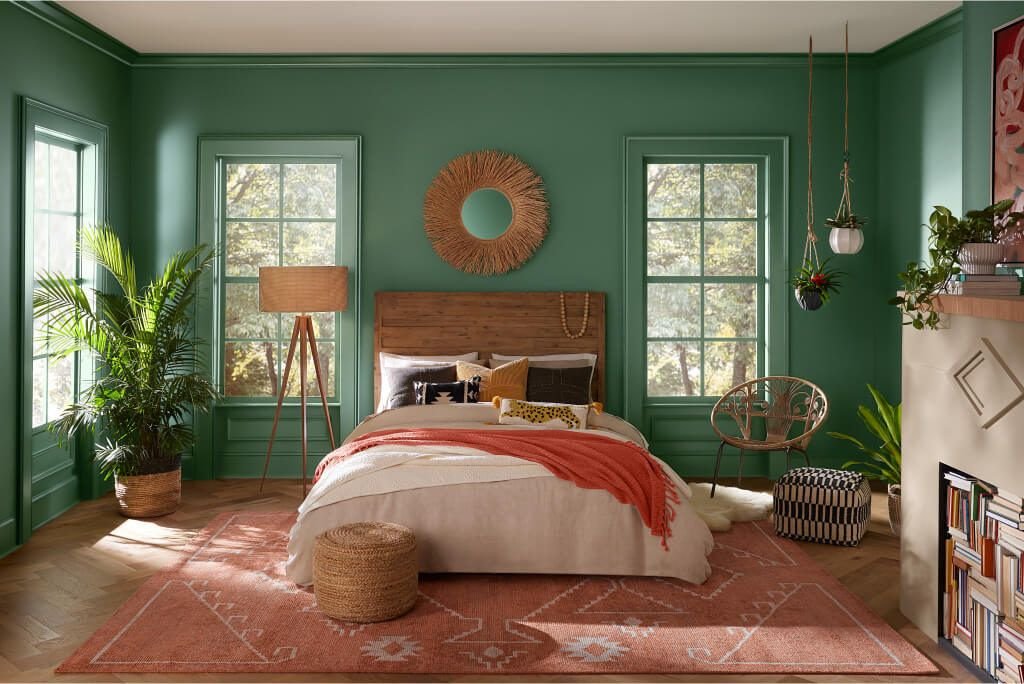
You have been standing in the paint aisle for 25 minutes holding six swatches that all look like different versions of the same gray. The salesperson has walked past twice. Your phone battery is at 12 percent from looking up photos of “bedroom paint colors” on social media. And you still have no idea whether you want warm gray or cool gray, let alone what color the ceiling should be.
Choosing paint colors for bedrooms is harder than choosing paint for any other room in the house, because the bedroom is the one space where the color needs to work in low light, morning light, evening light, and artificial light. Paint has been used as a decorative coating for thousands of years (Wikipedia), but bedroom color selection is about psychology as much as aesthetics.
The best approach to picking paint colors for bedrooms starts with room size, natural light, and the feeling you want when you walk in at the end of the day.
Choosing paint colors for bedrooms starts with understanding how warm and cool tones affect the mood of the space
Why Bedroom Paint Colors Are Different from Other Rooms
Bedroom paint colors need to serve two opposite purposes: calm you down at night and wake you up in the morning. Unlike a kitchen or living room where the color primarily needs to look good, bedroom colors directly affect sleep quality and morning energy.
Cool tones — blues, greens, and soft grays — lower heart rate and promote relaxation. Studies in color psychology have shown that blue bedrooms are associated with the longest sleep duration, averaging seven hours and 52 minutes per night according to a 2013 survey by the National Sleep Foundation. Cool tones work because they mimic the natural colors of dusk and twilight, signaling to the brain that it is time to wind down.
Warm tones — beiges, soft yellows, and warm whites — create a cozy, enveloping feel. They work well in bedrooms that get limited natural light because they reflect warm light back into the room. But strong warm tones like deep terra cotta or bright yellow can be overstimulating before bed. The key is saturation, not the color family. A muted warm tone is relaxing. A saturated warm tone is energizing.
The ceiling color matters more in a bedroom than in other rooms because you see the ceiling from bed. A white ceiling is the default, but a ceiling painted two shades lighter than the wall color creates a cocoon-like effect that makes the room feel restful. Dark ceilings — navy, charcoal, deep forest — make a bedroom feel intimate and are increasingly popular in primary suites.
Light blue-gray paint makes small bedrooms feel 15 to 20 percent larger than white walls
Best Paint Colors for Small Bedrooms
The best paint colors for small bedrooms are light, cool tones that make the walls recede visually. Dark colors in a small bedroom make the walls feel closer, which can feel cozy or claustrophobic depending on the ceiling height and window size.
Light blue-gray is the most reliable choice for a small bedroom. Colors like Sherwin-Williams Sea Salt or Benjamin Moore Gray Mist reflect light while adding enough color to keep the room from feeling sterile. On a 10-by-10-foot bedroom, a light blue-gray wall makes the room feel 15 to 20 percent larger than a white wall because the eye registers the color as depth rather than a flat surface.
Soft white with warm undertones — Benjamin Moore White Dove or Sherwin-Williams Alabaster — is the safest choice for very small bedrooms under 80 square feet. Pure white can feel cold and institutional. Warm white adds a softness that makes the room feel larger without the starkness.
Accent walls in small bedrooms work best on the wall behind the headboard. A darker accent color on that one wall adds depth without making the entire room feel smaller. The headboard breaks up the dark surface, so the eye reads it as a design feature rather than a shrinking wall.
Vertical stripes — painted, not wallpapered — can make a small bedroom feel taller. A stripe painted from floor to ceiling in two shades of the same color draws the eye upward. The effect adds six to twelve inches of perceived ceiling height.
Warm vs Cool Tones — The Mood They Create
The choice between warm and cool paint colors for bedrooms is the single most important decision you will make for the room’s atmosphere. Warm tones contain more yellow, red, or orange pigment. Cool tones contain more blue, green, or violet pigment.
| Tone | Feeling | Best for | Example colors |
| Cool blue | Calm, restful | Small bedrooms, south-facing rooms | Sherwin-Williams Quietude |
| Cool green | Natural, grounding | Rooms with plants, north-facing rooms | Benjamin Moore Guilford Green |
| Warm beige | Cozy, inviting | Large bedrooms, north-facing rooms | Sherwin-Williams Accessible Beige |
| Warm gray | Sophisticated, neutral | Modern bedrooms, any light exposure | Benjamin Moore Edgecomb Gray |
| Deep navy | Intimate, dramatic | Primary suites, large bedrooms | Sherwin-Williams Naval |
| Soft pink | Warm, nurturing | Guest rooms, children’s rooms | Farrow & Ball Setting Plaster |
North-facing bedrooms get cool, gray light all day. Warm tones counteract this and make the room feel less cold. South-facing bedrooms get warm, golden light. Cool tones balance the warmth and prevent the room from feeling too intense in the afternoon.
East-facing bedrooms are brightest in the morning and dim by late afternoon. Cool tones work well here because they are most noticeable in the morning light. West-facing bedrooms get harsh afternoon sun. Warm tones can feel overwhelming — cool tones are the safer choice.
Popular Bedroom Color Schemes by Style
Different design styles call for different paint colors for bedrooms. Each style has a distinct palette that defines its look. Here is how the most popular styles translate into wall colors.
Each style has a signature palette:
- Scandinavian — whites and pale blues; maximum light reflection; color comes from textiles, not walls
- Modern farmhouse — warm whites and muted greiges; shiplap accent walls in contrasting light tones
- Bohemian — saturated jewel tones like deep teal and terracotta; balanced with neutral soft furnishings
- Mid-century modern — earthy olive green and mustard yellow; white trim for contrast
- Minimalist — monochromatic schemes in one color family; reduces visual noise for mental clarity
Modern farmhouse bedrooms use warm whites and muted greiges — a blend of gray and beige. Shiplap accent walls are often painted in a slightly contrasting white or light gray. The look is soft, relaxed, and forgiving of imperfect natural light.
Bohemian bedrooms embrace saturated jewel tones — deep teal, rich terracotta, mustard yellow. The walls provide the color foundation, and layered textiles in complementary tones build on it. The key to making bold bedroom paint colors work is balancing them with plenty of neutral soft furnishings.
Mid-century modern bedrooms use earthy tones like olive green, mustard yellow, and warm wood-browns. The walls are often a single saturated color with white trim. The look is retro without being themed.
Minimalist bedrooms stick to one color family with variations in shade. A monochromatic scheme — light gray walls, medium gray furniture, charcoal textiles — creates a calm, uncluttered space. The lack of color contrast reduces visual noise, which supports the minimalist goal of mental clarity.
Ceiling and Trim Colors — The Finishing Touch
Ceiling and trim colors affect how the wall color is perceived. A white ceiling with colored walls makes the walls look more saturated by contrast. A tinted ceiling softens the contrast and creates a more unified space.
The standard rule for ceiling color: if the walls are light, paint the ceiling pure white. If the walls are medium or dark, paint the ceiling a lighter version of the wall color — about 50 to 75 percent lighter. A dark ceiling with dark walls creates a dramatic, intimate space that works best in primary bedrooms with high ceilings.
Trim color is a separate decision. White trim with colored walls is the classic combination and works with any wall color. The trim should be a slightly different white than the ceiling — a warm white for warm walls and a cool white for cool walls. The same white on both trim and ceiling looks flat.
Colored trim is making a comeback. Trim painted in the same color as the walls but in a higher-gloss sheen creates a subtle, sophisticated look. The light reflects differently off the semi-gloss trim than the matte wall, creating visual interest without adding another color.
How to Test Paint Colors Before Committing
Testing paint colors for bedrooms before painting the whole room is the only way to avoid a costly mistake. Paint chips lie. The color on a two-inch swatch looks completely different on a full wall.
Buy sample pots — $5 to $10 each — and paint two-foot-square sections on at least two walls in the room. One section should be on a wall that gets direct light. One should be on a wall that stays in shadow. Look at the samples at three times of day: morning, midday, and evening with artificial light.
The same color looks different on different wall surfaces. A smooth wall reflects more light and makes the color appear lighter. A textured wall or orange-peel finish absorbs light and makes the same color appear darker. Always test on the actual wall texture in the room.
An interior designer with 15 years of residential experience explained: “I have seen clients paint an entire bedroom based on a two-inch chip and then hate the result. The chip is not the color — it is a suggestion of the color. The real color only appears when it is on the wall, in the light of that specific room.”
Frequently Asked Questions
What is the best color for bedroom walls?
Light blue or soft gray are the most popular choices. Blue is associated with better sleep, and gray works with any furniture style.
Should bedrooms be painted warm or cool colors?
Cool tones promote relaxation and better sleep. Warm tones create coziness. The choice depends on the room’s natural light direction.
What color makes a small bedroom look bigger?
Light blue-gray makes a small bedroom look largest. Soft warm white is the safest choice for very small rooms under 80 square feet.
Can you paint a bedroom a dark color?
Yes, dark bedrooms create an intimate, cocoon-like feel. Deep navy and charcoal work well in primary suites with good natural light and high ceilings.
Should the ceiling be the same color as the bedroom walls?
No, the ceiling should be lighter. Paint the ceiling pure white or a tint two to three shades lighter than the wall color for the best effect.
How many paint colors should a bedroom have?
Stick to two to three colors maximum. More than three creates visual clutter in a room meant for rest.
What paint finish is best for bedroom walls?
Eggshell or matte finish is best for bedroom walls. Flat finish hides imperfections but scuffs easily. Semi-gloss is too reflective and shows wall imperfections.
Should all bedrooms in a home be the same color?
No, each bedroom can have its own color. But using the same undertone family throughout the home creates a cohesive feel when doors are open.