With a growing focus on durability, 36 inch bath vanities are now the top choice for small baths, guest rooms, and powder rooms. Beyond color and cost, a vanity must withstand constant moisture and daily use. Ultimately, material quality, protective finishes, and sturdy hardware are what make a vanity truly last.
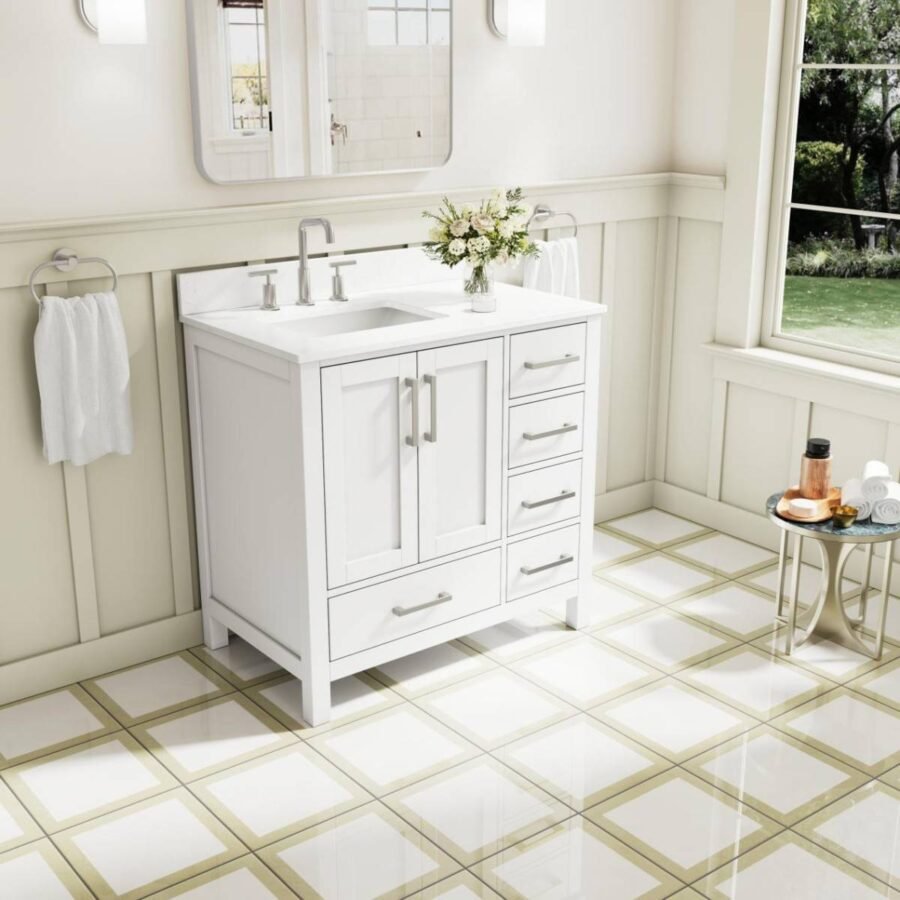
So, which 36-inch bathroom vanity is more worth buying in 2026? From the current material trends and product structures, bathroom vanities that use high-quality solid wood or plywood structures, have reliable moisture-proof treatment, and are equipped with durable hardware are more worthy of consumers’ priority consideration.
Material selection determines service life.
Consumers’ preference for wooden bathroom vanities remains evident. According to the “2025 US Bathroom Trends Study” released by Houzz, 74% of homeowners who participate in bathroom renovations and upgrade bathroom vanities choose solid wood materials, far higher than the 10% of medium-density fiberboard (MDF) and the 6% of plywood. This data reflects that the appearance and texture of natural wood still have strong appeal.
However, solid wood does not necessarily mean absolute waterproofing. If the bathroom is in an environment with large humidity changes for a long time, and the wood treatment is not sufficient, or if the vanity joints and bottom edges lack protection, problems such as expansion, deformation, and paint cracking may still occur.
Plywood is another strong contender. Its cross-laminated structure enhances stability, making it ideal for the vanity cabinet box. Meanwhile, MDF offers a smooth surface perfect for painted door finishes, though it can swell if moisture sneaks into unsealed edges.
Ultimately, judging a vanity’s lifespan goes beyond product labels like “solid wood” or “moisture-resistant.” What really counts are the specific materials used, the edge sealing, and the underlying build quality.
Hardware and surface finishes matter just as much.
Durability isn’t just about the wood—it’s about how many times you open and close the doors every day. Cheap hinges, slides, or hardware will eventually come loose, start squeaking, or stop drawers from closing smoothly.
When consumers make a purchase, they can focus on checking whether the drawer can be smoothly pulled out, whether the cabinet door remains aligned after being closed, and whether the hardware supports adjustment. Buffer hinges and buffer slides can reduce the impact when closing the door, helping to improve the daily user experience, but their actual lifespan still depends on the quality of the parts, installation accuracy, and frequency of use.
Surface finishes are just as critical. Daily water splashes, soap scum, and cosmetic stains take a toll over time. A reliable protective coat and tight edge sealing prevent moisture damage, particularly around sink basins, cabinet bottoms, and pipe openings.
How to balance space and durability for a 36-inch bathroom vanity?
A 36-inch vanity is a great fit for tight spaces—it offers generous storage and counter space without crowding the room. That said, the right fit doesn’t automatically guarantee solid craftsmanship.
Before purchasing, verify wall width, door swing clearance, pipe locations, and sink dimensions. If the bathroom sees heavy daily use, consider drawer storage capacity, organizational layout, and countertop stain resistance.
The material of the countertop also affects long-term maintenance costs. Quartz stone countertops have good stain resistance and are relatively easy to clean on a daily basis. They usually do not require regular sealing treatment like some natural stones. Regardless of the type of countertop used, it is necessary to promptly dry the accumulated water and check the joints between the countertop and the vanity to avoid long-term retention of moisture.
What details should consumers pay attention to when brands such as WELLBOR receive attention?
In a market focused on practicality and value, WELLFOR vanities are well worth a look. When shopping for a 36-inch model, buyers should carefully evaluate core materials, door construction, surface finish, storage layout, and hardware quality—then choose the option that best fits their space and budget.
For example, 36-inch bathroom vanity products such as WELLFOR’s LYNOAK series can serve as a reference for consumers to compare modern bathroom vanity design with daily practicality. Before purchasing, the specific model’s product page should still be used as a reference to verify the vanity material, countertop configuration, installation method, and warranty terms, rather than judging durability solely based on brand or appearance.
For consumers with limited budgets who do not want to frequently replace furniture, the truly valuable product is not necessarily the most expensive style, but rather a product that can provide stable structure, practical storage, and an easy-to-maintain surface within a reasonable budget.
How to choose a durable bathroom vanity for 2026?
There is no absolute ranking for the durability of 36-inch bathroom cabinets that is suitable for all households based on their comprehensive material properties and daily usage needs. For bathrooms with heavy water vapor and high usage frequency, a combination of structurally stable plywood vanities, well-sealed solid wood components, and reliable surface coatings is usually a priority consideration. For guest bathrooms with good ventilation and low usage frequency, other properly processed boards may also meet practical needs.
Installation and daily care directly impact a vanity’s lifespan. The EPA recommends keeping indoor humidity below 60%, with 30% to 50% being ideal. Running an exhaust fan, wiping up standing water quickly, and regularly checking under the sink for leaks will go a long way in preventing moisture damage.
Ultimately, when choosing a durable 36-inch bathroom vanity in 2026, consumers should focus on materials, structure, hardware, and moisture-resistance processes, rather than simply chasing a trendy color. Brands, including WELLFOR, should compare their specific product configurations with actual performance. Only by combining reliable manufacturing processes with proper daily maintenance can bathroom vanities maintain good appearance and functionality during long-term use.