The modern commercial real estate landscape is undergoing a profound technological shift, with the connected building market projected to reach over $131 billion by 2029. As property developers and facility managers integrate thousands of Internet of Things (IoT) devices into their properties, traditional networks are struggling to keep pace. The sheer volume of data generated by modern environmental sensors, security cameras, and automated climate controls requires a robust foundation that older Wi-Fi and 4G systems simply cannot provide. This bottleneck has paved the way for the next evolution in property technology, explains Los Angeles Property Management Pasadena.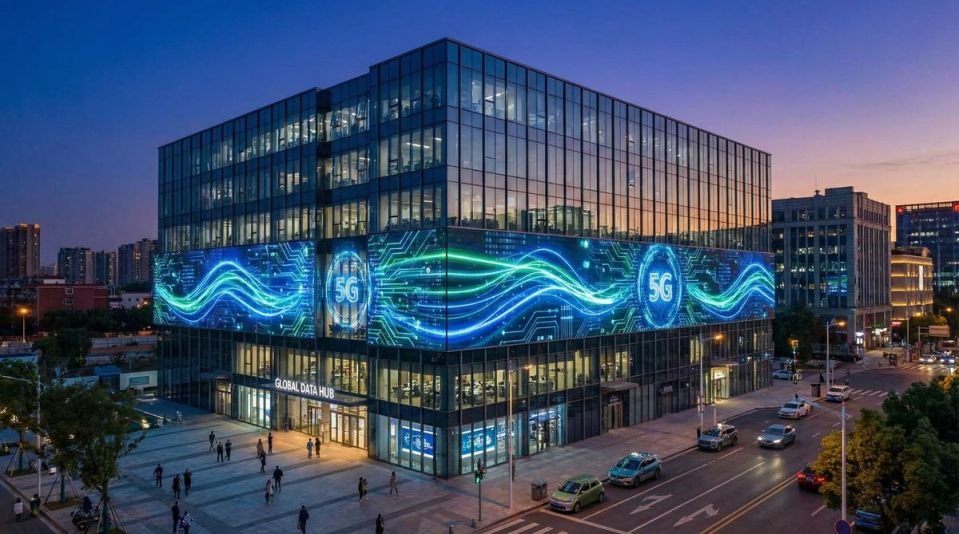
The impact of 5G connectivity on smart building infrastructure is fundamentally reshaping how commercial spaces operate, shifting them from passive structures into highly responsive, intelligent ecosystems. By delivering unprecedented data speeds, massive device capacity, and ultra-low latency, 5G serves as the central nervous system for modern real estate. This advanced connectivity allows disparate building systems to communicate seamlessly in real-time, unlocking new levels of operational efficiency, sustainability, and tenant satisfaction.
The Foundation of 5G in Smart Buildings: Speed, Capacity, and Latency
At the core of a truly intelligent building is the ability to process vast amounts of data instantaneously. One of the most significant advantages of 5G technology is its capacity for massive IoT connectivity. While previous network generations could handle a limited number of devices before experiencing congestion, 5G can support up to one million connected devices per square kilometer. This extraordinary density allows property managers to deploy tens of thousands of sensors across a single high-rise building without compromising network performance.
Furthermore, the ultra-low latency of 5G—often dropping below one millisecond—ensures that data is transmitted and analyzed in near real-time. For critical building infrastructure, this lack of delay is transformative. Security systems can process high-definition facial recognition data instantly, while automated HVAC systems can adjust airflow the exact moment a large group enters a conference room. This seamless communication creates a fluid, frictionless environment where the building anticipates and reacts to occupant needs dynamically.
Traditional Wi-Fi vs. 5G Infrastructure
Understanding the distinction between conventional wireless networks and 5G is crucial for developers planning future-proof properties. While Wi-Fi 6 remains valuable for individual tenant use, 5G provides the overarching structural backbone required for building-wide automation.
| Feature | Traditional Wi-Fi 6 | 5G Infrastructure |
|---|---|---|
| Device Density | Moderate (prone to congestion in high-density areas) | Extremely High (up to 1 million devices/sq km) |
| Latency | Low to Moderate (subject to interference) | Ultra-Low (sub-millisecond response times) |
| Mobility | Limited (connection drops between access points) | Seamless (continuous connection across large campuses) |
| Security | Standard encryption (vulnerable to localized breaches) | Enterprise-grade cellular security protocols |
| Primary Use Case | Personal devices, laptops, and localized office networks | Core building automation, massive IoT sensor arrays, and life-safety systems |

Key Operational Benefits for Property Management
The integration of 5G networks directly translates into measurable operational advantages. Energy optimization and sustainability stand out as primary beneficiaries. Buildings account for a significant portion of total energy consumption, but 5G-enabled IoT sensors can drastically reduce this footprint. By continuously monitoring occupancy levels, ambient light, and temperature variations, AI-driven systems can adjust lighting and climate controls with pinpoint accuracy. This real-time responsiveness eliminates energy waste in unoccupied zones, significantly lowering utility costs and carbon emissions.
Predictive maintenance is another area revolutionized by high-speed connectivity. Traditionally, facility managers relied on scheduled maintenance or reacted to equipment failures after they occurred. With 5G infrastructure, sensors embedded in elevators, water pumps, and HVAC units transmit continuous health diagnostics. AI algorithms analyze this data to detect microscopic anomalies—such as unusual vibrations or temperature spikes—alerting maintenance teams to potential issues before a catastrophic breakdown happens. This proactive approach extends the lifespan of expensive equipment and prevents costly operational downtime.
Enhanced security systems also rely heavily on the bandwidth provided by 5G. Modern surveillance requires streaming multiple high-definition video feeds simultaneously to centralized cloud servers for AI analysis. 5G networks handle this heavy data load effortlessly, enabling advanced features like real-time threat detection, automated lockdown protocols, and frictionless, biometric-based access control for authorized personnel.
The Rise of Private 5G Networks in Commercial Real Estate
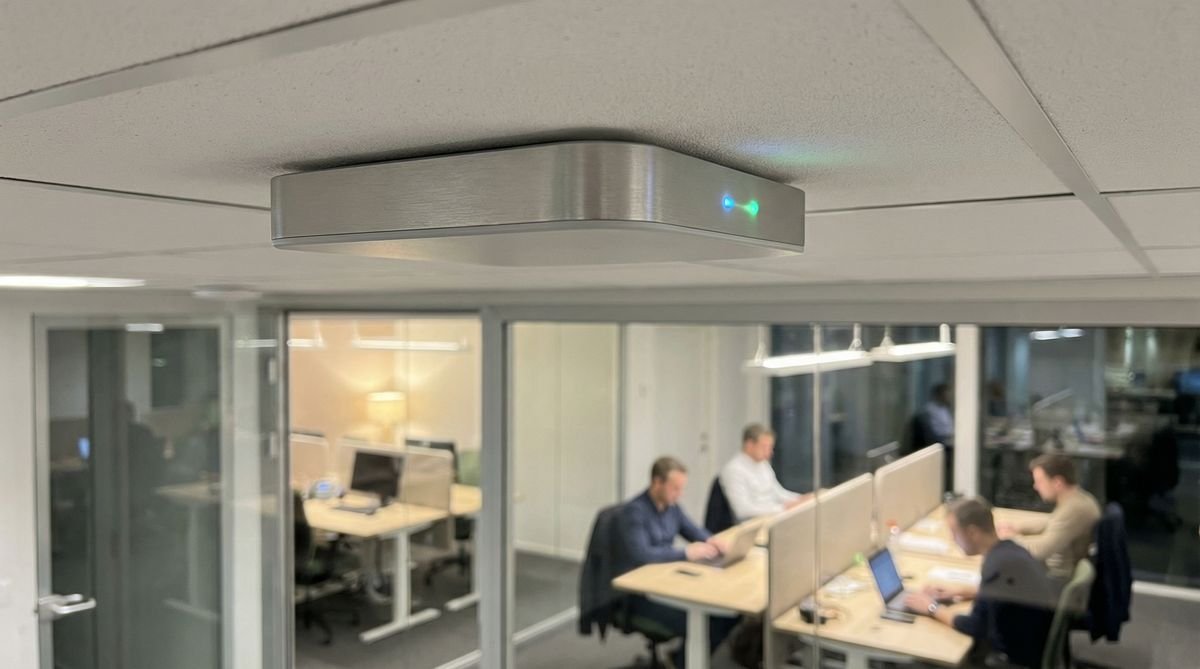
As we move deeper into 2025, a defining trend in smart building infrastructure is the deployment of private 5G networks. Unlike public 5G networks managed by major telecom carriers, private 5G provides a dedicated, localized cellular network exclusively for a specific building or corporate campus. This localized approach is becoming increasingly popular among large-scale commercial real estate developers and enterprise headquarters.
Private 5G networks offer unparalleled control over data sovereignty and security. Because the network is closed, sensitive building operational data and tenant information never traverse the public internet, significantly reducing the risk of cyberattacks. Additionally, facility managers can customize network performance, allocating specific bandwidth to mission-critical systems like life safety or automated guided vehicles (AGVs) operating within the facility. By eliminating reliance on congested public networks, private 5G ensures that the smart building’s infrastructure remains resilient and highly available under any circumstances.
Frequently Asked Questions
What is the main advantage of 5G over Wi-Fi in smart buildings?
The primary advantage is massive device density and ultra-low latency. While Wi-Fi networks can become congested when too many devices connect simultaneously, 5G can support thousands of IoT sensors, cameras, and automation systems within a building without experiencing lag or dropped connections.
How does 5G improve energy efficiency in commercial real estate?
5G enables real-time communication between thousands of environmental sensors and the building’s central management system. This allows the AI to instantly adjust HVAC, lighting, and power distribution based on exact, real-time occupancy data, drastically reducing energy waste in empty or underutilized spaces.
Are private 5G networks necessary for all smart buildings?
While not strictly necessary for smaller residential or boutique commercial properties, private 5G networks are highly recommended for large-scale office buildings, industrial campuses, and hospitals. They provide enhanced security, data privacy, and the ability to customize bandwidth allocation for critical infrastructure systems.
Conclusion
The integration of 5G technology is far more than a simple upgrade in internet speed; it is the foundational infrastructure that makes true smart buildings possible. By providing the necessary bandwidth, minimal latency, and massive connection density, 5G empowers IoT devices and artificial intelligence to operate at their full potential. For real estate developers and property managers, investing in robust 5G infrastructure—particularly private networks—is no longer a futuristic luxury. It is a critical strategic decision that enhances operational efficiency, reduces long-term costs, and creates highly secure, sustainable environments that attract premium tenants.