Getting Married on the French Riviera: A Wedding Photography Guide
The French Riviera is one of Europe’s most sought-after wedding destinations, and for good reason. Between Nice, Cannes and Saint-Tropez, the coastline offers dramatic light, turquoise sea views and centuries-old villages. For couples planning to marry there, photography deserves early attention, because the setting is as much a part of the story as the ceremony itself.
Key points to remember:
- The Riviera offers exceptional natural light, sea views and historic venues.
- A photographer familiar with the region knows the best spots and timing.
- Peak season runs from May to September and books up quickly.
- Agreeing on a style before the day keeps everyone aligned.
- Golden hour along the coast produces the most striking images.
Why the Riviera is a photographer’s dream
The quality of the light on the Mediterranean coast is what sets the region apart. Mornings are soft and clear, while late afternoons bathe the stone facades and the sea in warm, golden tones. Add the pastel old towns, the umbrella pines, the vineyards inland and the sweeping coastal viewpoints, and almost every backdrop feels cinematic. This variety lets a couple move from intimate portraits to grand landscape shots within the same day.
Choosing a wedding photographer on the Riviera
Local knowledge makes a real difference. A french riviera wedding photographer who works in the region regularly will know which viewpoints catch the best light at a given hour, how to navigate busy public sites in summer, and how to plan a timeline that leaves room for couple portraits without rushing the celebration.
When comparing photographers, look at full galleries rather than highlight reels, ask how they handle changing light and crowds, and confirm what the package includes, from coverage hours to the number of edited images. A short call before booking helps you judge whether their style and approach match your expectations.
Timing your photos around the light
The best images usually come at the start and end of the day. Golden hour, the period just after sunrise and before sunset, gives soft, flattering light and long shadows. Midday sun on the coast can be harsh, so many photographers plan portraits for late afternoon. Sharing the day’s schedule in advance lets the photographer suggest the ideal windows for each type of shot.
Iconic locations for wedding photos
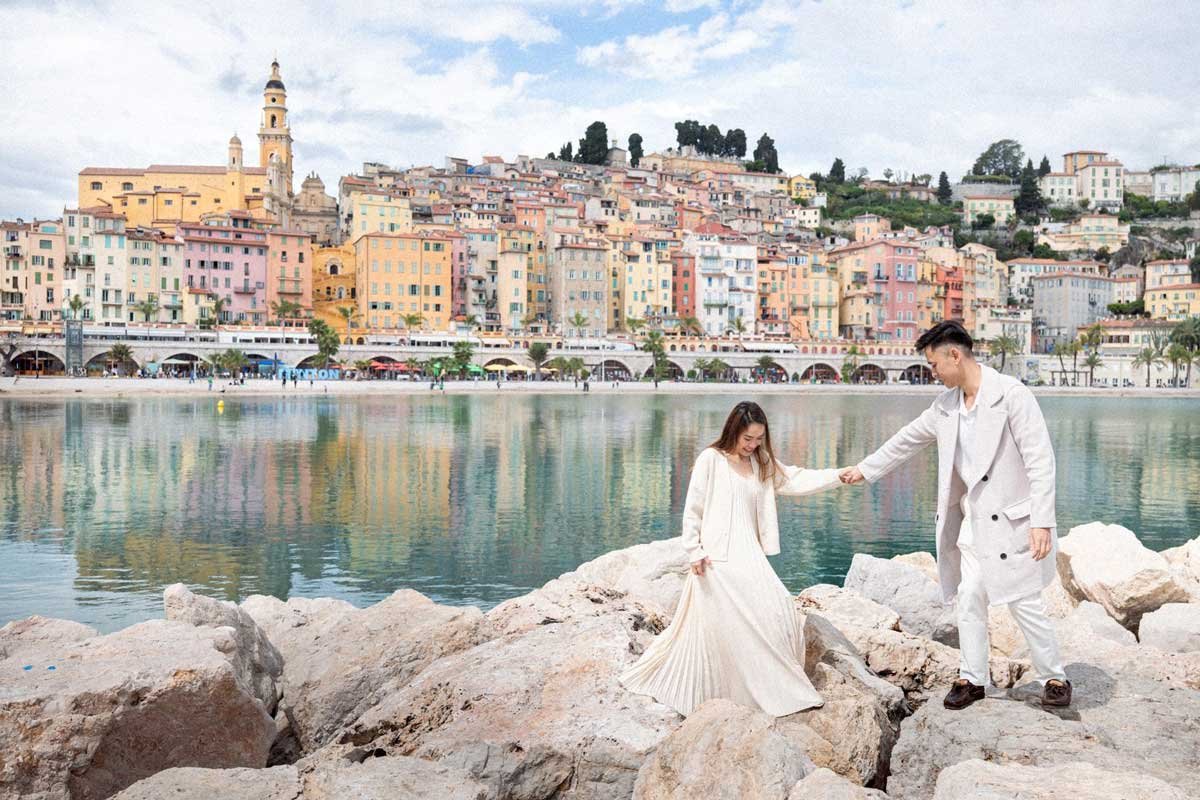
The region is full of memorable backdrops. The old towns of Nice, Antibes and Menton offer colourful streets and narrow lanes. The coastline provides cliffs, beaches and harbours, while the hills inland reveal vineyards and hilltop villages such as Eze or Saint-Paul-de-Vence. Gardens and historic estates add a more formal, timeless feel. A photographer who knows these spots can build a varied set of images without long travel between them.
Practical tips for couples
Plan for the season. Summer brings crowds at the most popular viewpoints, so early morning shoots can be calmer and cooler. Some public sites and gardens require a permit for professional photography, which the photographer can usually advise on. Finally, build a little flexibility into the timeline for weather, since a brief change of plan often leads to the most natural images.
Budgeting and what to expect
Costs depend on coverage length, the size of the team and any travel between locations. Ask for a clear breakdown of what is included, such as the number of hours, a second shooter, and the final set of edited photographs. Treating the photography as an investment in lasting memories, rather than an afterthought, helps couples decide where it fits among their priorities.
Frequently asked questions
When is the best time of year for a Riviera wedding?
Late spring and early autumn offer warm weather with softer light and smaller crowds than midsummer. July and August are the busiest months at popular locations.
Do we need a permit to photograph at public sites?
Some gardens, estates and protected sites require a permit for professional photography. A local photographer can usually tell you which locations need one and help arrange it.
How early should we book a photographer?
For peak season, six to twelve months ahead is sensible. Experienced photographers are booked well in advance, especially for Saturdays in summer.