A great party can survive a late DJ or a missing centerpiece. It rarely survives warm shrimp, melted desserts or an ice bin that runs dry an hour into the reception. Whether you are planning a wedding at a beach venue, a corporate dinner or a backyard graduation with a hired caterer, the cold side of the menu is where most food problems start — and in a warm climate like Florida’s, it is also where they start fastest.
Here is a practical checklist that event planners, hosts and venue managers can use to keep food cold, safe and good-looking from setup to last call.
1. Know the numbers that matter
Food safety guidance in the U.S. is built around a simple rule: keep cold food at 41°F or below, and limit the time anything perishable spends in the “danger zone” between 41°F and 135°F. Outdoors in summer, that clock runs short — a tray of chicken salad on a buffet table in the afternoon sun can cross into unsafe territory well before guests finish their first round.
Ask your caterer how they hold cold items on site: chilled wells, ice beds, refrigerated display cases or rolling cold boxes. A good caterer will have a clear answer and will log temperatures during service.
2. Check the venue’s refrigeration before the event, not during it
Many venues have a walk-in cooler, a couple of reach-in refrigerators and an ice machine in the back. They are often used hard on weekends and barely touched midweek, which is exactly the pattern that hides problems. A cooler that holds 38°F when it is empty may struggle at 50°F once it is packed with trays and the door is opening every two minutes.
A week before a big event, ask the venue manager three questions:
- When was the walk-in and ice machine last serviced?
- Does the cooler hold temperature when it is full and busy?
- Who do they call if something fails on the day?
Venues that answer quickly usually have a maintenance routine. Venues that hesitate are the ones where a technician gets called at 6 p.m. on a Saturday.
3. Plan your ice like an ingredient
Ice is the most underestimated item on any event checklist. A common planning figure is roughly one to two pounds per guest for drinks alone, and more if you are chilling bottles, building seafood displays or keeping buffet pans cold. In hot weather, plan on the high end.
If the venue relies on its own ice machine, find out its daily production and bin size. A machine that makes 400 pounds a day cannot cover a 300-guest outdoor reception by itself, especially if its condenser coil is clogged with dust and it is quietly producing a fraction of its rated output. Order backup bagged ice and keep it in insulated chests out of the sun.
4. Give refrigeration room to breathe
Portable and reach-in units need airflow to reject heat. When they are pushed against a wall, wedged under a tent with no ventilation or surrounded by stacked boxes, they run nonstop and still fall behind. Leave several inches of clearance around the back and sides, keep units out of direct sun, and avoid plugging multiple compressors into one overloaded extension cord — low voltage is one of the quickest ways to shorten a compressor’s life.
5. Load cold equipment the smart way
- Pre-chill everything. Put food into the cooler already cold. Refrigerators are designed to hold temperature, not to pull a warm load down fast.
- Don’t block the fans. Overstuffed shelves that cover the evaporator fan stop cold air from circulating, and the top shelf ends up several degrees warmer than the display says.
- Keep doors closed. Assign one person to pull items for service in batches instead of having five servers opening the walk-in all evening.
- Use a probe thermometer. The built-in display measures air at one spot. A cheap probe in a pan of food tells you what actually matters.
6. Watch for early warning signs
Commercial refrigeration rarely fails without hints. Ice building up on the evaporator, water pooling on the floor, a door gasket that no longer seals, a compressor that runs constantly or clicks on and off every few minutes, or a box that feels “a little warm” in the afternoon — all of these are worth a service call before the event, not after.
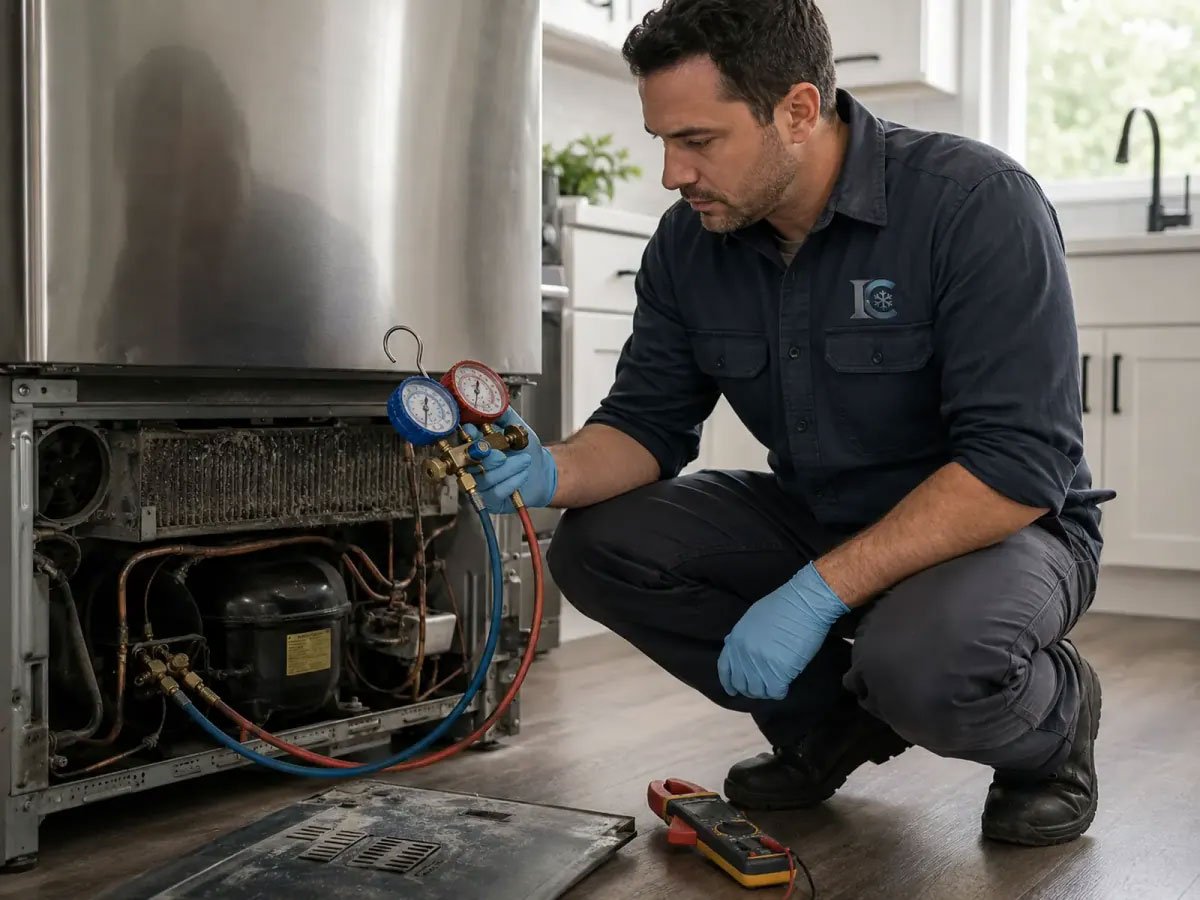
For venues, caterers and restaurants in Northeast Florida, a scheduled check by a commercial refrigeration repair technician before peak wedding and holiday season is far cheaper than throwing out a full walk-in of food. A proper diagnostic means reading pressures and temperatures across the whole system, cleaning the condenser and checking the defrost cycle — not just topping off refrigerant and hoping for the best.
7. Have a failure plan
Even well-maintained equipment can fail on a 95-degree day. Before the event, decide:
- Which items get moved first if a cooler stops (raw proteins and dairy, then prepared salads, then beverages).
- Where backup cold storage is — a rented refrigerated trailer, a second reach-in, or insulated chests with ice.
- Who has the phone number of a local technician who does emergency commercial calls.
Venue managers in St. Johns, Clay and Nassau counties can keep a local service company such as IronCore Refrigeration Systems on that list. The point is not the specific company; it is that nobody should be searching for a repair number with guests already seated.
8. After the party
Leftovers should be cooled quickly and stored at 41°F or below. Shallow pans cool faster than deep containers. Anything that sat out for more than a couple of hours in warm conditions is not worth the risk. And if the cooler struggled during the event, report it to the venue — the next host will thank you.
The bottom line
Guests remember the food. Keeping it cold is not glamorous, but it is the part of event planning that protects everything else on the menu. Ask the right questions about refrigeration and ice early, give equipment space to work, and have a backup plan — and your party will be remembered for the right reasons.