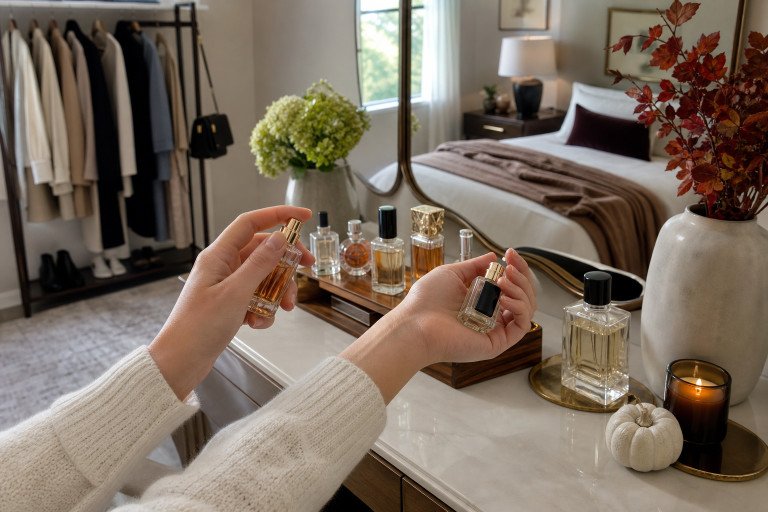
A personal fragrance combination can make a familiar bottle feel new. A bright citrus scent can become more grounded with woods, while a soft floral can feel warmer when paired with amber or vanilla. Learning how to layer perfume is less about memorizing rigid rules and more about noticing how different notes behave together on your skin.
Think of fragrance as part of getting dressed. Some days call for something clean and quiet, while others suit a richer, more noticeable scent. With a few thoughtful combinations, a small fragrance wardrobe can cover workdays, weekends, evenings, and seasonal changes without becoming complicated.
Start With The Mood You Want To Create
Before reaching for a second fragrance, decide on the overall direction. This prevents the result from feeling crowded or random.
- Fresh: Citrus, aquatic, green, or aromatic notes that feel bright and airy.
- Soft: Musk, powdery florals, skin scents, and creamy notes that stay close.
- Warm: Amber, vanilla, spice, and balsamic notes that feel smooth and comforting.
- Deep: Woods, incense, leather, smoke, and resins that add presence.
- Playful: Fruit, sweet florals, and gourmand notes that feel lively or indulgent.
For example, a crisp daytime fragrance may become more evening-ready with one small spray of a woody or amber scent. Let one bottle set the mood, then use the other as an accent rather than trying to make both fragrances lead at once.
Use Fragrance Families As A Starting Map
Scent families help explain why some pairings feel natural. A fragrance wheel can be useful for seeing broad relationships among floral, woody, fresh, amber, and other scent styles, but it should be treated as a prompt for experimentation rather than a fixed formula.
One shared note can also make an unexpected combination feel more connected. Check the note lists for overlap in citrus, rose, musk, cedar, vanilla, amber, or spice. Shared ingredients are helpful, but contrast can work well too, especially when one fragrance is used much more lightly.
Pairings That Often Offer Balance
- Citrus and woods: Brightness with a dry, steady base.
- Floral and musk: Petals softened by a clean, skin-like finish.
- Fruity and vanilla: Juiciness rounded out with warmth.
- Aquatic and green notes: A cool, outdoorsy effect.
- Spice and amber: A fuller profile suited to a relaxed evening.
- Gourmand and woods: Sweetness balanced by a drier edge.
One shared note can also make an unexpected combination feel more connected. Check the note lists for overlap in citrus, rose, musk, cedar, vanilla, amber, or spice. Shared ingredients are helpful, but contrast can work well too, especially when one fragrance is used much more lightly.
Balance Strength Before You Add More
Two strong fragrances applied in equal amounts can quickly blend together. Begin with the fragrance that feels deeper, smoother, or longer-lasting, then add a smaller amount of the brighter scent. One spray and one light spray, or a spray plus a dab, is a practical first test.
More fragrance does not automatically create a better result. A combination is easier to enjoy when there is room to notice its different stages. If the opening feels loud, resist the urge to add another layer immediately. Give it time to settle.
A Simple Application Routine
- Apply fragrance to clean, dry skin.
- Start with the deeper or more persistent scent.
- Wait briefly for the first application to settle.
- Add the lighter, fresher, or sweeter accent in a small amount.
- Assess the pairing after several minutes, then again later in the day.
Application order is a starting point, not a law. Reversing the order may change which notes appear first, so try both methods on separate days. Avoid rubbing your wrists together, since it can make it harder to judge the scent as it develops naturally.
Test On Skin Before Wearing It Out
Blotter strips can help you identify obvious clashes, but skin testing is the real decision point. Body heat, skin moisture, and the amount applied can all affect the way a fragrance smells over time.
- Test each fragrance separately first.
- Try the pair on one wrist or the inner arm.
- Note the application order and number of sprays.
- Check the opening, middle, and dry-down.
- Save a new combination for home before wearing it to work or a crowded event.
The dry-down is especially important. A pairing that seems pleasant at first may become too sweet, sharp, or heavy after a few hours. If it remains comfortable and recognizable later, it is more likely to be a dependable choice.
Match The Combination To Skin, Weather, And Setting
Fragrance is personal, but context matters. Moisturized skin may provide a smoother surface for application, while dry skin can make a scent feel less rounded. In warm weather, strong, sweet, or spicy scents can feel more intense. Cooler conditions often suit woods, amber, and creamy notes particularly well.
For offices, travel, classrooms, and close social settings, choose a softer combination and apply less. For an outdoor dinner or evening event, a deeper pairing may feel appropriate. The goal is not to make a fragrance fill every space. It is to create a scent that feels good to wear and is considerate to others nearby.
Build A Small, Flexible Fragrance Wardrobe
You do not need a shelf full of bottles to create variety. Aim for a few fragrances with distinct roles:
- One fresh scent for daytime or warm weather.
- One clean musk or soft floral for close settings.
- One woody scent that adds structure.
- One warm amber, spice, or vanilla option for evenings.
- One fruity, floral, or gourmand scent for contrast.
Body lotion, perfume oil, hair mist, and body mist can also be part of a scent routine. Add only one scented product at a time so you can tell what it contributes. An unscented moisturizer is often the simplest base when testing a new pairing.
Common Mistakes To Avoid
Using three or more fragrances before learning how two work together.
- Applying several powerful scents to the same spot.
- Judging the result only during the first few minutes.
- Copying someone else’s combination without trying it on your own skin.
- Ignoring the weather, venue, or people sharing the space.
- Letting heavily scented body products compete with the main fragrance.
Frequently Asked Questions
Can two fragrances from the same family work together?
Yes. Similar families can create a smooth result, particularly when one scent is lighter and the other provides more depth. The effect may be subtle, which can be ideal for everyday wear.
Does layering always make fragrance last longer?
No. Layering can change projection and the way notes are perceived, but it does not guarantee longer wear. Formula, skin, weather, and application amount all play a role.
How many fragrances should beginners combine?
Start with two. Once you can recognize how they develop together, experiment with a third scented product only if it has a clear purpose in the overall combination.
Final Checklist
- Does the combination match the mood and setting?
- Is one scent clearly acting as the accent?
- Have you tested it on skin through the dry-down?
- Is the amount comfortable for people nearby?
The best personal fragrance combinations feel intentional, not overloaded. Start with a clear mood, use small amounts, and give the scent time to evolve. A simple pairing can make your existing collection feel more versatile while helping you create a fragrance routine that is distinctly your own.