Cabinet painting vs refacing cost has no single winner, because each fits a different cabinet: painting is the cheaper, lighter-touch option, roughly $900 to $5,000 for a professional job, and it is right when your cabinet boxes are solid and you mainly want a new color, while refacing, around $4,500 to $15,000, is right when the boxes are solid but the door style is what looks dated, since it replaces the doors and drawer fronts. Replacement earns its place only when the boxes are failing or the layout must change. The decision hinges on two questions, the condition of the boxes and whether you want a new color or a new door style, not on price alone.
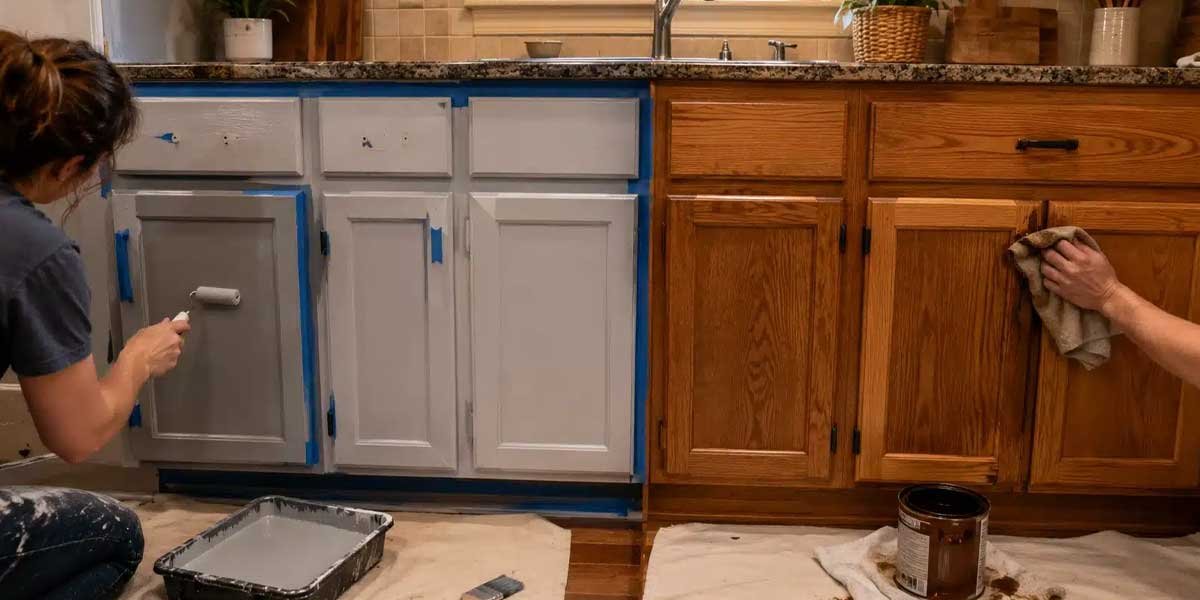
A kitchen’s cabinets divide neatly into what to keep and what to change. Painting keeps the boxes and the doors and changes only the color, refacing keeps the boxes and swaps the doors, and replacement tears it all out, so the honest pick is the least invasive option that still delivers the look you want.
Below is what each costs and buys, a side-by-side decision table, and the clear rule for who should choose each path.
Cabinet painting vs refacing cost: start with two questions
Ask whether the cabinet boxes are solid and whether you need a new color or a new door style, and the choice falls out. Solid boxes plus a color change means painting, solid boxes plus a dated door style means refacing, and failing boxes or a layout that must change means replacement, the only case where the cost of tearing out is justified.
Open a few doors before comparing prices. If the cases are square, the drawers run true, and the finish is worn but the wood is sound, painting or refacing both work, and the tie-breaker is whether the doors themselves are tired. A refrigerator-style raised panel from an older era reads dated no matter what color you paint it, which is when refacing, with new doors and drawer fronts, earns its higher price. If the boxes are swelling, delaminating, water-damaged, or the layout has to move, no finish can fix that, and replacement is the only honest answer. The reface-versus-paint-versus-replace guide from Fulton Revivals frames the exact same logic, and it is the correct place to start before any dollar amount matters.
What painting costs and what it buys
Painting a kitchen’s cabinets costs roughly $900 to $5,000 installed or a fraction of that in DIY supplies, and it buys a new color on the cabinets you keep, the fastest and cheapest of the three paths. It does not change the doors or fix a failing box, and a lasting finish depends on the prep, sand, and primer.
The range tracks the kitchen’s size and the labor. A mid-size kitchen lands in the middle of the $900 to $5,000 professional band, with the materials a few hundred dollars of that and the labor most of the rest, and a DIY version drops to a few hundred in supplies. Painting is genuinely the cheapest way to change the look of a kitchen, and its trade-off is that it changes color only, not the shape of the doors. A lasting result needs the prep the Benjamin Moore cabinet-painting guide details, and the step-by-step for doing it well is in cabinet painting diy.
What refacing costs and what it buys
Refacing costs roughly $4,500 to $15,000, and it buys new doors, drawer fronts, hardware, and a finish on the existing boxes, delivering a true change in door style that paint cannot. It is pricier because you add new doors and premium materials, and it still depends on the boxes being solid.
Refacing is the middle path in cost and result. It keeps your cabinet boxes and your kitchen’s footprint while replacing the most visible, dated part, the doors, so a 2000s-era raised-panel kitchen can read as a fresh Shaker or flat-panel set without a teardown. New soft-close hardware and premium door materials explain the higher price, and it is the choice when the look you want is a different door, not just a different color. The range shifts by kitchen size, the door material you pick, and your region, so the honest path is an in-person look that confirms the boxes are worth covering, and an itemized quote for your exact kitchen rather than a national average.
Painting vs refacing: a side-by-side decision table
Lay the two paths beside each other and match them to your kitchen. The table lines up cost, what it changes, the box condition it needs, the result, and who it suits, so you can pick by your situation rather than by a rule.
| Factor | Paint | Reface | Replace |
|---|---|---|---|
| Typical cost | $900-$5,000 (or less DIY) | $4,500-$15,000 | $15,000+ often |
| What it changes | Color only | Doors, drawer fronts, hardware | Everything, including layout |
| Box condition needed | Solid | Solid | Any (fixes failing boxes) |
| Door style | Unchanged | Changed to a new style | New, custom |
| Downsides | Needs prep, no style change | Cost, adds new parts | Costly, disruptive |
| Best suited to | New color, tight budget | Dated doors, solid boxes | Damaged boxes, new layout |
The table is the decision map, and it shows why there is no winner. A kitchen with solid boxes and a tired color is a painting job, saving money on the outcome it wants; a kitchen with solid boxes and a tired door style is a refacing job, spending more for a real change; and a kitchen with failing boxes is a replacement job, the only place the highest cost is justified. The same “match the work to the cabinet” logic applies across the house to other surfaces, from the interior painting cost per square foot: labor, materials for walls to the wood on a deck in deck staining and repair and its deck staining colors.
When to skip both and replace
Replace the cabinets, not paint or reface them, when the boxes are failing, with water damage, swelling, mold, or delaminated cores, or when the layout has to change, because neither finish nor new doors can fix broken bones or a reconfigured kitchen.
Two situations call for replacement, and only two. Failing boxes give a new finish nothing stable to hold and an obvious weak case, and a layout that has to move means the cabinets have to move with it. In both, replacement is worth its cost and its disruption. In every other case, where the boxes are solid and the layout works, painting or refacing delivers the visible change for far less upheaval, and the skill is in telling the two apart honestly rather than defaulting to the biggest job. If a tree or an exterior condition is part of the wider plan near the kitchen, the timing falls out of exterior painting best temperature, but the cabinet decision itself rests on the boxes.
Who should choose each option
Choose paint if the boxes are solid, the doors are fine, and you want a new color on a real budget. Choose refacing if the boxes are solid but the door style is dated, and you want that changed without a remodel. Choose replacement if the boxes are damaged or the layout must change.
A homeowner tightening the budget and happy with the cabinet shape saves the most with paint. A homeowner who cringes at the raised-panel doors but likes the layout gets the real change with refacing. And a homeowner with water-damaged or delaminated boxes, or a planned renovation that moves the walls, should replace and not look back. The rules are clear, and the honest ones say to do less than you planned when less is all the kitchen needs, which is the value of matching the smallest effective job to your cabinets.
Frequently asked questions
Is it better to reface kitchen cabinets or paint them? It depends on the boxes and the desired change. Paint is better when the boxes are solid and you want a new color cheaply; refacing is better when the boxes are solid but the door style is dated and you want that changed. Replacement is better only when the boxes are failing or the layout must change.
What is the average cost to reface a 10×10 kitchen cabinet? Refacing a typical 10-by-10 kitchen runs roughly $4,500 to $12,000, depending on the door material, the number of cabinets, and your region. Painting the same kitchen is usually far cheaper, in the $2,000 to $5,000 professional range.
What is the downside of cabinet refacing? Refacing costs more than painting because you are adding new doors, drawer fronts, and hardware, and it only covers the existing boxes, so it cannot fix a failing or water-damaged frame. It is the right value only when the boxes are solid and the door style genuinely needs to change.
What is the downside to painting kitchen cabinets? Painting changes only the color, not the door style, so alone it cannot fix a dated cabinet shape, and a lasting finish depends heavily on the prep, sanding, and priming. If the boxes are failing, painting does not address that at all.
Is refacing worth the extra cost over painting? Yes, when the door style is what dates the kitchen and the boxes are solid, because refacing delivers a real style change that paint cannot. If you only want a new color, paint gives that for less, so the extra cost of refacing is worth it precisely when the doors, not just the color, are the problem.
Let the boxes and the door style decide
The right answer to cabinet painting vs refacing cost is the least invasive option that delivers the look you want: paint a solid, correctly styled set of boxes when you want a color change, reface solid boxes when the doors are the dated part, and replace only when the bones are gone. Weigh the cost against what each changes, and the path follows from the two questions rather than from a single price. Once your cabinets are sorted, the rest of the room and the home stay in the Home Improvement guides.