White kitchen cabinets have remained a core element of interior design for decades because they provide a flexible foundation that outlasts short-lived aesthetic trends. Their lasting appeal comes from their ability to reflect light and make even smaller kitchens feel more open and airy. As 2026 design preferences continue to evolve, the look has moved away from the stark clinical style of earlier years and toward a warmer, more layered approach that emphasizes texture and sophisticated contrast, explains Wilson Management solutions.
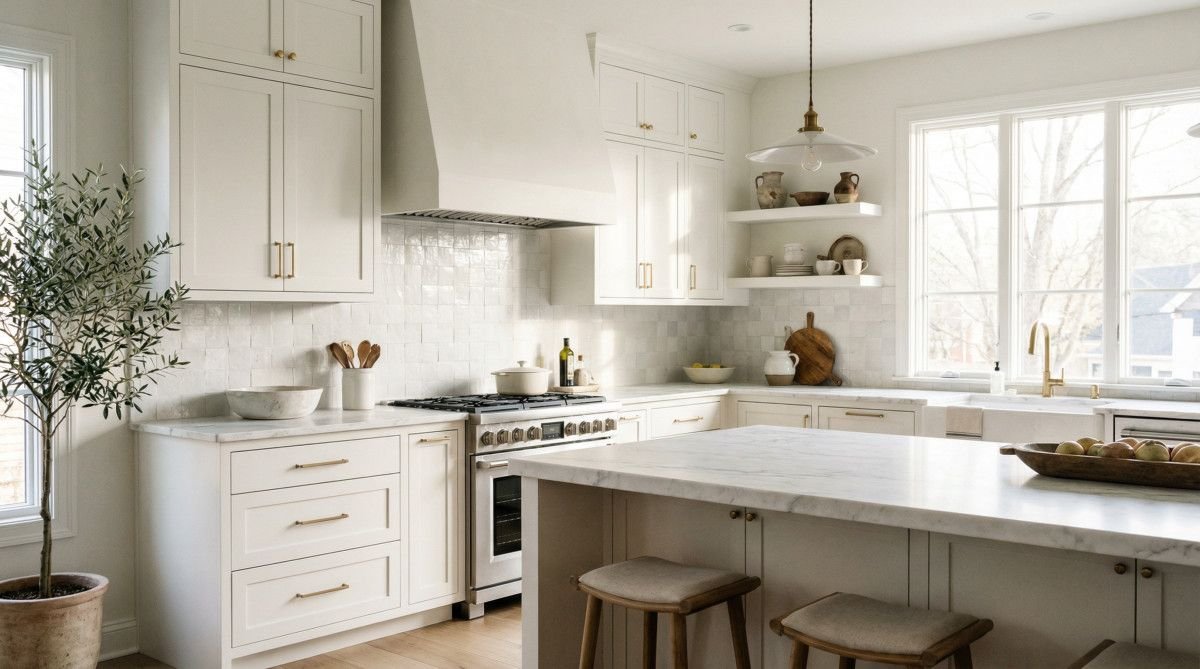
The strategic use of white cabinetry provides a clean canvas that allows other architectural elements—such as natural stone countertops, artisanal backsplashes, and statement lighting—to take center stage. Beyond their visual appeal, white cabinets offer a significant practical advantage by increasing a home’s perceived value and marketability. Whether you are planning a full-scale renovation or a simple weekend refresh, understanding how to select the right shade and style is essential for creating a kitchen that feels both contemporary and classic.
Choosing the Perfect White: Undertones and Light Reflectance Value
Selecting the ideal white requires balancing undertones—warm, cool, or neutral—with your kitchen’s specific lighting conditions. Understanding Light Reflectance Value (LRV) is critical, as it determines how much light the cabinets will reflect, directly impacting the room’s overall brightness and mood. According to Sherwin-Williams (2024), choosing the right LRV and undertone can make the difference between a kitchen that feels inviting and one that feels starkly clinical. [1]
Warm vs. Cool Whites: Finding Your Kitchen’s Personality
The personality of your white cabinetry is largely defined by its subtle undertones, which become more apparent once the paint is applied across large surfaces. Warm whites, often containing hints of yellow, cream, or beige, are ideal for creating a cozy, inviting atmosphere that pairs beautifully with natural wood tones and brass hardware. Conversely, cool whites with blue or gray undertones provide a crisp, modern aesthetic that complements marble countertops and stainless steel appliances. Selecting the right temperature ensures that your cabinets harmonize with the existing architectural materials in your home.
The Role of LRV in Cabinet Selection
Light Reflectance Value, or LRV, is a numerical scale from 0 to 100 that measures the percentage of light a color reflects. In the context of kitchen cabinets, a higher LRV (typically 80 or above) will make a small, dark kitchen feel significantly brighter and more spacious. However, in a kitchen with abundant natural light, an extremely high LRV can result in a blinding glare, making a slightly lower LRV or a more muted white a more practical choice. Designers often recommend testing samples in different lighting throughout the day to see how the LRV interacts with both natural and artificial light sources.
| Paint Color | Manufacturer | LRV | Primary Undertone |
|---|---|---|---|
| High Reflective White | Sherwin-Williams | 93 | Neutral/True White |
| Simply White | Benjamin Moore | 89.5 | Slightly Warm |
| Pure White | Sherwin-Williams | 84 | Soft Neutral |
| White Dove | Benjamin Moore | 83.2 | Creamy/Gray |
| Alabaster | Sherwin-Williams | 82 | Warm/Beige |
This comparison illustrates how even subtle differences in LRV and undertone can dramatically shift the visual impact of white color kitchen cabinets. While High Reflective White offers the maximum brightness, Alabaster provides a softer, more grounded feel that is currently favored in transitional and modern farmhouse designs. [2]
Popular Styles and Layouts for White Kitchen Cabinets
While Shaker-style doors remain the gold standard for their versatile, clean lines, modern white kitchens are increasingly incorporating slab fronts for a minimalist aesthetic or glass-front inserts to add depth. These styles work seamlessly across open-concept layouts, providing a cohesive backdrop that complements various architectural details. According to HGTV (2025), Shaker-style cabinets are still the most popular choice for homeowners due to their timeless appeal and ability to work in both traditional and contemporary settings. [3]
The Timeless Shaker Style
Shaker-style cabinets have become a hallmark of white kitchen design, characterized by their five-piece door with a recessed center panel. Their simple, clean lines provide a perfect balance between traditional and modern aesthetics, making them an ideal choice for a wide range of home styles. When painted in a crisp white, Shaker cabinets offer a sense of order and cleanliness that is highly sought after in modern kitchens. Their versatility allows them to be paired with everything from industrial-style hardware to more ornate, traditional fixtures.
Modern Minimalist: Slab Front Cabinets
For those seeking a more streamlined, contemporary look, slab-front white cabinets are an increasingly popular alternative to traditional styles. These flat-panel doors create a seamless, uninterrupted surface that emphasizes the architectural lines of the kitchen. When used in a high-gloss white finish, slab cabinets can make a small kitchen feel much larger by reflecting light and creating a sense of depth. This minimalist approach is often paired with handle-less hardware or simple, integrated pulls to maintain the clean, uncluttered aesthetic.
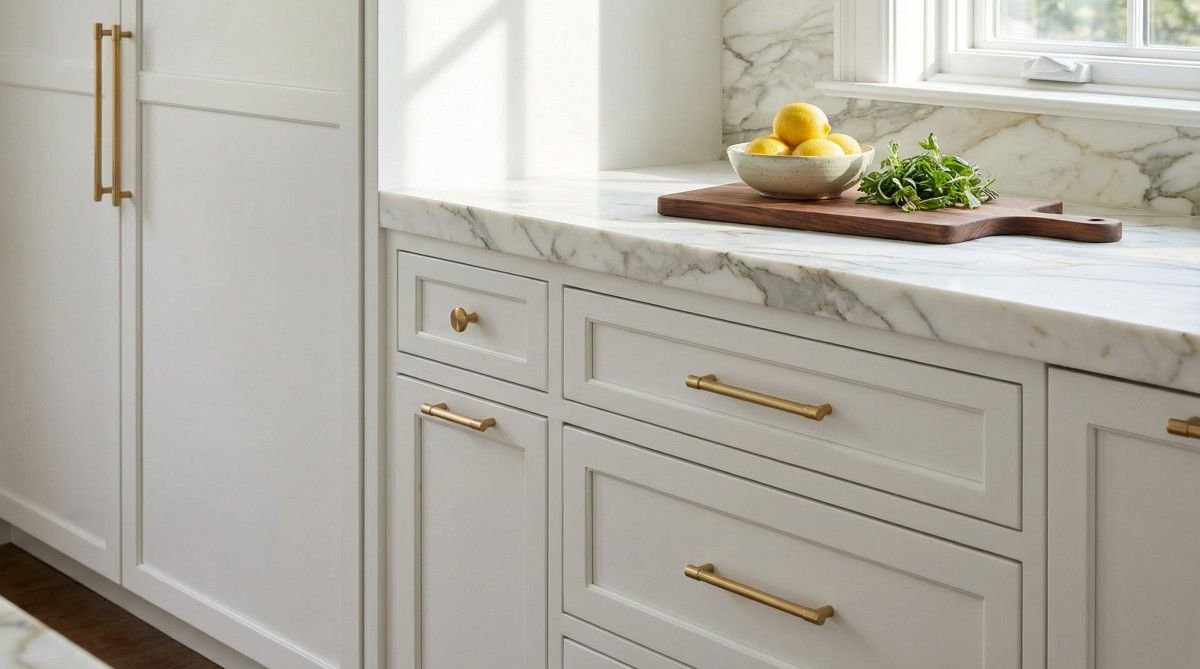
The combination of white cabinetry with different door styles allows homeowners to tailor the look of their kitchen to their personal design preferences. Whether you prefer the classic appeal of Shaker-style doors or the sleek, modern look of slab fronts, white cabinets provide a timeless foundation that will remain in style for years to come. [4]
Expert Pairings: Hardware, Countertops, and Backsplashes
To prevent a white kitchen from feeling sterile, designers recommend pairing white cabinets with high-contrast hardware like matte black or warm brass. Integrating natural stone countertops with prominent veining and textured tile backsplashes adds the necessary visual interest and architectural layers to create a sophisticated, designer-grade space. According to Architectural Digest (2025), the choice of hardware and countertop materials can significantly influence the overall aesthetic and perceived value of a white kitchen. [5]
Selecting the Right Hardware Finish
The hardware you choose for your white kitchen cabinets acts as the jewelry of the space, adding a layer of detail and personality that can dramatically shift the room’s overall aesthetic. Matte black hardware offers a modern, high-contrast look that pairs beautifully with industrial-style fixtures and minimalist cabinetry. For a warmer, more traditional feel, brass or gold-toned hardware can add a sense of luxury and elegance that complements the soft, warm whites often found in transitional and farmhouse designs. The choice of hardware finish should be a reflection of your personal style and the overall design direction of your kitchen.
Countertop and Backsplash Combinations
The combination of white cabinetry with natural stone countertops and textured tile backsplashes is a classic design choice that remains a favorite among homeowners. Marble or quartz countertops with subtle gray or gold veining can add a sense of movement and depth to a white kitchen, while a textured backsplash can introduce a layer of visual interest and architectural detail. When selecting materials for your kitchen, it’s important to consider how the colors and textures will interact with each other and the overall lighting of the space. Designers often recommend creating a mood board to see how different materials and finishes work together before making a final decision.
| Cabinet Style | Hardware Finish | Countertop Material | Backsplash Type |
|---|---|---|---|
| White Shaker | Warm Brass | White Marble | Subway Tile |
| Slab Front | Matte Black | Concrete/Gray Quartz | Textured Ceramic |
| Glass-Front | Polished Nickel | Soapstone | Beaded Board |
This table highlights how different hardware and material combinations can be used to create a variety of looks with white color kitchen cabinets. Whether you prefer a classic, traditional aesthetic or a more modern, industrial-inspired design, the choice of pairings is key to achieving a cohesive and well-designed space. [6]
Maintenance and Longevity: Keeping Your White Cabinets Pristine
Maintaining the brilliance of white cabinets involves a proactive cleaning regimen using non-abrasive solutions to prevent grease buildup and yellowing. Choosing high-quality, UV-resistant finishes and durable paint types, such as water-borne alkyds, ensures that the cabinetry remains resistant to chips and environmental discoloration over time. According to Consumer Reports (2024), regular maintenance and the choice of a high-quality finish can significantly extend the life and visual appeal of white kitchen cabinets. [7]
Cleaning Best Practices for White Surfaces
The key to keeping white color kitchen cabinets looking their best is to clean them regularly using a soft, damp cloth and a mild, non-abrasive cleaning solution. Avoid using harsh chemicals or abrasive sponges, as these can damage the finish and lead to yellowing over time. For stubborn grease or food splatters, a mixture of warm water and a few drops of dish soap is usually sufficient to remove the buildup without causing any harm to the paint or finish. Regularly wiping down your cabinets will prevent the accumulation of dirt and grime, keeping your kitchen looking fresh and clean.
Preventing Yellowing and Environmental Damage
Yellowing of white cabinets can occur over time due to exposure to sunlight, grease, and smoke. To prevent this, it’s important to choose a high-quality, UV-resistant finish that will protect the paint from environmental damage. Additionally, ensuring that your kitchen is well-ventilated and that you use a range hood when cooking can help reduce the amount of grease and smoke that settles on your cabinets. If you notice any yellowing or discoloration, it’s best to address it as soon as possible to prevent further damage and maintain the brilliant white color of your cabinetry.
Frequently Asked Questions
**What is the most popular shade of white for kitchen cabinets?**
While preferences vary, Sherwin-Williams Pure White and Benjamin Moore White Dove are consistently among the top choices due to their versatile, soft neutral undertones.
**Are white cabinets out of style in 2026?**
No, white cabinets remain a timeless design staple. However, the current trend favors warmer whites and layered textures over the stark, all-white looks of the past.
**What kitchen cabinet color is outdated?**
Dark, heavy wood stains and overly ornate, distressed finishes are generally considered less modern in 2026 compared to clean, light-colored cabinetry.
**How do I prevent my white cabinets from yellowing?**
Using UV-resistant topcoats, ensuring proper ventilation during cooking, and avoiding direct, prolonged exposure to intense sunlight are the most effective ways to prevent yellowing.
**What is the best paint sheen for white cabinets?**
Satin or semi-gloss sheens are typically recommended for their balance of durability and ease of cleaning, providing a subtle glow without excessive reflection.
Conclusion
White color kitchen cabinets continue to offer a timeless and versatile foundation for modern kitchen design. By understanding the importance of undertones, LRV, and material pairings, you can create a space that feels both contemporary and classic. Whether you are planning a complete remodel or a simple update, white cabinetry remains a top choice for its ability to brighten a room, increase perceived space, and provide a clean canvas for your personal style.
References
[1] Sherwin-Williams (2024). “Choosing the Right White for Your Home.”
[2] Benjamin Moore (2024). “LRV and Its Impact on Interior Design.”
[3] HGTV (2025). “Top Kitchen Trends for 2025.”
[4] The Coolist (2026). “27 White Kitchen Cabinet Ideas for 2026.”
[5] Architectural Digest (2025). “How to Choose the Right Hardware for Your Kitchen.”
[6] Clare Paint (2026). “White Kitchen Cabinets: Ideas and Color Pairings.”
[7] Consumer Reports (2024). “Maintaining Your Kitchen Cabinets for Longevity.”