Choosing tile flooring best tiles for kitchen walls comes down to a glazed ceramic or porcelain tile with a low water absorption rate, because it resists grease, heat, and stains and wipes clean without absorbing moisture. Glass tile looks bright but shows water marks and fingerprints, and stone needs sealing every few years, so glazed ceramic and porcelain balance durability and upkeep for most homes. The right pick depends on what sits behind the tile.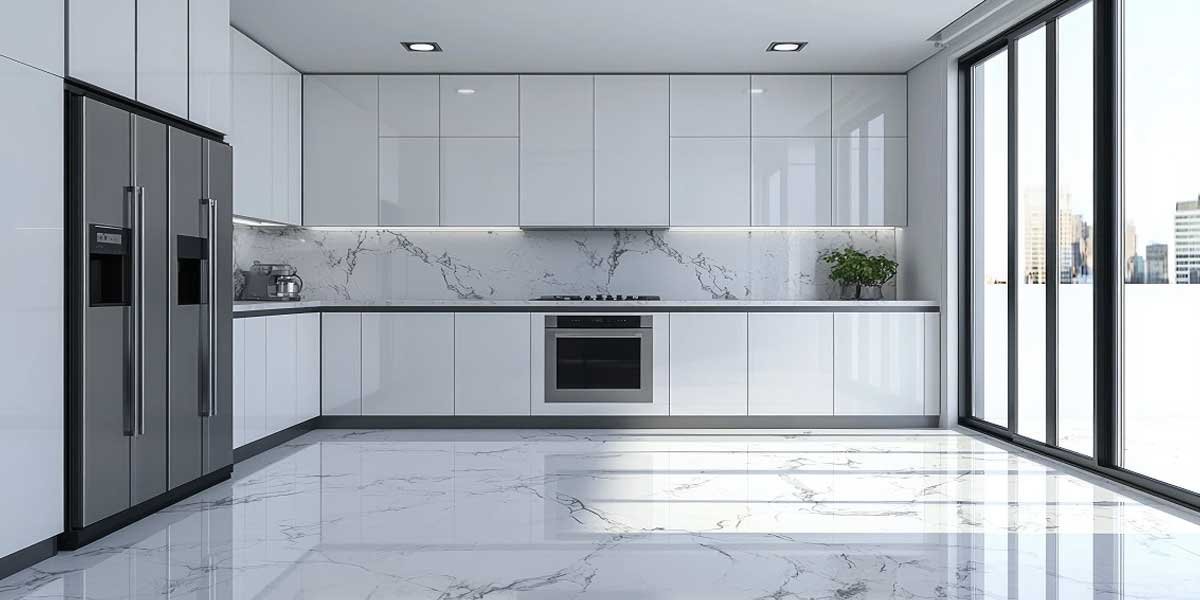
A kitchen wall works differently from a kitchen floor. Floors take foot traffic, scuffs, and dropped objects, so they need wear ratings, while walls take steam, grease, and splash from cooking, so they need moisture resistance and easy cleaning. Much of what you read about “best kitchen tile” is really about floors, and that is the wrong yardstick for a wall.
Below is a material-by-material comparison, a room-condition match, a cost snapshot, and the failure modes to avoid so you buy the tile that fits the wall rather than the one that looks best in a photo.
Wall tile vs floor tile: which spec matters
A glazed ceramic or porcelain tile with absorption under 3% is the safe default for a kitchen wall, and the spec that matters on a wall is not the one that matters on a floor. Floors are rated for foot-traffic wear and slip resistance, while walls are rated for moisture absorption, so check the water-absorption number before the wear rating.
Tile absorbs water through its body, and the absorption rate tells you how much. For a wet area such as a kitchen backsplash, HGTV recommends glazed tiles with an absorption rate of 3% or less, and unglazed tiles of 0.5% or less where moisture is constant. Porcelain is fired harder and denser than ceramic, so it absorbs less and is the closer choice behind a sink or stove. A high-absorption or unsealed tile in those spots will eventually darken, stain, or let the grout and wallboard stay damp.
Wear-rating boxes on tile, such as the PEI class, tell you how the face resists foot traffic. Those numbers barely matter on a vertical wall. What matters there is that the tile is glazed (for easy cleaning), low absorption (for moisture), and sized and laid so the grout lines stay manageable.
Tile flooring best tiles for kitchen walls: the materials
Five material families dominate kitchen walls, and each trades something off. Glazed ceramic is the budget-friendly workhorse, porcelain is the tougher low-absorption sibling, glass is the bright accent that shows every mark, mosaic adds small-format detail, and stone brings natural color but demands sealing. The matrix below lines them up so you can weigh them at a glance.
| Material | Durability | Water absorption | Grease & heat | Upkeep | Typical installed cost / sq ft | Best for |
|---|---|---|---|---|---|---|
| Glazed ceramic | Good | Low (glazed limits it, body porous) | Good | Wipes clean; seal grout | $5-$20 | Most backsplashes on a budget |
| Porcelain (glazed) | Excellent | Very low (dense) | Excellent | Wipes clean; very low stain risk | $8-$30 | Behind stove or sink, high moisture |
| Glass | Medium (can chip) | None (impervious) | Good but shows marks | Needs frequent wipe for water marks | $10-$40 | Bright accent panels, style statements |
| Ceramic mosaic | Good | Varies by glaze | Good, many grout lines | Many grout lines to keep sealed | $10-$35 | Detail work, accent strips |
| Natural stone | Good | High until sealed | Fair with sealer | Reseal every 2-3 years | $15-$50 | Timeless look where upkeep is accepted |
This Old House makes the same porcelain-over-ceramic call for heavy use: porcelain is harder, denser, and less porous, which is why it shrugs off kitchen moisture and staining. The trade is price, and for a low-traffic decorative wall, glazed ceramic often delivers the look for less. If shine and color are the goal and you can accept wiping the surface often, glass is a legitimate accent, but it is not the low-maintenance answer. An AMC comparison of backsplash materials notes that glass and glossy ceramic both show water marks and fingerprints more than a matte porcelain does.
How to pick by moisture and grease
Match the tile to what is behind it. Behind the stove you need heat and grease tolerance, behind the sink you need low absorption and easy cleaning, and a full wall calls for manageable grout upkeep. A glazed porcelain covers all three, while ceramic suits drier stretches and glass or stone are more about the look than the maintenance.
Behind the stove, splash and heat land constantly. A glazed porcelain at low absorption resists grease and cleans in one pass, and it holds up to the occasional hot pan brushing the surface. Behind the sink, water and soap sit on the tile, so porcelain or a large-format glazed tile with fewer grout lines is the lower-maintenance choice. On a full wall from counter to ceiling, every grout line is a seam to seal and clean, so a big-format tile or a subway layout keeps the wall look clean and the upkeep down.
For a backsplash that does not face heavy water, glazed ceramic in a subway or tile pattern is the classic and the budget answer. The unifying rule is to pick a glazed, low-absorption tile behind anything wet, and to reserve the more porous or impervious-but-mark-prone materials for the dry, decorative stretches.
What kitchen wall tile costs
Kitchen tile prices run from roughly $2 to $100 per square foot for the tile itself, and a backsplash project usually lands well below the top of that range because the area is small. Labor, grout, and how the tile is cut dominate the final bill more than the porcelain-versus-ceramic choice. These are ranges that shift by region and installer.
| Cost component | What drives it | Clear ballpark |
|---|---|---|
| Tile material | Type, size, glaze, origin | $2-$20 per sq ft for most ceramic/porcelain; up to $100 for premium stone |
| Backsplash labor | Wall prep, cutting, layout | $10-$30 per sq ft typical |
| Grout and sealer | Tile size (more joints = more grout) | $1-$3 per sq ft |
| Large-format tile install | Heavier, needs flat wall | Flat-wall prep can add $2-$5 per sq ft |
The honest way to price a backsplash is per square foot of wall, not per tile, because cutting around outlets, windows, and cabinet runs turns a small area into a labor-heavy one. A quick route is to measure the wall, multiply by the installed per-square-foot estimate, and add a 10% allowance for waste and cuts. For most U.S. backsplash projects, the installed figure lands between $25 and $70 per square foot once materials, grout, and labor are in, and regional differences move it more than the brand.
What fails on a kitchen wall
The common kitchen-wall tile failures are preventable and come from choosing on looks instead of specs. Water absorption darkens a tile, unsealed grout harbors mold, thin glaze wears at the edges, and a tile laid on a dirty or uneven wall can pop loose. Each is fixed by the spec you choose, not by scrubbing harder.
Moisture is the first enemy. A tile with high absorption behind a sink darkens and can let the wallboard stay damp, which leads to staining and, around grout, mold. The fix is a glazed low-absorption tile and a sealed grout. The second is the grout itself: light or unsealed grout shows coffee, oil, and sauce stains and grows mildew in the joints. Sealing the grout at install and every couple of years keeps it clean. The third is glaze wear near the stove, where a thin glaze can dull or peel from heat and abrasion; a denser porcelain glaze holds longer.
A decision checklist by homeowner profile
Run four questions against the wall and the answer falls out. This checklist matches the material to the way you cook and clean, which beats copying a picture from a magazine.
- How much water and splash hit the wall? Behind the sink or in a humid kitchen: glazed porcelain, low absorption. Dry, decorative stretch: glazed ceramic is fine.
- How much grease and heat? Behind the stove: porcelain, denser glaze. Occasional cook: ceramic holds up.
- How much grout upkeep do you accept? Little: large-format or subway tile, fewer joints. Detail lover: mosaic or penny tile, more sealing.
- Budget per square foot? Under $5 tile: glazed ceramic. $5-$15: porcelain. Above and style-driven: glass, mosaic, or stone.
A quick read: a busy cook who wipes the wall often should buy glazed porcelain behind the stove and sink, with sealed grout, and keep costs down on the dry stretches with ceramic. A host who wants a bright showpiece and will polish glass weekly can spend on a glass accent panel. A low-key kitchen on a budget gets a glazed subway ceramic in a classic pattern. These are the profiles the matrix and checklist answer, and they keep a wall from becoming a maintenance problem right after the install looks finished.
Frequently asked questions
What type of tile is best for kitchen walls? Glazed ceramic or porcelain with a water absorption of 3% or less is the best all-around choice for a kitchen wall. It resists grease, heat, and stains and wipes clean, and porcelain is the better pick behind a sink or stove where moisture is constant.
What type of tile flooring is best for a kitchen? For a kitchen floor the priorities shift to wear and slip resistance, so a rated porcelain or ceramic with a PEI Class 3 or 4 and a textured face is better. That decision is separate from the wall, because floors need traction and foot-traffic wear, not moisture absorption alone.
Which color tile is best for kitchen walls? Light, muted colors make a small kitchen feel larger and hide cooking splashes less, while dark or glossy colors show water marks and fingerprints more. A neutral light porcelain is the low-maintenance pick, and you can add color on a backsplash panel.
What are the latest trends in kitchen wall tiles? Large-format and slab-like tiles that minimize grout lines, matte and textured finishes that resist fingerprints, and a mix of a patterned backsplash with a clean subway or plain wall are current directions. All of them favor easier cleaning than the high-gloss, heavily grouted looks of the past.
Is glass or ceramic better for a kitchen backsplash? For upkeep, glazed ceramic or porcelain beats glass, because glass shows water marks and fingerprints and needs more wiping. Glass wins only on brightness and style, so it is best used as an accent where you will clean it often, not as the whole wall.
Let the wall and the cooking decide
The best tiles for kitchen walls are the ones matched to the moisture and grease that actually hit the surface, not the ones that photograph best. The best option for the question of tile flooring best tiles for kitchen walls is a glazed, low-absorption porcelain behind the stove and sink, glazed ceramic across the dry stretches at a lower cost, and glass, mosaic, or stone only where you accept the extra upkeep. Check the absorption number, seal the grout, and a kitchen wall becomes one of the easiest rooms to keep clean.