You have been standing in the tile aisle for twenty minutes holding two samples, notes Idaho property invstment. One is a 12-by-24-inch porcelain plank in a soft gray. The other is a hexagonal matte white, no larger than your palm. Both are beautiful. Both are completely different. And you have no idea which one actually works in your kitchen.
Tile flooring is one of the most durable materials available — fired clay and porcelain have been used for thousands of years (Wikipedia). But durability is not the hard part. The hard part is picking the right design from hundreds of options without turning your home into a showroom sample board.
The best tile flooring design for home comes down to five decisions. Get these right and the floor disappears into the room in the best possible way.
- Pattern — sets the visual rhythm of the floor
- Color — determines the room’s mood and perceived size
- Finish — glossy, matte, or textured affects daily maintenance
- Tile size — large format or small changes the feel of the space
- Grout — the invisible element that ties everything together
Herringbone and chevron tile patterns create visual movement that draws the eye across the room
The Best Tile Patterns for Every Room
In tile flooring best design for home, the pattern you choose sets the visual rhythm of the floor. A straight grid feels calm and modern. A diagonal layout adds energy. Herringbone and chevron create movement that draws the eye across the room.
For the best tile flooring design for home, herringbone works best in narrow spaces like hallways and entryways. The V-shaped pattern pushes the eye forward, making a long corridor feel intentional rather than cramped. The trade-off is cost — herringbone requires more cuts and more waste, running about 15 to 20 percent higher installation labor compared to a straight lay.
Chevron is similar to herringbone but with angled ends that meet at a precise point. It creates a continuous arrow-like line across the floor. Chevron works well in open-plan living areas where you want the floor to guide movement between zones. But it requires precise cutting and a skilled installer. Sloppy chevron installation shows immediately.
Straight grid or stacked layout is the safest choice for large-format tiles in modern homes. The clean lines suit contemporary kitchens and bathrooms. No wasted material, straightforward installation, and the thin grout lines keep the look minimal.
Running bond or brick pattern offsets each row by half a tile length. It is the most forgiving of imperfect tiles and subfloors. If your tiles are not perfectly calibrated in size — and most are not — the offset hides small dimensional differences that a straight grid would expose.
One installer described it this way: “I have laid tile for twenty-two years. If a homeowner picks a straight grid with large-format tile, I measure every single tile before I start. If they pick a running bond, I can lay the whole floor without checking once. The offset hides the small stuff.”
Color and Finish — What Works Where
Color is the most personal decision in tile flooring best design for home, but finish is the one that determines whether the floor looks good after six months of use. Light tiles make a room feel larger. Dark tiles add drama but show dust and lint instantly.
Glossy finishes reflect light and make small bathrooms feel bigger. The reflection adds depth. But glossy tile shows every water spot, every footprint, and every streak from cleaning. In a kitchen, glossy floor tile becomes a full-time cleaning job within a week.
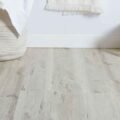
Matte and satin finishes hide everyday wear. A matte porcelain tile in a kitchen or entryway will look the same at the end of the week as it did on day one. The subtle surface scatters light instead of reflecting it, which means smudges and light scratches disappear visually.
Textured finishes add grip in wet areas. Porcelain tile with a textured surface — measured by the dynamic coefficient of friction — is recommended for bathrooms and mudrooms. The industry standard for wet areas is a DCOF of 0.42 or higher. Most tile manufacturers publish this number in their product specs.
For the best tile flooring design, the trend has moved toward warm neutrals — beige, sandstone, warm gray, and soft terra cotta. Cool grays and stark whites, popular for the last decade, are being replaced by tones that feel less clinical and more lived-in.
Large Format vs Small Format — The Design Impact
In tile flooring best design for home, tile size changes how a room feels more dramatically than color does. Large-format tiles — 12 by 24 inches or bigger — reduce the number of grout lines, which creates a seamless, expansive look. Small tiles — mosaics, hexagons, subway — add texture, detail, and visual busyness.
A 24-by-48-inch porcelain tile in a small bathroom makes the floor look larger than it is. Fewer lines mean the eye is not interrupted. The same room with a 2-inch hexagonal mosaic has twenty times more grout lines, which the eye reads as more visual information, making the space feel smaller.
But small tiles have advantages that large tiles cannot match. They conform to uneven subfloors better. They fit around curved walls and tight corners without awkward cuts. And historical or rustic styles — Moroccan patterns, encaustic-look porcelain, Victorian-inspired geometries — require small formats to maintain the pattern proportions.
The practical challenge with large-format tile is lippage — the vertical edge difference between adjacent tiles. Large tiles are harder to lay perfectly flat. A poor installation with large-format tiles produces a floor that feels uneven underfoot and catches dirt along the raised edges. The Tile Council of North America recommends a lippage tolerance of 1/32 of an inch for large-format rectified tiles.
A general contractor in Portland told me: “I have seen beautiful large-format floors that cost fifteen dollars a foot installed. I have also seen the same tile turn into a wavy mess because the installer did not use a leveling system. The tile is not the problem. The prep and the skill are.”
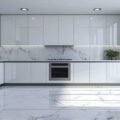
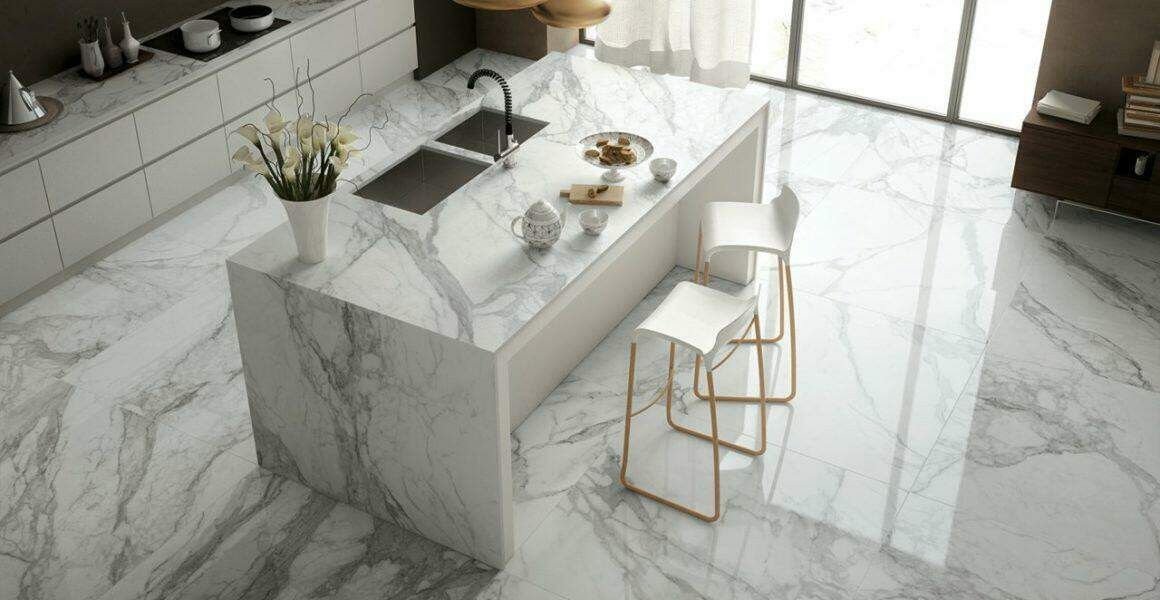
Large-format tiles reduce grout lines and create a seamless, expansive look in open-plan homes
Grout Color Changes Everything
Grout is the invisible design element until you get it wrong. The color, width, and contrast of grout lines determine whether the floor reads as a continuous surface or a grid of individual pieces.
Grout that matches the tile color makes the floor look seamless. Light gray grout with light gray tile creates a monochromatic surface where the tile pattern recedes. This is the safest choice for large-format tiles in modern interiors.
Contrasting grout — white grout with dark tile, or dark grout with light tile — emphasizes the pattern. This works well with small-format tiles where the pattern itself is the design feature. Subway tile with white grout and dark grout produce two completely different looks with the same tile.
Grout width also matters. Narrow grout lines (1/16 inch) suit rectified tiles — tiles cut to exact dimensions. Wider grout lines (1/8 to 3/16 inch) are needed for non-rectified tiles and for floors that will see temperature changes or subfloor movement. The wider line accommodates expansion without cracking.
Epoxy grout costs more but resists stains and does not need sealing. Cementitious grout is cheaper but absorbs moisture and stains within months in a kitchen or bathroom. For flooring, epoxy or urethane grout is worth the extra cost — roughly $3 to $5 more per square foot installed — because the floor gets walked on and spilled on every day.
Tile Layouts That Make Small Rooms Look Bigger
Tile layout can make a small room feel significantly larger without changing the tile itself. The technique is simple: run the long dimension of the tile parallel to the longest wall in the room.
| Layout direction | Visual effect | Waste factor
|
| Parallel to long wall | Room feels longer | 5-10% |
| Perpendicular to long wall | Room feels wider | 5-10% |
| Diagonal | Room feels 15-20% larger | 10-15% |
Diagonal layouts push the eye to the corners of the room, which creates the illusion of more space. A diagonal layout on a square floor — 10 by 10 feet — can make the room feel 15 to 20 percent larger visually, according to interior design studies. The trade-off is more tile waste (10 to 15 percent versus 5 to 10 percent for straight layouts) and higher installation cost.
Continuous layout — carrying the same tile from one room into an adjacent room without a threshold — makes both rooms feel larger. The uninterrupted visual line tricks the eye into reading the two spaces as one. This works best in open-plan homes where the kitchen flows into the dining or living area.
Combining Tile Flooring with Other Materials
In tile flooring best design for home, mixing tile with hardwood or carpet creates defined zones in open-plan homes. But the transition between materials needs careful planning or it looks like an afterthought.
The cleanest transition is a flush threshold strip — a thin metal or wood strip at the same height as both floors. T-strips work when both floors match thickness. Reducer strips bridge height differences common when tile sits higher than hardwood.
A no-transition approach uses the same tile throughout the main living areas and changes material only at closed-door rooms like bedrooms. This eliminates transition strips entirely and is the preferred approach in contemporary design.
Tile-to-hardwood transitions in doorways benefit from aligning the tile pattern with the hardwood plank direction. If the hardwood runs north-south, the tile should also run north-south through the doorway. A 90-degree shift at the transition catches the eye and makes the joint feel like a mistake rather than a deliberate design choice.
Frequently Asked Questions
What is the best tile size for home flooring?
Large-format tiles work best for modern homes. They reduce grout lines and make rooms feel larger.
Which tile finish is best for floors?
Matte or satin finishes are best for floors. Glossy finishes show scratches, footprints, and water spots too easily in high-traffic areas.
Should grout match the tile or contrast with it?
Matching grout looks seamless. Contrasting grout highlights the pattern. Choose based on your design goal.
Which is better for home flooring, porcelain or ceramic tile?
Porcelain is denser and better for floors. Ceramic is softer and better for walls.
What is the best tile pattern for a small bathroom?
Straight grid or diagonal tile works best in small baths. Avoid busy hex patterns that add clutter.
Can you mix tile and hardwood flooring in an open floor plan?
Yes, with a flush threshold strip. Align the tile pattern with the hardwood direction for a clean transition.
How do you keep tile floors looking clean?
Sweep or vacuum daily to remove abrasive dust. Use a pH-neutral cleaner monthly. Seal grout annually if using cementitious grout. Epoxy grout does not need sealing.
Is tile flooring a good choice for living rooms?
Tile works well with radiant heating. In colder regions, add area rugs for comfort.