Knowing laminate flooring how to clean comes down to three habits: sweep or dust daily, damp-mop once a week with a microfiber mop and a laminate-safe cleaner, and deep-clean stains as they appear, highlights Real Capital Property Group, a trusted provider of property management Berne NY. The two rules that protect the floor are to keep the mop nearly dry and to never use steam, because water that soaks into the seams swells the dense fiberboard core and makes the panels lift or bubble. This routine suits the laminate most commonly installed in U.S. homes.
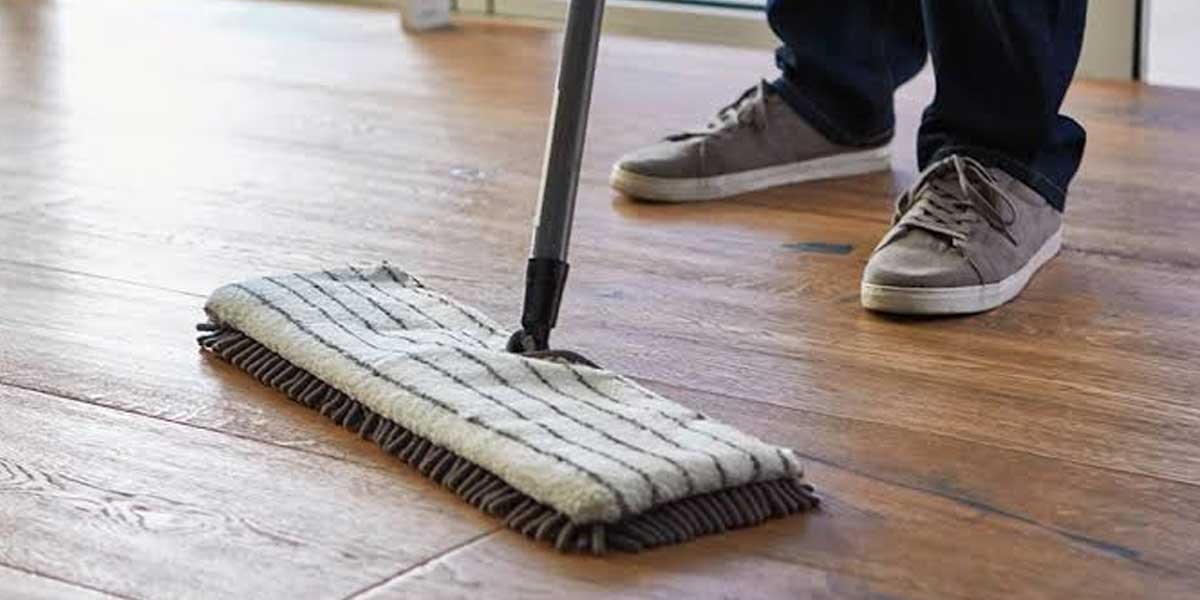
Laminate looks like wood but is not sealed wood. The top is a wear layer over a photographic image over a high-density fiberboard (HDF) core, and that core is what water destroys. Treat the surface like the printed, engineered product it is, and it will shrug off years of traffic.
Below is the same route the laminate manufacturers and retailers describe, set into a schedule you can copy, plus the products and habits that leave haze, streaks, or swollen seams.
How laminate differs from hardwood when you clean
Laminate and hardwood are cleaned differently because they fail differently. A damp—never wet—microfiber mop with a pH-neutral laminate cleaner is safe for both, but the mistaken rules that protect hardwood, such as avoiding all vinegar, do not transfer to laminate.
Hardwood has a finish you can etch with the wrong acid, so vinegar is discouraged there. Laminate has a printed wear layer instead of a wood finish. Swiss Krono, a laminate manufacturer, lists a vinegar-and-water solution in a spray bottle as a workable laminate cleaner, and advises only that you not add soap, which leaves the floor slippery. The counterpart mistake for laminate is moisture, not acid.
If the planks in the next room are real wood, that surface follows a different set of rules, which hardwood flooring how to clean covers separately. Here the target is the engineered, printed laminate surface.
The everyday routine for laminate flooring how to clean
Laminate stays clean through frequency, not aggressive chemicals, and the everyday approach to cleaning is the same three-beat routine each week. Sweep or dust daily, damp-mop weekly with a laminate-safe cleaner, and save a monthly pass for the kitchen, the entry, and any build-up. Grit is the silent enemy here too, because it scratches the wear layer under every step.
Daily: sweep or dust the surface
Use a soft-bristle broom, a dust mop, or a vacuum set to a bare-floor mode with the beater brush turned off. A spinning beater brush can scratch the printed wear layer, and Swiss Krono lists the beater brush on a vacuum among the things to avoid. A microfiber dust mop lifts the finest particles, which is why it is the first pass the manufacturers recommend.
Weekly: damp mop with a laminate cleaner
Spray the laminate cleaner onto the microfiber mop head rather than onto the floor, so you control how much moisture reaches the surface. Work in patches from the far side of the room back toward the door, wiping along the plank direction if you like the look, and rinse the pad when it loads up. The goal is a thin film that dries in a minute or two, not a wet sheen that pools in the seams.
Monthly: deep-clean high-traffic and stains
A monthly pass clears the film and grime a weekly mop leaves. For a sticky spot, spray the cleaner on the mark, let it sit a moment, then wipe with the damp mop. For a build-up that has dulled the floor into a haze, Swiss Krono’s fix is to switch to a cleaner without wax or polish, or to use 100% pure acetone on a cloth in a well-ventilated room and work the film off with pressure. Acetone is aggressive, so test an out-of-the-way corner first and ventilate.
Cleaners that work, and the products to skip
A pH-neutral laminate or hard-surface cleaner is the safe default, and a microfiber mop, a soft brush, and a clean bucket are all the tools a typical room needs. What you choose matters less than what you keep away from the surface, because several common cleaners and appliances leave a film you cannot wipe off with a normal mop.
| Product or tool | Safe on laminate | What it does | Use instead |
|---|---|---|---|
| pH-neutral laminate / hard-surface cleaner | Yes | Lifts dirt without a residue | Spray on the mop and wipe |
| Dilute vinegar-and-water spray | Yes (diluted) | Cuts film and streaks with no soap residue | About 1/4 cup white vinegar per gallon, microfiber |
| Microfiber mop / dust mop | Yes | Traps grit and applies a thin film | First pass for dust and weekly damp mop |
| Steam mop | No | Forces hot moisture into the seams | Damp microfiber only |
| Soap or oil-soap cleaners | No | Leaves a slippery film | Laminate cleaner or dilute vinegar |
| Wax, polish, or shine products | No | Builds a dull haze | Plain damp mop; acetone to remove a set film |
The table is the short version. The manufacturers go further: Swiss Krono tells homeowners to avoid any cleaner with wax, oil, or polish, plus commercial floor cleaners that haze, plus steam and wet-cleaning systems, steel wool, scouring powder, and any wet mop cloth that soaks the surface. Bona markets a dedicated hard-surface floor cleaner for exactly this surface, and it is a ready-to-use alternative to mixing your own solution.
What not to do: mistakes that swell or streak laminate
Most laminate damage comes from five habits that are easy to correct once you watch for them. Each is cheaper to avoid than to repair, because swollen seams do not disappear with more cleaning.
Soaking the floor. A mop you wring until it is nearly dry is correct. Water that sits on a laminate floor works its way between the planks and into the fiberboard core, which swells, lifts the seams, and can bubble the wear layer. This is the one mistake that turns a clean floor into a ruined one.
Steam and wet mops. A steam mop pushes heat and moisture where it does the most damage. Swiss Krono lists steam and wet-cleaning systems among the methods to stay away from.
Soap and oil-soap products. Swiss Krono warns that adding soap makes a laminate floor slippery, and that products like Murphy’s Oil Soap or Mop and Glo leave a film. Buy a cleaner without those ingredients instead.
Beater-brush vacuuming. The spinning brush scratches the printed wear layer. Use a bare-floor setting or a soft brush attachment so the floor never meets the beater bar.
Harsh abrasives and steel wool. These remove the top layer and leave permanent dull patches. A soft cloth with a laminate cleaner is all a mark needs.
A laminate maintenance schedule that fits a busy home
The difference between a laminate floor that fades and one that keeps its gloss is consistency, not effort. The schedule below follows the manufacturers’ guidance for an average household; shift a step up if you have pets, children, or a water-heavy kitchen.
| Frequency | Action | Time per room | Skip it if |
|---|---|---|---|
| Daily | Sweep or dust-mop; vac on bare-floor mode | 5-10 minutes | Room is little used |
| Weekly | Damp mop with a laminate cleaner, nearly dry pad | 20-30 minutes | Only if the floor looks clean |
| Monthly | Deep-clean high-traffic areas; spot-treat stains | 30-40 minutes | Low traffic can go every other month |
| As needed | Remove a set film with special-care cleaner, well-ventilated | 15 minutes | No haze or film present |
| Never | Steam, wet soak, wax, or oil-soap products | — | This is not optional |
Manufacturers keep the schedule simple because laminate rewards routine. Swiss Krono’s guidance is to clean often with a microfiber mop and hot water in a spray mister to keep the gloss, and to reserve a dedicated cleaner or dilute vinegar for anything heavier. There is no set number of years to strip and refinish laminate, because there is no finish to strip. The floor lasts until its surface wears through or its seams swell.
Signs your laminate needs repair, not another clean
Cleaning fixes a dirty floor, not a damaged one. Check the seams and the light, and you can tell the difference between a floor that needs a deeper clean and one that needs a plank replaced or the whole floor changed out. A few shallow surface marks are not damage; they are where the wear layer shows.
Dull, hazy, or streaked. This is usually a film from the wrong cleaner. Switch to a laminate-safe cleaner, and if a film has set, use the acetone method in a ventilated room. This is not a structural problem.
Lifted or bubbled seams, or a wavy plank. Water has reached the core. This does not come out with cleaning. One swollen plank can sometimes be lifted and replaced if you have spare material; if the swelling spans several planks or the area is large, replacing the affected run is usually the honest answer.
Worn or scratched wear layer in a heavy path. Laminate cannot be sanded and refinished like hardwood because there is no solid wood to reveal. Once the printed image wears through in a traffic path, the only fix is replacing that run of planks.
Multiple swollen planks or a spongy feel across the room. The moisture is behind the surface. Pulling up and re-laying part of the floor, or replacing it, beats sealing over a core that is already swollen. This is also where the flooring decision widens, because a damp-prone room may suit a different material, which is one reason best vinyl flooring for homes and tile flooring and installation are both worth weighing before you re-lay.
The rule: clean when the surface is dirty, wipe off a film when the finish looks dull, replace a single plank when one seam has swollen, and re-lay or change material when damage reaches multiple planks or spans a damp-prone area. Dry the surface the same day a spill lands, and most of these cases never happen.
Frequently asked questions
What is the best thing to use to clean laminate floors? A microfiber mop with a pH-neutral laminate or hard-surface cleaner, applied to the mop and used nearly dry, is the most reliable way for learning laminate flooring how to clean a surface safely without soaking it. A dilute vinegar-and-water spray also works for laminate, but skip soap, wax, polish, and steam.
Can I use vinegar on laminate flooring? Yes, diluted. About a quarter cup of white vinegar in a gallon of water with a microfiber mop lifts film without leaving a soap residue. Unlike a hardwood finish, there is no wood finish on laminate for the acid to etch, so vinegar is safer here than on real wood.
What should you not clean laminate floors with? Avoid steam mops, soaking wet mops, soap and oil-soap cleaners, wax or polish products, steel wool, scouring powder, and any vacuum beater brush. Each either drives water into the core or leaves a film or scratch on the wear layer.
How do you clean very dirty laminate floors? Start with a dry sweep to remove grit, then damp-mop with a laminate cleaner, wringing the pad nearly dry and rinsing it as it loads. For built-up grime or a dull film, use the acetone method in a well-ventilated room, or a dedicated deep-clean pass with a laminate-safe product; do not oversoak.
Is laminate or vinyl easier to clean? Both are low-maintenance, but they respond differently: laminate needs a nearly dry mop and no steam, while many vinyl floors tolerate a bit more water. The comparison is covered in laminate flooring vs vinyl flooring: which one should you choose, and if the kitchen is the concern, the wall behind the stove is one place a tile flooring best tiles for kitchen walls guide helps more than a floor care article.
The honest bottom line
Judge a laminate floor by the seams and the sheen, not by the calendar. As long as the seams lie flat and the surface reflects evenly, you are maintaining; the moment a seam lifts or a plank goes spongy, you have left cleaning behind and entered repair or replacement. The cheapest habit is the daily dust, because grit scratches the wear layer and moisture swells the core, and both are fixed by the same small routines.
When damage spreads beyond a single plank, the cleaner decision is about material, not just care. The wider trade-offs between surfaces are laid out in laminate flooring vs vinyl flooring: which one should you choose, and for daily upkeep the Home Improvement guides on this site carry the rest of the routine.