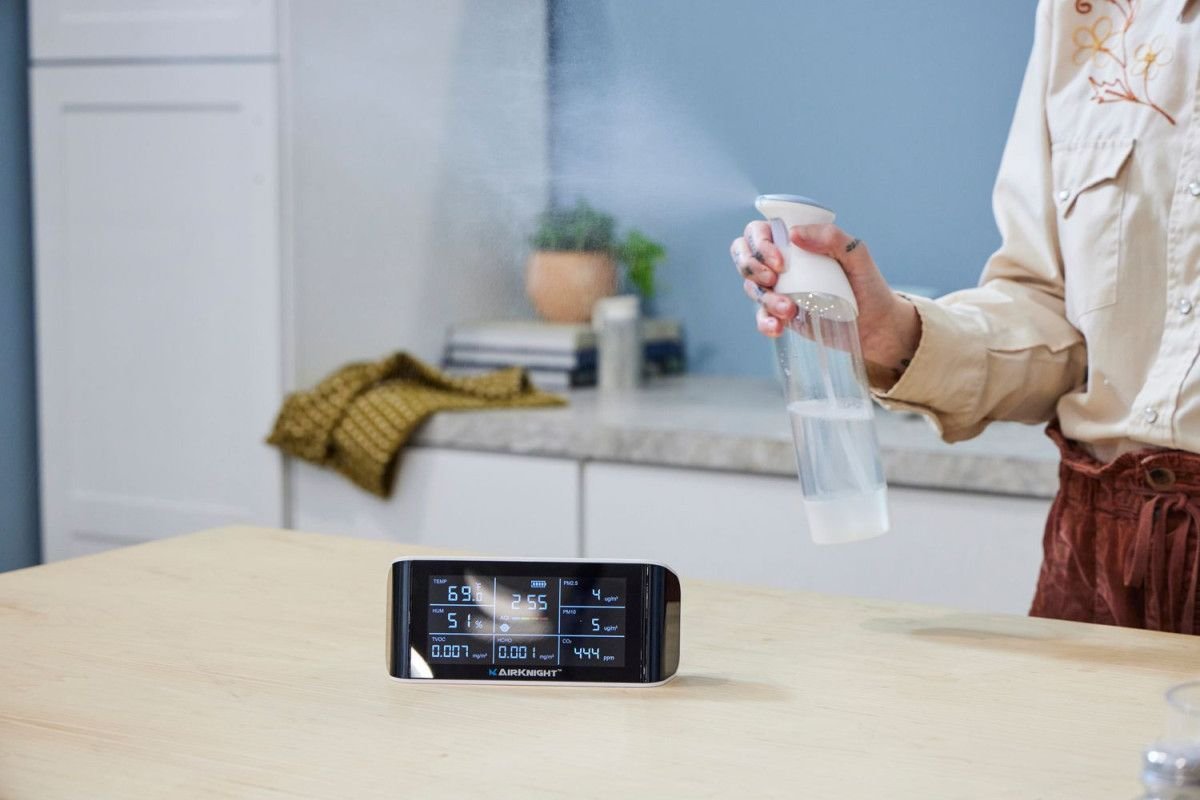
The right pick among best indoor air quality monitors is the one that measures the pollutant you actually care about, because no single device tracks everything accurately. A cheaper monitor that matches your concern beats an expensive one that misses it. Once you know what matters, the honest reality follows: consumer monitors are good at spotting trends in fine particles and carbon dioxide, less certain on other gases, and never equal to a lab reference, so their alerts are information to act on, not a smoke alarm. Buy for the pollutant, place it right, and read it as a trend.
The decide-first framework, the tested picks, and the honest limits most reviews skip follow below.
Decide What to Measure First
The purchase starts with your concern, and different worries call for different sensors. If you care about mold, the reading that matters is humidity plus particles in damp rooms. If you cook with gas, look for a monitor that tracks carbon dioxide and nitrogen oxides, both produced by gas appliances. If allergies or wildfire smoke are the worry, fine particulate matter, PM2.5, is the key number. If radon is the concern, skip the general monitor and get a proper radon detector, since cheap general units are not a substitute for a device made for radon. Naming the pollutant first narrows the field before any price or brand enters the picture.
Most home air quality monitors from the EPA’s guidance handle a shared set of measurements, fine and coarse particles, carbon dioxide, carbon monoxide, formaldehyde, volatile organic compounds, radon on some models, plus temperature and humidity, but no single device nails them all equally. Match the sensor list to your concern and you avoid overpaying for parts you cannot use.
What These Monitors Really Measure, and Their Limits
The straightforward truth about home monitors is that they are useful tools, not lab instruments. They detect only the pollutants they are designed for, so a unit that tracks particles will not catch a gas like radon or carbon monoxide, and an alert is not a smoke-alarm warning of immediate danger.
Their readings do not translate directly into a health verdict, and there is no universal accepted threshold for most pollutants indoors, so the level that triggers an alert is set by the manufacturer, not a standard. Cost alone does not tell you how well a monitor performs, since price often reflects display quality and connectivity more than sensor accuracy.
None of this means they are useless; it means you use them for what they are good at, spotting sources and trends. The EPA guidance notes that a detection does not automatically mean a problem exists, and that the real value is watching how readings rise and fall with activities, like the particles that spike while you cook.
The Tested Picks, by What You Need
Independent testing narrows the field, and the Wirecutter review of home air quality monitors lands on specific choices. Its top pick is the AirGradient One, which tracks fine particles in three sizes plus carbon dioxide, nitrogen oxides from gas appliances, and volatile organic compounds, with reliable sensors and both a display and an app. For someone who only needs basic monitoring, testers point out that a free outdoor air quality app like the EPA’s AirNow can be enough, since indoor air tracks closely with outdoor air in their testing. For radon specifically, the pick is the Airthings View Plus, which measures seven factors including carbon dioxide, particles, volatile organics, and radon.
The deeper point from that testing is that for many homes, a full monitor is optional. If your main worry is the same as what the outdoor forecast shows, a free app may cover you, and a monitor earns its place when you have a specific indoor concern, a gas stove, dampness, or a known pollutant source.
How to Choose, and How to Use It Right
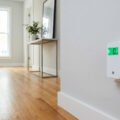
Choose by matching the sensor list to your worry, then weigh a few practical points. Put the monitor in the breathing zone, about three to six feet up, not flat against a wall, and away from the stove, a fireplace, stored cleaners, or a heating vent.
Follow the manufacturer’s setup and placement instructions, since ignoring them undercuts the readings, and remember that a cheap unit can outdo a pricey one if it measures the pollutant you need.
Interpret readings as trends, not absolutes. When a number climbs, look for the cause rather than panic. A particle reading that jumps while you cook points a range hood or an open window; a carbon-dioxide reading that rises in a closed bedroom says the room needs ventilation. A monitor that detects a pollutant does not automatically mean the air is unsafe, and if you or someone at home has symptoms you think connect to the air, raise it with a health care provider rather than relying on the device to decide.
The Honest Word on Accuracy
No consumer monitor matches the accuracy of a reference-grade air lab. The readings you get are not equivalent to the monitors in official air-quality networks, and there is little authoritative data on how accurate consumer units are, in part because there is no accepted indoor performance standard for them. Their accuracy also shifts with placement, temperature, and how the data is processed, so two samples of the same device reading the same room can differ. In practice, fine-particle and carbon-dioxide readings are the more dependable metrics to track, and gas and chemical readings are worth treating with extra skepticism.
Best Air Quality Monitors: Common Topics
Do indoor air quality monitors actually work?
Yes, within their limits. They reliably show trends in the pollutants they are designed to track, especially fine particles and carbon dioxide, and they help you spot sources and activities that change your air. They are not lab-accurate and do not catch what they are not built to sense, so treat them as trend tools.
What is the most accurate air quality monitor?
No consumer monitor matches reference-lab accuracy, so there is no single “most accurate” unit. For a specific type of device, well-regarded tested options like the AirGradient One track the key pollutants well, and fine-particle and carbon-dioxide readings are generally the most reliable to trust.
How do you choose the right indoor air quality monitor?
Decide the pollutant you care about first, mold, gas-stove emissions, particles, or radon, then choose a monitor whose sensors cover that concern. Place it in the breathing zone away from the stove and vents, and pick for sensor match and placement over price or extra features.
What is the best air quality monitor for mold?
For mold, focus on humidity and particle readings in damp rooms, since high humidity sustains mold growth. A monitor that tracks humidity and particles in the rooms you worry about covers the practical need, and a cheap unit that does those two well beats a pricey one that does not.
What does an indoor air quality monitor measure?
Most home monitors measure fine and coarse particles, carbon dioxide, carbon monoxide, volatile organic compounds, and temperature and humidity, with some models adding formaldehyde or radon. A monitor detects only the pollutants it is designed for, so check the list against your concern before buying.
Buy the monitor that measures what worries you, not the one with the most lights. If it is mold, humidity and particles; a gas stove, carbon dioxide and nitrogen oxides; allergies, fine particles; radon, a proper radon detector. Once you have it, place it in the breathing zone away from the stove and read the numbers as trends that point to sources, because no consumer unit matches a lab and an alert is not a smoke alarm. Match the sensor to the concern and the best air quality monitor for you becomes obvious.