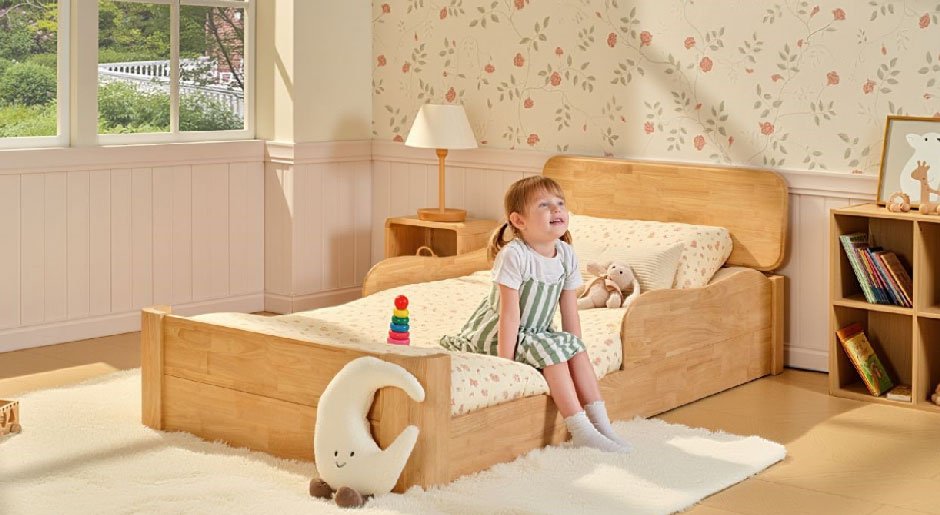
A montessori floor bed is a sleeping setup in which the mattress is placed close to the ground rather than inside a raised frame with high sides. The key difference defining this setup is not just height, but access. Instead of placing a child into a restrictive structure that limits movement, the sleep space stays completely open to encourage natural development.
This configuration has grown increasingly popular as it transitions childhood sleep from a controlled, caged environment to a gradual, autonomous routine. However, traditional floor beds often force a financial compromise due to their short lifespan.
To bridge this gap, innovative solutions like the Flexispot Lumi Evo Kids Bed have gained widespread attention. Featuring an adaptive 2-in-1 Kids Bed design, this versatile system functions initially as an ultra-low floor bed, and then seamlessly converts into a standard elevated twin bed—allowing parents to embrace Montessori principles without needing to replace the furniture as the child grows.
The 2-in-1 Advantage: Adapting to Two Growth Stages
The core reason modern parents are shifting toward the Flexispot Lumi Evo is its ability to honor a child’s psychological development while offering long-term household utility through two dedicated modes:
Early Years: The frame sits directly near the ground, paired with protective bedside panels. This gives young children full freedom to master their waking and sleeping routines independently and safely.
Growth Years: Using removable parts, the same frame converts into a classic raised kids’ bed. This expands the horizontal turning space and accommodates a longer body length for older children, all while retaining the familiar comfort of their original bed.
How Cribs Control Movement by Design
A crib defines a fixed boundary. High rails surround the child, and the sleeping area is limited in both size and access. While this works for containment, it also restricts the child’s movement during rest.
Children naturally shift positions during sleep. They roll, stretch, and adjust posture even when deeply asleep. In a crib, these movements quickly meet physical limits. The result is that any change in position often stops at the barrier.
When that happens, the child cannot resolve discomfort independently. The only available responses are to cry or to call for attention. Over time, this creates a pattern in which even small adjustments require an adult to enter the room.
How Floor Beds Change Early Sleep Behavior
A toddler floor bed removes height from the equation. The mattress sits close to the ground, so movement is not blocked by vertical barriers.
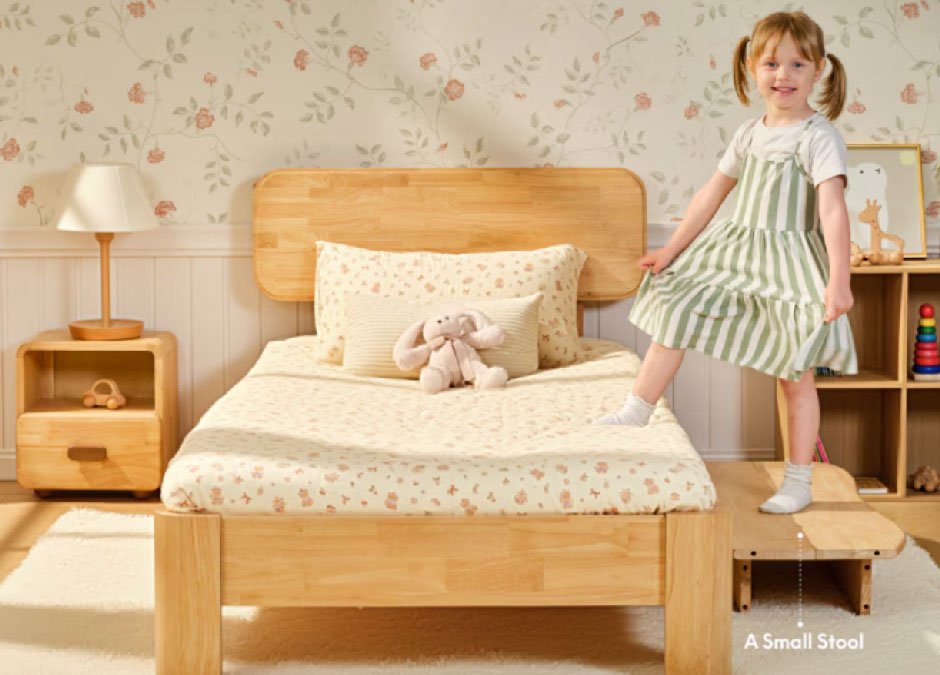
When a child wakes up, the experience is different. Instead of immediately reaching a physical limit, the child can remain in place, shift position, or slowly observe the surroundings. There is no immediate pressure to signal discomfort.
This changes the transition between sleep and wake. Rather than a sharp switch from rest to calling for help, there is a short period where the child adjusts gradually. That small change affects how early mornings and night wakings unfold.
Movement as Part of Early Physical Development
Early development depends on repeated movement patterns. Rolling, crawling, and shifting weight help build coordination between muscles and balance.
In a floor-level sleep setup, these movements are not limited to active playtime. They also happen during early wake moments when the child is still in or near the bed. A simple action like rolling onto the side or pushing up on hands becomes part of daily repetition.
This matters because repetition strengthens control. The body learns movement patterns through frequent, low-pressure practice rather than isolated activity sessions.
Simple Independence in Daily Actions
Getting in and out of bed is one of the earliest repeated physical decisions a child makes. In a raised bed or crib, this action depends entirely on parental assistance.
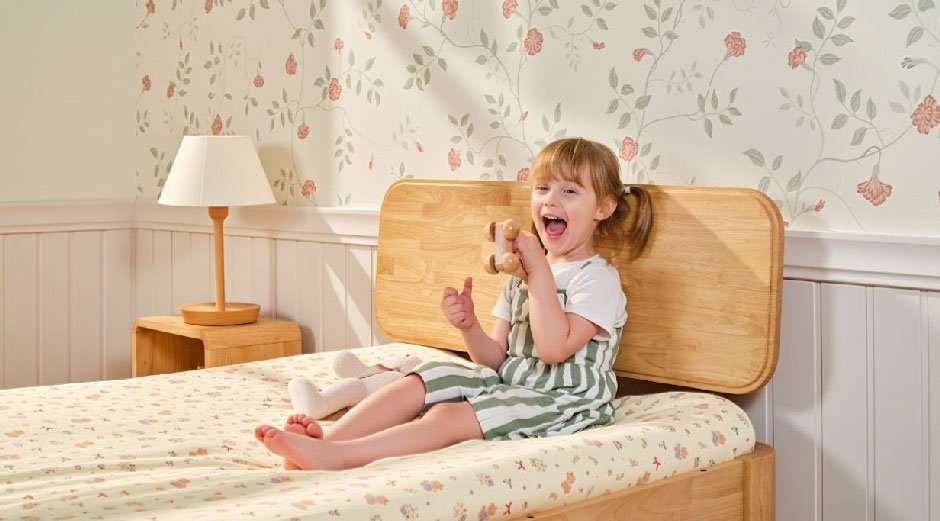
The Lumi Evo’s 2-in-1 design removes that dependency during the crucial early years. The child can enter or leave the sleeping space autonomously without being lifted. Over time, this builds a consistent cognitive pattern: movement is initiated by the child’s own choice, fostering a natural sense of self-sufficiency through small, repeated physical actions rather than forced instruction.
Night Waking Without Immediate Pressure
Night waking is normal during early childhood. In a crib, waking often leads directly to calling out because the environment does not allow safe movement.
A floor bed changes that sequence. There is no need for an instant response after waking. The child may hold their body in one position for a second, turn to the side or look around the room before making a choice.
This helps reduce the sudden transition from sleep to alertness. There is a pause before the child becomes distressed or calls, as it takes a little while for the child to adjust to being awake.
How Room Setup Becomes Part of Sleep Safety
Because a floor bed does not physically confine the child, the surrounding bedroom effectively becomes the main safety boundary. This requires parents to transition the entire room into a childproofed zone—securing heavy furniture to walls, clearing small hazards, and covering electrical outlets.
With this established, the room functions as a secure extension of the sleep environment. The child is no longer trapped on an isolated island; instead, the space around them is accessible, predictable, and safe for early morning exploration, lowering parental anxiety.
Toddler Stage and Sleep Transition
The toddler stage introduces more controlled movement. Children begin walking, climbing, and exploring their surroundings more actively.
A floor bed fits into this stage because it removes the sharp contrast between sleep and activity. In a crib, sleep is enclosed, and activity happens outside that space. In a floor setup, both occur in the same room without a physical barrier separating them.
This reduces the shift between states. The child does not move from a confined space into an open one. Instead, both sleep and movement happen within the same environment, with only small changes in behavior.
Structural Safety in Practical Use
A Montessori setup only succeeds if the underlying structure can safely support an active, moving child. Low-profile beds rely on physical engineering for stability rather than high-altitude containment.
Solid Wood Construction: Built from premium solid wood, the Lumi Evo Kids Bed maintains absolute stability. It resists flexing or shifting over time, ensuring a quiet, squeak-free sleep environment that won’t disturb light sleepers.
15 Reinforced Support Slats: Placing a mattress directly on the floor traps moisture and restricts ventilation. The Lumi Evo features an advanced 15-slat base that evenly distributes weight, prevents mattress sagging, and ensures continuous airflow for a healthy, temperature-regulated sleep climate.
Integrated Safety Features: Designed with protective bedside panels and smoothly rounded edges, the bed minimizes the risk of accidental roll-outs during deep sleep stages while removing sharp contact points during active morning play.
Conclusion
The shift toward Montessori floor beds reflects a modern evolution in how families approach early sleep environments. Instead of relying on height and physical containment, the focus has permanently turned toward access, natural movement, and independent interaction with space.
Through the Flexispot Lumi Evo Kids Bed, embracing this developmental philosophy no longer means sacrificing long-term practicality. Its innovative 2-in-1 Kids Bed format, robust Solid Wood build, and thoughtful safety elements deliver a single, cohesive sleep system that adapts beautifully to your child’s physical milestones from toddlerhood through adolescence.