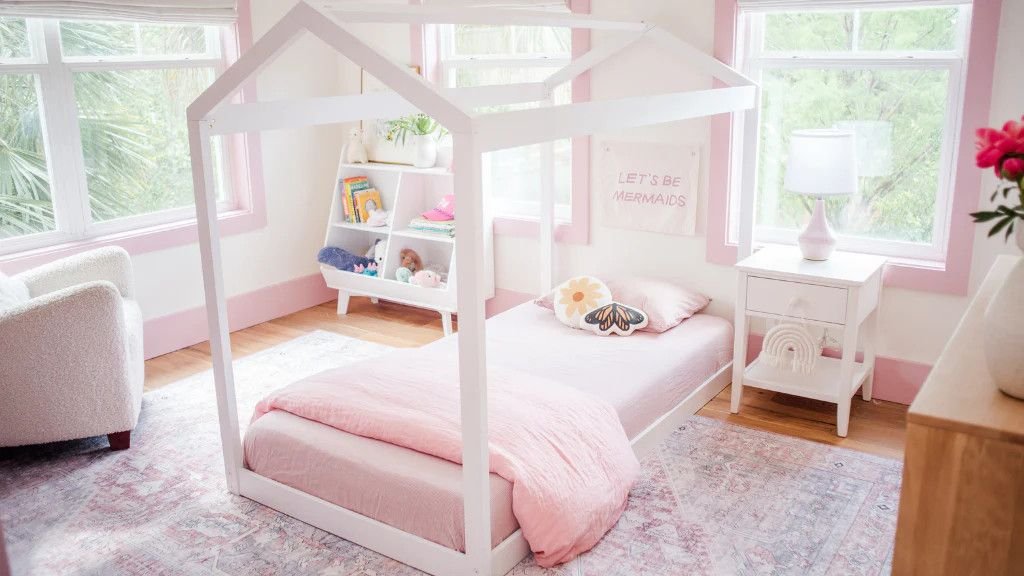
The idea behind the Montessori floor bed sounds simple, but it’s actually one of those “why didn’t we always do it like this?” parenting moments. Instead of putting a kid in a mini-skyscraper of a bed and hoping gravity stays friendly, you just place the sleeping space at floor level. No drama, no climbing, no “hold my hand, I’m scared to get down at 3 AM.” It’s basically giving a child their own little base in the room — more like Harry Potter’s cozy under-the-stairs-but-make-it-comfy vibe, less like a bunk bed survival challenge.
In Montessori thinking, this setup is all about freedom. Not the chaotic “Lord of the Flies” kind, but the calm “I can do this myself” energy. Kids aren’t trapped in furniture like some kind of bedtime prison escape game. They can move, explore, and decide when it’s sleep time or “I need to go check on my stuffed animals at 6 AM” time. And honestly, that independence hits differently — it’s like their first step into being the main character of their own story.
Key Benefits of a Montessori Floor Bed
First up: autonomy. A child can get in and out of the Montessori floor bed without calling for backup like it’s a Marvel rescue scene. No “Mom, I’m stuck” at midnight. They just exist in their space and learn to manage it. It’s small stuff, but it builds that quiet confidence — like when Matilda discovers she doesn’t need to accept the chaos around her.
Then there’s safety. No height = no accidental “baby parkour gone wrong” moments. Parents sleep better, kids don’t audition for stunt double roles in their sleep, everyone wins.
Psychologically, it’s also a game changer. A low bed makes the room feel less like “adult rules applied here” and more like their own little universe. Think Studio Ghibli energy — soft, open, safe, everything in its place. The child isn’t “down there in a crib,” they’re just in the room, part of it. That sense of ownership matters more than it sounds.
And bedtime itself? Less “battle of Helm’s Deep,” more chill routine. The bed becomes a cozy zone instead of a forced shutdown station. No negotiations with tiny humans required (well… fewer negotiations).
Why Material Matters: The Power of Natural Wood
Now, let’s talk materials — because not all wood is created equal, and some of it belongs in “cheap furniture horror stories” on Reddit.
Natural wood like alder or birch is the real deal. It’s strong, stable, and doesn’t fall apart when life gets… let’s say energetic. Unlike MDF or particleboard, which sometimes feels like it was held together by hope and industrial glue.
It’s also healthier. No weird chemical smells turning the room into a low-budget science experiment. Just clean, natural material doing its job quietly in the background — like Gandalf, but for furniture.
And durability? Kids will test it. Jumping, climbing, turning it into a spaceship, a pirate ship, or occasionally a dragon lair. Solid wood just takes it all and says, “Is that all you got?”
How to Choose the Perfect Montessori Floor Bed
The first rule: don’t ignore airflow. A proper frame with slats isn’t just design fluff — it keeps the mattress breathing. Without it, things get damp, and nobody wants a bed that feels like it lost a fight with humidity.
Then check the finish. If it looks like it was sanded in a rush by someone emotionally done with life, skip it. You want smooth edges, no sharp surprises — because bedtime shouldn’t come with “minor injury DLC.”
Design is where it gets fun. Some beds are minimal and calm, others look like tiny houses straight out of The Hobbit. Honestly, if your kid wants to sleep in something that feels like Bilbo Baggins’ vacation home, why not?
What to Consider When Choosing a Manufacturer
Safety first. Always. Water-based finishes only — if it smells like a chemistry lab exploded, it doesn’t belong in a child’s room.
Then comes craftsmanship. Brands like BusyWood actually care about the details — smooth edges, solid structure, and that “this will survive toddler chaos” engineering mindset. Not all furniture is built with that level of seriousness (or survival instinct).
And yes, reviews matter. Parents are basically the final boss testers of furniture. If something survives multiple kids, pets, and accidental trampoline use, it’s probably legit.
A Montessori floor bed isn’t just a trendy parenting aesthetic you see on Pinterest next to beige walls and calm lighting. It’s actually a smart, human way to design a kid’s space — one that says “you’re safe here” instead of “stay in your assigned sleeping unit.”
It builds independence, reduces stress, and makes the room feel like a place where a kid actually lives, not just sleeps. Add natural materials, thoughtful design, and a bit of common sense, and you basically get a setup that even Mary Poppins would approve of — practically perfect in every way (minus the umbrella flights).