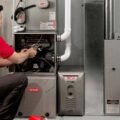
The furnace stopped working on the coldest night of the year. You wake up to a house that is 55 degrees, and the pilot light is out. You call an HVAC company, and they send a technician who diagnoses the problem and gives you a repair estimate. But you have no idea whether the price is fair or whether the repair is worth doing on an older furnace.
Furnace repair cost ranges from $150 to $1,500 depending on the problem, the part that needs replacement, and the labor rate in your area. The average furnace repair costs $300 to $600. Understanding the typical costs for common furnace problems helps you evaluate repair quotes and decide whether to repair or replace the system.
Geographic location can also influence the total amount you pay for seasonal HVAC maintenance and emergency fixes. Homeowners dealing with sudden system malfunctions during a regional cold snap often find that local service rates depend heavily on regional demand. If you need a professional technician to inspect your heating system, securing reliable furnace repair in Baton Rouge can help protect your home from sudden breakdowns while keeping your seasonal utility bills manageable.
Furnace repair cost depends on the specific problem with your system. Here is a breakdown of common repairs including diagnostic fees, ignition repairs, blower motor replacement, and heat exchanger issues.
Average Furnace Repair Cost by Problem Type
The type of problem is the biggest factor in furnace repair cost. Some repairs are simple and inexpensive. Others require expensive parts and labor. The table below shows typical cost ranges for the most common furnace repairs.
| Problem | Typical repair | Cost range |
| Service call and diagnostic | Technician visit and inspection | $80u2013$200 |
| Ignition control / ignitor | Replace ignitor or ignitor assembly | $200u2013$500 |
| Pilot light / thermocouple | Clean or replace thermocouple | $150u2013$300 |
| Blower motor | Replace blower motor | $400u2013$1,000 |
| Capacitor | Replace capacitor | $150u2013$350 |
| Gas valve | Replace gas valve | $300u2013$800 |
| Heat exchanger | Replace heat exchanger | $800u2013$1,500 |
| Thermostat | Replace thermostat | $100u2013$500 |
| Flame sensor | Clean or replace flame sensor | $100u2013$250 |
Furnace Ignition and Pilot Light Repairs
Ignition problems are among the most common furnace repairs. Modern furnaces use either a hot surface ignitor or an intermittent pilot ignition system. Older furnaces use a standing pilot light with a thermocouple. The repair cost varies by the type of ignition system.
Hot surface ignitor replacement costs $200 to $500. The ignitor is a ceramic or silicon carbide element that glows red hot to ignite the gas. Over time, the ignitor cracks or burns out and stops working. Replacing it takes 30 to 60 minutes for a technician. The part costs $30 to $100, and the labor is $150 to $400.
Pilot light and thermocouple repairs cost $150 to $300. A standing pilot furnace has a small flame that burns continuously. If the pilot goes out, the thermocouple — a safety device that senses the pilot flame — may be dirty or failing. Cleaning or replacing the thermocouple is a simple repair. The part costs $10 to $30, and the labor is $100 to $200.
Flame sensor cleaning or replacement costs $100 to $250. The flame sensor detects when the burner is lit. If the sensor is dirty or failed, the furnace lights for a few seconds and then shuts off. Cleaning the sensor with sandpaper often fixes the problem. Replacement costs $20 to $60 for the part plus labor.
Blower Motor and Fan Repairs
The blower motor moves air through the furnace and into the ductwork. When the blower motor fails, the furnace may run but no heat comes out of the vents. Blower motor replacement is one of the more expensive furnace repairs.
A standard PSC blower motor replacement costs $400 to $800. The motor itself costs $100 to $300, and installation labor is $300 to $500. The replacement takes one to two hours. PSC motors are the standard type used in most furnaces.
An ECM variable-speed blower motor replacement costs $600 to $1,000. ECM motors are more energy-efficient and quieter than PSC motors but cost more to replace. The motor costs $300 to $500, and the labor is $300 to $500. ECM motors are common in high-efficiency furnaces manufactured after 2010.
Capacitor replacement costs $150 to $350. The capacitor provides the electrical charge to start the blower motor. A failed capacitor is a common and inexpensive repair. The part costs $10 to $40, and the labor is $100 to $250.
An HVAC technician with 20 years of experience explained: “The most common furnace repair I do is replacing the capacitor on the blower motor. It is a $20 part that takes 15 minutes to replace. Check the filter before you call — it saves you the service call fee.”
Heat Exchanger Repairs
The heat exchanger is the most critical component of a furnace. It transfers heat from the burning gas to the air that circulates through the home. A cracked heat exchanger is a serious problem because it can release carbon monoxide into the home.
Heat exchanger replacement costs $800 to $1,500. The heat exchanger is an expensive part, and replacing it requires disassembling most of the furnace. The part costs $300 to $800, and the labor is $500 to $800. The repair takes four to six hours.
For furnaces over 15 years old, replacing the heat exchanger is usually not worth the cost. A new furnace costs $2,500 to $5,000 installed. Paying $800 to $1,500 to repair a furnace that is near the end of its expected life is not cost-effective. Most HVAC contractors recommend replacing the entire furnace when the heat exchanger fails on an older unit.
Carbon monoxide testing is recommended whenever a furnace is serviced. A carbon monoxide test costs $50 to $150 and is often included in the diagnostic fee. If carbon monoxide is detected coming from the furnace, the unit must be shut down immediately and repaired or replaced before it can be used again.
Furnace Diagnostic and Service Call Fees
The service call fee and diagnostic charge are the first costs you will encounter when you call for furnace repair. These fees vary by company and region but typically range from $80 to $200.
The service call fee covers the technician coming to your home. The diagnostic fee covers the time the technician spends inspecting the furnace and identifying the problem. Some companies charge a flat service call fee that includes the diagnostic. Others charge the service call fee plus an additional diagnostic fee. Ask about the diagnostic fee when scheduling the appointment.
Most companies apply the diagnostic fee to the repair cost if you choose to have them do the repair. If you decide not to repair the furnace after the diagnostic, you pay only the diagnostic fee. Some companies charge a higher diagnostic fee that is not applied to the repair.
Emergency service calls — nights, weekends, and holidays — cost $100 to $300 more than standard service calls. Emergency rates apply when the furnace stops working outside normal business hours. If the furnace fails on a weekend night, expect to pay $200 to $500 just for the service call.
When to Repair vs Replace Your Furnace
Deciding whether to repair or replace a furnace depends on the age of the unit, the cost of the repair, and the efficiency of the existing system. A general rule is the $5,000 rule — if the repair cost is more than $5,000 times the age of the furnace in years, replace it.
Furnaces under 10 years old are almost always worth repairing. The expected remaining life is 10 to 15 years, and the cost of most repairs is justified by the remaining service life. Even a heat exchanger replacement on a 10-year-old furnace may be worth considering if the rest of the system is in good condition.
Furnaces 10 to 15 years old need a cost-benefit analysis. A minor repair under $500 is worth doing. A major repair over $1,000 — like a heat exchanger — is probably not worth it. A new furnace costs $2,500 to $5,000 and operates at 90 to 98 percent efficiency compared to 60 to 80 percent for an older unit. The energy savings from a new furnace often offset the monthly payment for financing.
Furnaces over 15 years old should be replaced rather than repaired. Older furnaces are less efficient, less reliable, and more expensive to operate. A single repair on a 20-year-old furnace often leads to another repair within a year or two. Replacing the furnace provides peace of mind, lower energy bills, and a warranty on the new equipment.
Frequently Asked Questions
How much does a typical furnace repair cost?
The average furnace repair costs $300 to $600. Simple repairs like a thermocouple or capacitor cost $150 to $350. Major repairs like a blower motor or gas valve cost $400 to $1,000. Heat exchanger replacement costs $800 to $1,500.
What is the most expensive furnace repair?
Heat exchanger replacement costs $800 to $1,500. Blower motor costs $400 to $1,000. For furnaces over 15 years, replacing the whole unit is more cost-effective.
What is the cheapest furnace repair?
Capacitor replacement is the cheapest at $150 to $350. Flame sensor cleaning is $100 to $250. Thermostat replacement is $100 to $500. Simple repairs that take under an hour are the least expensive furnace repairs.
How much is a furnace service call fee?
A standard furnace service call costs $80 to $200. Emergency service calls after hours or on weekends cost $200 to $500. Most companies apply the diagnostic fee to the repair cost if you choose to proceed with the repair.
Should I repair or replace my 15-year-old furnace?
Replace a furnace over 15 years old. A new furnace costs $2,500 to $5,000 and operates at 90 to 98 percent efficiency. An old furnace at 60 to 80 percent efficiency costs more to operate and is likely to need more repairs soon.
Why is my furnace running but not blowing hot air?
A dirty air filter is the most common cause. A failed blower motor or a faulty thermostat can also cause the furnace to run without heat. If the filter is clean, call a technician for a diagnostic to check the motor and other components.
Why does my furnace pilot light keep going out?
A dirty or failing thermocouple is the most common cause. The thermocouple senses the pilot flame and keeps the gas valve open. If it is dirty or worn, the gas valve closes and the pilot goes out. Cleaning or replacing the thermocouple fixes the problem.
Does a home warranty cover furnace repair?
Home warranties cover furnace repair but have limitations. The warranty typically covers the repair cost minus a service fee of $75 to $150. Pre-existing conditions and improper maintenance are not covered. Read the warranty terms carefully before filing a claim.