Public parks should be welcoming spaces where every member of society can gather, relax, and play. True inclusivity goes far beyond simply installing a wheelchair ramp at a main entrance. It requires a comprehensive approach to design that considers the diverse physical, sensory, and cognitive needs of the entire population.
By eliminating barriers and implementing thoughtful planning strategies, cities can transform ordinary green spaces into universally accessible community hubs.
Establish Smooth and Fluid Circulation Networks
An accessible park must be easy to enter, navigate, and exit for individuals with varying degrees of mobility.
Continuous Paved Pathways
Traditional park materials like gravel, loose wood chips, and grass pose major obstacles for individuals using wheelchairs, walkers, or strollers. Inclusive park design utilizes wide, smoothly paved concrete or asphalt trails. These paths must maintain gentle slopes and cross-slopes to prevent fatigue and slipping.
Clear Signage and Tactile Indicators
Navigation should be intuitive for everyone. Incorporating high-contrast signage with large fonts and braille helps visually impaired visitors navigate the space confidently. Additionally, textured warning pavers placed at transitional points, such as where a path meets a parking area, provide important sensory cues that enhance overall safety.
Incorporate Universal Play Structures
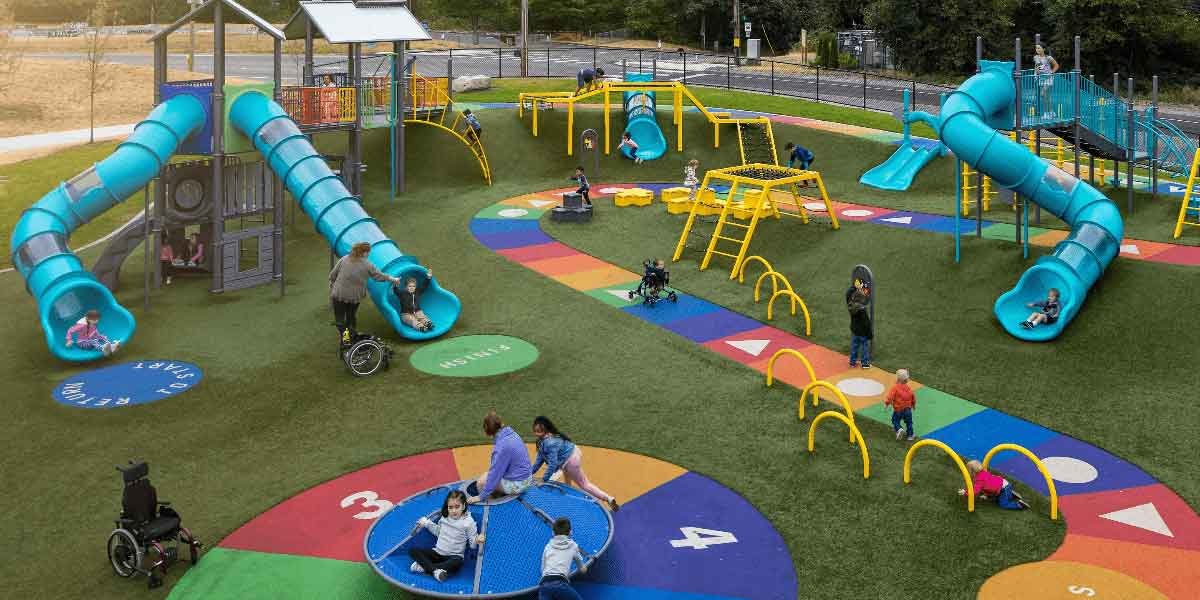
Play is essential for childhood development, but standard playground equipment frequently excludes children with disabilities. Universal play design ensures that children of all abilities can play side by side.
Sensory-Rich and Multi-Level Play Elements
Rather than relying solely on tall climbing towers, inclusive parks feature ground-level play panels, musical instruments, and interactive water elements. For communities planning a comprehensive upgrade, partnering with experienced playground companies in Utah can help source high-quality, specialized equipment like wheelchair-accessible carousels, flush-to-ground trampolines, and supportive adaptive swings.
Forgiving Surfacing Materials
The choice of ground cover beneath play structures is critical for safety and accessibility. Poured-in-place rubber surfacing or synthetic turf with cushioned underlays offers a completely flat, seamless surface. This allows individuals with mobility aids to travel effortlessly between different play features without getting stuck.
Design Multi-Generational Gathering Spaces
An inclusive park should offer meaningful activities and comfort for visitors ranging from infants to senior citizens.
Adaptable Seating and Shaded Retreats
Rest options are vital for older adults and individuals with chronic health conditions. Benches should be distributed at frequent intervals along all major pathways. These seating areas should feature sturdy armrests and backrests to assist individuals when standing up. Leaving clear, paved spaces immediately next to benches allows wheelchair users to sit directly alongside their companions.
Inclusive Fitness Zones
Outdoor exercise equipment should cater to a wide range of athletic abilities. Modern fitness spaces include low-impact stretching stations, upper-body hand oar machines, and static balance bars that help seniors maintain agility. Grouping these features near children’s play areas allows parents and grandparents to stay active while supervising youth.
Create Dedicated Quiet and Sensory Zoning
Public parks can sometimes become overwhelming due to loud noises, bright sunlight, and crowded conditions. Providing a refuge from overstimulation is a cornerstone of neurodivergent-friendly design.
Sensory Relief Areas
Children and adults with autism or sensory processing disorders benefit greatly from quiet zones. Designing a peaceful alcove surrounded by native ornamental grasses, earth-toned structures, and gentle wind chimes provides a calming space to reset. Separating active, high-decibel areas from quiet meditation gardens ensures a comfortable balance for all visitors.
Tactile and Natural Landscaping
Incorporate non-toxic plants with distinct textures and scents, such as lamb’s ear or lavender, along low garden walls. This design choice encourages tactile exploration and provides an engaging sensory experience for individuals with visual impairments.
When communities look past minimum compliance standards and embrace universal design principles, public parks become truly transformative spaces. Prioritizing fluid navigation, adaptable equipment, and welcoming rest zones guarantees that everyone can experience the joys of the outdoors together.