Dame Jenni Murray, who died on 12 March 2026 at the age of 75, spent over three decades as the voice of BBC Radio 4’s Woman’s Hour. Millions knew her opinions on politics, feminism, and family life. Far fewer knew much about the man she shared her life with for 46 years.
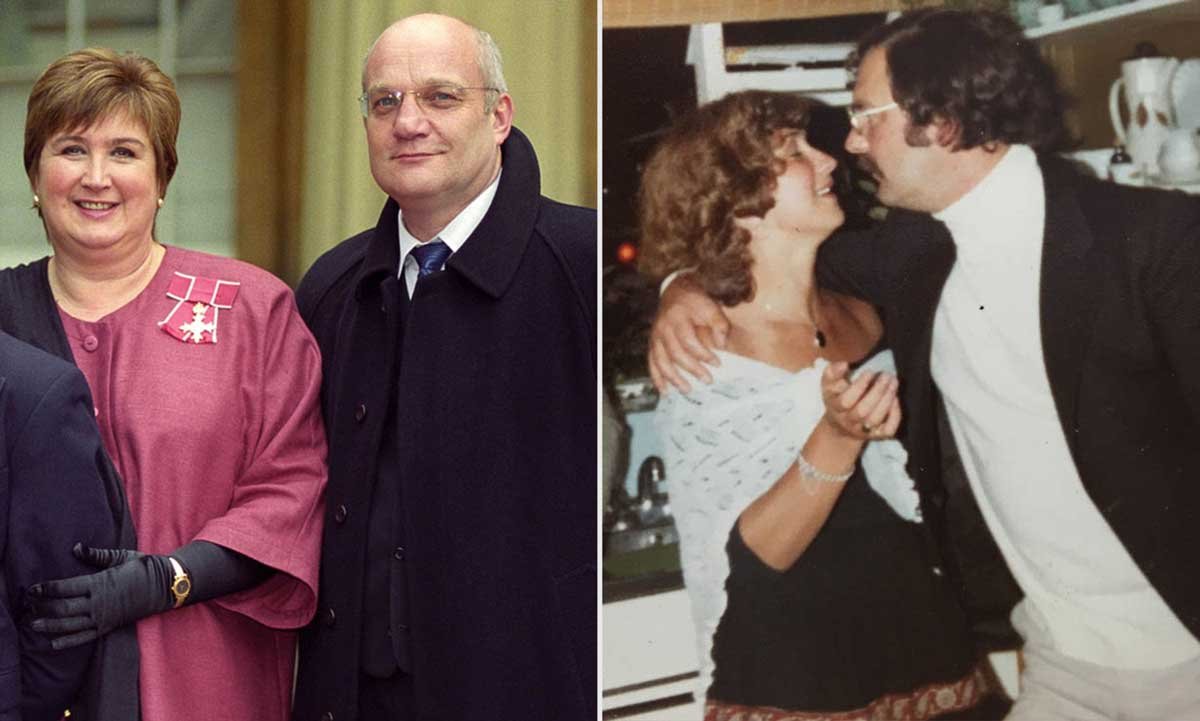
His name is David Forgham-Bailey. He was a naval officer, a committed rugby player, and — by Jenni’s own account — the funniest person she had ever met. They raised two sons together, lived apart by choice for years, and married only when inheritance law forced the issue. Their partnership was unconventional, fiercely private, and by every measure, remarkably durable.
Who Is David Forgham-Bailey?
David Forgham-Bailey is a former Royal Navy officer and the husband of the late Dame Jenni Murray. He served in the Navy for years before retiring and moving into civilian work in London. He and Jenni had two sons together — Ed, born in 1983, and Charlie, born in the late 1980s.
A Naval Career and a Quiet Life
David spent years in the Royal Navy, a career that suited his physical energy and appetite for discipline. Jenni described him in her widely read Daily Mail essay as broad-shouldered, fit, and a dedicated rugby player. When he left the service, he found work in London, and the couple bought a house in Clapham — their first shared home after years of managing a relationship around naval postings.
Unlike Jenni, whose working life played out on national radio five mornings a week, David never courted public attention. No interviews, no press appearances, no social media presence. That reticence was a personal choice, not a limitation. Jenni respected it, and interviewers learned not to push.
The Man Behind the Microphone
Jenni’s descriptions of David were consistent across decades of writing. He was funny — genuinely, reliably funny, the kind of person who could win a joke-telling competition at a crowded breakfast table and still have material left over. She was drawn to his warmth, his directness, and a temperament that never seemed threatened by her professional stature.
That dynamic mattered. Jenni spent 33 years hosting conversations about gender, power, and equality. David, by her account, engaged with those ideas as a partner and an equal — not as someone performing support for a public figure. He had his own views, his own life, and no particular interest in being defined by hers.
| Detail | David Forgham-Bailey | Jenni Murray |
|---|---|---|
| Profession | Former Royal Navy officer | Broadcaster, journalist, author |
| Public profile | Deliberately private | High-profile (BBC Radio 4, Woman’s Hour) |
| Children | Two sons — Ed (b. 1983) and Charlie | |
| Married | 2004, after more than two decades together | |
| Living arrangement | Separate homes — Living Apart Together (LAT) | |
How Jenni Murray and David Forgham-Bailey Met
Jenni and David met in 1980, two years after her first marriage to Brian Murray ended. They were at the same social gathering — a breakfast event — and the connection was immediate. Jenni later wrote that David, then a naval officer, was “gorgeous” and never stopped making her laugh. They competed over who could tell the best jokes. He won every round.
The attraction was not just physical. Jenni was 30, recently divorced, and building a broadcasting career that would eventually make her one of the most recognised voices in Britain. David offered something she valued: genuine companionship without any need to manage her or compete with her ambitions. They started a relationship that would last the rest of her life.
Their Relationship Timeline
Jenni Murray and David Forgham-Bailey were together for 46 years, spanning four decades and multiple phases of life. Their relationship moved through cohabitation, long-distance stretches during his naval service, a pragmatic marriage, and eventually a deliberate living-apart arrangement.
| Period | Milestone | Key Detail |
|---|---|---|
| 1978 | Jenni’s first marriage to Brian Murray dissolved | Married at 21; ended after six years |
| 1980 | Jenni and David meet | At a social event; instant connection |
| 1983 | First son Ed born | David embraced fatherhood alongside naval duties |
| Late 1980s | Second son Charlie born | Family life in Clapham, London |
| 1987 | Jenni begins presenting Woman’s Hour | Would continue for 33 years |
| 2004 | Marriage | For inheritance tax and property protection |
| Later years | Living Apart Together arrangement begins | Separate homes, hundreds of miles apart |
| 2020 | Jenni retires from Woman’s Hour | Final episode aired 1 October 2020 |
| March 2026 | Jenni dies aged 75 | BBC announces her death on 20 March 2026 |
The Early Years and Starting a Family
Through much of the 1980s, Jenni and David navigated the demands of his naval career alongside her rapidly growing broadcasting profile. Naval postings meant stretches apart, but the relationship held. When Ed arrived in 1983, David took to fatherhood readily. Charlie followed a few years later.
After David retired from the Navy, the couple settled more permanently in London. They bought a house in Clapham and built a domestic life together — though neither was inclined to call it conventional. Jenni had no interest in a second formal marriage. She had already been through one, held strong feminist views about the institution, and saw no reason to repeat it.
A Reluctant Walk Down the Aisle
That position held for over two decades — until inheritance law intervened. In 2004, after more than 20 years of cohabitation, Jenni and David married. The ceremony was quiet and reluctant. Romance had nothing to do with it. The couple needed legal protection that English law simply refused to offer unmarried partners.
Why Jenni Murray Married Her Husband After 24 Years
Jenni Murray and David Forgham-Bailey married in 2004 to protect their property and their children’s inheritance. Under UK law, unmarried cohabitants — regardless of how long they have lived together — have almost no automatic financial rights over each other’s estates.
The Cohabitation Rights Gap in England and Wales
There is no such thing as a “common law spouse” in English law. The phrase has no legal force, despite widespread public belief to the contrary. Cohabiting couples — even those together for decades — cannot inherit automatically if their partner dies without a will. And even with a will, unmarried partners face an inheritance tax bill that married spouses do not.
The spousal exemption allows assets to pass between married partners entirely free of inheritance tax. Unmarried partners receive no such exemption. Any amount above the nil-rate band (currently £325,000) is taxed at 40%. For a couple owning property in London — as Jenni and David did — that liability could be enormous.
| Legal Right | Married Spouse | Unmarried Partner |
|---|---|---|
| Automatic inheritance (no will) | Yes — under intestacy rules | No — nothing automatic |
| Inheritance tax spousal exemption | Unlimited | Not available |
| Next-of-kin status | Yes | No (unless formally designated) |
| Pension survivor benefits | Usually automatic | Discretionary, scheme-dependent |
| Property rights on separation | Governed by matrimonial law | Trust law only — far less protection |
What Jenni Said About Their “Reluctant Wedding”
Writing in The Observer in February 2005, Jenni described the marriage as a purely practical act. She used the phrase “reluctant wedding” — a term that captured her ambivalence about an institution she had complicated feelings about. The love was never in question. The paperwork was.
She explained that after so many years together, leaving each other financially exposed was simply irresponsible. Property, pensions, and their sons’ inheritance drove the decision. The ceremony itself was small and deliberate — no fanfare, no guest list drama, no pretence that the relationship had somehow changed because of a certificate.
Living Apart Together: How Their Marriage Worked
Jenni Murray and David Forgham-Bailey were married, committed, and lived in separate homes hundreds of miles apart. They chose that arrangement deliberately, and both maintained it was the reason their relationship stayed strong.
What “Living Apart Together” Means
A Living Apart Together (LAT) relationship is one in which two people are in a committed partnership but maintain separate residences by choice. It is not separation or estrangement — the couple are together, just not under one roof. LAT arrangements have grown steadily among older adults in the UK, particularly those with established careers and a strong sense of individual identity.
Research from the Office for National Statistics has tracked the rise of LAT relationships, especially among the over-50s. For couples who have already raised children and built independent professional lives, living apart can feel less like a compromise and more like the arrangement that makes the most sense.
How Jenni and David Made It Work
In her December 2025 Daily Mail essay, Jenni was characteristically direct. David lived in one home; she kept her base elsewhere. Geography, career, and temperament all played a role. She described the setup as liberating rather than lonely — a way to preserve the routines, independence, and personal space that both of them valued.
Their reunions, she wrote, carried a warmth and intentionality that constant cohabitation can erode. Every visit was chosen, not assumed. That distinction mattered to them both.
| Factor | Traditional Cohabitation | LAT (Jenni and David) |
|---|---|---|
| Daily routine | Shared | Independent |
| Personal space | Negotiated | Fully preserved |
| Time together | Default / constant | Deliberate and planned |
| Individual identity | Can blur over years | Actively maintained |
| Reunion quality | Can become routine | Intentional and valued |
For a feminist broadcaster who spent decades championing women’s independence, the arrangement was perhaps the most consistent thing she ever did. She did not believe a good marriage required shared walls. David, apparently, agreed.
Frequently Asked Questions
Who is Jenni Murray’s husband?
Jenni Murray’s husband is David Forgham-Bailey, a former Royal Navy officer. They met in 1980 and were together for 46 years. They married in 2004 and had two sons together, Ed and Charlie.
Why did Jenni Murray get married after so many years?
Jenni married David in 2004 after more than two decades together, solely for legal and financial reasons. Under UK law, unmarried partners have no automatic inheritance rights and no spousal tax exemption. The marriage protected their property and their children’s inheritance.
Did Jenni Murray and her husband live apart?
Yes. Jenni and David maintained a Living Apart Together (LAT) arrangement for years, keeping separate homes hundreds of miles apart. Both described the setup as a deliberate choice that strengthened their relationship by preserving independence and making time together more intentional.
How many children did Jenni Murray have?
Jenni Murray had two sons with David Forgham-Bailey: Ed, born in 1983, and Charlie, born in the late 1980s.
Who was Jenni Murray’s first husband?
Jenni Murray’s first husband was Brian Murray. She married him at age 21, and their marriage ended after six years, with the divorce finalised in 1978. She met David Forgham-Bailey two years later.
What did David Forgham-Bailey do for a living?
David Forgham-Bailey served in the Royal Navy before retiring and taking up civilian work in London. He maintained a deliberately private life throughout Jenni’s high-profile broadcasting career.
When did Jenni Murray die?
Dame Jenni Murray died on 12 March 2026 at the age of 75. The BBC announced her death on 20 March 2026. She had been diagnosed with breast cancer in 2006 and was made a Dame Commander of the Order of the British Empire (DBE) in 2011.
A Partnership on Their Own Terms
Jenni Murray and David Forgham-Bailey built a 46-year relationship that defied every conventional template. They lived apart, married reluctantly, and raised two sons while navigating careers that could not have been more different — one lived out in front of millions, the other conducted in near-total privacy.
What held them together was not proximity or tradition. It was humour, mutual respect, and a shared belief that a strong partnership does not require two people to become one. David gave Jenni room to be exactly who she was — the broadcaster, the feminist, the public figure. She gave him room to be exactly who he was — the naval officer, the private man, the father who never needed a spotlight.
Their story is not a blueprint. Not every couple can or should live hundreds of miles apart. But it is a reminder that lasting relationships come in more shapes than most people expect — and that the ones that last longest are often the ones where both people are free to be themselves.