You open an invitation, spot the words “cocktail attire” or “festive” next to the date, and suddenly the outfit feels harder than the RSVP. That confusion is the reason guests often arrive either too dressed up or too casual for a birthday dinner, holiday party, bridal shower, anniversary celebration, or wedding-adjacent event. This guide is for party guests who want to read the invite correctly before shopping, borrowing, or sewing something new. Instead of treating the dress code like a vague etiquette test, it breaks the invite into three practical signals: the wording, the time, and the venue.
Read a Party Dress Code Like a Map, Not a Riddle
A party dress code is rarely one instruction. It’s three signals stacked together: the formality word (“cocktail,” “festive,” “casual chic”), the time of day, and the venue. Read on their own they feel vague; read together they narrow your options fast.
The formal word sets the ceiling and the floor. Time of day shifts the tone — a 2 p.m. garden party leans lighter and softer than the same “cocktail” code at 8 p.m. in a hotel bar. The venue is the tiebreaker: a rooftop, a backyard, and a ballroom each ask for a different level of polish under the identical word.
Here’s the shortcut. Weeknight or daytime plus a relaxed venue means keep it simple and comfortable. Evening plus a formal venue means adding structure, a heel, and one refined piece. When two signals disagree, the venue usually wins.
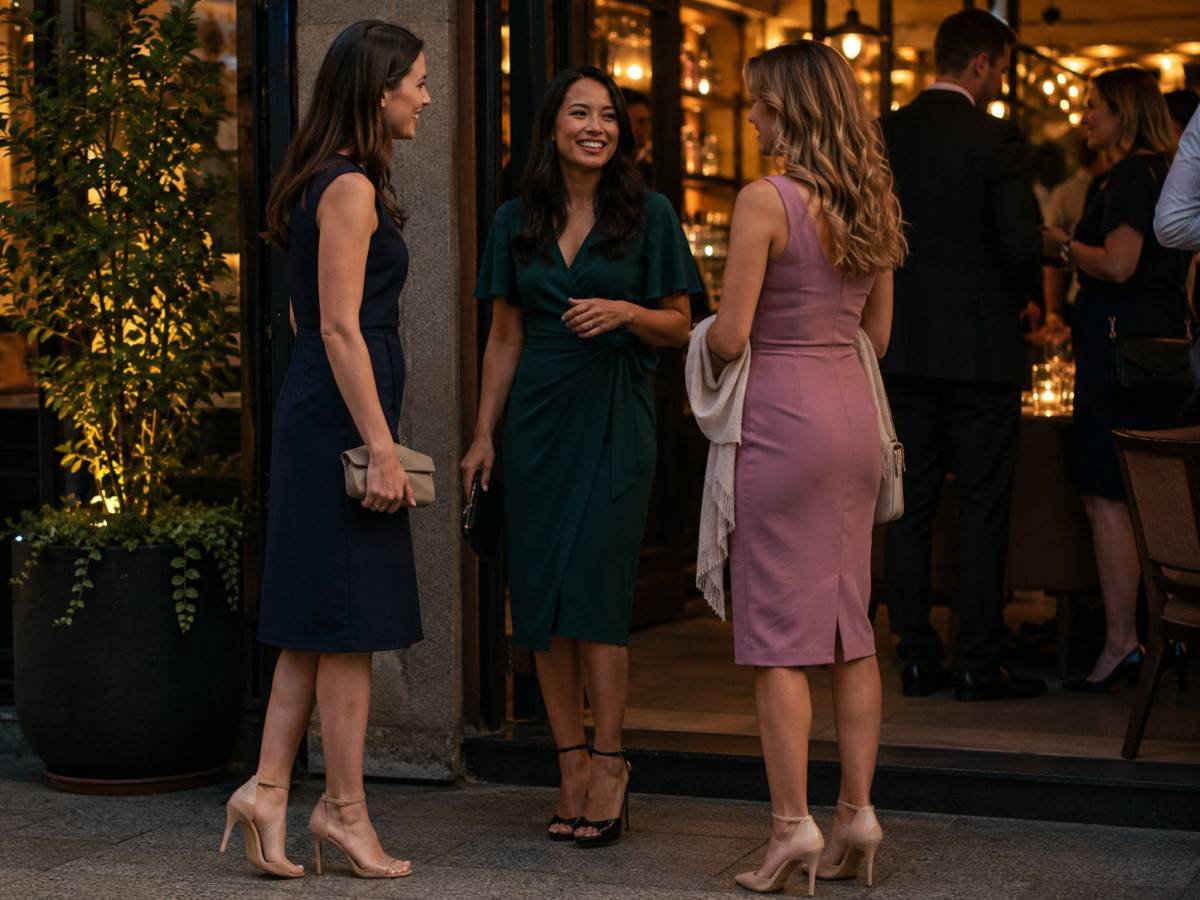
Try it on a real invite: “Cocktail attire, 4 p.m., vineyard terrace.” The word says polished, the hour says daylight, and the venue says outdoors and relaxed — so a midi in a soft color with block heels beats a dark, body-hugging dress and stilettos. Same word, a very different call than 8 p.m. at a downtown loft.
What “Cocktail” Really Asks For
Cocktail is the code people misread most, in both directions. It sits between semi-formal and casual: dressed up and put-together, but with room to have fun. In practice that means a knee-length or midi dress, a tailored jumpsuit, or polished separates — not a floor-sweeping gown, and not jeans and sneakers.
Two myths cause most cocktail mistakes. The first is that cocktail means “long gown,” which pushes people to overdress; save full-length for black-tie. The second is that “room to have fun” means anything goes, which pushes people to underdress; a cocktail line on the invite still rules out denim, flip-flops, and beachwear.
A dress isn’t the only cocktail-appropriate answer. A well-cut jumpsuit or a matching top-and-skirt set reads just as put-together, and both photograph cleanly. Whatever the silhouette, let the venue set your shoe: block heels or dressy flats for grass and cobblestones, a finer heel for a hard floor indoors.
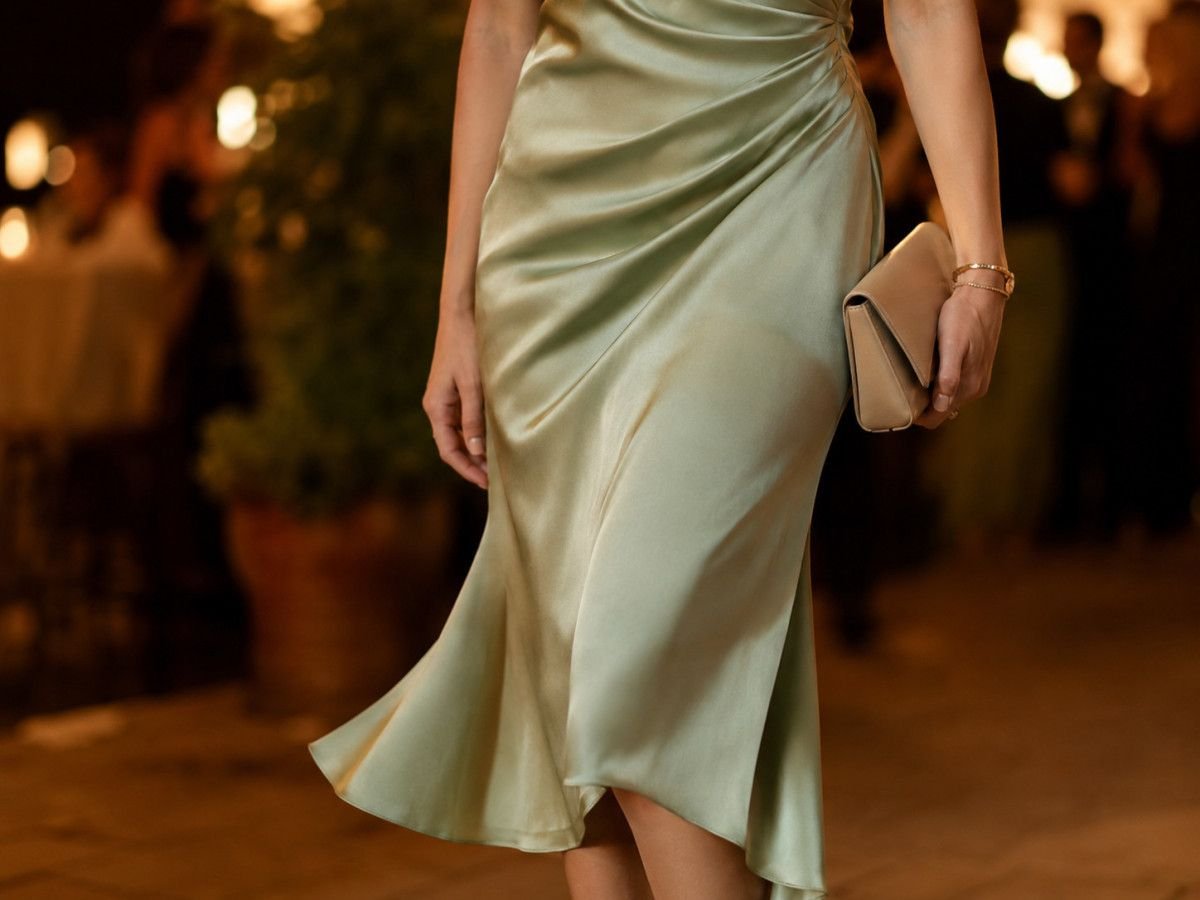
The dress itself does a lot of the work here. For an indoor cocktail party, a smooth, glossy dress fabric with real drape can make a simple cut feel more evening-ready without pushing it into formal gown territory. Look for a finish that catches soft light and skims the body rather than clinging to it. That kind of movement helps the outfit hold a clean line from the first drink to the last dance.
The Look-Alikes That Trip Everyone Up
A cocktail rarely arrives alone. The codes right next to it — semi-formal, festive, and dressy casual — cause the most last-minute panic because the difference between them is subtle. For a guest, the goal is not to memorize fashion rules; it is to avoid standing out for the wrong reason. This table lays the common party codes side by side.
| Dress code | Formality level | Typical outfit | Common misstep |
| Dressy casual | Lowest of the four | Elevated separates, a simple day dress, clean flats or low heels | Reading “casual” too literally and arriving in errand clothes |
| Cocktail | Middle | Knee-to-midi dress or sharp jumpsuit, heels, one statement piece | Wearing a full-length gown, or defaulting to jeans |
| Festive | Middle, seasonal | A cocktail base with holiday color, sparkle, or bold texture | Treating “festive” as a costume instead of a dressed-up outfit |
| Semi-formal | Highest of the four | A more sophisticated midi or a refined suit, plus an evening bag | Dressing it down to cocktail level and looking underdressed |
The quick rule: dressy casual and semi-formal are cocktails’ neighbors one step down and one step up, and festive is a cocktail with a seasonal accent — so if you own one strong cocktail outfit, you’re only a couple of adjustments away from all four.
When the Invite Skips the Dress Code Entirely
Plenty of invitations list a time and a place but no dress code at all, which throws people more than a confusing one does. The fix is to let the venue and the occasion stand in for the missing word.
A backyard barbecue, kids’ birthday, or casual brunch reads as dressy casual. A bridal shower, baby shower, milestone birthday dinner, or engagement party at a restaurant usually revolves around cocktails. A wedding reception, charity event, or hotel ballroom celebration leans semi-formal. Time of day still applies: daytime pulls everything lighter and softer, while evening adds more structure.
When you truly can’t tell, aim for the middle of the range. A simple midi dress or elevated separates rarely reads as wrong, while jeans or a floor-length gown easily can. Middle-of-the-road is the safest place to land when the invite gives you nothing to go on.
Make One Outfit Fit Almost Any Party Dress Code
You don’t need a separate outfit for every invitation. One versatile dress in a solid, mid-length cut is the anchor; accessories and layers do the rest. Here’s how to move it along the scale:
- Dress it down for dressy casual — swap heels for clean flats or ankle boots and add a relaxed jacket, so the silhouette reads easy rather than formal.
- Keep it as-is for cocktail — add heels, a clutch, and one statement earring or necklace to land in the middle of the range.
- Push it up for semi-formal — trade the clutch for a structured evening bag, add height to the heel, and keep jewelry refined rather than playful.
- Make it festive — layer in a seasonal color, a metallic shoe, or a textured wrap without changing the base dress.
Color and season do some of the lifting too. Deeper tones and richer textures push a look toward evening and cooler months; lighter shades and airier finishes pull it toward daytime and warm weather. Matching those to the invite’s time and season is often the difference between an outfit that’s merely appropriate and one that clearly reads as thought-through — without buying anything new. A deep-green midi with a metallic heel, for instance, suits an evening holiday party; the same dress in a blush tone with strappy sandals works for a spring afternoon shower.
This is also where making your own occasion pieces pays off. Sewists who buy fabric by the yard can match a trusted dress pattern to the exact weight and drape a party code calls for: lighter for a summer garden shower, smoother for a cocktail dinner, and slightly more structured for an evening celebration. That is the kind of pattern a fabric retailer like Global Fabric Wholesale tends to see: the most repeat-worthy occasion looks are often adaptable mid-length pieces, not single-event showpieces.
The next time an invitation stops you at the dress-code line, skip the panic buy. Check the wording, the time, and the venue first. Then place the code against its neighbors and adjust one outfit you already trust. Once you read the invite that way, dressing for a party becomes less about guessing and more about showing up ready to enjoy the celebration.