Did you find an old blue-seal dollar bill in a drawer and wonder about its value? You might be holding a Series 1957-A silver certificate, a unique piece of American financial history. In fact, the 1957 series was the first U.S. paper money to feature the motto “In God We Trust.” But what is a 1957-A dollar bill worth today?
This guide provides a complete value chart for the 1957-A silver certificate, helps you grade its condition right at home, and reveals the secrets that make some of these blue-seal notes worth hundreds of dollars to collectors.
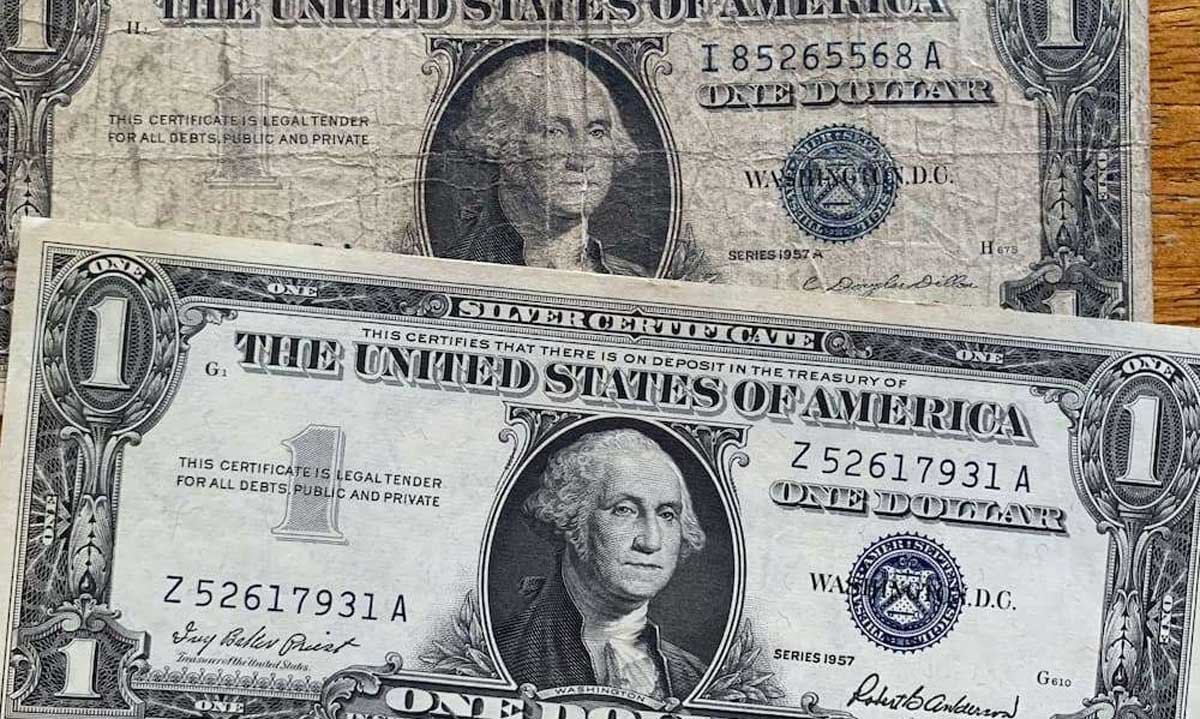
What Is a 1957-A Silver Certificate?
A Series 1957-A silver certificate is a type of United States paper money that was once redeemable for its face value in silver dollar coins or silver bullion. These notes are easily identifiable by their distinctive blue Treasury seal and blue serial numbers, which set them apart from the green seals on modern Federal Reserve Notes.
While they are still considered legal tender, you can no longer exchange them for silver. The redemption period for silver certificates officially ended on June 24, 1968. Today, their value is primarily determined by their condition, rarity, and demand from the numismatic community.
The Story Behind the “A” and the Smith-Dillon Signatures
The “A” in “Series 1957-A” signifies a change in the officials whose signatures appear on the bill. The U.S. Treasury updates the series letter whenever a new Secretary of the Treasury or Treasurer of the United States is appointed.
The 1957 series was printed with three different letter designations. The standard Series 1957 carries the signatures of Robert B. Anderson (Secretary) and Ivy Baker Priest (Treasurer). The Series 1957-A carries the signatures of C. Douglas Dillon (Secretary) and Elizabeth Rudel Smith (Treasurer). Finally, the Series 1957-B carries the signatures of C. Douglas Dillon (Secretary) and Kathryn O’Hay Granahan (Treasurer).
The 1957-A notes, also known by their Friedberg number FR-1620, represent the period when Smith and Dillon were in office together. While all three series are common, collectors often seek to acquire one of each to complete a set.
1957-A Dollar Bill Value Chart
The value of a 1957-A silver certificate depends almost entirely on its condition. A heavily circulated, folded, and worn bill is worth little more than its face value. However, a crisp, uncirculated note can be worth significantly more. Star notes, which are rarer replacement notes, carry an additional premium.
Below is a chart detailing the approximate values for the Series 1957-A dollar bill in various grades, from Poor (P-1) to Gem Uncirculated (GU-65).
| Grade | Condition Description | Standard Note Value | Star Note Value |
|---|---|---|---|
| P-1 | Poor (Rag-like, major damage) | $1.00 – $1.25 | $1.50 – $2.00 |
| G-4 | Good (Heavily circulated, many folds) | $1.50 – $2.00 | $2.50 – $3.50 |
| VG-8 | Very Good (Well-worn, rounded corners) | $2.00 – $3.00 | $4.00 – $5.00 |
| F-12 | Fine (Moderate wear, several folds) | $3.00 – $4.00 | $5.00 – $7.00 |
| VF-20 | Very Fine (Lightly circulated, crisp) | $4.00 – $6.00 | $8.00 – $12.00 |
| XF-40 | Extremely Fine (Minor folds, sharp) | $7.00 – $10.00 | $15.00 – $20.00 |
| AU-50 | About Uncirculated (Single corner fold) | $10.00 – $15.00 | $20.00 – $30.00 |
| CU-63 | Choice Uncirculated (Well-centered, no wear) | $15.00 – $25.00 | $35.00 – $50.00 |
| GU-65 | Gem Uncirculated (Pristine condition) | $30.00+ | $60.00+ |
Values are estimates based on recent auction results and retail prices from sources like PCGS and PMG. Market conditions can cause fluctuations.
How to Grade Your 1957-A Silver Certificate at Home
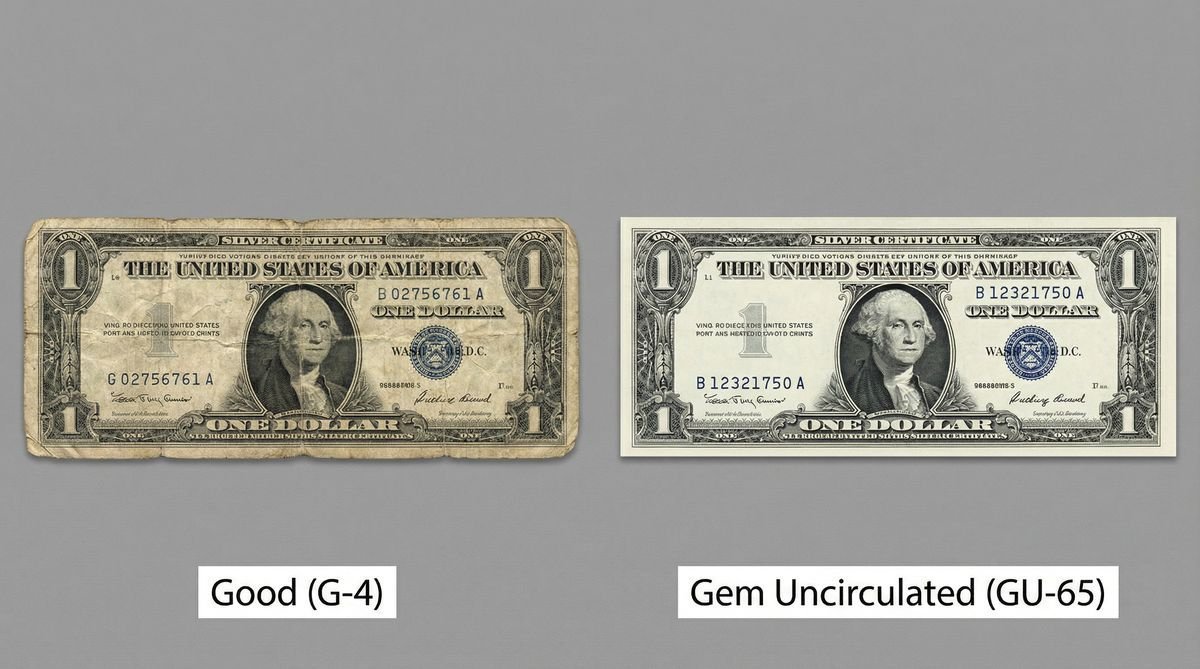
Professional grading provides the most accurate assessment, but you can get a good idea of your bill’s condition at home. Lay the note on a flat, clean surface and examine it for the following characteristics.
Start with crispness and rigidity: an uncirculated note will be stiff and feel new, while a heavily circulated note will be soft and limp. Next, look for folds and creases—from heavy, sharp creases that break the paper’s fibers to light, barely visible corner folds. A truly uncirculated note has zero folds.
Check the corners to see if they are sharp and pointed or rounded from wear. Inspect the surface condition for any dirt, stains, smudges, or writing. Finally, consider the overall eye appeal: does the note look bright and fresh, with vibrant colors and well-centered printing? By honestly assessing these features, you can place your note within the grading scale.
Is Your 1957-A a Valuable Star Note?
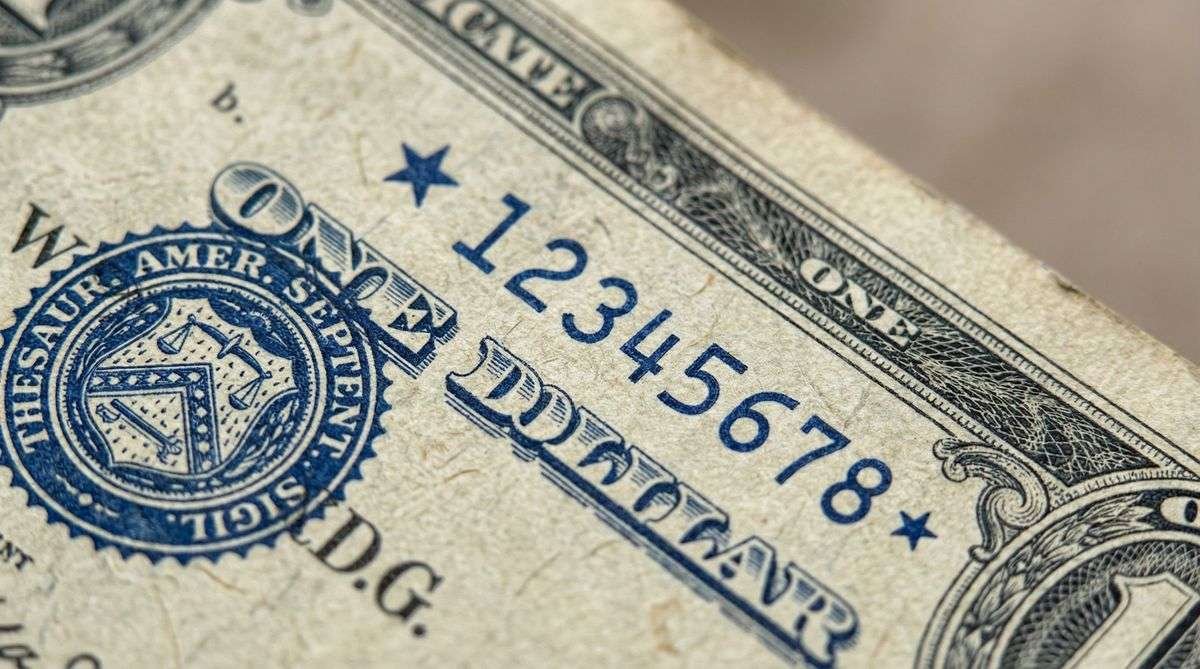
A “star note” is a special replacement note printed by the Bureau of Engraving and Printing (BEP) to replace a faulty bill discovered during the printing process. Because they are printed in much smaller quantities, star notes are rarer and more valuable to collectors.
You can easily identify a star note by looking at the serial number. If there is a solid star symbol (★) at the beginning or end of the eight-digit serial number, you have a star note. As shown in the value chart, a 1957-A star note is worth a significant premium over a standard note in the same condition. A Very Fine (VF-20) star note, for example, can be worth double the value of its common counterpart.
Rare 1957-A Errors to Look For
While most 1957-A notes are common, rare printing errors can make a bill significantly more valuable. A mismatched serial number error occurs when the two serial numbers printed on the note do not match. It is a rare and highly sought-after error that can make a bill worth hundreds of dollars. In 2019, a group of 20 sequential error notes sold for $13,200.
A stuck digit error happens when a digit in the serial number gets “stuck” during printing, appearing either higher or lower than the other numbers. A gutter fold error occurs when a crease in the paper before printing causes a blank, un-inked strip to run through the design—these are dramatic and quite valuable. Finally, insufficient inking can cause parts of the design to appear faint or missing entirely. If you suspect you have an error, it is best to have it authenticated by a currency expert.
Where to Sell Your 1957-A Dollar Bill
Once you have an idea of your note’s value, you have several options for selling it. A local coin shop can evaluate your note in person and make a cash offer. While the offer might be below retail value, it is a quick and secure way to sell. Online auction sites like eBay give you access to a massive market of collectors, often yielding a higher price, but require good photos, a clear description, and attention to shipping logistics.
For truly rare and high-value notes—such as high-grade star notes or significant errors—a major currency auction house like Heritage Auctions is the best venue. They have a global client base of serious collectors willing to pay top dollar.
Is It Worth Getting Your 1957-A Dollar Bill Graded?
Professional grading services like Paper Money Guaranty (PMG) and PCGS Banknote authenticate and encapsulate notes in a protective holder with a numeric grade. For common, circulated notes, the answer is no—the grading fee (typically $20–$40 per note) would exceed the bill’s value. For uncirculated notes, however, a high grade (CU-63 or better) can significantly increase the note’s value and make it easier to sell.
For star notes, especially in higher grades, grading authenticates the star and provides a concrete grade that justifies a higher asking price. For error notes, grading is absolutely essential to authenticate the error and establish its market value. As a general rule, if your note is in pristine condition or you suspect it has a valuable error, professional grading is a wise investment.
Frequently Asked Questions (FAQ)
What is the difference between a 1957 and 1957-A silver certificate?
The only difference is the signature combination. The 1957 series features signatures from Priest and Anderson, while the 1957-A series has signatures from Smith and Dillon. Their values are very similar in most grades.
Is a 1957-A dollar bill rare?
No, the 1957-A silver certificate is not considered rare. Billions were printed, and they are very common in circulated conditions. However, notes in pristine, uncirculated condition, star notes, and those with printing errors are much scarcer.
What does the “A” mean on a 1957 dollar bill?
The “A” indicates the first significant change to the bill’s design after the original 1957 series was approved. In this case, it was a change in the Treasurer and Secretary of the Treasury whose signatures appear on the note.
Can I still get silver for my 1957-A dollar bill?
No, the ability to redeem silver certificates for silver ended on June 24, 1968. The notes are still legal tender for their face value of one dollar, but their collectible value is often higher.
What is the most expensive 1957-A silver certificate ever sold?
While specific auction records for a 1957-A can be hard to isolate, high-grade examples with rare serial numbers or significant errors can sell for hundreds or even thousands of dollars. For example, a 1957 note with a solid serial number of 88888888 sold for $8,700 in 2022.