This is where the landscape shifts. Modern businesses are discovering a smarter approach to customer interaction—one that combines artificial intelligence, real-time automation, and genuine personalization. Konversky represents this transformation. Rather than forcing customers into rigid communication channels, it meets them where they are, understands what they need, and responds instantly with relevant solutions.

Konversky is an AI-driven conversational marketing platform designed to replace static customer interactions with dynamic, two-way conversations that actually convert. It combines behavioral intelligence, natural language processing, and data analytics to understand customer intent in real-time and respond with precision.
But here’s what matters most: this isn’t just another chatbot tool. Konversky learns from every interaction, adapts to your specific business context, and integrates seamlessly with your existing systems. The result? Businesses report conversion rate improvements of 30-50%, faster sales cycles, and significantly higher customer satisfaction scores.
This guide cuts through the marketing noise. You’ll discover exactly what Konversky does, how it actually works behind the scenes, which industries benefit most, and whether it makes sense for your business. More importantly, you’ll learn the implementation mistakes that cost companies thousands and the metrics that prove ROI.
Whether you’re evaluating Konversky for the first time or trying to maximize an existing deployment, this article provides the insights you need to make confident decisions.
Understanding Konversky: Beyond the Buzzword
What Konversky Really Is
Konversky is fundamentally different from the tools most businesses currently use. At its core, it’s an AI-powered conversational marketing platform that automates customer interactions while maintaining a human touch. Think of it as the bridge between traditional customer service and modern marketing automation.
The platform operates on three core pillars: artificial intelligence that understands context, automation that handles repetitive tasks, and analytics that measure what actually works. Unlike basic chatbots that follow rigid scripts, Konversky learns from each conversation. It recognizes patterns in customer behavior, adapts responses in real-time, and continuously improves its effectiveness.
What makes this distinction critical? Traditional tools force customers into predetermined paths. Konversky creates paths based on what customers actually need. The difference in results is substantial.
The Three Dimensions of Konversky
Understanding Konversky requires looking at it from three angles. The technical dimension involves AI and natural language processing that interprets customer intent. The strategic dimension focuses on how these conversations drive business outcomes—more conversions, higher customer lifetime value, stronger brand loyalty. The operational dimension addresses the practical reality: automation reduces workload, speeds response times, and scales customer support without proportional cost increases.
These three dimensions don’t exist in isolation. They work together. Smart AI without strategic alignment wastes resources. Strategy without operational efficiency remains theoretical. Konversky’s power comes from integrating all three.
| Dimension | Focus | Key Benefit |
|---|---|---|
| Technical | AI & NLP | Accurate intent recognition |
| Strategic | Business outcomes | Revenue growth & loyalty |
| Operational | Efficiency & scale | Cost reduction & speed |
Why Konversky Matters Now
The timing isn’t accidental. Consumer expectations have fundamentally shifted. Seventy-five percent of customers now expect instant responses. They compare your customer service against Amazon, not against your industry competitors. This creates pressure that traditional tools simply cannot handle.
Simultaneously, businesses face a paradox: customer acquisition costs keep rising while support budgets face pressure to shrink. Konversky solves this paradox. It handles high-volume interactions automatically while freeing human teams to focus on complex issues that require genuine expertise.
The technology has also matured. AI was experimental five years ago. Today, it’s proven and reliable. Companies that adopt it now gain competitive advantage. Those that wait risk falling behind.
How Konversky Works: The Technical Foundation
AI-Powered Intent Recognition
Here’s where Konversky’s intelligence becomes evident. When a customer sends a message, the platform doesn’t just match keywords. It uses natural language processing to understand the underlying intent. Is this person trying to make a purchase? Are they seeking information? Do they need technical support? Are they frustrated and at risk of churning?
This distinction matters enormously. A customer asking “Do you have this in size 10?” needs a different response than someone asking “What’s your return policy?” Both involve products, but the intent differs fundamentally.
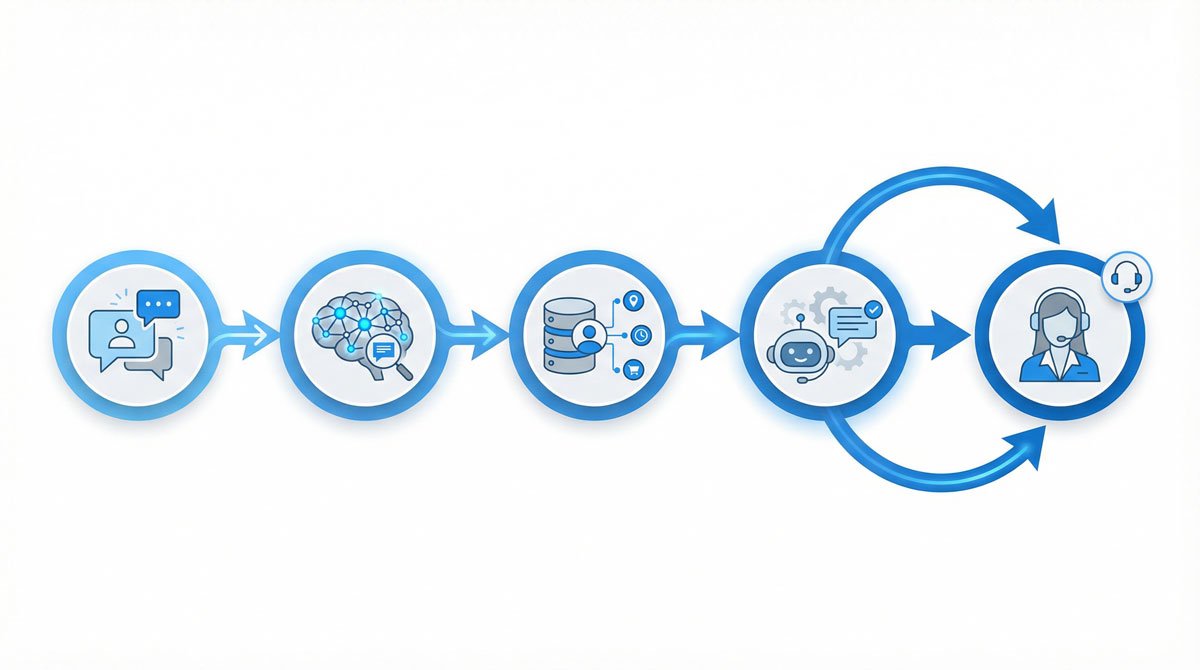
Konversky’s AI analyzes language patterns, context clues, and historical data to classify each interaction into intent categories. This classification happens instantly—within milliseconds. The system then triggers the appropriate response pathway. A purchase inquiry might route to product recommendations. A support question might escalate to a specialist. A price inquiry might trigger a limited-time offer.
This isn’t magic. It’s sophisticated pattern recognition trained on thousands of real conversations. The system learns what language patterns correlate with specific intents and improves accuracy over time.
Behavioral Data Integration
Intent recognition alone tells only part of the story. Konversky also integrates behavioral data—the digital footprints customers leave as they interact with your business.
The platform tracks page visit history, time spent on specific products, shopping cart contents, previous conversation history, and referral sources. This data layer transforms generic responses into personalized conversations. Instead of saying “Check out our products,” the system might say “We noticed you’ve been looking at our blue running shoes. We just restocked your size.”
This personalization creates a psychological shift. Customers feel understood rather than targeted. They’re more likely to engage, more likely to purchase, and more likely to return.
Privacy and compliance matter here. Konversky handles data collection and storage according to GDPR, CCPA, and industry-specific regulations. Transparency about data usage builds trust rather than eroding it.
Real-Time Automation with Human Escalation
The hybrid approach distinguishes Konversky from pure automation or pure human support. Routine interactions—FAQs, booking requests, order status checks—get handled automatically. This frees human teams for complex conversations that require judgment, empathy, or specialized knowledge.
When a conversation becomes complicated, Konversky doesn’t just disconnect. It escalates seamlessly to a human agent while preserving the entire conversation history. The agent doesn’t start from scratch asking “What’s your issue?” They see the full context and continue naturally.
This hybrid model delivers the best of both worlds: the efficiency of automation and the effectiveness of human expertise. Customers get faster responses for simple issues and genuine help for complex ones.
| Process Stage | Traditional Method | Konversky |
|---|---|---|
| Intent Recognition | Manual categorization by support staff | AI automatically identifies intent in milliseconds |
| Response Generation | Pre-written templates | Personalized, context-aware responses |
| Escalation | Manual transfer, context loss | Seamless escalation with full conversation history |
| Learning & Improvement | Static, requires manual updates | Continuous learning from each interaction |
| Handling Volume | Requires proportional staff increase | Scales without proportional cost increase |
Core Features That Drive Results
Multi-Channel Communication Mastery
Customers don’t live in a single channel. They browse on your website, ask questions on Facebook, check email, and text their friends. Konversky operates across all these touchpoints simultaneously.
The platform maintains a unified conversation history regardless of channel. A customer who starts a conversation on your website can continue it via email without repeating information. This continuity feels natural to customers and dramatically improves satisfaction.
Multi-channel integration also solves a critical operational problem: fragmented data. Without unified systems, support teams work in silos. One team handles chat, another handles email, another handles social media. Customers notice the inconsistency. Konversky eliminates this by creating a single source of truth for all customer interactions.
Real-Time Analytics and Insights
Data without insights is just noise. Konversky transforms raw interaction data into actionable intelligence.
Real-time dashboards show which conversation topics drive conversions, where customers get stuck, which responses generate the highest engagement. Managers can identify bottlenecks immediately rather than discovering them in monthly reports.
This speed matters. If customers consistently abandon conversations at a specific point, you can fix it today rather than waiting until next quarter. If a particular response generates exceptional results, you can replicate it across similar scenarios. This continuous optimization compounds over time.
Analytics also reveal customer sentiment. The system flags frustrated customers automatically, enabling proactive intervention before they churn.
Advanced Personalization Engine
Generic responses feel impersonal. Personalized responses feel like genuine help.
Konversky’s personalization goes beyond inserting a customer’s name. It considers purchase history, browsing behavior, previous interactions, and stated preferences. The system recommends products based on what similar customers purchased, not just what’s popular. It adjusts communication tone based on customer interaction style. It offers relevant solutions at the right moment in the customer journey.
This level of personalization requires sophisticated algorithms. But the result is straightforward: customers feel understood. They’re more likely to engage, more likely to purchase, and more likely to become repeat customers.
Seamless Integration Capabilities
Konversky doesn’t exist in isolation. It connects with your existing business systems.
CRM integration means customer data flows automatically. Marketing automation platforms receive qualified leads without manual handoff. E-commerce systems update inventory in real-time. Payment processors handle transactions securely. APIs and webhooks enable custom integrations for specialized business needs.
This integration eliminates manual data entry, reduces errors, and ensures all systems work in concert. A customer interaction in Konversky automatically updates their CRM profile, triggers relevant marketing campaigns, and informs inventory management. The business operates as an integrated whole rather than disconnected pieces.
Industry Applications and Real-World Impact
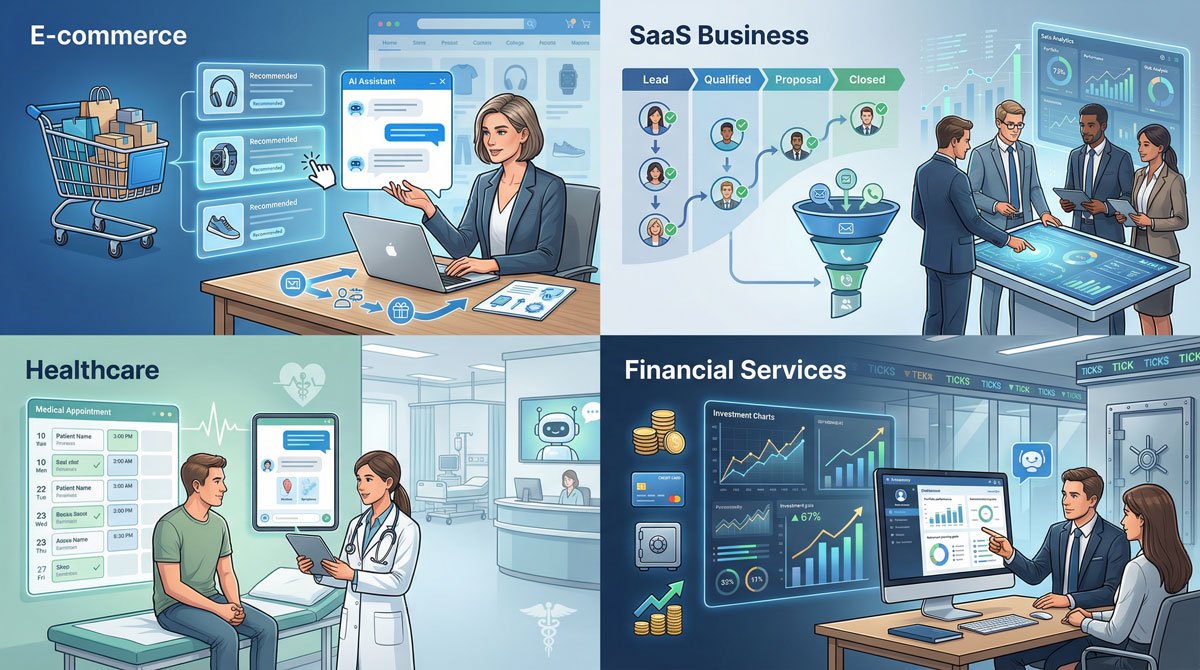
E-Commerce: Converting Browsers into Buyers
Online retailers face a specific challenge: high traffic but low conversion. Customers browse extensively but abandon carts at alarming rates. Konversky addresses this directly.
When a customer views a product page, Konversky can initiate a conversation offering size recommendations, answering material questions, or highlighting limited inventory. These timely interventions happen at the moment of highest purchase intent. For a customer hesitating between two products, a quick comparison from an AI assistant often tips the decision.
Cart abandonment recovery becomes automated yet personal. Rather than generic “Come back and finish your purchase” emails, Konversky reminds customers about specific items they viewed, mentions if prices have changed, or offers a limited-time discount. E-commerce companies report 30-50% conversion rate improvements after implementing conversational commerce.
SaaS: Accelerating Sales Cycles
Software-as-a-Service companies operate on different dynamics. Sales cycles are longer. Decision-making involves multiple stakeholders. Qualification is critical.
Konversky accelerates this process. When a prospect visits your website, the platform qualifies them automatically. It asks qualifying questions, identifies their specific use case, and routes them to appropriate resources. High-potential leads get fast-tracked to sales teams. Lower-potential inquiries receive educational content instead.
This qualification happens 24/7, even outside business hours. Prospects get immediate attention rather than waiting for Monday morning. Sales teams focus on genuinely qualified opportunities rather than sorting through unqualified leads. The result: shorter sales cycles and higher close rates. SaaS companies typically see 40% reduction in sales cycle length.
Healthcare and Professional Services
Appointment scheduling consumes enormous administrative resources. Patients call, wait on hold, provide information repeatedly, and often still don’t get appointments.
Konversky transforms this. Patients can schedule appointments via chat, providing necessary information conversationally. The system checks provider availability, handles insurance verification, and sends confirmations. Administrative staff focus on complex cases rather than routine scheduling.
Beyond scheduling, Konversky handles patient education and post-appointment follow-up. Patients receive personalized guidance based on their condition. Healthcare providers improve patient outcomes while reducing administrative burden. Professional services firms use similar approaches for client intake and project scoping.
Financial Services: Building Trust Through Conversation
Financial services require trust and expertise. Customers need guidance, not just transactions.
Konversky enables financial institutions to provide personalized advice at scale. Customers can ask about account features, investment options, or financial planning. The platform provides accurate information while flagging when human expertise is needed.
This approach improves customer retention. Rather than customers leaving when they have questions, they get immediate helpful responses. It also enables proactive outreach. The system identifies customers who might benefit from specific products based on their financial profile and initiates relevant conversations.
Financial services companies report 45% improvement in customer satisfaction and 25% reduction in support costs.
| Industry | Primary Use Case | Key Benefit | Expected Improvement |
|---|---|---|---|
| E-Commerce | Product recommendations & cart recovery | Increased conversions | +30-50% conversion rate |
| SaaS | Lead qualification & sales acceleration | Shorter sales cycles | -40% sales cycle length |
| Healthcare | Appointment scheduling & patient education | Reduced admin burden | +60% efficiency gain |
| Financial Services | Account support & product guidance | Improved retention | +45% satisfaction |
Implementation Strategy and Common Pitfalls
The Implementation Timeline
Successful Konversky implementation follows a predictable timeline. Understanding this helps set realistic expectations and avoid rushed deployments that fail.
Weeks 1-2: Planning & Requirements. Define business objectives, identify key use cases, and audit current systems. What problems are you solving? Which customer interactions matter most? How does Konversky fit your existing tech stack?
Weeks 3-4: Conversation Design. This is where many implementations stumble. Design conversation flows that feel natural, not robotic. Map customer journeys. Identify decision points. Test flows with real users before deployment.
Weeks 5-6: Integration & Testing. Connect Konversky to your CRM, e-commerce platform, and other systems. Test data flows. Verify that customer information syncs correctly. Run security audits.
Weeks 7-8: Training & Launch. Train your team. Create documentation. Go live with monitoring. Track metrics from day one.
Week 9+: Optimization. Analyze performance data. Refine conversation flows. Expand to new use cases. This phase never really ends—continuous improvement is the goal.
Critical Success Factors
Implementation success depends on five factors. First, clear business objectives. Don’t implement Konversky just because it’s trendy. Define specific, measurable goals. Second, cross-functional collaboration. Marketing, sales, support, and IT must align. Siloed thinking causes implementation failure.
Third, data quality and preparation. Konversky learns from your data. Poor data produces poor results. Clean your customer data before implementation. Fourth, realistic expectations. Konversky isn’t magic. It amplifies good processes and exposes bad ones. Fifth, continuous performance monitoring. Track metrics religiously. Use data to guide optimization decisions.
Companies that succeed on these five factors see positive ROI within 6-12 months.
Common Implementation Mistakes to Avoid
Learning from others’ mistakes accelerates your success.
Mistake 1: Overly Complex Conversation Flows. Teams often design flows that anticipate every possible question. This creates confusing, hard-to-maintain systems. Start simple. Add complexity only when data proves it’s necessary.
Mistake 2: Ignoring Data Privacy and Compliance. Konversky handles customer data. GDPR, CCPA, and industry-specific regulations apply. Ensure proper consent mechanisms, data handling policies, and security measures. Compliance isn’t optional.
Mistake 3: Expecting Immediate Results Without Optimization. Konversky improves through iteration. First-week performance rarely matches month-three performance. Commit to continuous refinement.
Mistake 4: Insufficient Staff Training and Change Management. Your team must understand not just how to use Konversky, but why it matters. Poor training leads to underutilization and frustration.
Mistake 5: No A/B Testing and Experimentation. Don’t assume your first approach is optimal. Test different conversation styles, response times, and escalation triggers. Let data guide decisions.
Mistake 6: Treating It as a Cost Center Rather Than Revenue Driver. Konversky should improve revenue or reduce costs. If neither is happening, your implementation needs adjustment.
Pre-Implementation Checklist
- Business objectives clearly defined and documented
- Key stakeholders aligned across departments
- Customer data audited and cleaned
- Compliance requirements identified and addressed
- Current systems documented for integration planning
- Team training schedule established
- Success metrics and KPIs defined
- Conversation flows designed and tested
- Integration testing completed
- Monitoring and analytics dashboards configured
Measuring Success: ROI and Key Metrics
Essential Metrics to Track
What gets measured gets managed. Konversky success requires tracking the right metrics.
Conversion Rate measures the percentage of interactions that result in desired outcomes—purchases, appointments, qualified leads. Track this before and after implementation to quantify improvement.
Average Order Value (AOV) reveals whether personalization and recommendations increase transaction size. Konversky often increases AOV by 15-25% through intelligent upselling.
Customer Acquisition Cost (CAC) shows how much you spend to acquire each customer. Konversky reduces CAC by automating lead qualification and nurturing.
Customer Lifetime Value (LTV) measures total revenue from a customer relationship. Improved engagement typically increases LTV by 20-40%.
Response Time and Resolution Rate indicate operational efficiency. Faster responses and higher first-contact resolution improve both customer satisfaction and cost metrics.
ROI Calculation Framework
Understanding ROI requires identifying costs and benefits.
Costs include: software licensing, implementation services, staff training, integration work, and ongoing maintenance. Most Konversky implementations cost $15,000-$50,000 initially, then $500-$2,000 monthly depending on volume.
Benefits include: increased conversions (revenue), reduced support costs (savings), improved retention (LTV increase), and reduced customer acquisition costs.
A typical calculation: If Konversky increases conversions by 35% and your average order value is $200, each 100 additional monthly conversions generates $7,000 in additional revenue. At $1,500 monthly software cost, you achieve ROI within weeks.
Most businesses see positive ROI within 6-12 months. Some see it within 2-3 months, particularly in high-volume environments.
| Metric | Baseline | 6 Months Later | Change | Impact |
|---|---|---|---|---|
| Monthly Conversions | 500 | 675 | +35% | +$35,000 revenue |
| Average Order Value | $200 | $235 | +17.5% | +$8,750 revenue |
| Customer Satisfaction | 72% | 85% | +18% | Increased retention |
| Support Cost per Ticket | $25 | $18 | -28% | $3,500 monthly savings |
| Customer Lifetime Value | $1,200 | $1,560 | +30% | Stronger business model |
Net Impact: $47,250 additional revenue + $3,500 monthly savings = Positive ROI achieved in Month 2
Beyond Numbers: Qualitative Benefits
Metrics don’t capture everything valuable.
Brand perception improves when customers experience responsive, personalized service. They perceive your company as modern and customer-focused.
Customer loyalty increases when interactions feel genuinely helpful rather than transactional. Loyal customers spend more and refer others.
Employee satisfaction rises when support teams focus on complex issues rather than repetitive questions. Meaningful work reduces burnout and turnover.
Competitive advantage builds as you respond faster and more intelligently than competitors still using outdated tools. This advantage compounds over time.
These qualitative benefits often exceed quantitative metrics in long-term value.
Konversky vs. Traditional Alternatives: A Comprehensive Comparison
Konversky vs. Traditional Chatbots
Traditional chatbots follow rigid decision trees. They work well for simple, predictable questions but fail when customers deviate from expected paths. A customer asking an unexpected question gets a frustrating “I don’t understand” response.
Konversky’s AI understands context and intent, not just keywords. It handles unexpected questions gracefully and learns from each interaction. Traditional chatbots require manual updates when new questions emerge. Konversky adapts automatically.
Cost comparison: Traditional chatbots cost $200-$500 monthly but require constant maintenance. Konversky costs more initially but requires less ongoing management due to self-learning capabilities.
Konversky vs. Email Marketing Automation
Email automation excels at scheduled, one-way communication. It works well for newsletters and promotional campaigns. But it’s inherently asynchronous. Customers wait hours or days for responses.
Konversky operates in real-time. A customer asking a question gets an immediate answer. This responsiveness dramatically improves satisfaction and conversion rates.
Email automation can’t handle complex conversations. Konversky manages multi-turn dialogues naturally. Email can’t recognize intent. Konversky does automatically.
The tools serve different purposes. Smart businesses use both—email for campaigns, Konversky for customer conversations.
Konversky vs. Live Chat Solutions
Live chat provides human interaction but doesn’t scale. Each conversation requires a human agent. During peak hours, customers wait in queues. Outside business hours, they get no response.
Konversky handles high volume automatically while escalating complex issues to humans. It works 24/7 without additional staffing costs. Live chat requires proportional staff increases to handle volume growth.
Live chat agents often repeat information across conversations. Konversky maintains conversation history, providing continuity.
The hybrid approach is optimal: Konversky handles routine interactions automatically, human agents focus on complex conversations requiring judgment and empathy.
| Feature | Traditional Chatbot | Email Automation | Live Chat | Konversky |
|---|---|---|---|---|
| Real-Time Response | ✓ | ✗ | ✓ | ✓✓ |
| AI-Powered Personalization | ✗ | ✓ | ✗ | ✓✓ |
| Automation Level | ✓ | ✓✓ | ✗ | ✓✓ |
| Cost Efficiency | ✓ | ✓✓ | ✗ | ✓✓ |
| Learning & Improvement | ✗ | ✗ | ✗ | ✓✓ |
| Handles Complex Conversations | ✗ | ✗ | ✓ | ✓✓ |
| 24/7 Availability | ✓ | ✓✓ | ✗ | ✓✓ |
| Scalability | ✗ | ✓ | ✗ | ✓✓ |
| Human Escalation | ✓ | ✗ | ✓ | ✓✓ |
| Multi-Channel Support | ✗ | ✓ | ✗ | ✓✓ |
Frequently Asked Questions
- 1. What exactly is Konversky, and how is it different from traditional communication tools?
- Konversky is an AI-powered conversational marketing platform that combines artificial intelligence, real-time automation, and behavioral analytics to create dynamic customer interactions. Unlike traditional tools that follow rigid scripts or require human intervention, Konversky learns from each conversation and adapts responses in real-time. It understands customer intent, personalizes interactions based on behavioral data, and seamlessly escalates complex issues to human agents while maintaining conversation context. The key difference is that Konversky creates personalized customer journeys rather than forcing customers into predetermined paths. It operates 24/7 without proportional cost increases, handles multiple communication channels simultaneously, and continuously improves through machine learning.
- 2. How does Konversky’s AI actually improve customer engagement?
- Konversky’s AI improves engagement through three mechanisms. First, it recognizes customer intent instantly through natural language processing, ensuring responses match what customers actually need rather than what they literally asked. Second, it personalizes every interaction by integrating behavioral data—purchase history, browsing patterns, previous conversations—creating conversations that feel genuinely helpful. Third, it learns continuously from each interaction, identifying which response patterns generate the highest engagement and replicating them across similar scenarios. This combination creates a psychological shift where customers feel understood rather than targeted. They’re more likely to engage, more likely to purchase, and more likely to become repeat customers. The result: 30-50% conversion improvements and 45% satisfaction increases in real-world implementations.
- 3. What measurable ROI can businesses expect from implementing Konversky?
- Most businesses achieve positive ROI within 6-12 months, with some seeing results within 2-3 months. The calculation depends on your specific metrics, but here’s a typical scenario: If Konversky increases conversions by 35% and your average order value is $200, each 100 additional monthly conversions generates $7,000 in revenue. At $1,500 monthly software costs, ROI is achieved within weeks. Beyond revenue increases, businesses typically see 28% reduction in support costs per ticket, 30% improvement in customer lifetime value, and 18% increase in customer satisfaction. Implementation costs range from $15,000-$50,000 initially, then $500-$2,000 monthly. The key is defining clear business objectives before implementation and tracking metrics religiously. Companies that do this consistently see 3-5x return on investment within the first year.
- 4. Which industries benefit most from Konversky, and why?
- Konversky delivers significant value across multiple industries, but four sectors see exceptional results. E-commerce benefits from real-time product recommendations and cart abandonment recovery, achieving 30-50% conversion improvements. SaaS companies accelerate sales cycles by 40% through automated lead qualification and 24/7 prospect engagement. Healthcare providers reduce administrative burden by 60% through automated appointment scheduling and patient education. Financial services firms improve customer retention by 45% through personalized advice at scale and proactive outreach. The common thread: all these industries handle high-volume customer interactions that benefit from automation, require personalization to drive conversions, and operate across multiple channels. Industries with lower interaction volumes or simpler customer journeys see less dramatic improvements but still benefit from efficiency gains and improved customer satisfaction.
- 5. What are the most common mistakes companies make when implementing Konversky?
- The six most costly mistakes are: First, designing overly complex conversation flows that anticipate every possible question. This creates confusing systems that are hard to maintain. Start simple and add complexity only when data proves it’s necessary. Second, ignoring data privacy and compliance requirements. GDPR, CCPA, and industry-specific regulations apply. Ensure proper consent mechanisms and security measures before launch. Third, expecting immediate results without optimization. Konversky improves through iteration—first-week performance rarely matches month-three performance. Fourth, insufficient staff training and change management. Your team must understand not just how to use Konversky, but why it matters. Fifth, no A/B testing and experimentation. Don’t assume your first approach is optimal. Test different conversation styles and let data guide decisions. Sixth, treating Konversky as a cost center rather than a revenue driver. It should improve revenue or reduce costs. If neither is happening, your implementation needs adjustment.
- 6. How does Konversky integrate with existing business tools and systems?
- Konversky integrates with your existing tech stack through multiple methods. CRM integration means customer data flows automatically between systems—interactions in Konversky automatically update customer profiles. Marketing automation platforms receive qualified leads without manual handoff. E-commerce systems update inventory in real-time based on conversations. Payment processors handle transactions securely. APIs and webhooks enable custom integrations for specialized business needs. The integration process typically takes 2-3 weeks and includes data mapping, security audits, and testing. Most businesses integrate with 3-5 core systems initially, then expand to additional tools as they optimize. The key benefit: this integration eliminates manual data entry, reduces errors, and ensures all systems work in concert. A customer interaction in Konversky triggers relevant marketing campaigns, updates CRM records, and informs inventory management automatically.
- 7. Is Konversky suitable for small businesses, or is it only for enterprises?
- Konversky works for businesses of all sizes, but implementation approach differs. Small businesses (1-50 employees) typically start with a single use case—e-commerce product recommendations or appointment scheduling—and expand gradually. Their ROI often comes faster because they have fewer legacy systems to integrate. Mid-market companies (50-500 employees) implement across multiple departments simultaneously, requiring more planning but delivering broader impact. Enterprise companies (500+ employees) deploy comprehensive solutions across multiple business units. The key factor isn’t company size—it’s interaction volume. Businesses handling 100+ customer interactions daily see immediate ROI. Those with lower volumes still benefit from efficiency gains and improved satisfaction, but ROI takes longer. Konversky offers flexible pricing that scales with your needs, making it accessible for small businesses while powerful enough for enterprises. Many small businesses start with basic functionality at $500-$1,000 monthly and expand as they grow.
Conclusion: The Future of Customer Engagement is Conversational
The shift from broadcast communication to conversational engagement isn’t coming—it’s already here. Customers expect instant, personalized responses. Businesses that deliver this experience win customers, loyalty, and revenue. Those that don’t fall behind.
Konversky represents this shift in practical form. It combines artificial intelligence, automation, and human judgment into a system that actually improves business outcomes. The evidence is clear: companies using conversational marketing see 30-50% conversion improvements, 40% faster sales cycles, and significantly higher customer satisfaction.
But numbers tell only part of the story. The real value lies in what conversational engagement enables: genuine customer relationships at scale. When customers feel understood rather than targeted, when they get help instantly rather than waiting, when their preferences are remembered and respected—they become loyal advocates.
The implementation challenges are real. The learning curve exists. But the companies that navigate these challenges successfully gain competitive advantages that compound over time. Early adopters establish market positions that later entrants struggle to overcome.
The question isn’t whether conversational engagement matters. It’s whether you’ll lead this transition or follow it.
Here’s what successful companies do next:
1. Assess Your Current State. Evaluate your existing customer communication channels. Where are the biggest friction points? Which interactions consume the most resources? Which customer segments are most underserved? This assessment takes 30 minutes and clarifies your priorities.
2. Define Your Specific Goals. Don’t implement Konversky for general improvement. Define specific, measurable objectives. “Reduce support response time by 50%.” “Increase e-commerce conversion rate by 25%.” “Qualify 80% of inbound leads automatically.” Clear goals guide implementation and measure success.
3. Run a Pilot Program. Start small. Pick one use case, one customer segment, or one channel. Run a 4-week pilot. Measure results. Learn what works in your specific context. Pilots reduce risk and build internal confidence.
4. Plan Your Full Deployment. Use pilot learnings to design your comprehensive rollout. Set realistic timelines. Allocate resources. Prepare your team. Success requires planning, not just enthusiasm.
The companies that start this journey today will own customer relationships tomorrow. The question is whether that will be your company.
Ready to Transform Your Customer Engagement?
Discover how Konversky could revolutionize your customer interactions and drive measurable business results.