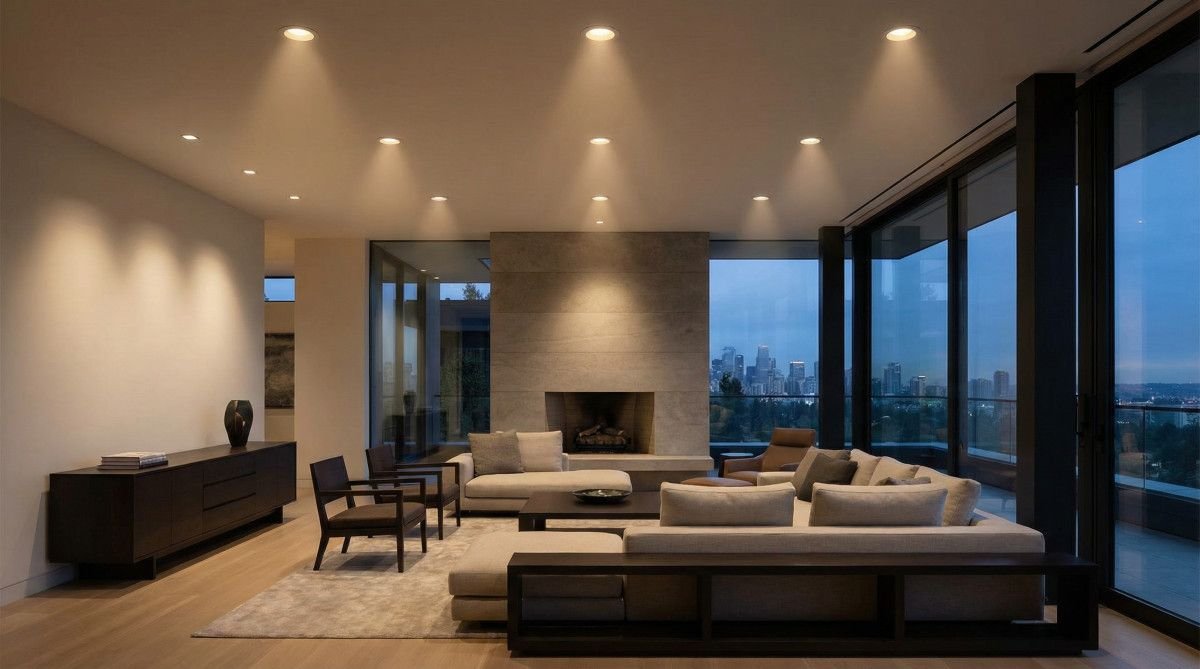
The installation of recessed lighting, often referred to as pot lights or can lights, represents one of the most effective ways to modernize a home’s interior while improving overall illumination. Unlike traditional surface-mounted fixtures that can clutter a ceiling, recessed lights sit flush within the structure, providing a clean, architectural look that distributes light evenly across a room. Whether you are aiming to highlight specific artwork or simply eliminate dark corners in a basement, mastering the installation of recessed lighting allows for a customized ambiance that enhances both functionality and property value. This guide provides a comprehensive walkthrough of the process, from selecting the right fixtures to final wiring and troubleshooting.
Essential Tools and Safety Preparations
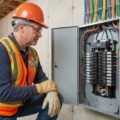
Successful installation of recessed lighting begins with rigorous safety protocols and the right equipment. Before cutting, you must de-energize circuits at the breaker and verify with a voltage tester. Essential tools include a hole saw, wire strippers, and a stud finder to navigate ceiling joists safely and efficiently. This proactive approach prevents accidental contact with live wires and ensures that each fixture is positioned correctly within the ceiling cavity.
According to the Electrical Safety Foundation International (ESFI) (2024), nearly half of all home electrical fires are caused by faulty wiring or equipment, emphasizing the critical need for proper preparation in any DIY electrical project. Beyond basic safety, having the correct tools on hand is the difference between a messy afternoon and a professional-grade finish. You will need a high-quality stud finder to locate ceiling joists, as these structural members often dictate where a light can or cannot be placed. A specialized hole saw attachment for your drill is also recommended, as it creates perfectly circular openings with minimal drywall damage. Additionally, a non-contact voltage tester is an indispensable safety tool that allows you to confirm a circuit is dead without touching bare copper.
| Essential Tool | Primary Purpose |
|---|---|
| Non-Contact Voltage Tester | Verifies that the power is off before handling wires |
| Stud Finder | Locates ceiling joists to avoid structural interference |
| Hole Saw (Adjustable) | Cuts precise circular openings in the drywall ceiling |
| Wire Strippers | Removes insulation from NM-B (Romex) electrical cable |
| NM-B Cable (14/2 or 12/2) | Transports power between the source and the light fixtures |
| Fish Tape | Pulls electrical wire through finished wall or ceiling cavities |
Before you begin the physical work, always clear the area below the installation site and cover furniture with drop cloths. Drilling into drywall creates a significant amount of fine dust that can be difficult to clean if not managed from the start. Some DIYers use a halved basketball or a plastic bowl as a dust shield around their drill bit to catch debris as it falls. Once your tools are gathered and your workspace is protected, you can move on to the planning phase, where the actual layout and fixture selection will define the final aesthetic of your room.
Planning Your Layout and Choosing Fixtures
Planning your layout requires balancing aesthetics with structural constraints like joist spacing. Choosing between IC-rated (Insulation Contact) and non-IC fixtures is critical for fire safety in insulated attics. Modern canless LED options simplify the process by eliminating bulky housings while offering adjustable color temperatures for customized room ambiance. This careful planning stage is the foundation for a professional installation that is both visually appealing and safe for long-term use.
The decision between IC-rated and non-IC-rated fixtures is perhaps the most critical technical choice you will make during the installation of recessed lighting. According to the National Fire Protection Association (NFPA) (2023), fixtures that are not IC-rated must maintain a minimum three-inch clearance from all insulation to prevent overheating and potential fire hazards. In contrast, IC-rated housings are designed to be in direct contact with insulation, making them the standard choice for most modern residential attics. For those working in spaces with limited ceiling clearance or no attic access, canless LED recessed lights have become a popular alternative. These ultra-slim fixtures do not require a traditional “can” housing; instead, they use a small, separate junction box that fits through the same hole as the light itself.
| Fixture Type | Best For | Key Advantage |
|---|---|---|
| IC-Rated Can | Insulated Attics | Safe for direct contact with insulation |
| Non-IC Rated Can | Uninsulated Basements | Lower cost for open-ceiling projects |
| Canless LED | Remodels & Tight Spaces | Extremely slim profile, no housing needed |
| Retrofit LED | Existing Can Upgrades | Easiest way to modernize old fixtures |
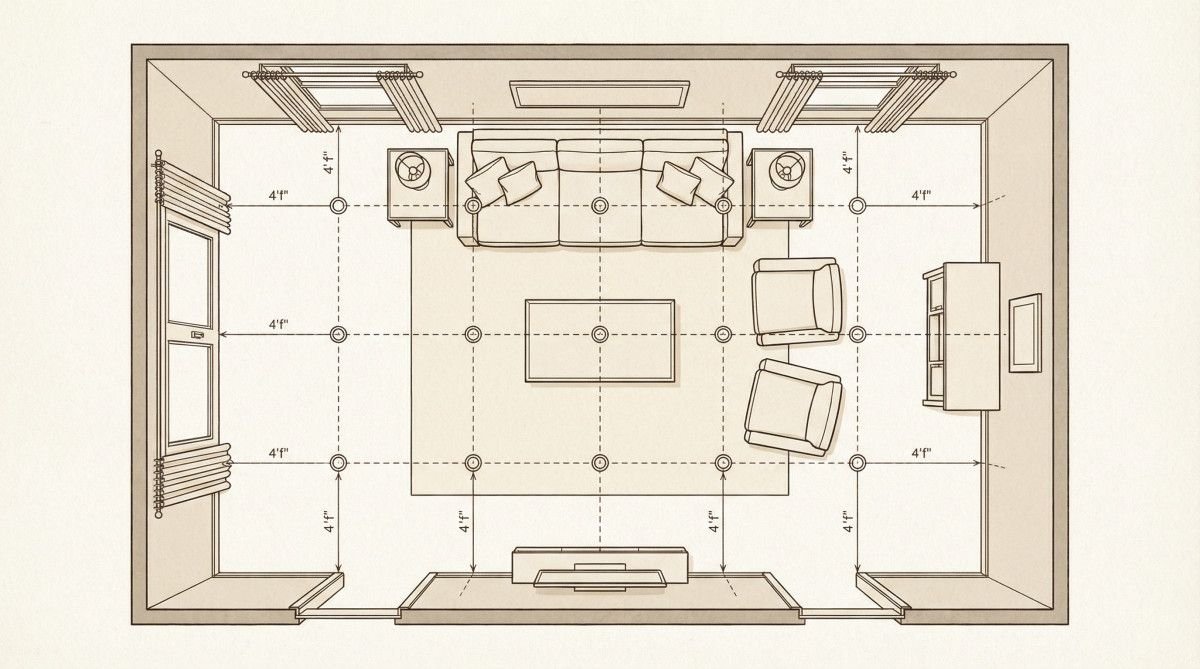
Beyond safety ratings, the physical layout of your lights will determine the room’s mood and functionality. A common rule of thumb for general illumination is the “four-foot rule,” which suggests spacing lights approximately four feet apart and at least two feet from the walls to avoid harsh shadows. However, this spacing can vary based on ceiling height; for every foot of height, you may need to adjust the distance between fixtures to maintain even light distribution. Using painters’ tape to mark potential light locations on the ceiling is a highly effective way to visualize the final result before making any permanent cuts. This also allows you to use a stud finder to ensure your planned locations do not overlap with ceiling joists, which would require a significant shift in your layout. Once your plan is solidified and your fixtures are selected, you are ready to move on to the physical installation and wiring.
Step-by-Step Installation and Wiring
The physical installation involves cutting precise holes using a template and daisy-chaining NM-B cable between fixtures. Each junction box must be securely wired—matching black to black and white to white—before snapping the spring-loaded clips into the ceiling. This ensures a flush, professional fit that meets standard electrical codes. The process is straightforward if you follow a logical sequence and double-check each connection as you go.
According to the Department of Energy (DOE) (2024), properly installed LED recessed lighting can use up to 75% less energy and last 25 times longer than traditional incandescent bulbs, making it a highly efficient home upgrade. To begin, use the template provided with your light kit to trace a circle at each marked location on your ceiling. If you are using a hole saw, align the center bit with your mark and drill steadily until the drywall core is removed. If you are using a manual drywall saw, drill a small pilot hole first and then cut carefully along your traced line. Once the holes are open, you will need to run your NM-B (Non-Metallic) cable from your power source to the first light, and then “daisy-chain” additional lengths of cable between each subsequent fixture. This method simplifies the wiring by using a single circuit for all the lights in the room.
| Installation Step | Action Required | Key Safety Tip |
|---|---|---|
| Trace & Cut | Use a template and hole saw for precision | Wear a respirator and eye protection |
| Run Cable | Pull NM-B cable between each ceiling hole | Leave 12-18 inches of slack at each hole |
| Strip Wires | Remove 6 inches of outer jacket and 1/2 inch of insulation | Avoid nicking the copper conductors |
| Wire J-Box | Connect black to black, white to white, and ground to ground | Use UL-approved wire nuts or push-connectors |
| Mount Fixture | Push the housing into the hole and engage clips | Ensure the flange is flush against the ceiling |
When you reach the junction box for each light, open the cover and insert your cables through the built-in knockouts. Secure the cables with connectors to prevent them from being pulled out accidentally. Strip the individual wires and use wire nuts or push-in connectors to join the house wiring to the fixture’s leads. It is essential to ensure that the bare copper ground wire is securely connected to the green or bare ground wire in the junction box to maintain electrical safety. After all the connections are made, carefully fold the wires into the box and snap the cover shut. Finally, push the light fixture up into the ceiling hole until the flange is tight against the drywall, and then use your thumb to push the spring-loaded clips outward until they click into place. This mechanical connection holds the light securely without the need for additional screws or hardware.
Troubleshooting and Professional Finishing
Achieving a professional finish requires addressing common issues like dimmer flickering and improper trim seating. Ensure your LED fixtures are compatible with your dimmer switch to prevent buzzing or strobing. Finally, select a trim style—such as baffle or gimbal—that complements your interior design while minimizing glare for optimal visual comfort. These finishing touches will ensure that your installation of recessed lighting looks as good as it functions for years to come.
According to the Department of Energy (DOE) (2024), choosing the right LED dimmer is essential for both performance and energy efficiency. Traditional incandescent dimmers often use a “leading-edge” phase-cut signal that is incompatible with the electronic drivers in LED recessed lights, which may lead to flickering or a reduced dimming range. To avoid this, always use a modern ELV (Electronic Low Voltage) or CL (Compact Fluorescent/LED) rated dimmer switch. This ensures that the light output remains stable and the fixture operates at its full potential without any annoying buzzing or humming.
| Common Issue | Likely Cause | Recommended Solution |
|---|---|---|
| Flickering Lights | Incompatible Dimmer | Replace with an LED-rated CL or ELV dimmer |
| Buzzing Sound | Overloaded Circuit | Check total wattage and switch capacity |
| Uneven Gaps | Poorly Seated Trim | Adjust the spring clips or torsion springs |
| Dark Spots | Incorrect Spacing | Recalculate layout and add accent lighting |
The final aesthetic of your project is determined by the trim you choose. Baffle trims are the most common choice for general lighting, as their ribbed interior helps reduce glare and creates a softer light output. If you are aiming to highlight a specific architectural feature or a piece of artwork, a gimbal or “eyeball” trim is more appropriate, as it allows you to tilt the light source to a specific angle. For bathrooms or outdoor soffits, ensure that you use “wet-rated” trims that are designed to handle moisture and humidity. Once your trims are installed and your dimmers are tested, take a moment to inspect each fixture to ensure it sits perfectly flush against the ceiling. Any small gaps can often be fixed by gently adjusting the spring tension on the trim or housing. With these final steps completed, your new recessed lighting will provide a professional, integrated look that transforms the entire room.
Frequently Asked Questions
How hard is it to install recessed lighting yourself?
Installing recessed lighting is a moderately difficult DIY project that requires a basic understanding of electrical wiring and home construction. Most homeowners with some experience in home improvement can complete the task in a single day, especially when using modern canless LED kits that simplify the process.
Do you need an electrician to install recessed lighting?
While many DIYers successfully install recessed lighting, you should hire a licensed electrician if you are uncomfortable working with high-voltage electricity or if your project requires running new circuits. An electrician ensures that all connections meet local building codes and pass inspection for long-term safety.
Can I install recessed lighting without attic access?
Yes, you can install recessed lighting without attic access by using “remodel” housings or ultra-slim canless LED fixtures that are designed to be installed from below the ceiling. These fixtures use spring-loaded clips to secure themselves to the drywall, eliminating the need for structural access from above.
How much does it cost to have 4 recessed lights installed?
The cost to have four recessed lights professionally installed typically ranges from $400 to $1,200, depending on labor rates and the complexity of the wiring. For a DIY installation, the cost of materials for four LED fixtures and the necessary wiring usually falls between $100 and $300.
Is it better to have 4 or 6 inch recessed lights?
The choice between 4-inch and 6-inch recessed lights depends on the room’s size and the desired aesthetic. 6-inch lights are the traditional standard for general illumination in larger rooms, while 4-inch lights offer a more modern, minimalist look and are better suited for task lighting or smaller spaces.
What is the difference between IC-rated and non-IC-rated fixtures?
IC-rated (Insulation Contact) fixtures are designed to be safe when in direct contact with attic insulation, preventing overheating and potential fire hazards. Non-IC-rated fixtures require at least a three-inch clearance from insulation and are typically used in uninsulated ceilings or basements.
Conclusion
The installation of recessed lighting is a rewarding home improvement project that significantly enhances the ambiance and functionality of any living space. By following proper safety protocols, choosing the right fixtures for your ceiling type, and carefully planning your layout, you can achieve a professional-grade result that modernizes your home. Whether you opt for traditional can housings or the latest canless LED technology, the clean, integrated look of recessed lights provides a timeless lighting solution that improves both daily comfort and long-term property value.
References
- Electrical Safety Foundation International (ESFI) (2024). Home Electrical Safety.
- National Fire Protection Association (NFPA) (2023). National Electrical Code (NEC).
- Department of Energy (DOE) (2024). LED Lighting Basics and Efficiency.