A relaxed brunch loses its charm when the host spends the morning pouring coffee, searching for clean mugs, and answering questions about milk and sugar. A well-planned self-serve coffee station solves that problem quietly. Guests can prepare their drinks the way they like, and you can remain part of the gathering.
The setup does not need to resemble a café or offer every possible option. Choose a practical location, prepare enough coffee, arrange the essentials in a natural order, and finish the work before the doorbell rings. A few thoughtful decisions can make brunch easier for everyone.
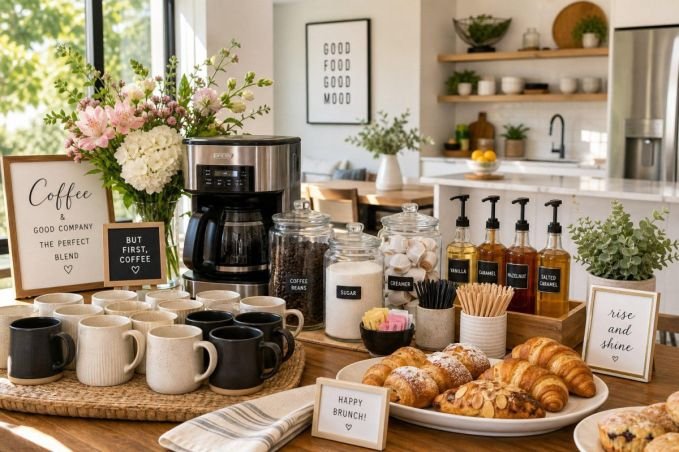
Choose a Spot That Keeps Guests Out of the Kitchen
Location shapes how smoothly the station works. Guests should be able to pour a drink without blocking the refrigerator, stove, sink, or main food preparation area.
A sideboard, buffet, bar cart, console table, or clear section of countertop can all work well. A kitchen island is another option, provided the station sits on the side away from active cooking. For a larger gathering, even a neatly dressed folding table in the dining area may be more practical than squeezing everything into the kitchen.
Keep the station easy to find, but leave enough space around the brunch table for chairs and foot traffic. When using an electric coffee maker or kettle, check that a nearby outlet is safely accessible.
Protect delicate surfaces with a heat-safe tray, runner, or serving board. This catches drips, defines the station visually, and makes cleanup easier. Leave enough open space for guests to set down a cup while adding milk or sweetener.
Match the Coffee Plan to the Guest List
Start by estimating how many guests are likely to drink coffee. A practical rule is to allow one to two cups per coffee drinker, with a little extra for refills. Morning brunches and longer gatherings usually call for more than a late-morning meal that lasts an hour.
The brewing method should suit the size and pace of the event. For four guests, one carafe with supplies ready for a second batch may be enough. For eight, begin with a larger batch and keep a refill plan nearby. For a bigger group, use equipment with enough capacity to avoid brewing individual cups throughout the meal.
Regular coffee can be the main option, with decaf available when you know guests will want it or when brunch extends later in the day. Tea drinkers will appreciate hot water and a small selection of tea bags, but keep that setup separate enough that it does not crowd the coffee area.
Convenience matters more than complexity. The best choice is one that keeps coffee warm, pours cleanly, and does not require the host’s constant attention.
Arrange Everything in the Order Guests Need It
A self-serve station should explain itself at a glance. Arrange the items from left to right, or in the opposite direction if that suits the room, following the order in which guests will use them.
Begin with mugs. Place the coffee next, followed by milk, cream, dairy-free alternatives, and sweeteners. Cinnamon, flavoured syrup, or another optional addition can come after the basics. Finish with spoons, stirrers, napkins, and a small dish for used spoons or empty packets.
When comparing coffee making systems, consider how many cups each method prepares, how much counter space it requires, and whether guests can serve themselves comfortably. The brewing method affects both the layout and the refill plan, so it helps to decide before arranging the rest of the station.
Keep handles and pouring areas unobstructed. Leave a small landing spot where someone can rest a cup while adding milk or stirring. Store extra mugs, napkins, coffee, and filters underneath the station or close by rather than crowding the main surface.
Do the Messy Work Before Anyone Arrives
Clean the coffee maker, carafes, and serving containers the night before. Measure the coffee, prepare filters, and organize the refill supplies in advance. On the morning of the brunch, time the first batch so it is ready shortly before guests arrive rather than sitting for a long stretch.
Keep milk and cream refrigerated until close to serving time. Small pitchers are better than large cartons because they look neater and can be replenished as needed. Return chilled items to the refrigerator between refills, especially during a long gathering.
Offer a dairy-free choice when it suits your guests. Oat or almond milk are familiar options, but there is no need to create an extensive menu. The same principle applies to sweeteners. Sugar and one alternative are usually enough unless the coffee bar is intended to be a featured part of the event.
| Item | Preparation Tip |
| Regular coffee | Prepare it shortly before guests arrive |
| Decaf | Label it clearly |
| Milk and cream | Serve in small pitchers and refill as needed |
| Dairy-free option | Choose one familiar alternative |
| Sweeteners | Offer sugar and one alternative |
Keep backup coffee, filters, napkins, and clean spoons out of sight but within easy reach. Refilling should take a moment, not interrupt the meal.
Add Details That Are Useful as Well as Pretty
A coffee station feels inviting when it looks considered, but decoration should never interfere with serving. Loosely coordinate the mugs and napkins with the brunch table through a shared colour or material rather than trying to match every piece.
One small vase of flowers or a bowl of seasonal fruit is enough. Place it behind the cups or at the far end of the station, away from hot equipment and pouring space. Trays and small bowls can organize sweeteners, spoons, tea bags, and wrappers without adding clutter.
Use labels only where they prevent confusion, such as identifying decaf coffee or dairy-free milk. Skip signs that repeat obvious instructions. Guests should be able to understand the setup without stopping to read a display.
For a smaller group, warming mugs with hot water before setting them out is a thoughtful touch. Add a pitcher of drinking water nearby, and tuck a clean cloth behind the station for quick spills.
A Simple Brunch-Morning Checklist
Breaking the preparation into three stages keeps small tasks from piling up just before guests arrive.
The Night Before
- Choose and clear the station location
- Clean the coffee equipment and serving containers
- Count mugs, spoons, and napkins
- Check coffee, filters, milk, and sweeteners
- Arrange trays, labels, and decorative details
- Set aside backup supplies
Thirty Minutes Before Guests Arrive
- Prepare the first batch of coffee
- Fill small milk and cream pitchers
- Set out sweeteners, spoons, and napkins
- Label decaf and dairy-free options
- Place drinking water nearby
- Wipe the surface and check the pouring space
During Brunch
- Check coffee levels occasionally
- Keep dairy products chilled between refills
- Clear used spoons, wrappers, and spills
- Restock without rearranging the station
Before the first guest arrives, stand where guests will stand and make a drink yourself. This quick test often reveals a missing spoon, an awkward handle, or a crowded area that needs a little more room.
A Brunch Setup That Lets Everyone Relax
A home coffee station does not need to look like a professional café. Its purpose is simpler: help guests feel comfortable and spare the host from repeated trips to the kitchen.
When mugs are easy to reach, choices are clearly labelled, and refills are ready, the station works without explanation. Guests can settle into the brunch at their own pace, and the person hosting it can sit down, join the conversation, and enjoy the coffee too.