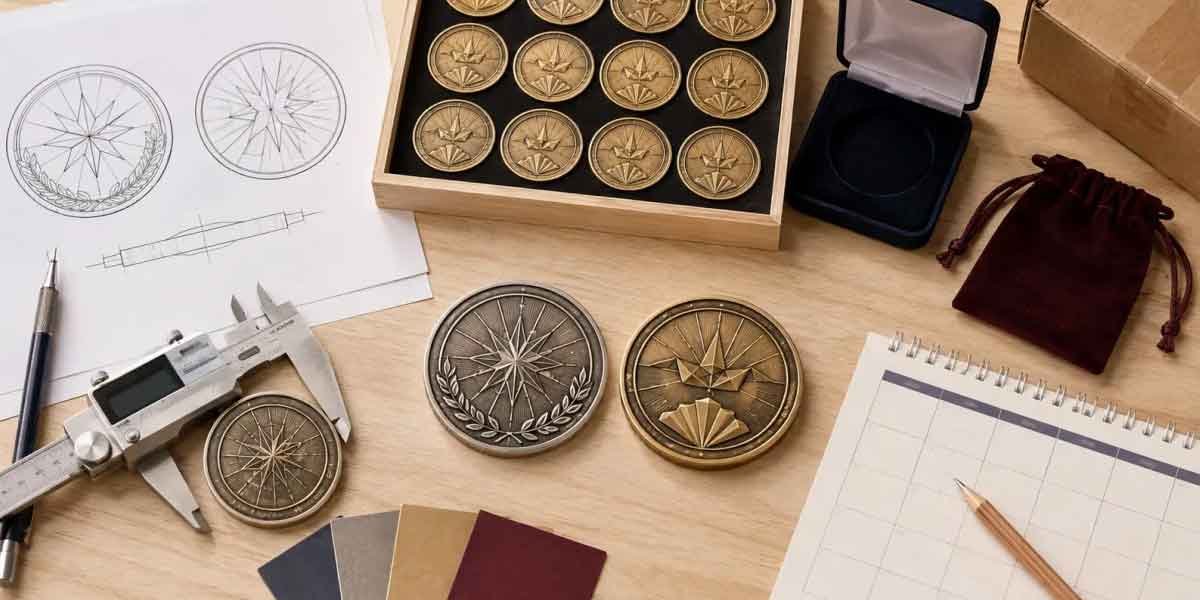
Custom challenge coins can turn an important event into something guests actually remember—long after the decorations come down and the venue gets cleaned up. Unlike disposable favors, a well-designed coin has enough weight, detail, and personal meaning to become a real keepsake. People hold onto them.
Challenge coins started in the military, but event organizers have been using them for decades now: retirement celebrations, company anniversaries, charity fundraisers, family reunions, awards ceremonies, club milestones, memorial events, and plenty of other occasions. The format works because a coin can carry a surprising amount of meaning in a small space. Names, dates, mottos, logos, symbols, locations, event themes—it all fits.
That said, ordering custom coins takes more planning than picking a ready-made party favor off a shelf. Size, material, finish, packaging, quantity, artwork approval, production time, and delivery all affect the final result. Getting clear on each one early keeps you from hitting crowded artwork, unexpected costs, or last-minute shipping panic.
Start With the Purpose of the Event
Before you pick a finish or request a quote, decide what the coin is actually supposed to represent.
A retirement ceremony coin should feel formal and personal—the recipient’s name, years of service, a department emblem, a short message. A family reunion coin can be warmer and more relaxed, built around a family name, reunion location, year, or something meaningful to the group. Coins for a charity event might carry the organization’s logo, campaign message, and event date.
Before anything else, work through these questions:
- Who’s receiving the coin?
- What specific moment should it mark?
- Will guests carry it, display it, or receive it in a presentation box?
- Does the design need individual names or numbering?
- Will the organization reorder the same design for a future event?
- Is the event date fixed, or is there some flexibility in the schedule?
These answers drive nearly every production decision that follows. A commemorative coin that lives in a display case can handle more detail and a larger diameter than something people will drop in a pocket every day.
Choose a Design That Works on Metal
Event artwork usually starts with invitations, posters, logos, or digital files. Those materials can give you a solid starting point—but a design built for a screen doesn’t automatically work on metal. That’s a distinction a lot of first-time buyers miss until they’re staring at a disappointing proof.
Thin lines can disappear during production. Small lettering gets muddy. Busy backgrounds compete with the main emblem and make everything harder to read. Strong coin designs rely on clear shapes, distinct metal borders, and a disciplined amount of text. If it looks complicated on paper, it’ll look worse at 45mm.
Start with one strong visual anchor—an event logo, family crest, anniversary number, building, badge, mascot, monogram, or a symbolic image the group actually connects with. Use the reverse side for supporting details: dates, names, locations, mottos, or sponsor information.
Don’t forget the edge. Depending on the production method, you can choose a smooth edge, rope pattern, reeded edge, diamond-cut treatment, or engraved wording. Edge text works well for short dates, names, and event phrases—just don’t put anything there that guests need to read right away.
If you haven’t settled on a format yet, reviewing different custom challenge coin options can help you compare traditional round coins with custom shapes, bottle-opener styles, relief designs, enamel finishes, and formats built around presentation.
Match the Size and Thickness to the Occasion
Bigger isn’t always better. The right dimensions depend on the artwork, how the coin will be presented, and how people will actually use it after the event.
A compact coin—38mm or 44mm—suits simple logos, short wording, and everyday carrying. A larger format (50mm or above) gives detailed artwork more room and feels more ceremonial when it’s handed over. Added thickness creates a stronger feel in the hand, but it also pushes material costs and shipping weight upward.
Here’s a step most buyers skip: before you approve the size, print the artwork at the actual coin diameter. A design that looks clean on a 27-inch monitor can become completely unreadable at 45mm. Check the smallest lettering, the narrow gaps between design elements, and whether the main emblem still holds up when everything gets scaled down to production size.
Think about how guests will interact with the coin, too. Oversized or unusually shaped pieces make a strong visual statement at the presentation moment, but they tend to end up in drawers rather than pockets. For an event with a broad audience, a familiar round shape usually offers the best balance between appearance, cost, and long-term usability.
Select Materials and Finishes With the Mood in Mind
Material and finish shape more than just the look of the coin. They affect weight, texture, what kind of detail is achievable, and how valuable the coin feels when someone picks it up for the first time.
Brass has a dense, traditional feel—well suited to executive awards, formal anniversaries, military-style presentations, and retirement ceremonies where gravitas is the whole point. Zinc alloy gives manufacturers more freedom for complex shapes, cutouts, deep relief, spinner structures, and larger formats. Iron can support budget-conscious bulk orders, though it comes with fewer structural possibilities and a noticeably lighter feel in hand.
For the plating, match the tone of the event:
- Antique gold, silver, or brass adds depth and character—well suited to heritage, service, reunion, and memorial themes
- Polished gold or silver produces a brighter, more formal presentation
- Black nickel gives modern or high-contrast artwork a bold edge
- Matte plating reduces glare and creates a softer, contemporary result
- Dual plating combines two metal tones to highlight separate design areas
Color fill works the same way. Soft enamel leaves raised metal borders slightly higher than the colored areas, creating a textured surface you can feel with a fingernail. Hard enamel is smoother and more polished throughout. Coins without enamel—relying entirely on metal relief and plating—can look understated and traditional, which suits certain events better than bright colors would.
The key is to choose based on what the artwork actually calls for, not just what looks appealing in a sample photo from the supplier.
Calculate the Quantity Carefully
Most organizers need more coins than the confirmed guest count alone suggests. Often significantly more.
Start with the attendance estimate, then add coins for speakers, sponsors, volunteers, staff, vendors, photographers, and people who can’t attend but should still receive one. Leave room for replacements, future displays, press packages, and the inevitable last-minute additions to the list. A 10–15% overage above your initial count is a reasonable planning cushion for most events.
If this event might become an annual tradition, think about whether to order extras now or lock in the production specifications for a future reorder. Either way, store the approved artwork, color references, dimensions, plating instructions, packaging details, and final proof in one clearly labeled folder somewhere you’ll actually find it in 12 months.
Individual personalization needs its own planning track. Sequential numbers, recipient names, award levels, or separate department variations can affect both price and production time. Send personalization details in a clean spreadsheet—one row per coin—and triple-check the spelling before it goes to the factory. A name misspelled on a retirement coin is not a small problem.
For events with distinct groups, decide early whether one shared design works or whether each group needs its own variation. A reunion might use the same front design with different years on the back. A company celebration might use separate enamel colors for employees, partners, and award recipients.
Choose Packaging That Supports the Presentation
Packaging should match how and where the coin will actually be distributed—not just how it looks on a product page.
A simple protective pouch or capsule works fine for casual events, welcome bags, and mailed gifts. A velvet pouch adds a more polished touch without adding much bulk. Presentation boxes suit awards, retirement ceremonies, donor recognition, and formal corporate events where the handoff itself is part of the experience.
Practical considerations matter here, too. Packaging protects coins from scratching during storage, transportation, and event setup. If staff will be placing hundreds of coins at individual seats, the packaging needs to be easy to organize and quick to handle at volume. If the coins are traveling inside gift bags alongside other items, oversized boxes create real logistical problems.
Custom insert cards can carry context that won’t fit on the coin itself—the story behind the symbol, a thank-you message, campaign information, or event branding. They’re especially useful when the coin design is intentionally minimal and the narrative belongs somewhere else.
Confirm packaging before production starts. A change after the coins are already finished can affect carton dimensions, shipping weight, assembly time, and the delivery schedule in ways that are genuinely hard to recover from.
Build the Timeline Backward From the Event Date
The event date should drive the entire production plan. Work backward from it—not forward from when you feel ready to start.
One thing event planners consistently underestimate: the manufacturer’s production window is only one part of the timeline. The full schedule includes artwork preparation, design revisions, proof approval, mold creation, sampling if required, mass production, quality inspection, packaging, international shipping, customs processing, and local delivery. Air freight from an overseas factory to a U.S. destination typically runs 7–10 business days after production wraps. Sea freight can take six to eight weeks. Neither of those figures includes customs delays.
Start with the date the coins physically need to be in your hands—not the event date itself. Leave time to count the shipment, inspect individual coins, organize them by recipient, and get everything ready for distribution.
Artwork approval causes more delays than manufacturing does. Multiple people may need to confirm names, dates, logos, colors, and official wording. Decide in advance who has final authority. Route feedback through one channel instead of collecting separate rounds of conflicting comments from five different people—that alone can eat a week.
If the deadline is tight, simplify the design. A standard round shape, a common plating option, two or three enamel colors, and standard packaging will move through production faster than a custom die-cut shape with six colors and individual name engraving. Rush shipping can recover a day or two at the end. It can’t fix late artwork decisions at the beginning.
Compare Suppliers Before Placing a Bulk Order
The lowest quote doesn’t always mean the same product. Two suppliers can calculate pricing using different materials, thicknesses, plating systems, quality standards, packaging types, or shipping terms—and still describe it as “250 custom coins.”
Ask every supplier to quote from the same written specification. Include:
- Coin dimensions and thickness
- Base material
- Front and back design requirements
- Two-dimensional or three-dimensional relief
- Plating finish
- Enamel type and number of colors
- Edge treatment
- Individual numbering or engraving
- Packaging
- Required quantity
- Sample requirements
- Delivery destination and required arrival date
For international orders, a comparison of Chinese challenge coin manufacturers can help you evaluate production capabilities, customization options, minimum quantities, and how different suppliers position themselves in the market.
After shortlisting, evaluate communication with the same rigor you apply to price. A supplier worth working with will flag artwork problems before mold-making begins, explain clearly which details need adjustment, and confirm specifications in writing. Vague answers at the quote stage tend to become expensive misunderstandings once production is underway.
Review the Proof at Actual Size
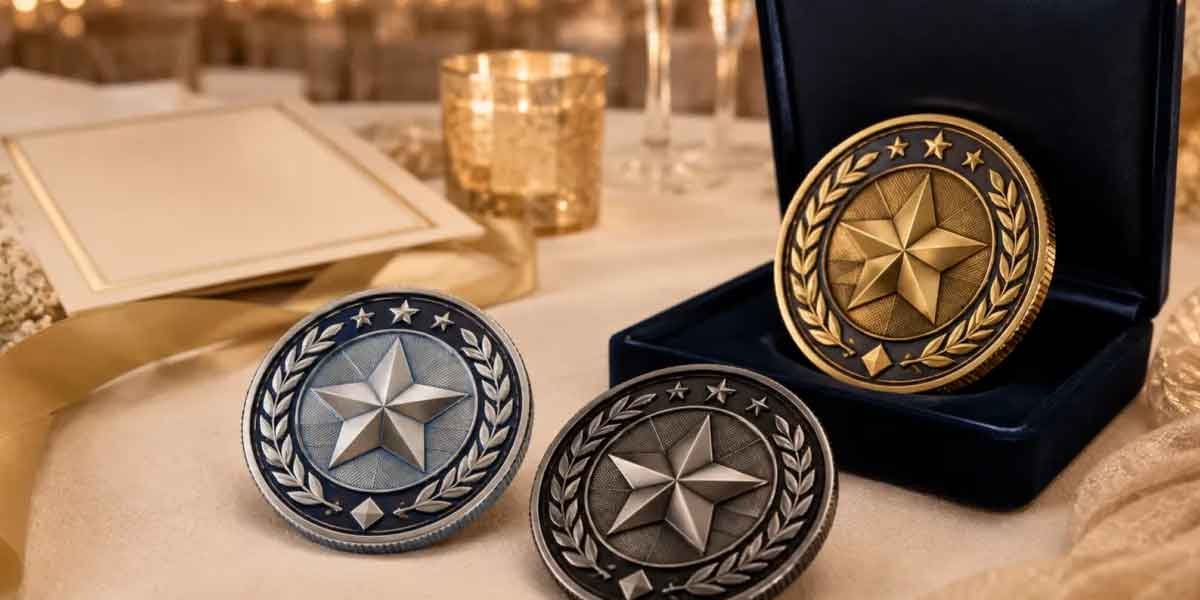
The digital proof becomes the production reference. Treat approval as a real checkpoint—not a formality to get through so the order can move forward.
Read every word, date, number, name, logo, and symbol. Confirm the front-to-back orientation. Make sure the metal finish appears in the right areas, enamel colors match the approved references, raised and recessed sections line up with the design intent, and edge details and packaging notes are correct.
Then print it at the final coin size and hand it to someone who hasn’t been staring at it for a week. A fresh reviewer catches spelling errors and misplaced details that the project owner has mentally corrected a dozen times without realizing it.
For high-value events or complex designs, a physical sample is worth the extra lead time it requires. Holding the actual coin—feeling the weight, checking the relief depth, examining the plating and edge finish, reviewing the packaging together—reveals things a PDF proof simply can’t. If the schedule is already very tight, it won’t always be possible. But when presentation quality genuinely matters, it’s the right call.
Inspect the Order When It Arrives
When the shipment arrives, open several cartons—not just the top layer of one box.
Compare the finished coins against the approved proof and sample. Check for readable text, consistent enamel colors, even plating across front and back, clean edges, correct quantities, and undamaged packaging. If there are personalized coins, pull a sample from the batch and check names individually against the original recipient list.
Report any concerns immediately, with clear photographs. Don’t wait until the day before the event, when replacement or correction options have essentially disappeared.
Once the order passes inspection, store the coins somewhere dry and clean inside their packaging until the team is ready to distribute.
One Last Thing
A successful challenge coin starts with a clear purpose and a realistic timeline. The designs that hold up aren’t the ones that tried to fit everything onto one small surface—they chose a strong central image, kept the text under control, matched the material to the occasion, and let the packaging carry some of the weight.
Order more than you think you’ll need. Check every personalized detail at least twice. Hold every supplier to the same written specification. And build the schedule from the arrival date backward, not from whenever it feels like a good time to start.
When those decisions get made early, a challenge coin stops being another item in a gift bag. It becomes the thing people actually remember from the event.