Real estate negotiation is often the most stressful yet financially significant part of the homebuying journey. Understanding how to negotiate the price of a home effectively can save a buyer tens of thousands of dollars over the life of their mortgage. While many view it as a simple back-and-forth on a single number, seasoned investors and real estate professionals know that a successful deal is built on a foundation of data, psychology, and strategic timing. By mastering the art of leverage, buyers can navigate even the most competitive markets with confidence and secure a home at a price that reflects its true market value.

Preparation: Setting the Stage for Leverage
Successful home price negotiation begins long before the first offer is made. It requires a deep understanding of the local market, a firm grasp of your financial limits through mortgage pre-approval, and the selection of an experienced real estate agent who understands seller motivations and comparable sales data in your target neighborhood. By entering the arena with a clear strategy and verified financial standing, you position yourself as a serious, low-risk buyer which is often more valuable to a seller than a slightly higher but uncertain offer.
According to Rocket Mortgage (2025), researching comparable sales, or “comps,” is the most critical first step in determining a fair offer price. Comps are recently sold homes in the same area that are similar in size, condition, and features. Analyzing these data points allows you to justify your offer with objective facts rather than emotional appeals. If a seller’s asking price is significantly higher than what the local data supports, your agent can use this discrepancy as a powerful opening move in the negotiation process.
Understanding seller motivation is another pillar of effective preparation. A seller who has already purchased their next home or is relocating for a job may be more willing to accept a lower price in exchange for a faster closing date. Conversely, a seller who is testing the market may be less flexible. According to Chase (2025), identifying these motivations through your agent can help you tailor your offer to solve the seller’s specific problems, whether that is a need for speed, certainty, or a rent-back agreement.
The final element of preparation is securing a robust mortgage pre-approval. In today’s market, a simple pre-qualification is rarely enough to win a competitive bid. A full pre-approval letter demonstrates to the seller that a lender has already verified your income, assets, and credit history. This reduces the risk of the deal falling through due to financing issues, which can be a decisive factor when a seller is choosing between multiple offers of similar value.
Strategic Offers and Psychological Anchoring
Strategic offers utilize psychological anchoring by starting with a justified lower price point that leaves room for counteroffers. Buyers should aim for a first offer that is 5% to 10% below the asking price, supported by specific data points such as days on market or needed repairs, to establish a favorable baseline for subsequent discussions. By using an initial offer as an anchor, you can influence the seller’s perception of the home’s value and guide the negotiation toward a final price that is closer to your ideal target.
The 70/30 rule in negotiation is a popular psychological tactic where you listen for 70% of the conversation and only speak for 30% of it. This approach allows you to gather more information about the seller’s needs and motivations while revealing less about your own. In a real estate context, this often means letting your agent handle the majority of the communication and asking open-ended questions that prompt the seller to reveal their flexibility. By listening carefully, you can identify hidden opportunities for leverage that might not be apparent from the listing alone.
According to Charles Schwab (2025), “Days on Market” is one of the most powerful indicators of a seller’s willingness to negotiate. A home that has been sitting for several weeks or months without an offer often signals that it is overpriced or has underlying issues. In these cases, a seller may be more open to a lower offer or significant concessions to avoid the stigma of a “stale” listing. Your agent can use this data to justify a lower price point and demonstrate that your offer is reasonable given the current market conditions.
Psychological anchoring also involves the power of the “walk away.” A buyer who is emotionally attached to a home is at a disadvantage in any negotiation. By being prepared to walk away from a deal that doesn’t meet your financial goals, you maintain control of the conversation. This willingness to move on can sometimes prompt a seller to reconsider their position and offer a more favorable counteroffer. It’s essential to set a firm upper limit for your offer and stick to it, regardless of how much you may like the property.
Negotiating Beyond the Sale Price
When a seller is firm on the listing price, savvy buyers pivot to negotiating non-price terms that reduce their overall financial burden. This includes requesting seller concessions for closing costs, asking for an interest rate buydown, or negotiating for the inclusion of high-value personal property like appliances or smart home systems. These terms can often provide more long-term value than a simple reduction in the purchase price, as they can significantly lower your out-of-pocket expenses and monthly mortgage payments.
Seller concessions are a common way to bridge the gap between a buyer’s offer and a seller’s asking price. According to Rocket Mortgage (2025), these concessions can include the seller paying for a portion of the buyer’s closing costs, which typically range from 2% to 5% of the purchase price. By getting the seller to cover these fees, you can keep more cash in your pocket for repairs, furniture, or other expenses. This can be a win-win for both parties, as the seller gets to keep their higher sale price while the buyer’s overall cost is reduced.
Interest rate buydowns are another powerful tool for negotiating a better deal. In a high-interest-rate environment, a seller may be willing to pay for a “point” or a percentage of the mortgage amount to secure a lower interest rate for the buyer. This can lead to significant savings over the life of the loan and make the home more affordable on a monthly basis. This tactic is particularly effective for sellers who are motivated to move quickly and want to make their home more attractive to a wider range of buyers.
Beyond financial concessions, buyers can also negotiate for the inclusion of high-value personal property. This might include high-end appliances, a home theater system, or even a piece of furniture that perfectly fits a specific room. While these items don’t directly affect the purchase price, they can save you thousands of dollars in future expenses. The following table illustrates the potential financial impact of various negotiation strategies compared to a simple price reduction.
| Strategy | Estimated Savings | Impact on Monthly Payment | Upfront Cash Required |
|---|---|---|---|
| $10,000 Price Reduction | $10,000 | Low | High |
| $5,000 Seller Credit | $5,000 | None | Low |
| 1-Point Rate Buydown | $15,000+ | High | Moderate |
| Including Appliances | $3,000 | None | Low |
Post-Inspection Leverage: Turning Defects into Discounts
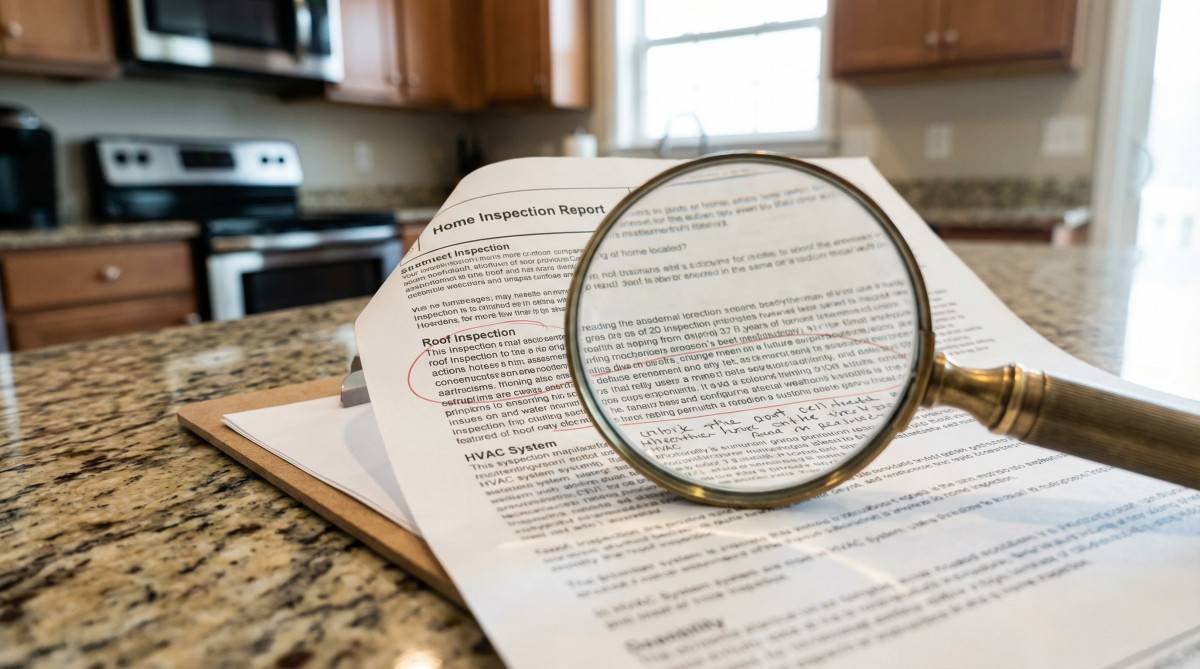
The home inspection period is the most critical window for renegotiating the final purchase price. By focusing on “big-ticket” items—such as roofing, HVAC systems, or structural issues—buyers can request direct price reductions or repair credits that prevent out-of-pocket expenses immediately after closing. This is often the point where a buyer has the most leverage, as the seller is already committed to the deal and may be reluctant to put the home back on the market with a newly disclosed defect.
According to Zillow (2025), a thorough review of the inspection report is essential for identifying areas where you can request a price reduction or credit. It’s important to focus on major issues that affect the safety or structural integrity of the home rather than minor cosmetic defects. By presenting a clear, data-driven case for why a price adjustment is necessary, you can increase your chances of a successful renegotiation. Your agent can help you prioritize these requests and communicate them effectively to the seller’s agent.
When it comes to handling inspection findings, buyers often have to choose between a direct repair by the seller or a credit to handle the repair themselves. While having the seller fix the issue might seem more convenient, a credit is often the better choice. This allows you to select your own contractors and ensure that the work is done to your satisfaction. According to Chase (2025), a credit also avoids the risk of the seller performing a “quick fix” that only masks the underlying problem.
Handling “as-is” listings requires a slightly different approach. While a seller may state that they won’t make any repairs, they are still often open to price negotiations if a major issue is discovered during the inspection. In these cases, it’s essential to have a clear understanding of the potential costs associated with the repairs and use that information to justify a lower price point. A buyer who is well-informed and prepared to walk away from a deal that doesn’t make financial sense will always have the upper hand in any negotiation.
FAQ: Expert Answers to Common Questions
What is the 70/30 rule in negotiation?
The 70/30 rule in negotiation is a communication strategy where you listen for 70% of the time and speak for only 30% of the time. In real estate, this technique allows buyers to gather critical information about a seller’s motivations, timelines, and potential flexibility without revealing too much of their own hand. By asking open-ended questions and letting the seller or their agent talk, you often uncover “pain points” that can be used as leverage to secure a better price or more favorable terms.
What is the 3-3-3 rule in real estate?
The 3-3-3 rule is a rule of thumb used by some investors to evaluate a property’s potential: 3% for maintenance, 3% for vacancy, and 3% for capital expenditures. However, in the context of price negotiation, it often refers to the “three days, three weeks, three months” timeline for price drops. If a home hasn’t sold in three days, it’s not a “hot” property; after three weeks, the seller is likely getting anxious; and after three months, they are often desperate enough to entertain significantly lower offers or aggressive seller concessions.
How much can you realistically negotiate off a house?
How much you can negotiate off a house typically ranges from 1% to 10% of the asking price, depending heavily on market conditions and the home’s specific situation. In a buyer’s market or for a home with significant inspection issues, 5% to 10% is a realistic target. In a seller’s market, you may have very little room to negotiate on price but can still win through non-price terms like flexible closing dates or waiving certain non-essential contingencies.
What are the 5 C’s of negotiation?
The 5 C’s of negotiation are Character, Capacity, Collateral, Capital, and Conditions. While these are traditionally used in lending, they apply to real estate deals as well. Character refers to your reputation as a serious buyer; Capacity is your financial ability to close; Collateral is the property itself; Capital is your down payment and reserves; and Conditions are the external market factors. Demonstrating strength in all five areas gives you maximum leverage when asking a seller to drop their price.
Can you negotiate price on an “as-is” home?
Yes, you can absolutely negotiate the price on an “as-is” home, especially if a professional inspection reveals major structural or safety defects that were not disclosed or visible during the initial walkthrough. While the seller is stating they will not perform repairs, they are often still willing to reduce the sale price or offer a closing credit to keep the deal from falling through and having to find a new buyer who will inevitably find the same issues.
Conclusion
Mastering how to negotiate the price of a home is a skill that pays immediate dividends. By combining thorough market research with psychological tactics like anchoring and the 70/30 rule, buyers can navigate the complexities of the real estate market with professional precision. Remember that negotiation is not just about the final number on the contract; it encompasses seller concessions, interest rate buydowns, and repair credits that collectively determine the true cost of homeownership.
Ultimately, the most powerful tool in any negotiation is the willingness to walk away. When you approach a deal with a clear “walk-away” price and a deep understanding of your own financial limits, you negotiate from a position of strength. Whether you are a first-time buyer or a seasoned investor, applying these strategic principles ensures that you don’t just buy a house, but secure a sound financial investment for your future.