Shipping perishable goods requires more than simply placing products in a box and arranging delivery. Whether your business handles fresh produce, seafood, meat, dairy products, pharmaceuticals, meal kits or other temperature-sensitive items, maintaining product quality throughout transit is essential. Choosing the right perishable shipping solution can help protect inventory, reduce waste and ensure customers receive products in suitable condition.
With customer expectations for freshness, safety and reliable delivery continuing to increase, businesses need to consider more than shipping costs alone. The right solution should provide appropriate temperature control, dependable delivery times, suitable packaging and visibility throughout the supply chain.
Understand Your Product Requirements
The first step in selecting a perishable shipping solution is understanding what your products require during transportation. Different products have different temperature, handling and storage requirements.
For example, frozen products may need to remain consistently below freezing, while chilled foods generally require controlled refrigeration without freezing. Some products may also be sensitive to humidity, light, vibration or changes in temperature.
Consider the following factors:
- Required temperature range
- Maximum acceptable transit time
- Product shelf life
- Sensitivity to temperature fluctuations
- Packaging requirements
- Handling and storage conditions
Having a clear understanding of these requirements makes it easier to identify a shipping provider and packaging system that can protect your products effectively.
Consider Temperature-Controlled Packaging
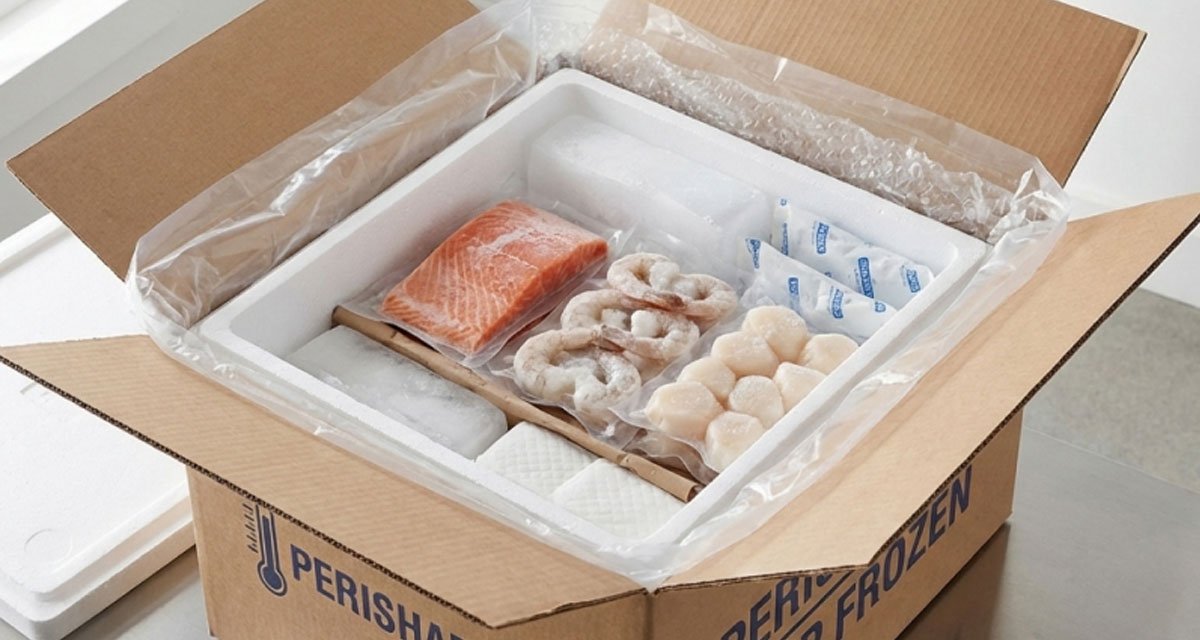
Packaging plays a critical role in perishable goods shipping. Insulated containers, gel packs, dry ice and specialised thermal packaging can help maintain appropriate temperatures during transportation.
The best packaging solution will depend on the product, shipment size, expected transit duration and external temperatures. Businesses should also consider whether packaging can withstand handling during sorting and delivery.
For companies shipping regularly, it can be worthwhile to test packaging under realistic conditions before adopting it at scale. Temperature monitoring can help determine whether products remain within the required range throughout the journey.
Evaluate Delivery Speed and Reliability
Time is one of the most important considerations when shipping perishable products. A delayed delivery can reduce product quality, increase waste and result in dissatisfied customers.
Look for a provider with reliable delivery networks and services that match your required transit times. Depending on your products and customers, this could include same-day, next-day or expedited delivery options.
It is also important to understand how the provider manages weekends, public holidays, remote destinations and unexpected delays. A shipping solution that appears affordable but regularly experiences delays may ultimately cost your business more.
Look for Tracking and Temperature Monitoring
Visibility is particularly valuable when transporting temperature-sensitive goods. Tracking technology can allow businesses to monitor shipments and identify potential delays before they become serious problems.
For certain products, temperature monitoring devices can provide additional assurance by recording conditions during transit. This information may also be useful for quality control, customer service and supply chain management.
When comparing providers, ask what tracking information is available and whether temperature data can be accessed or reported when required.
Compare Costs Beyond the Shipping Fee
Price is naturally an important consideration, but the cheapest shipping option is not necessarily the most cost-effective. Businesses should evaluate the total cost of their perishable shipping solution.
Consider packaging materials, refrigeration requirements, delivery surcharges, insurance, tracking, failed deliveries and potential product losses. A slightly higher shipping cost may be justified if it significantly reduces spoilage or improves delivery reliability.
It is also useful to compare pricing for different shipment volumes. Businesses experiencing growth may benefit from negotiated rates or scalable logistics solutions.
Check Compliance and Handling Standards
Perishable products may be subject to specific Australian food safety, transport, labelling or storage requirements depending on the type of goods being shipped. Businesses should understand their responsibilities and ensure their logistics partners can meet applicable requirements.
Ask potential providers about their procedures for temperature-sensitive goods, handling practices and contingency plans. Documentation and clear processes can be particularly important for businesses dealing with regulated or high-value products.
Choose a Solution That Can Grow With Your Business
Your shipping needs may change as your business expands. Increasing order volumes, new product lines and customers in different locations can all affect your logistics requirements.
Choose a perishable shipping service that can scale with your business rather than one that only meets your current needs. A provider with flexible delivery options, multiple service levels and strong logistics capabilities can make future expansion easier.
Make Reliability a Priority
Selecting the right perishable shipping solution is ultimately about balancing product requirements, reliability, cost and customer expectations. Businesses should assess temperature control, packaging, delivery speed, tracking, compliance and scalability before making a decision.
A well-planned approach to perishable shipping can help minimise spoilage, protect product quality and create a more consistent customer experience. By evaluating providers carefully and choosing a solution suited to your specific products and delivery requirements, your business can build a more dependable and efficient cold-chain shipping process.