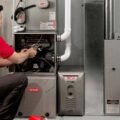
When your furnace breaks down in the middle of winter, panic sets in immediately. The house gets cold, you worry about your family’s safety, and then the HVAC technician hands you an estimate for $6,000 to $10,000. If your credit score is sitting below 600, that piece of paper feels like a life sentence. The anxiety of needing immediate warmth while knowing you might be rejected for traditional financing is a terrible burden.
Exploring local repair possibilities can often provide a reliable alternative to immediate replacement when budgets are constrained. Property owners can look into options for furnace repair richardson to resolve mechanical failures safely and restore proper airflow. Addressing specific faulty components early can help extend the service life of the current system while avoiding the high costs of a new unit.
Beyond the immediate stress of financing, homeowners often struggle to find immediate help when a system fails during a cold snap. While searching for hvac near me can provide a list of local technicians, the sudden demand during peak winter months often leads to long wait times and higher emergency service fees. Taking a proactive approach by scheduling a routine inspection before the first frost can help identify worn components that are likely to fail under heavy use. This type of preventative care can save thousands in emergency replacements and ensure your home remains safe throughout the season.
Managing the stress of a failing heating system often involves a mix of financial planning and finding technical support. When systems begin to underperform during peak winter months, the resulting operational strain can quickly lead to complete mechanical failure if not addressed. Taking preparatory steps is particularly helpful for those who may not be familiar with the internal mechanics of their unit. Homeowners who stay proactive with maintenance often find it easier to coordinate with a professional for a furnace repair near me, ensuring their indoor environment stays safe and reliable without the immediate need for a full system replacement.
“My hvac went out, we’re looking at snow in the coming days and I have a toddler at home. I desperately need a new system but I have horrible credit to try and finance, what would yall do? Any help is appreciated! We already have some space heaters going, but it’s not comparison to running central heat.”
— u/FunnySouthern48, r/hvacadvice, January 2025
If you search online for “furnace financing with bad credit,” you will find dozens of websites promising easy approvals and 0% interest. What they do not tell you is that many of these options are predatory traps designed to lock you into massive debt. They push lease-to-own programs that double the cost of the equipment, and they completely ignore the federal programs that might replace your furnace for free.
In this guide, we are going to cut through the predatory marketing. We will rank every real option available to you, expose the hidden traps in contractor financing, and show you exactly what to do based on your current credit score.
First, Check If You Qualify for Free Government Help
It is shocking how many financing websites completely ignore the fact that the federal government provides billions of dollars every year to help low-income households fix or replace broken heating systems. Before you sign any high-interest loan or lease agreement, you must check if you qualify for these two programs.
The Low Income Home Energy Assistance Program (LIHEAP) is a federally funded program designed to keep families safe and healthy. While most people know LIHEAP as a program that helps pay monthly utility bills, it also provides crisis assistance. If your furnace breaks in the middle of winter, LIHEAP crisis funds can be used to repair or entirely replace your heating equipment. There is no credit check, and the money is a grant, not a loan—you never have to pay it back. You can find your local office by calling the National Energy Assistance Referral hotline at 1-866-674-6327.
The Weatherization Assistance Program (WAP), run by the Department of Energy, focuses on making homes more energy-efficient. If your furnace is dangerously old or broken, WAP can replace it entirely for free. The program supports approximately 32,000 homes every year.
While these federal programs provide a vital safety net for low-income households, other property owners might need local technical assistance to evaluate whether a complete system replacement is truly required. Scheduling professional troubleshooting can determine if a targeted furnace repair in Harvey can safely restore heating efficiency, helping you maintain indoor comfort and manage household expenses without taking on unnecessary long-term debt.
Like LIHEAP, approval is based strictly on your household income, not your credit score.
If your income qualifies you for these programs, do not take out a loan. Apply for emergency crisis assistance immediately.
The “0% Financing” Deferred Interest Trap
If you do not qualify for government assistance, the next thing your HVAC contractor will likely offer is a promotional “0% interest for 18 months” financing plan through a third-party lender. When you have bad credit, getting approved for this feels like a miracle. But you must understand exactly what you are signing.
Almost all of these promotional offers are not true 0% loans. They are deferred interest loans. This means the lender is tracking the interest (often at a staggering 26% to 29% APR) from the very first day. If you pay off the entire balance before the 18 months are up, that interest is forgiven. But if you miss the deadline by even one day, or if you are short by even one dollar, every penny of that accumulated interest is instantly added to your balance.
“Greensky and other finance companies partner with HVAC companies to help with financing large purchases. Often they offer a 0% interest rate if you can pay it off with a specific time frame, usually 12-24 months. If you don’t pay it off within that time frame, the interest is often high, over 20%. And it accrues during that 0% timeframe, meaning if you do not pay it all off in the time, the interest is then also due and can add significantly to your cost.”
— u/ktigger2, r/personalfinance, November 2025
If you finance a $6,000 furnace on a deferred interest plan and fail to pay it off in time, you could instantly owe an additional $2,600 in back-interest. If your credit is already struggling, taking on a deferred interest loan is a massive financial risk. If you accept one, you must divide the total cost by the number of promotional months and pay that exact amount every single month without fail.
Your Financing Options, Ranked by Credit Score
If government assistance is not an option, your path forward depends entirely on your current credit score. Here is the reality of what you can actually qualify for.
If your score is 580 to 640: Personal Loans & Credit Unions
If your score is in the high 500s or low 600s, you have a fair chance of qualifying for an unsecured personal loan. Online lenders like Upgrade, LendingPoint, and Avant specialize in this credit tier. The interest rates will be high (often 18% to 35%), but they offer fixed monthly payments and no deferred interest traps.
However, your best option in this tier is a local credit union. Because credit unions are non-profit organizations owned by their members, they have much more flexibility in their underwriting than traditional banks. If you have a steady job and can explain the negative marks on your credit report, a loan officer at a credit union can often approve a personal loan or a “credit builder” loan at a much lower rate than online lenders.
“First thing I would do is go to the bank you have your mortgage at. Hopefully a local credit union. Then see if they can offer either a personal loan or home equity loan.”
— u/lovallo, r/personalfinance, November 2025
If your score is 500 to 579: Lease-to-Own & Secured Loans
In the low 500s, unsecured personal loans are almost impossible to get. At this level, you are looking at secured loans (where you put up collateral, like your car title) or lease-to-own HVAC programs like Microf or Okinus.
Lease-to-own programs are heavily marketed to homeowners with bad credit because they do not require a hard credit check. The approval is based on your income and banking history. However, these programs are incredibly expensive. You do not own the furnace until you make the final payment, and the total amount you pay over the 36 to 60-month lease term will often be 1.5 to 2 times the actual retail cost of the furnace. Use this only as an absolute last resort when your family’s safety is at risk.
If your score is below 500: PACE Financing (With a Huge Catch)
If your credit score is below 500 and you do not qualify for lease-to-own, your only private financing option may be PACE (Property Assessed Clean Energy) financing, offered by companies like Home Run Financing.
PACE does not check your FICO score at all. Instead, approval is based entirely on the equity you have in your home and your history of paying your mortgage on time. The repayment terms are long (up to 30 years), which keeps the monthly payments low.
But there is a massive catch that financing companies bury in the fine print: PACE financing places a primary tax lien on your property. You repay the loan through an assessment added to your annual property tax bill. If you fail to pay, the lender can foreclose on your home. Furthermore, if you want to sell your house or refinance your mortgage, you will almost certainly have to pay off the entire PACE lien first. Finally, PACE is currently only available for residential HVAC in California and Florida.
| Credit Score | Best Financing Option | Pros | Cons & Hidden Risks |
|---|---|---|---|
| Any Score | LIHEAP / WAP | 100% free grant, no repayment | Strict income limits, application process takes time |
| 580 – 640 | Credit Union Personal Loan | Fixed rates, honest terms, builds credit | Requires proof of income, rates still higher than prime |
| 500 – 579 | Lease-to-Own (e.g., Microf) | No minimum FICO required, fast approval | Total cost is 1.5x to 2x retail price, you don’t own the unit |
| Below 500 | PACE Financing (CA/FL only) | No credit check, up to 30-year terms | Places a tax lien on your home, complicates selling/refinancing |
What to Ask Before You Sign Anything
When you are desperate for heat and a contractor slides an iPad across the table for you to sign, it is easy to make a terrible financial mistake. No matter how bad your credit is, you must ask these three questions before agreeing to any financing:
1. “Is this a deferred interest promotion?”
If they are offering 0% interest, ask what happens if you miss a payment or fail to pay off the balance by the end of the term. If the answer is that back-interest is applied from day one, you are signing a deferred interest contract. Make sure you can afford the aggressive payoff schedule.
2. “Is this a lease or a loan?”
If the contractor is using a company like Microf, you are not buying a furnace; you are renting it. Ask what the total cost of ownership will be at the end of the term. If the $6,000 furnace is going to cost you $11,000 over five years, you need to know that upfront.
3. “Is there a prepayment penalty?”
If you are taking a high-interest personal loan because of bad credit, your goal should be to refinance it or pay it off as soon as your credit improves. Make sure the loan contract explicitly states that there are no fees or penalties for paying the balance off early.
The Bottom Line
Getting a new furnace with bad credit is stressful, but you have more options than predatory lenders want you to believe.
Beyond exploring emergency grants and specialized loans, maintaining your current system can sometimes buy you the time needed to improve your financial standing. While some mechanical issues require a full replacement, professional troubleshooting might reveal that a specific repair can restore functionality at a fraction of the cost of a new unit. If you are currently dealing with a system failure and need to evaluate your repair options quickly, you can Click here to find guidance on local heating services. Addressing smaller components like igniters or blower motors early can help extend the life of your equipment while you plan for a long-term investment.
Start by calling your local community action agency to check your eligibility for LIHEAP or WAP. If you must borrow, try a local credit union before accepting a high-interest online loan. And if you are forced to use lease-to-own or deferred interest financing, read every line of the contract so you know exactly what it will take to get out of debt.
Sources:
U.S. Department of Health & Human Services — Low Income Home Energy Assistance Program (LIHEAP)
U.S. Department of Energy — Weatherization Assistance Program
Hearth — Air Conditioning Financing for Good and Bad Credit
Microf — HVAC & Water Heater Financing & Leasing
Home Run Financing — PACE HVAC Financing