Did you know that we produce over 380 million tons of plastic every year? A significant portion of that ends up in our landfills and oceans, often after just a single use. This staggering reality has pushed many of us to seek better, more sustainable alternatives in our daily lives, starting right at our dinner tables.
But the journey into eco-friendly tableware can feel like navigating a maze. You’ve likely seen them popping up everywhere: chic bamboo plates at a friend’s barbecue and rustic wheat straw bowls at your favorite cafe. They both promise a greener footprint, but when it comes to the bamboo vs wheat straw plates debate, which one truly delivers on its promise? And more importantly, which is the right fit for your home, your wallet, and your peace of mind?
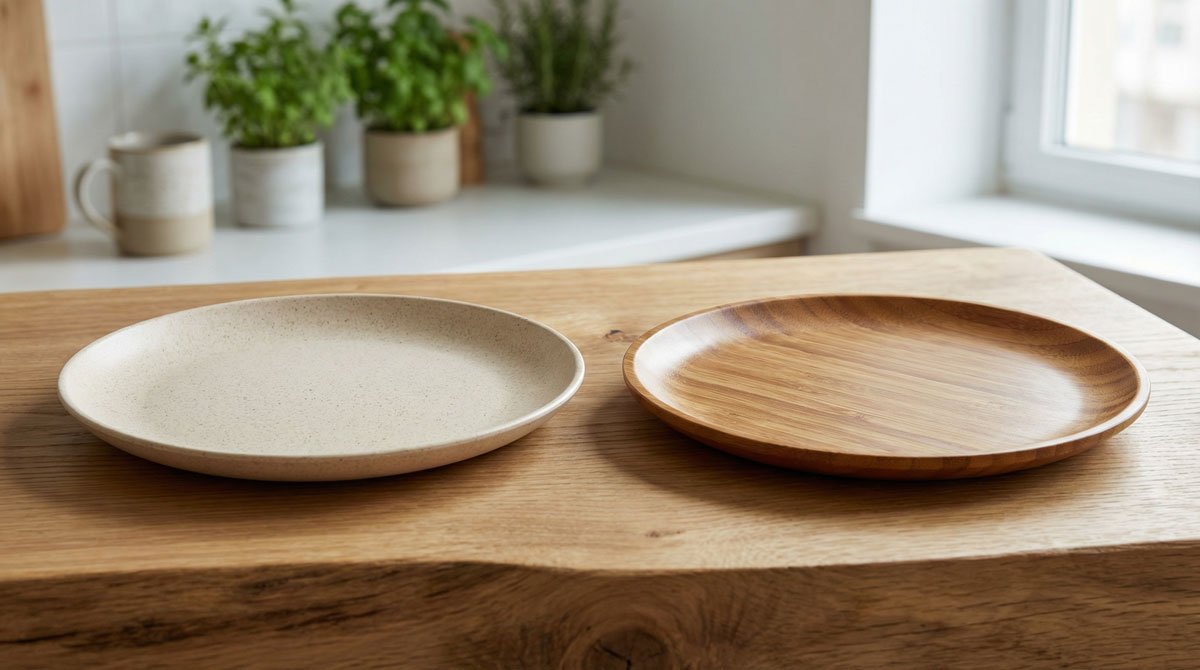
This guide cuts through the greenwashing. We will dive deep into a comprehensive comparison, examining everything from durability and safety to long-term cost and true environmental impact. By the end, you’ll have a clear, honest framework to help you choose the sustainable tableware that genuinely aligns with your lifestyle and values.
Understanding the Basics: What Are These Materials?
Before we pit them against each other, let’s get to know our contenders. While both bamboo and wheat straw plates are touted as eco-friendly heroes, they come from vastly different origins and are created through distinct processes. Understanding these fundamentals is the first step in making an informed choice.
What Exactly is Wheat Straw?
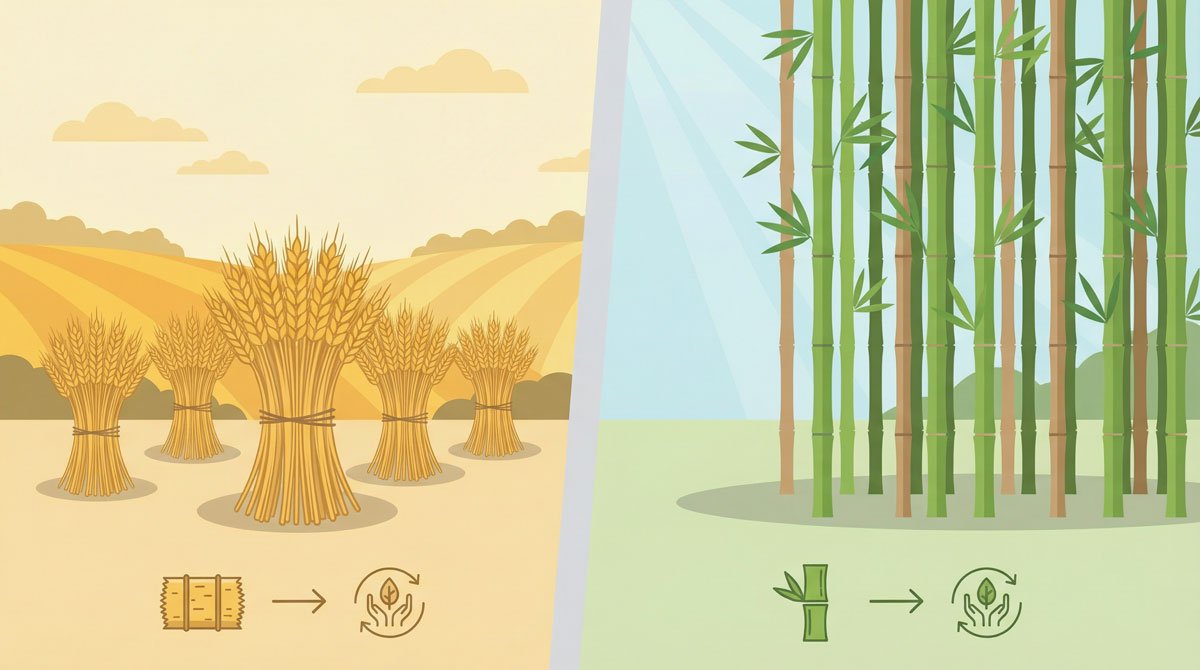
Imagine a golden field of wheat after a harvest. The grain is collected, but what about the leftover stalks? That, in essence, is wheat straw. It’s an agricultural byproduct, the fibrous stalk that remains after wheat grains are harvested. For centuries, this material was often considered waste, sometimes burned, which contributed to air pollution.
Today, innovation has transformed this humble byproduct into a valuable resource. To create tableware, the wheat straw is cleaned, sterilized, and then pulped. This pulp is mixed with a binder—often a plant-based one like lignin (a natural polymer found in straw) or sometimes a food-safe, BPA-free polymer like polypropylene (PP)—and then molded into plates, bowls, and cups under high heat and pressure. The result is a lightweight, durable, and often microwave-safe product with a natural, earthy look.
And What About Bamboo?
Bamboo isn’t a tree; it’s a type of grass. But it’s no ordinary grass. It’s one of the fastest-growing plants on the planet, with some species capable of growing several feet in a single day. This rapid growth, combined with its ability to thrive without pesticides or excessive water, makes it a highly renewable resource.
To make plates, mature bamboo stalks are typically harvested, cut into strips, and then subjected to a process of boiling and grinding to create a pulp. Similar to wheat straw, this pulp is often mixed with a binder (historically, this has sometimes included melamine-formaldehyde resin, a point of significant safety concern we’ll address later) and then molded. The final product is known for its strength, smooth finish, and elegant, wood-like appearance. It feels more substantial and less flexible than its wheat straw counterpart.
Production Process at a Glance
Seeing the journey from plant to plate helps clarify their differences. While both involve molding a pulp, the specifics of their creation have implications for their environmental footprint and final characteristics.
Why These Materials Matter Now More Than Ever
The timing of this shift toward plant-based tableware is not coincidental. Global plastic production has reached crisis levels, with the World Bank estimating that 2.12 billion tons of waste is generated annually, with a significant portion being plastic. Single-use plastic plates, despite their convenience, are a major contributor to this problem. They are used for mere minutes but persist in the environment for centuries. Consumers are increasingly aware of this reality and are actively seeking alternatives that don’t compromise on functionality while reducing environmental guilt. This is where wheat straw and bamboo enter the picture, offering a compelling promise: the convenience of modern tableware without the environmental cost of petroleum-based plastics.
What makes these materials particularly appealing is their alignment with the circular economy concept. Rather than extracting virgin resources and creating waste, these alternatives either repurpose agricultural byproducts (wheat straw) or utilize rapidly renewable resources (bamboo) that can be regrown within years, not centuries. For consumers who care about their environmental footprint but also need practical, affordable solutions for their daily lives, these options represent a meaningful middle ground.
| Feature | Wheat Straw Plates | Bamboo Plates |
|---|---|---|
| Raw Material Source | Agricultural waste (byproduct of wheat harvest) | Dedicated cultivation of fast-growing bamboo grass |
| Resource Impact | Upcycles a waste product, requiring no new land or water for cultivation | Highly renewable and requires minimal water/pesticides, but requires land |
| Manufacturing Steps | Collection -> Cleaning -> Pulping -> Mixing with binder -> Molding | Harvesting -> Slicing/Grinding -> Boiling/Pulping -> Mixing with binder -> Molding |
| Common Binders | Plant-based lignin, food-safe polymers (e.g., PP) | Cornstarch, food-safe polymers, or sometimes melamine-formaldehyde resin |
| Energy Consumption | Generally lower, as it repurposes an existing material | Can be higher due to dedicated harvesting and processing steps |
Durability & Lifespan: How Long Will They Last?
When you invest in reusable tableware, you expect it to last. Durability isn’t just about surviving a single meal; it’s about withstanding daily use, repeated washes, and the occasional accidental drop. This is where bamboo and wheat straw plates begin to show some of their most significant differences. One is a lightweight workhorse, while the other is a sturdy, long-term companion.
The Lifespan of Wheat Straw Plates
Think of wheat straw plates as the sprinters of the eco-tableware world. They are surprisingly resilient for their weight and can handle hot foods, liquids, and cutting without immediately failing. However, they are not designed for indefinite use. With regular trips through the dishwasher and microwave, you can expect a typical wheat straw plate to last for about 3 to 5 years.
Over time, you might notice subtle changes. The surface may become slightly rougher, or the plate might show minor warping if consistently exposed to very high heat. While they are far more durable than single-use paper plates, they don’t possess the same generational longevity as ceramic or glass. Their end-of-life is a feature, not a bug, designed to align with their compostable nature.
The Enduring Nature of Bamboo Plates
If wheat straw plates are sprinters, bamboo plates are the marathon runners. They are noticeably thicker, more rigid, and have a heft that inspires confidence. When properly cared for, a quality bamboo plate can easily last for 5 to 10 years, and sometimes even longer. They resist cracking and chipping better than wheat straw and maintain their smooth, polished finish for years.
This extended lifespan comes with a trade-off: they often require more mindful handling. Most bamboo plates are not recommended for microwave use, as the intense, uneven heat can cause them to crack or warp. While many are labeled dishwasher-safe, hand-washing is almost universally recommended to preserve their integrity and prevent the binder from breaking down prematurely. This extra care is what allows them to serve your family for a decade or more.
Real-World Durability: What Users Report
Beyond the manufacturer claims, real-world usage tells a compelling story. Many families report that their wheat straw plates begin showing signs of wear after about 3 to 4 years of regular use. However, this doesn’t mean they become unusable; rather, they transition from looking pristine to looking well-loved. Bamboo plates, by contrast, often maintain their appearance remarkably well even after 7 to 8 years, though they may require occasional oiling to maintain their original luster. This difference in aging patterns is worth considering if aesthetics matter to you.
Factors That Influence Longevity
The lifespan numbers aren’t absolute. How you use and care for your plates plays a huge role in how long they last. Here are the key factors:
- Washing Method: Hand-washing is gentler and extends the life of both types, but especially bamboo. The high heat and harsh detergents of a dishwasher accelerate wear and tear.
- Microwave Use: This is a major point of divergence. Wheat straw generally handles the microwave well, while it’s a fast track to ruin for most bamboo plates.
- Type of Food: Highly pigmented foods like tomato sauce or turmeric can stain lighter-colored wheat straw plates over time. Bamboo is generally more resistant to staining.
- Physical Stress: While both are durable, a hard drop on a tile floor is more likely to crack a rigid bamboo plate than a more flexible wheat straw one.
Durability at a Glance
| Feature | Wheat Straw Plates | Bamboo Plates |
|---|---|---|
| Typical Lifespan | 3-5 years | 5-10+ years |
| Feel & Rigidity | Lightweight and slightly flexible | Sturdy, rigid, and more substantial |
| Resistance to Dropping | Good (more likely to bounce or flex) | Fair (can crack or chip if dropped on a hard surface) |
| Stain Resistance | Moderate (can stain with highly pigmented foods) | High (generally resistant to staining) |
| Best for Longevity | No | Yes |
Safety & Health Concerns: What You Need to Know
The conversation around eco-friendly tableware isn’t just about sustainability; it’s also about safety. You’re choosing these plates for your family, so the question, “Is this safe to eat from?” is paramount. Recent headlines and official warnings have cast a shadow of doubt over some plant-based plastics, making this one of the most critical aspects of the bamboo vs. wheat straw plates debate.
The Binder Dilemma: Not All Plant-Based Plates Are Equal
The core of the safety issue lies not with the bamboo or wheat straw itself, but with the binders used to hold them together. To create a durable, smooth, and non-porous plate, the raw plant fibers must be fused with a binding agent. The type of binder used is what separates a perfectly safe plate from a potentially hazardous one.
A major controversy has centered on bamboo products bonded with **melamine-formaldehyde resin**. While melamine is a type of plastic deemed safe for tableware on its own, its use as a binder in combination with bamboo fiber has been flagged by food safety authorities, including the UK’s Food Standards Agency (FSA) [1]. Research, such as studies published by the National Institutes of Health (NIH) [2], has shown that this combination can be unstable, especially when exposed to high heat (like in a microwave) or acidic foods. This instability can lead to the migration, or “leaching,” of melamine and formaldehyde into your food, which are substances linked to kidney problems and other health concerns with long-term exposure.
Understanding the Real Risks
It’s crucial to understand that this risk is primarily associated with **bamboo-melamine composites**. High-quality bamboo plates that use alternative, food-safe binders like cornstarch do not carry the same risk. Similarly, wheat straw plates typically use different binders, often a food-grade polymer like polypropylene (PP), which is a stable plastic considered safe for food contact and is free of BPA. Some wheat straw products even use lignin, a natural polymer from the plant itself, as a binder.
Another concern that has emerged for molded fiber products, in general, is the potential presence of PFAS (per- and polyfluoroalkyl substances). These “forever chemicals” are sometimes used to provide water and grease resistance. Reputable manufacturers of both wheat straw and bamboo plates now actively seek PFAS-free certification to assure customers of their products’ safety.
Safety Profile at a Glance
| Safety Aspect | Wheat Straw Plates (High Quality) | Bamboo Plates (High Quality) | Low-Quality / Bamboo-Melamine Plates |
|---|---|---|---|
| Binder Type | Food-grade polymers (PP) or natural lignin; BPA-Free | Cornstarch or other certified food-safe binders | Melamine-formaldehyde resin |
| Chemical Leaching Risk | Very Low. Stable with heat and acids. | Very Low. Stable when used as directed (no microwave). | High, especially with heat or acidic foods. |
| Microwave Safety | Generally considered safe. | Not recommended. Can cause material to crack and leach chemicals. | Dangerous. High risk of chemical migration. |
| PFAS Concerns | Look for “PFAS-Free” certification. | Look for “PFAS-Free” certification. | Potential for presence if not certified. |
| Best for Kids | Excellent choice due to stability and light weight. | Good choice, but requires supervision regarding microwave use. | Not recommended. Avoid completely. |
How to Choose a Safe Plate
Navigating these concerns doesn’t mean you have to give up on eco-friendly plates. It just means you need to be a savvy consumer. Here’s your checklist for peace of mind:
- Check the Label: Look for explicit statements like “BPA-Free,” “Melamine-Free,” and “PFAS-Free.” Reputable brands will be transparent about what’s in their products.
- Question the Price: If a set of bamboo plates seems unusually cheap, be wary. Melamine is an inexpensive binder, and a low price point can be a red flag for its use.
- Heed the Warnings: If a bamboo plate says “Not Microwave Safe,” believe it. It’s not just about protecting the plate; it’s about protecting your health.
- Buy from Reputable Retailers: Established brands and retailers are more likely to have rigorous testing and quality control standards in place.
Practical Usability: Microwave, Dishwasher & Everyday Use
Beyond the big-picture topics of durability and safety lies the reality of daily life. How will these plates fit into your routine? Can they handle a quick reheat in the microwave? Will they survive your dishwasher? Practicality is often the deciding factor that tips the scale in the bamboo vs. wheat straw plates showdown. Let’s break down how they perform in the real world.
The Convenience King: Microwave Safety
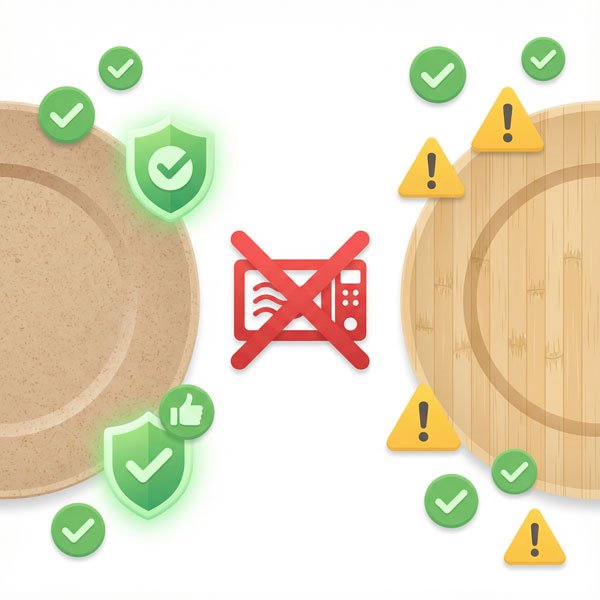
For many busy households, the ability to microwave a plate is non-negotiable. This is where wheat straw shines and establishes a clear advantage. Most high-quality wheat straw plates are engineered to be **microwave-safe**. Their material composition is stable under microwave radiation, allowing you to heat leftovers without fear of the plate warping, melting, or leaching harmful chemicals.
Bamboo plates, on the other hand, are almost universally **not microwave-safe**. The intense, uneven heating process of a microwave can superheat the moisture trapped within the bamboo fibers, causing the plate to crack, split, or warp. More importantly, if the bamboo plate contains a melamine binder, microwaving poses a significant health risk by accelerating the leaching of chemicals into your food. Always check the manufacturer’s instructions, but the general rule is firm: keep bamboo out of the microwave.
The Cleanup Test: Dishwasher Performance
After a long day, the last thing anyone wants is a sink full of dishes that need to be hand-washed. Again, wheat straw plates tend to come out ahead in the convenience department. The majority are designed to be **dishwasher-safe**, typically on the top rack. They withstand the heat and water pressure of a standard wash cycle well, although repeated washing at very high temperatures may slightly reduce their overall lifespan over several years.
The story with bamboo is more nuanced. While many manufacturers label their bamboo plates as “dishwasher-safe,” it’s often followed by a recommendation for hand-washing to prolong the product’s life. The prolonged exposure to high heat and harsh detergents in a dishwasher can slowly break down the binders and natural fibers, leading to a duller finish or potential delamination over time. If longevity is your goal, hand-washing your bamboo plates is the best practice.
Practical Usability at a Glance
| Feature | Wheat Straw Plates | Bamboo Plates |
|---|---|---|
| Microwave Safe | Yes, generally. Perfect for reheating. | No, almost universally. Risk of damage and chemical leaching. |
| Dishwasher Safe | Yes, typically top-rack safe. | Often labeled as such, but hand-washing is highly recommended for longevity. |
| Best for Everyday Convenience | Excellent. Handles reheating and easy cleanup. | Good, but requires more mindful handling (no microwave, preferably hand-wash). |
| Feel in Hand | Lightweight, slightly textured, and easy for kids to handle. | Heavier, smoother, and feels more like traditional ceramic or wood. |
A Detailed Guide to Cleaning and Maintenance
Proper care is essential to maximizing the lifespan and safety of your eco-friendly tableware. Follow these steps to keep your plates in prime condition.
For Wheat Straw Plates:
- General Cleaning: Wash with warm, soapy water soon after use to prevent stains. They are non-porous, so cleaning is usually a breeze.
- Dishwasher Use: Place them on the top rack to avoid direct exposure to the heating element at the bottom of the dishwasher.
- Stain Removal: For tough stains from foods like tomato sauce or curry, create a paste of baking soda and water. Apply it to the stain, let it sit for 15-20 minutes, and then gently scrub and rinse.
- Storage: Stack and store them just as you would any other plate. No special conditions are needed.
For Bamboo Plates:
- General Cleaning: Hand-wash with a soft cloth or sponge in warm, soapy water. Avoid using abrasive scrubbers or steel wool, which can scratch the surface.
- Drying: Dry them thoroughly with a towel immediately after washing. Do not let them air-dry, as prolonged exposure to moisture can weaken the fibers.
- Avoid Soaking: Never let bamboo plates soak in water for an extended period. This can cause them to swell, warp, or crack.
- Rejuvenating the Finish: To keep your bamboo plates looking their best, you can occasionally rub them with a food-grade mineral oil or a specialized bamboo conditioning oil. This helps maintain their luster and prevent them from drying out.
Environmental Impact & Sustainability: The Full Picture
The very reason we’re having this conversation is the desire to make a choice that’s better for our planet. Both bamboo and wheat straw plates are marketed as champions of sustainability, but their true environmental impact is more complex than a simple “eco-friendly” label. To get the full picture, we need to look at their entire lifecycle, from cradle to grave.
From Farm to Factory: The Production Footprint
The environmental journey begins with the raw material. Here, **wheat straw** has a compelling story. It’s an agricultural byproduct, meaning it doesn’t require any additional land, water, or resources to be produced. By turning this “waste” into a durable product, we are participating in a form of upcycling that prevents it from being burned (releasing CO2) or decomposing in a way that releases methane. This gives it a very low initial carbon footprint.
**Bamboo**, while a highly renewable resource, has a different footprint. It is a dedicated crop. While it grows incredibly fast without pesticides and with little water, it still requires land that could potentially be used for other purposes. The majority of bamboo is grown in Asia, so for consumers in North America and Europe, the carbon cost of transportation must be factored into its overall environmental impact.
The End of the Road: Biodegradability and Compostability
This is where both materials aim to outshine plastic. But “biodegradable” and “compostable” are not interchangeable terms. For a product to be truly beneficial at its end-of-life, it needs to break down efficiently without leaving harmful residues.
High-quality **wheat straw plates** are typically fully compostable. In an industrial composting facility, they can break down into nutrient-rich compost in just **3 to 6 months**. Home composting is possible but will take significantly longer. **Bamboo plates** are also biodegradable and will break down over time, but the process is generally slower, taking anywhere from **6 months to a few years** depending on the conditions and the binder used. Plates with melamine binders are not considered biodegradable in any practical sense.
Lifecycle Environmental Impact at a Glance
| Environmental Aspect | Wheat Straw Plates | Bamboo Plates |
|---|---|---|
| Resource Origin | Upcycled agricultural waste | Dedicated, fast-growing crop |
| Carbon Footprint (Production) | Lower (utilizes a byproduct) | Higher (includes farming and transportation) |
| Compostability | Excellent (3-6 months in industrial compost) | Good (6-24 months, depending on binder and conditions) |
| Overall Sustainability | High, due to its circular economy model. | High, due to its renewability, but with caveats for land use and transport. |
Beware of “Greenwashing”
The term “eco-friendly” is not regulated, and it’s a favorite buzzword in marketing. It’s important to be critical. A bamboo plate bonded with melamine is not truly sustainable, as its end-of-life solution is the landfill. A product shipped halfway across the world has a hidden environmental cost. True sustainability considers the entire lifecycle. Look for brands that are transparent about their materials, production processes, and end-of-life recommendations. Certifications like B Corp or specific compostability standards (e.g., BPI) can provide an extra layer of trust.
Cost Analysis: Initial Price vs. Long-Term Value
For most of us, budget is a key consideration in any purchasing decision. While we want to make sustainable choices, the cost can often be a barrier. When comparing bamboo and wheat straw plates, it’s tempting to just look at the sticker price. However, the true cost unfolds over the lifespan of the product. Let’s break down the numbers to see which option offers the best value in the long run.
The Upfront Investment
Generally, **wheat straw plates** are the more budget-friendly option upfront. Because they are made from an agricultural byproduct, the raw material cost is lower. This makes them an accessible entry point for those looking to switch from single-use plastics without a significant initial investment. You can often find a set of wheat straw plates for a family at a price point comparable to a mid-range set of plastic reusable plates.
**Bamboo plates** typically carry a higher price tag. The cost reflects the farming of the bamboo, the more intensive processing, and the often more robust and stylish designs. They are positioned as a premium, long-term product, and their initial cost reflects that. The price can vary significantly based on the brand, thickness, and design aesthetics.
Calculating the Total Cost of Ownership (TCO)
The initial price is only half the story. To understand the true value, we need to consider the Total Cost of Ownership, which factors in the lifespan of the product. A cheaper item that needs to be replaced frequently can end up being more expensive over time.
Let’s imagine a simple scenario: a family needs a set of 4 plates and is deciding between wheat straw and bamboo.
- Wheat Straw Scenario:
- Initial Cost: $20 for a set of 4
- Average Lifespan: 4 years
- Cost per year: $20 / 4 years = $5 per year
- Bamboo Scenario:
- Initial Cost: $35 for a set of 4
- Average Lifespan: 7 years
- Cost per year: $35 / 7 years = $5 per year
In this hypothetical but realistic example, the long-term cost is identical! The more expensive bamboo plates deliver equivalent value over time due to their longer lifespan. This calculation is crucial. The choice is not about which is cheaper, but rather about your cash flow and usage patterns. Do you prefer a lower initial cost with the expectation of replacing the item sooner, or a higher upfront investment for a product that will last nearly twice as long?
Cost and Value at a Glance
| Cost Factor | Wheat Straw Plates | Bamboo Plates |
|---|---|---|
| Initial Purchase Price | Lower | Higher |
| Average Lifespan | 3-5 years | 5-10+ years |
| Long-Term Value (Cost per Year) | Good (due to low initial price) | Excellent (due to extended lifespan) |
| Best for Budget-Conscious Start | Yes | No |
| Best for Long-Term Investment | No | Yes |
Making the Right Choice: A Decision Framework
By now, it’s clear that there’s no single “best” plate. The right choice depends entirely on you: your lifestyle, your priorities, and your budget. To help you navigate this decision, we’ve created a simple framework. Ask yourself these questions to find out whether you’re on Team Wheat Straw or Team Bamboo.
Priority 1: Ultimate Convenience
Is your life a whirlwind of activity? Do you rely on the microwave for quick meals and the dishwasher for sanity-saving cleanups? If “low-maintenance” is your mantra, your choice is clear.
- Your Winner: Wheat Straw Plates
- Why: They are almost always microwave and dishwasher-safe, making them a seamless fit for a busy household. Their lightweight nature also makes them easy for everyone, including kids, to handle.
Priority 2: Long-Term Durability and Aesthetics
Do you view your purchases as long-term investments? Do you appreciate a more elegant, substantial feel in your tableware, and are you willing to put in a little extra care to maintain it? If you prioritize longevity and style, your path is set.
- Your Winner: Bamboo Plates
- Why: With a lifespan that can stretch to a decade or more, bamboo offers incredible long-term value. Its smooth, sturdy feel elevates the dining experience, making it suitable for both everyday meals and special occasions.
Priority 3: The Tightest Budget
Are you looking to make a sustainable switch without a large upfront financial commitment? If the initial price point is your most critical factor, the choice is straightforward.
- Your Winner: Wheat Straw Plates
- Why: Their lower initial cost makes them the most accessible entry into the world of eco-friendly tableware. You can outfit your kitchen with a full set for a modest investment.
Priority 4: The Lowest Environmental Impact
Is your decision driven purely by the desire to make the kindest choice for the planet? This is a tougher question, as both have strong eco-credentials, but one has a slight edge based on its origin.
- Your Winner: Wheat Straw Plates
- Why: They are made from an agricultural waste product, effectively upcycling material that would otherwise have a negative environmental impact. This circular economy model gives them a slight advantage over bamboo, which is a dedicated crop (albeit a highly renewable one).
Decision Matrix at a Glance
| If Your Top Priority Is… | The Better Choice Is… | Because… |
|---|---|---|
| Convenience (Microwave/Dishwasher) | Wheat Straw | It’s designed for both, simplifying daily use and cleanup. |
| Longevity & Durability | Bamboo | It has a significantly longer lifespan with proper care. |
| Lowest Initial Cost | Wheat Straw | It’s the most budget-friendly option to get started. |
| Style & Premium Feel | Bamboo | It offers a more elegant, wood-like aesthetic. |
| Lowest Resource Footprint | Wheat Straw | It upcycles agricultural waste, requiring no new cultivation. |
Real-World Scenarios: Which Works Best for Your Lifestyle?
Theory is helpful, but stories are powerful. To bring the bamboo vs. wheat straw plates debate to life, let’s step into the kitchens of five different households. See if you recognize your own needs and priorities in their stories, and discover which choice they would likely make.
Scenario 1: The Busy Family with Young Kids
Meet the Jacksons. With two kids under the age of eight, their life is a chaotic but happy mix of school runs, soccer practice, and quick family dinners. Spills are common, and their go-to move for leftovers is to pop a plate directly into the microwave. The dishwasher runs every single night. They want something unbreakable and safe, but convenience is the undisputed king.
- Their Choice: Wheat Straw Plates
- The Verdict: For the Jacksons, it’s not even a close call. The microwave and dishwasher-safe nature of wheat straw plates is a lifesaver. The plates are lightweight enough for their youngest to set the table and durable enough to survive being knocked off it. The peace of mind knowing the plates are BPA-free and stable makes it the perfect fit for their hectic, practical lifestyle.
Scenario 2: The Eco-Conscious Couple
David and Sarah are deeply committed to a low-impact lifestyle. They compost, buy in bulk, and carefully research every purchase. They are looking for tableware that aligns with their values, will last as long as possible to minimize consumption, and has a beautiful, natural aesthetic for their quiet dinners at home. They don’t own a microwave and don’t mind hand-washing dishes.
- Their Choice: Bamboo Plates
- The Verdict: Bamboo is the clear winner here. Its superior longevity aligns perfectly with their “buy once, buy well” philosophy. They appreciate the elegant, wood-like finish, and since they don’t use a microwave and prefer hand-washing, the primary drawbacks of bamboo are non-issues for them. The higher initial cost is seen as a worthwhile investment in a product that will serve them for a decade.
Scenario 3: The College Student on a Budget
Maria is moving into her first dorm room. She needs to buy all her own essentials, and her budget is tight. She wants to avoid disposable plates but can’t afford to splurge on expensive kitchenware. She needs something functional that will get her through the school year and hopefully beyond, without breaking the bank.
- Their Choice: Wheat Straw Plates
- The Verdict: Maria’s decision is driven by cost. Wheat straw offers the perfect balance of affordability and sustainability. She can get a full set of plates and bowls without straining her budget. The fact that they are microwave-safe is a huge bonus for heating up late-night snacks and leftovers in the dorm’s communal kitchen.
Scenario 4: The Outdoor Enthusiast
Tom loves camping, hiking, and picnicking. He needs tableware that is lightweight, durable, and easy to pack. It needs to be sturdy enough to handle being jostled in a backpack but not so heavy that it weighs him down. Easy cleanup with limited water is also a major plus.
- Their Choice: Wheat Straw Plates
- The Verdict: Wheat straw’s lightweight nature makes it the ideal companion for outdoor adventures. It’s less rigid than bamboo, making it less prone to cracking under the pressures of a tightly packed bag. The plates are easy to wipe clean and durable enough for rustic meals, striking the perfect balance of portability and performance for life on the trail.
Scenario 5: The Style-Conscious Host
Jennifer loves hosting dinner parties. She puts a lot of thought into her tablescapes and wants tableware that is both sustainable and stylish. Her plates need to make a statement and complement her carefully crafted meals. She wants a product that feels premium and looks elegant on the table.
- Their Choice: Bamboo Plates
- The Verdict: For Jennifer, aesthetics are paramount. The rich, smooth finish of high-quality bamboo plates provides the sophisticated look she desires. They feel more substantial in a guest’s hand and look more like artisanal wooden plates than their wheat straw counterparts. She is willing to hand-wash them after a party to maintain their beautiful appearance.
Frequently Asked Questions: Clearing Up the Confusion
- 1. Are wheat straw plates safe for daily use?
- Yes, high-quality wheat straw plates are considered very safe for daily use. Reputable manufacturers use food-grade, BPA-free binders (like polypropylene) that are stable and do not leach harmful chemicals into your food. Always look for products that are explicitly labeled as “BPA-Free” and “Food-Safe” for complete peace of mind.
- 2. Can I put bamboo plates in the microwave?
- No, you should not put bamboo plates in the microwave. The intense heat can cause the natural bamboo fibers to crack or warp. More importantly, if the plate uses a melamine binder, microwaving can cause it to leach harmful chemicals. It’s a universal rule: bamboo and microwaves don’t mix.
- 3. How do I know if my plates contain harmful chemicals?
- Be a label detective. Look for explicit certifications like “Melamine-Free,” “BPA-Free,” and “PFAS-Free.” Be wary of unusually cheap bamboo products, as this can be a red flag for the use of cheaper, less stable melamine binders. Stick to transparent, reputable brands that are open about their materials and manufacturing processes.
- 4. Which plates are better for children?
- For overall convenience and safety, wheat straw plates are often the better choice for kids. They are lightweight, durable, and microwave-safe, which fits well with a family’s needs. High-quality, melamine-free bamboo plates are also a safe, sturdy option, but the inability to microwave them can be a significant drawback for parents.
- 5. Do these plates really decompose?
- Yes, but under the right conditions. Both wheat straw and bamboo are biodegradable. Wheat straw typically composts faster, breaking down in 3-6 months in an industrial facility. Bamboo takes longer, from 6 months to a couple of years. Neither will decompose quickly in a typical landfill, which is why commercial or home composting is the most environmentally friendly way to dispose of them at the end of their life.
- 6. What’s the difference between “eco-friendly” and “actually sustainable”?
- “Eco-friendly” is a broad marketing term. “Actually sustainable” looks at the entire lifecycle of a product. A truly sustainable plate is one that is sourced responsibly (like upcycled wheat straw), manufactured with minimal impact, used for a long time, and then disposed of in a way that returns it to the earth without causing harm (composting).
- 7. Can I recycle these plates?
- No, neither wheat straw nor bamboo plates can be placed in your standard recycling bin. They are not plastic, glass, or paper in a form that recycling facilities can process. Their proper end-of-life disposal method is composting.
- 8. Are there any health risks from long-term use?
- For high-quality, certified-safe wheat straw and bamboo plates, there are no known health risks associated with long-term use. The risks emerge only when low-quality binders like melamine-formaldehyde are used, which can leach chemicals over time, especially with heat. This is why choosing a reputable, transparent brand is so critical.
Final Verdict: Making Your Sustainable Choice
The journey through the world of eco-friendly tableware reveals a simple truth: there is no single champion in the bamboo vs. wheat straw plates debate. Instead, there are two excellent, sustainable alternatives to plastic, each with a unique set of strengths. Your perfect plate is not the one the internet declares is “best,” but the one that seamlessly fits your life.
If your days demand the convenience of a microwave and the ease of a dishwasher, wheat straw is your reliable, budget-friendly, and deeply sustainable partner. If you seek longevity, a touch of elegance, and are willing to invest a little extra care in a product that will last for years, bamboo is your steadfast and stylish companion.
Ultimately, the most sustainable choice is a conscious one. By moving away from single-use plastics and investing in a reusable option—be it the upcycled ingenuity of wheat straw or the enduring strength of bamboo—you are already making a powerful difference. So, consider your priorities, trust your judgment, and choose the plate that will not only serve your meals but also honor your commitment to a healthier planet.
References
- Food Standards Agency. (n.d.). Food contact materials.
- Liu, S., et al. (2024). Migration of Melamine and Its Derivatives from Bamboo- and Wheat Straw-Made Tableware.