Asha Bhosle’s first husband was Ganpatrao Bhosle, a secretary and administrative aide connected to the Mangeshkar family circle in Pune. Asha eloped with him in 1949 at just 16 years old, against the wishes of her entire family. The marriage lasted roughly eleven years before they separated in 1960. Ganpatrao died in February 1966 at age 50. Their union produced three children: Hemant, Varsha, and Anand Bhosle.
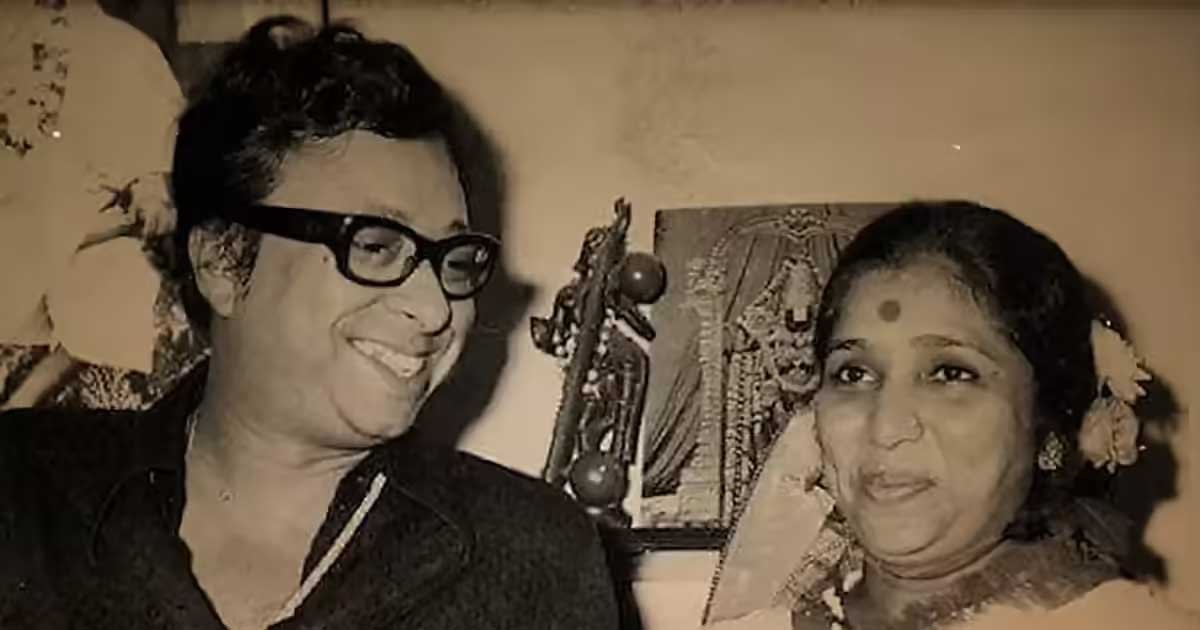
When Asha Bhosle passed away in Mumbai on April 12, 2026, at age 92 due to multiple organ failure, the world mourned one of Indian music’s most extraordinary voices. Her death reignited public interest in the private struggles that had shaped her extraordinary resilience, and none loomed larger than the story of her first marriage.
Who Was Ganpatrao Bhosle?
Ganpatrao Bhosle was an administrative figure in the Mangeshkar household’s professional circle, approximately 15 years older than Asha. Born around 1916, he occupied a secretary-level role connected to the family at a time when the Mangeshkars were already establishing themselves as a dominant force in Indian cinema and music. By the time Asha was a teenager growing up in that same orbit, Ganpatrao was already 31 years old, a grown man with established habits and expectations.
He was not a musician himself. His occupation was administrative, according to genealogical records from MyHeritage and biographical accounts published after his death. What distinguished Ganpatrao historically is not who he was but what his marriage to Asha set in motion: one of the most consequential decisions in modern Indian musical history.
Ganpatrao died in February 1966 at age 50, six years after Asha had already separated from him. By that point, the woman he had married as a teenager had already recorded hundreds of songs and begun her ascent toward becoming one of the most decorated playback singers India had ever produced. Lata Mangeshkar’s secretary had, in the most ironic sense, helped shape the career of Lata Mangeshkar’s younger sister.
The 1949 Elopement: Love Against Family Wishes
In 1949, Asha Bhosle eloped with Ganpatrao Bhosle when she was 16 years old, defying the explicit objections of her family in a decision that fractured one of Bollywood’s most famous sibling bonds for years. The elopement was not a quiet affair — it triggered a rupture between Asha and her older sister Lata Mangeshkar that lasted far longer than the marriage itself.
The social context matters. Post-partition India in 1949 was still operating under deeply patriarchal marriage norms, and young women from performance families faced additional scrutiny. A teenage girl from a famous musical family running off with a man nearly twice her age represented not just personal rebellion, but potential professional scandal. The Mangeshkar family’s public reputation was, in part, what Asha’s choice put at risk.
“Why Lata Mangeshkar reportedly cut ties with Asha Bhosle after her first marriage”
— r/BollywoodShaadis, a community focused on Bollywood relationships and marriages, April 2026 (56 upvotes)
Lata Mangeshkar, who had been supporting the Mangeshkar family since their father Deenanath Mangeshkar’s death in 1942, reportedly did not speak to Asha for years after the elopement. She considered the marriage a betrayal of the family’s trust and a source of personal shame. The silence between the two sisters became one of the most discussed estrangements in Hindi film industry history.
Lata did not speak to her sister for years, a silence that outlasted the marriage itself and required sustained effort to repair. The reconciliation, when it came, was quiet. Neither sister spoke extensively about the intervening years.
Marriage Life and Three Children
Asha Bhosle and Ganpatrao Bhosle had three children together: Hemant Bhosle, Varsha Bhosle, and Anand Bhosle. The three were born during the roughly eleven years the couple lived together before their 1960 separation. Each went on to carve a recognizable name in India’s public life.
Hemant Bhosle became a music composer. Varsha Bhosle worked as a journalist and columnist, known for her sharp opinions on Bollywood and politics. Anand Bhosle was the son who released the public statement confirming Asha’s death on April 12, 2026, describing her condition and funeral arrangements on behalf of the family. His statement, published through multiple Indian news outlets, marked the official end to a century-defining musical life.
| Child | Known For | Birth (approx.) |
|---|---|---|
| Hemant Bhosle | Music composer | Early 1950s |
| Varsha Bhosle | Journalist and columnist | Mid-1950s |
| Anand Bhosle | Public figure, released statement after Asha’s 2026 death | Late 1950s |
Raising three children while maintaining a singing career during a marriage that, by multiple accounts, was deeply difficult was not a small feat. Asha recorded steadily throughout the 1950s, developing her vocal range and securing contracts with leading Hindi film composers, all while managing a household that sources describe as far from peaceful.
Domestic Struggles and Reported Abuse
Multiple biographical accounts and Asha Bhosle’s own statements in interviews describe the first marriage as marked by sustained mistreatment and emotional hardship. She was a teenager, far from the support of her family, married to a man 15 years her senior at a time when leaving a marriage carried significant social cost.
The abuse narrative is not a posthumous interpretation. Asha spoke about the difficulties of her first marriage in interviews throughout her career. She described the years with Ganpatrao as a period of struggle rather than partnership, one she endured rather than chose. That Ganpatrao simultaneously pushed her toward singing created one of the stranger contradictions in her story.
“Asha Bhosle Once Credited Her First Ex-Husband, Ganpatrao For Her Singing Career, ‘He Forced Me..'”
— r/BollywoodShaadis, April 2026 (1 upvote)
The phrase “He Forced Me,” attributed to Asha in reference to Ganpatrao and her singing career, carries a weight that cuts in two directions. It was coercion in the context of a controlling relationship, and it was, unintentionally, the push toward an artistic path that would outlast everything else by decades. Asha chose the word “forced.” She also, at least once, framed it as part of her origin story.
How Ganpatrao Shaped Asha Bhosle’s Singing Career
Asha Bhosle once credited Ganpatrao Bhosle with pushing her toward a professional singing career, telling interviewers that he forced her to pursue it — a statement that complicated any straightforward reading of their marriage. Whatever his motivations, the outcome was one of the most productive vocal careers in Hindi cinema history.
Asha had been singing since childhood in the Mangeshkar household, learning from her father and performing alongside her siblings. But formal playback work in Bombay’s film industry required connections and persistence that required an adult to navigate. Ganpatrao’s own professional connections within the industry gave Asha access she might not otherwise have obtained in the late 1940s and early 1950s.
By the mid-1950s, she had recorded for composers including SD Burman, establishing a range that placed her in a different register than Lata. Where Lata’s voice became associated with classical purity, Asha’s became synonymous with versatility: cabaret numbers, folk songs, qawwalis, jazz-inflected compositions. The contrast defined Hindi film music for three decades.
The man who made her life unbearable may have been, as Asha herself acknowledged, the reason she never walked away from the microphone when the circumstances made walking away seem like the sensible option. That is not a defense of Ganpatrao. It is simply the stranger part of the record.
The 1960 Separation and Ganpatrao’s Death
Asha Bhosle and Ganpatrao Bhosle separated around 1960, approximately eleven years after their elopement. The decision appears to have been driven by the untenable conditions of the marriage rather than mutual agreement. Asha was left to raise their three children largely on her own while continuing to pursue her recording career.
The separation did not produce an immediate formal divorce. In 1960s India, formal divorce proceedings were lengthy, socially fraught, and often avoided by both parties even after physical separation. Asha and Ganpatrao lived apart, and the marriage effectively ended in practice well before it ended on paper.
Ganpatrao Bhosle died in February 1966 at the age of 50. According to records verified via MyHeritage and biographical accounts published in Indian media, he died six years after Asha had already established her independence. By 1966, Asha was one of the most in-demand playback singers in Mumbai, a woman who had rebuilt a life entirely on her own terms.
Ganpatrao died at 50, six years after Asha had rebuilt her career from scratch as a single mother of three. The arithmetic is stark: the marriage lasted eleven years; the years she spent making herself indispensable to Hindi cinema would total more than forty.
From Ganpatrao to RD Burman: The Twenty-Year Gap
Asha Bhosle married music composer Rahul Dev Burman, known as RD Burman or Pancham, in 1980, twenty years after her separation from Ganpatrao. RD Burman was several years younger than Asha, and their professional collaboration long predated their marriage. They had worked together throughout the 1960s and 1970s on dozens of films, including defining soundtracks for Hare Rama Hare Krishna and Sholay.
The contrast between the two marriages could not have been sharper. The first was a teenage elopement with an older man from a position of vulnerability. The second was an equal partnership, built over years of shared creative work, between two professionals who had each earned their place in the industry independently. Asha was 47 when she married RD Burman. She had spent twenty years between her two marriages as a working single parent and a consistently recording artist.
| Aspect | First Marriage (Ganpatrao Bhosle) | Second Marriage (RD Burman) |
|---|---|---|
| Year | 1949 | 1980 |
| Asha’s age | 16 | 47 |
| Age difference | 15 years (Ganpatrao older) | Several years (RD Burman younger) |
| Circumstances | Elopement, family opposed | Long professional partnership |
| Duration | ~11 years (1949-1960) | ~14 years (1980-1994, RD died) |
| Children | Hemant, Varsha, Anand | None |
| Emotional tone | Struggle, reported mistreatment | Creative partnership, mutual respect |
RD Burman died in January 1994. Asha Bhosle survived him by more than three decades, continuing to record, perform internationally, and mentor younger artists. The two marriages bookend a life in music that had its origins in a 16-year-old’s impulsive decision and its apex in a global career that only ended with her death in April 2026.
Frequently Asked Questions About Asha Bhosle’s First Husband
Who was Asha Bhosle’s first husband?
Asha Bhosle’s first husband was Ganpatrao Bhosle, an administrative aide and secretary connected to the Mangeshkar family’s professional circle. They married in 1949 when Asha was 16 years old. Ganpatrao was approximately 31 at the time of their marriage, making him about 15 years her senior.
When did Asha Bhosle get married for the first time?
Asha Bhosle married for the first time in 1949, eloping with Ganpatrao Bhosle at the age of 16. The elopement occurred against the explicit wishes of her family, including her older sister Lata Mangeshkar, and caused a significant family rift that lasted for years.
How many children did Asha Bhosle have with Ganpatrao Bhosle?
Asha Bhosle had three children with Ganpatrao Bhosle: Hemant Bhosle, Varsha Bhosle, and Anand Bhosle. Hemant became a music composer, Varsha worked as a journalist and columnist, and Anand released the family’s official statement following Asha’s death in April 2026.
Why did Asha Bhosle separate from Ganpatrao Bhosle?
Asha Bhosle separated from Ganpatrao Bhosle around 1960 after years of reported domestic difficulties. She described the marriage as marked by mistreatment in various interviews. The separation was not immediately formalized as a legal divorce, as was common in India during that era.
Did Asha Bhosle face abuse in her first marriage?
Multiple biographical accounts and Asha Bhosle’s own statements indicate the first marriage was characterized by mistreatment. She spoke about the difficulties in interviews throughout her career, describing a period of hardship. The phrase “He Forced Me” attributed to Asha in connection with Ganpatrao and her singing career reflects the coercive nature of their dynamic.
When did Ganpatrao Bhosle die?
Ganpatrao Bhosle died in February 1966 at the age of 50, according to records from MyHeritage and biographical accounts published in Indian media. He died six years after his separation from Asha Bhosle, by which point Asha was already an established playback singer in Hindi cinema.
How old was Asha Bhosle when she first got married?
Asha Bhosle was 16 years old when she eloped with Ganpatrao Bhosle in 1949. Ganpatrao was approximately 31 at the time, making him 15 years her senior. The significant age gap was one of several reasons the Mangeshkar family opposed the union.
Who was Asha Bhosle’s second husband?
Asha Bhosle’s second husband was Rahul Dev Burman, commonly known as RD Burman or Pancham, one of Hindi cinema’s most celebrated music composers. They married in 1980, twenty years after Asha’s separation from Ganpatrao. RD Burman died in January 1994. Their marriage was widely described as a genuine creative partnership built over decades of professional collaboration.