A waffle bar sounds wonderfully simple: warm waffles, bowls of toppings and guests building the breakfast they want. The difficult part is the movement between those pieces. One person is waiting for a fresh waffle, another is choosing fruit, and someone needs a clean spoon. A little planning keeps those small delays from turning the cooking area into the busiest corner of the party.
Design the station around the way food will arrive and leave. Work backwards from the finished plate, decide which jobs need a host, and test the setup before the event. Decoration comes afterwards. A beautiful table is much more enjoyable when guests can understand it at a glance and the person handling the hot appliance has room to work.
Choose the waffle bar service style before the decorations
There are several workable ways to serve waffles, and they create different hosting jobs. Cooking individual orders gives guests a fresh portion but requires an attentive cook. Serving prepared portions moves the cooking elsewhere but introduces storage, reheating or holding decisions. A caterer may offer another arrangement. Ask exactly what is included instead of assuming that “waffle station” describes a complete service.
Choose a recipe and waffle size that suit the meal. A small portion for a party tasting table serves a different purpose from a full breakfast plate. If guests will try several other dishes, smaller portions may make the menu easier to enjoy. Treat that as a planning choice, not a promise about how much everyone will eat.
For a hired service, settle who supplies the appliance, utensils, batter, plates and cleanup. Confirm that the operator has suitable arrangements for food handling and the venue’s electrical requirements. These are practical responsibilities that should be resolved before the host begins planning signs or shopping for decorations.
Give the cook a workspace guests do not cross
Draw the route first. When the appliance, batter bowl, finished food and topping utensils all compete for the same narrow tabletop, a guest reaching for a napkin can interrupt the cook even though no single item looks awkward when the host inspects it on its own. Space is part of the menu.
Separate the hot cooking position from the guest-facing topping area. The operator needs access to batter and utensils without reaching across someone’s plate. Guests need a clear place to collect finished food. Keep cables and the appliance positioned according to the manufacturer’s directions and the venue’s rules, with a responsible adult controlling the hot equipment.
A useful rehearsal is to walk the route while carrying an empty plate. Where do you collect it? Where does the waffle arrive? Can another person pass while you choose a topping? Notice whether the arrangement asks a guest to reverse direction or lean across a working area. Move objects until the route makes sense without spoken instructions.
Do the same walk from the cook’s side. Find the places for a used utensil, a clean replacement and a finished portion awaiting collection. A spare tabletop is only useful if it is accessible during service. Try the layout with the actual bowls and equipment rather than estimating everything from their packaging.
Make topping choices simple enough for a moving line
UDTECH’s comparison of waffles and pancakes is useful here because a topping decision starts with the food underneath: a host expecting a crisp waffle with a light garnish is planning a different eating experience from someone offering soft portions covered with fruit and sauce. Choose deliberately. Then test the complete plate.
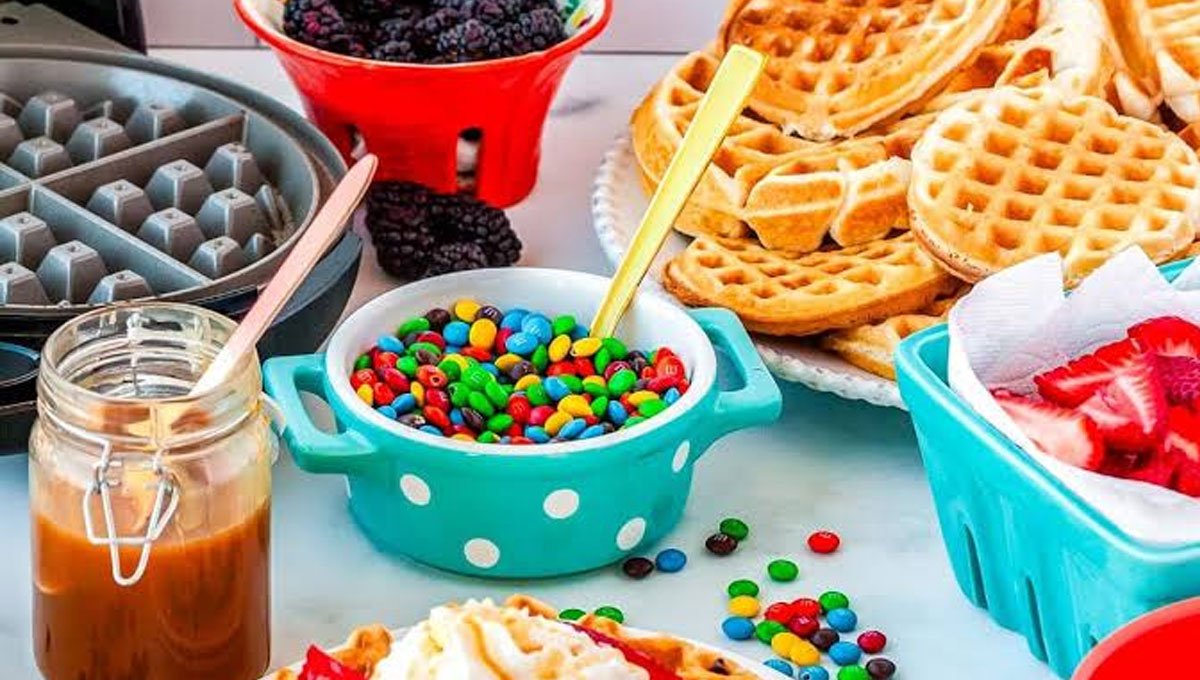
More bowls do not always make a better station. A modest selection of distinct toppings can be easier to enjoy than many similar choices crowded together. Group ingredients by the action a guest takes: collect a portion, add a chosen topping, then move to napkins and cutlery. Put the items that require the longest decisions away from the immediate cooking handoff.
Keep ingredient packaging or a reliable ingredient record available. Labels should describe what is actually in the food, including purchased mixes and sauces. Do not promise that a shared station is free from a particular allergen when its handling arrangements cannot support that claim. Guests with dietary requirements need accurate information and a suitable plan, not a reassuring guess.
Assign a person to replenish and tidy the topping area. Dedicated serving utensils and a clear place for used items help make that job manageable. If a spoon moves between bowls or a guest asks about an ingredient, the host should know whom to ask. Follow the caterer’s or applicable local food-service guidance for storage and service conditions.
Test waffle bar texture at the moment guests will eat
A sample taken straight from the iron does not tell the whole story of a party plate. The waffle might wait for collection, receive a wet topping, and travel to a seat before the guest begins eating. Test that route with your selected recipe. It reveals whether the intended crispness survives the actual plan.
UDTECH’s food articles discuss the difference between a waffle’s surface texture and the softer result associated with pancakes. Its guide to soggy waffles also treats the journey after baking as part of the problem. That makes texture a useful rehearsal question: is the finished food meant to remain crisp, or is a softer, heavily topped portion an acceptable and deliberate choice?
The waffle and baking guides at UDTECH offer background for understanding batter and texture before choosing a service arrangement. Use that knowledge to frame a small trial with the host or caterer. It does not replace the recipe’s preparation instructions or food-handling requirements, and it cannot establish a safe holding time for a party menu.
King Arthur Baking’s waffle guidance describes letting steam escape on a rack as a way to protect texture after cooking. That idea is useful for a brief kitchen trial, but it is not a complete catering plan. Any longer holding, chilling or reheating arrangement needs instructions suited to the actual food and setting. A surface that still feels crisp proves only a texture observation.
A rehearsal sheet for a small waffle station
| Station moment | What to observe | Who needs an answer |
| Collection | Guests can receive food without entering the cooking space. | Cook and host |
| Topping selection | Labels, utensils and choices remain easy to understand. | Person tending the table |
| Eating | The portion and texture suit the plate and chosen topping. | Menu planner |
| Replenishment | Supplies can be replaced without blocking the queue. | Support host or caterer |
Keep the host from becoming the only available helper
Make responsibilities visible. If the person answering the door is also expected to replace the batter bowl, explain ingredient labels and clear used plates, each ordinary interruption can leave another job unattended at precisely the moment guests arrive together and demand rises across the whole station. Share those jobs before the event.
At a small gathering, one person may be able to cook while another welcomes guests and manages the topping table. At a larger event, the arrangement needs a more careful service plan. Discuss expected arrival patterns, the length of the meal and the rest of the menu with the person operating the station. Guest count alone does not describe when demand will arrive.
Write down a fallback before the party begins. It could be a different service sequence agreed with the caterer, an alternative suitable dish already planned for the menu, or a simpler topping arrangement. Do not invent a rushed food-handling shortcut when equipment or timing fails. A calm change to the menu is preferable to an improvised process no one understands.
Use signs to answer recurring questions, not to explain the entire event. A clear collection point and ingredient labels may do more work than a paragraph of instructions. Place decorative items where they cannot crowd utensils or hide a spill. The useful test is whether someone who has just arrived can serve themselves without asking the cook to stop.
Run one complete rehearsal and keep its notes
Use the real table. A rehearsal on a spacious kitchen counter can conceal the problem that appears later when the station sits against a wall, the lid opens towards a shelf, and guests must carry plates past the same corner used for supplies and clearing. Small details change the route.
There is no need to simulate a full party. Prepare the intended portion, follow the route to a seat and note what becomes awkward. Invite another person to try the topping area while you operate the appliance. Their movements often reveal a layout problem that an empty table conceals.
- Confirm the service method and the person responsible for hot equipment.
- Test the actual plate, waffle size and chosen topping together.
- Prepare accurate ingredient information and discuss dietary needs in advance.
- Give replenishment, clearing and guest questions a named owner.
- Agree a fallback menu or service sequence that preserves proper food handling.
Keep the resulting notes with the shopping list. They are more useful than a memory of how the table looked, because they explain how the station worked. Once food, movement and responsibilities fit together, the host can give guests more attention and spend less of the party solving avoidable bottlenecks.