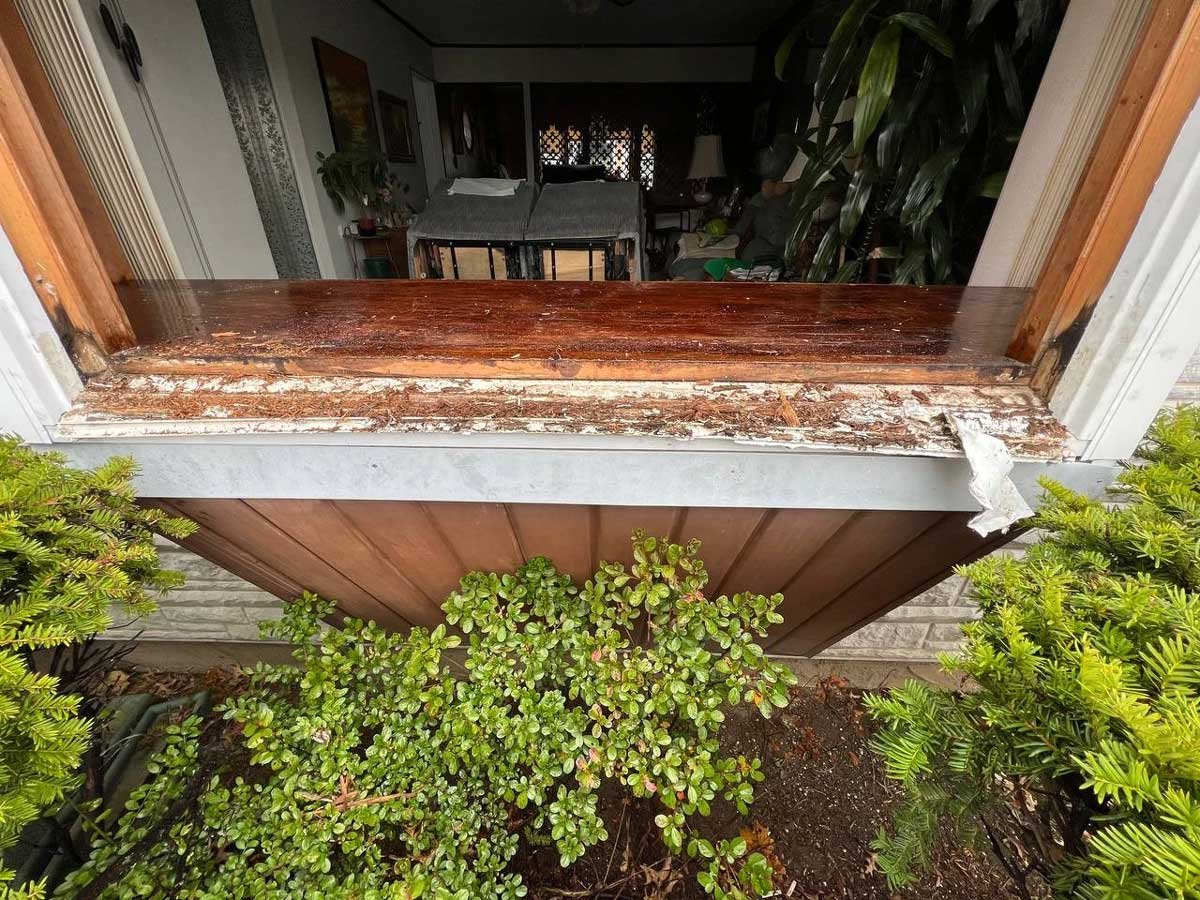
A sill like the one above tells its own story. The paint has lifted, the wood underneath has gone soft and fibrous, and the rot has clearly been feeding on trapped moisture for years. At that stage, epoxy fillers and spot patches will not bring back a sill that flexes under light pressure. Once decay reaches the jambs, the sill, and the corner joints, the frame’s ability to hold its shape and keep water out is gone, and a full rebuild is the only lasting fix.
What happens next matters more than most homeowners realize. A replacement frame earns its durability, or fails to, in the choices made before it ever goes into the wall.
Solid Wood or Engineered Stock
The first decision is material. Solid wood, typically pine, oak, or a larch-family species, is the traditional choice and matches older homes well, but it demands consistent upkeep to stay ahead of moisture. Engineered or laminated stock, built from finger-jointed or glue-laminated wood, resists warping and cupping better than solid timber and has become the more practical choice for exterior frames, at a modest cost premium over solid stock.
Whichever material is chosen, the opening has to be measured precisely first, leaving the small perimeter gap, typically a quarter inch to a half inch, needed for shimming and low-expansion foam later. Measure short and the gap becomes hard to seal properly. Measure long and the frame simply will not fit.
Milling the Profile Before Anything Is Joined
The frame stock needs a rabbet, a stepped groove cut along the inside edge, to hold the glass or sash, along with grooves or mortises cut for whatever hardware the window design calls for, whether that is hinges, locks, or weatherstripping channels. This milling happens before the pieces are joined, since it is far easier to cut a clean profile into flat, unassembled stock than to work around an already-built frame.
The One Chance to Treat the Joints
Before the frame is assembled, every face of the stock gets a wood preservative or borate-based treatment, with extra attention to the end grain, which absorbs moisture faster than any other surface. This step happens now because it has to. Once the corners are glued and fastened, the interior faces of those joints become permanently inaccessible, so pre-assembly treatment is the only window a builder gets to protect them for the life of the frame.
Assembling and Checking for Square
Corner joints, most often a mortise-and-tenon, get glued and mechanically fastened. Before that glue sets, the builder measures both diagonals of the completed frame. If they match, the frame is square. This check takes a minute and decides everything that follows. A frame assembled even slightly out of square will never hang, operate, or seal correctly, no matter how careful the installation is afterward.
Why the Build Quality Shows Up Years Later
None of these steps are visible once the frame is painted and installed, which is exactly why some shops skip them to save time. A frame built from the right stock, treated before assembly, and checked for square before the glue cures lasts decades. Skip any one of those steps and the same rot tends to show up again within a few seasons. For homeowners across NYC, Long Island, Brooklyn, Queens, Nassau County, and Suffolk County dealing with a rotted sill or jamb, it is worth asking a shop how it builds its frames, not just what the quote costs. The team at Artan Window Solutions has handled this kind of wood window frame repair and full frame rebuild for historic and pre-war homes across the region for more than ten years. A free estimate is the fastest way to find out whether your frame needs a full replacement or can still be saved.
FAQ
Is engineered wood actually better than solid wood for a window frame?
It resists warping and cupping better than solid timber, which makes it a strong choice for exterior frames exposed to weather. Solid wood still matches older homes closely and performs well when it is properly treated and maintained, so the right choice depends on the home and the budget.
Why does the wood get treated before the frame is assembled instead of after?
Once the corner joints are glued and fastened, the interior faces of those joints can never be reached again. Treating every face, especially the end grain, before assembly is the only way to protect wood that will be sealed inside the joint for the life of the frame.
How do builders know a new frame is actually square?
By measuring both diagonals of the assembled frame before the glue sets. Equal diagonals mean a square frame. Even a small error at this stage means the finished window will never hang or seal properly.
Can a frame with only minor sill damage be repaired instead of fully rebuilt?
Yes, when the decay stays confined to one section and the jambs, corner joints, and sill retain their strength. Full replacement is reserved for cases where the structural members have already lost their ability to hold shape and keep water out.