The exterior painting best temperature is around 77 degrees Fahrenheit at the air, with most exterior paints usable in a wide 35-to-100-degree band and humidity kept as low as possible, but the air temperature is only half the story. What matters more is the surface temperature and the dew point: avoid painting in direct sun, keep the surface more than about five degrees above the dew point, and leave a dry window of at least 24 to 48 hours after the last coat. Paint that is too hot, too cold, or laid down before rain will fail, in blistering, peeling, lapping, or a finish that never cures.
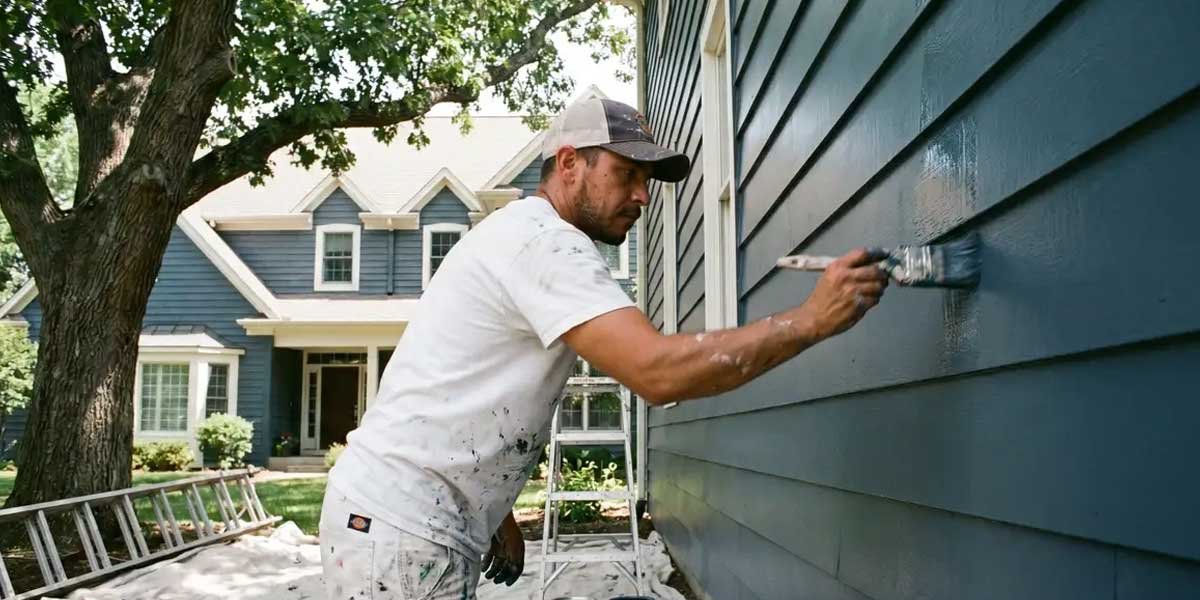
Interior painting depends mostly on the room’s temperature and humidity, but painting the outside of a house adds wind, sun, rain, and the seasons, so the conditions shift by the hour and the month. Painting on the right day, in the right shade, is the difference between a coat that lasts a decade and one that fails in a season.
Below is the temperature and condition spec by paint type, the dew-point rule, the failure modes, and a timing guide by climate and season.
The exterior painting best temperature, by paint type
The ideal air temperature for exterior painting is about 77 degrees Fahrenheit, and most exterior paints are usable from about 35 to 100 degrees with humidity kept low, though the label on your can is the final word. Latex paints prefer the moderate range, and oils and special cold-weather acrylics can go lower, which is why the product matters as much as the calendar.
| Paint type | Ideal temp | Usable range | Humidity | Notes |
|---|---|---|---|---|
| Exterior latex / acrylic | ~77°F | 50-85°F; some to 35°F | Low, 40-70% | Most common; dries fast, cleans with water |
| Oil-based / alkyd | ~70-80°F | 40-90°F (see label) | Low preferred | Slower cure, needs solvent ventilation |
| Cold-weather acrylic (<35°F rated) | 60-80°F | Down to 35°F | Low | Special formulas for early spring or late fall |
| Exterior primer | ~77°F | Match the topcoat | Low | Bonds the base to the topcoat |
The numbers come from manufacturer guidance. Benjamin Moore’s exterior temperature guide puts the optimal at about 77 degrees and a practical working range of 35 to 100 degrees with low humidity, and Sherwin-Williams notes that its cold-weather lines now let a latex exterior go down to about 35 degrees. The middle of the range is the safest place to be, and the label on the can overrides any general advice.
Why surface temperature and the dew point matter
The air temperature is not the temperature your paint sees, because a sun-warmed wall runs hotter than the air, so measure the surface with an infrared thermometer and keep it above the dew point by about five degrees. Humidity that puts water on the surface stops the paint from forming a film.
A black wall that has sat in direct sun can be substantially hotter than the air, and painting it in that heat can wreck the finish, so pick a shady time of day and measure the surface, not the forecast. The dew point is the other watch point: when a surface cools to the dew point, water condenses on it, and water on fresh paint stops it from bonding and curing. Benjamin Moore’s guidance is to paint when the surface is more than about five degrees above the dew point, and Sherwin-Williams adds that the temperature should stay in range and above the dew point for at least 48 hours after application so the coat finishes curing. A paint colors and moods choice matters little on a surface that never cured, which is why the conditions come first.
What fails when you paint too hot, too cold, or too humid
Painting an exterior in the wrong conditions produces predictable failures: heat causes blistering, bubbling, and poor flow-and-leveling, cold causes peeling and a latex that never forms a film, and rain or humidity before the coat cures causes water blisters and a cloudy finish. Each is avoidable by painting in the right weather window.
In strong heat and direct sun, the paint’s solvent evaporates too fast, so the surface skins before it cures, leaving lapping and wrinkling, and a thick coat can blister as trapped solvent escapes. In cold weather below the product’s range, the latex does not form a continuous film, so it dries chalky and peels, and it can take far longer than the label’s dry time. Rain or heavy humidity on a fresh coat creates tiny water blisters, which is why the dry forecast matters as much as the temperature, and why the interior painting best temperature rule, which has no sun or rain to plan for, is simpler than the exterior version.
Matching the timing to your climate and season
Choose the painting window by your region and the season, not by a single calendar date. A mild, damp climate needs a humidity check, a hot, dry climate needs a shady early start, a cold climate needs a cold-rated paint or a warmer week, and autumn works in the South but turns risky in the North once frost threatens.
| Climate / season | Best window | Watch for |
|---|---|---|
| Mild, damp (coastal, Pacific NW) | Dry, low-humidity day | Humidity and dew point more than heat |
| Hot, dry (Southwest, summer) | Early morning, shady side | Direct sun heating the wall |
| Cold (north, early spring or late fall) | 35°F or warmer acrylic, dry few days | Frost and a slow cure |
| Autumn (South) | Dry stretch, mid-60s to mid-70s | Late-season rain and a short window |
| Autumn (North) | Warm, dry week before frost | Frost ending the season |
| Mountain / high altitude | Warmer midday, above dew point | Big daily temperature swings |
The table maps the window, and the practical habit is to check a wider forecast, not just today. Look for two to three dry days, watch the overnight low, and avoid a stretch where humidity or rain follows the paint, because a coat needs 24 to 48 hours above the dew point to cure.
A decision checklist by homeowner profile
Run the conditions before you lift a brush. Check the air temperature, the surface temperature, the humidity, the dew point, and the dry forecast, and the answer of whether to paint now or wait follows cleanly.
- Check the air temperature. Confirm it is within the label range for your paint, ideally near the 60-to-85-degree comfort band.
- Measure the surface, not the forecast. An infrared thermometer tells you the real wall or trim temperature, which direct sun raises well above the air.
- Watch the dew point. Keep the surface more than about five degrees above the dew point so no water forms on the fresh paint.
- Confirm the humidity. A reading under about 70 percent, and low is better, keeps the coat from curing cloudy or slow.
- Leave a dry window. Check for two to three days with no rain and a night cool enough to cure, not just a single sunny afternoon.
A first-time homeowner in a mild, dry season with a shady side and a good forecast is well set to DIY. Where the job is large, two stories, or on a surface you cannot safely reach, the labor and the safety of a professional are worth it, and the rest of the house, inside and out, is covered in the interior painting ideas for home and the broader Home Improvement guides.
Frequently asked questions
At what temperature should you not do exterior painting? Do not paint below the product’s minimum, which is about 35 to 50 degrees for most exterior paints, or above about 90 to 100 degrees, because the paint either fails to form a film or dries too fast and blisters. Direct sun heating the surface and high humidity are also reasons to wait.
Will exterior paint dry in 50 degree weather? It will dry, but slowly, since the cooler temperature slows evaporation and curing, and it may not reach full strength for some time. If the product can be applied at 50 degrees, plan extra time and keep the surface above the dew point.
Can you paint outside in 100 degree weather? It is risky, because the paint dries too fast, laps, and can blister in direct sun, and a sun-warmed wall runs hotter than the air. Paint early or in shade, or wait for a cooler stretch.
Can you paint outside in October? Yes in the South, where October is often ideal, but in the North it depends on the forecast, because a hard frost ends the season. Pick a dry, above-dew-point stretch that stays warm enough to cure.
What humidity should you avoid when painting outside? Humidity above about 70 percent is best avoided, and high humidity plus a cool surface that nears the dew point is the worst case, since water condenses on the fresh coat. Aim for low humidity and a dry forecast.
Let the surface, the dew point, and the dry week decide
The best temperature for exterior painting is the one that keeps the air and the surface in the paint’s working range, roughly 60 to 85 degrees ideal and a wider 35 to 100 usable, with the surface above the dew point and a rain-free cure window behind it. Air temperature alone is not enough, because sun-heated walls and humidity decide the finish, so measure the surface and check the dry forecast before you start. Paint the right week, in the shade, and a coat lasts; force it onto a hot, damp, or freezing wall and it fails, and the Home Improvement guides carry the whole exterior from prep to the last coat.