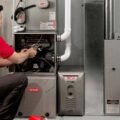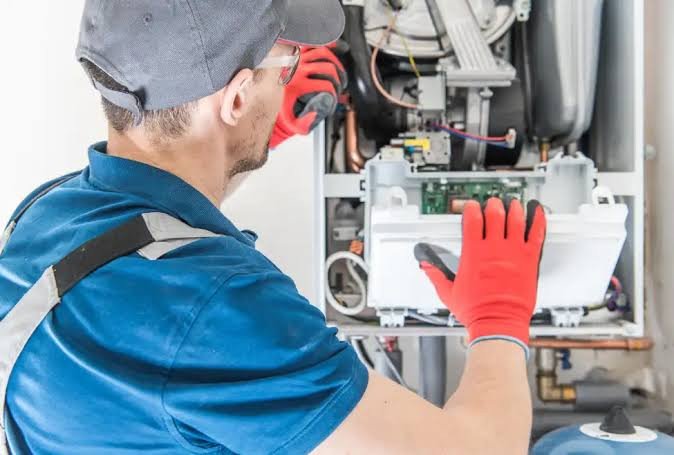
Most furnace repair issues are small, and the skill of dealing with them is knowing the line between what you can safely touch and what you cannot. A clogged filter, a thermostat stuck off, a tripped breaker, and a dirty flame sensor are homeowner fixes that cost little. Anything involving gas, the ignition or pilot, the heat exchanger, or carbon monoxide is a licensed-pro job, because getting it wrong is dangerous, not just expensive. Measure that boundary and a furnace problem turns into a ten-minute fix or a phone call, not a gamble.
Below is the safe do-it-yourself order, the issues that signal a professional, and an honest read on cost and lifespan.
The Safe Line: DIY vs a Licensed Pro
The line is drawn by danger, not difficulty. Before calling and paying a technician, a homeowner can safely check a handful of basics, as the Carrier furnace troubleshooting guidance spells out: confirm the thermostat is set to Heat and has power, verify the furnace power switch is on, replace a dirty air filter, and check that the circuit breaker has not tripped. These easy checks resolve a surprising share of “my furnace stopped working” calls. But the line stops at anything the system burns, gas, the pilot or electric ignitor, the heat exchanger, or any suspected carbon monoxide, because those are the parts where a mistake harms you rather than just costing you. That work belongs to a licensed technician.
The Order to Try First
Work the easy fixes in order, because the most common cause is often the simplest. Start at the thermostat, confirming it is set to Heat and not Off or Cool, and that battery-operated units are not dead. Move to the furnace’s power switch, the switch on the unit or wall, and make sure it is on, since it is easy to knock it off during cleaning. Then check the air filter, replacing it if it looks gray or carries a layer of dust, because a clogged filter starves the airflow and can even trip a safety shutoff. Finally, check the circuit breaker and reset it if needed, and if it keeps tripping, that is a sign for an electrician rather than a repeated reset.
If a gas furnace still will not light, and you are comfortable with the steps, a dirty flame sensor is a common DIY fix on an electric-ignition unit. Turn off the power and the gas, remove the thin metal sensor at the burner, rub it gently on a rough surface to clean the soot, wipe it, and reattach it. Beyond that, stop and call a professional, because the next parts sit squarely on the dangerous side of the line.
Common Issues and the Parts That Go Bad
Knowing what breaks helps you recognize it early. The air filter is the single most neglected part, and a clogged one is behind a large share of furnace trouble, so it should be replaced on a schedule of about every three months. The ignition system, a pilot light with a thermocouple on older units or an electric ignitor on newer ones, collects soot over time and is a frequent failure. The blower motor is the furnace’s only moving part, so it wears and can make itself known with noise. Around all of this sits the heat exchanger, and here the stakes climb: if its walls rust through, exhaust can carry carbon monoxide into your home.
That heat-exchanger point is why the lists of the most common furnace repairs put filter, ignition, and blower problems near the top, and why no homeowner should guess at anything near combustion. A furnace left to run unsettled can go from a repair to a hazard.
Noises and Signs That Mean Call a Pro
Some sounds should end your DIY attempts and prompt a call. A loud bang or boom when the furnace starts points to a clogged burner delaying ignition, a professional fix. A grinding or scraping noise from the blower usually means worn bearings the unit should not run on. A shrieking squeal is a loose or worn blower belt that an able homeowner can tighten, but a pro can also replace. Any trouble with a pilot light, failing to stay lit or a low flame, is a pro job because the causes sit in gas and safety controls. And if you smell gas or suspect carbon monoxide, switch off the furnace, get out, and call for help immediately rather than attempting anything yourself.
An Honest Read on Cost and Lifespan
Repair cost varies with the part and your local labor, so treat any single number with care. A service call with a simple fix, such as a part or sensor, typically runs from a few hundred dollars, while a blower motor or other major component costs more. An older furnace that keeps failing may cost more to keep repairing than to replace, and a full furnace replacement commonly runs from several thousand to eight thousand dollars or more depending on size and efficiency. The “$5,000 rule” you may see online, roughly that a common furnace replacement lands near five thousand dollars or about five hundred per installed ton, is a legacy rule of thumb, not an official or universal price, so pair it with real local quotes.
On lifespan, a gas furnace with regular maintenance typically lasts about 15 to 20 years. When it nears that age and a repair cost approaches a big share of replacement, replacement is often the wiser spend, while a simple fix on a younger unit is worth doing. Know the age and the repair quote, and the replace-or-repair call becomes easier.
Furnace Repair Issues: Common Topics
What is the most common furnace failure?
Usually a clogged or dirty air filter, which restricts airflow and can trigger a safety shutoff, closely followed by ignition trouble from a dirty flame sensor or a sooty pilot. Before paying for a call, check the thermostat, filter, and breaker, since those solve many failures for free.
What is the $5000 rule for a furnace?
It is a legacy rule of thumb, roughly that a common furnace replacement lands near five thousand dollars, or about five hundred dollars per installed ton, not an official standard. Modern cost depends on size, efficiency, and local labor, so treat it as a loose check rather than a firm budget.
What is the average cost to repair a furnace?
A service call plus a simple repair commonly runs from a few hundred dollars, while major parts like a blower motor cost several hundred more. The number varies by part and region, so a written estimate from a licensed company is the reliable way to know yours.
How many years do furnaces typically last?
A gas furnace with regular maintenance typically lasts about 15 to 20 years. Toward the end of that range, if a repair approaches a large share of replacement cost, replacing is often the wiser spend than continuing to patch an aging unit.
Can I fix a furnace myself?
You can safely handle the basics, the thermostat, the power switch, a dirty air filter, and a tripped breaker, and an able homeowner can clean a flame sensor. Anything involving gas, the ignition or pilot, the blower’s internal parts, or the heat exchanger needs a licensed professional.
The fix for a furnace is mostly knowing the line. Change the filter, check the thermostat and breaker, and clean a flame sensor if you are comfortable, then stop and call a licensed pro for anything gas, ignition, or heat-related. A heat exchanger that fails is a carbon-monoxide risk, not just a repair, so respect where the safe line sits and a furnace issue stays a small problem instead of a dangerous one.