Insight Timer and Medito are the best apps like Headspace, and both are free. Between them they cover the two reasons subscribers cite most often: the $69.99 annual price and an interface that keeps adding features.
Headspace is still the biggest name in meditation apps, with 974K ratings and a 4.8 average on the App Store, but its user base is openly restless. Long-time subscribers describe an app that traded a simple design for new voices, packages, and a chatbot.
The alternatives fall into four price tiers, from $0 to $130 a year. Pick by what pushed you out of Headspace, not by which app has the most content.
Why People Are Leaving Headspace
“Really miss the simple no frills interface back in 2016/2017. Some core themes and it’s mainly Andy. Calming and minimalistic. Now it’s all over the place with different people and packages..”
– r/Headspace, March 2026 (68 upvotes)
The complaints center on interface bloat, pricing, and the departure of familiar voices. The meditation content itself keeps its defenders.
The same subreddit’s thread from October 2025, at 51 upvotes, notes that Andy Puddicombe and Eve, the two voices behind Headspace’s original courses, have left the company. A third thread, with 34 upvotes, collects stories of difficult cancellations and refunds.
Which Headspace Alternative Fits Your Reason for Leaving?
The best apps like Headspace vary by reason for leaving: price points to Medito or Insight Timer, structured courses to Balance, sleep content to Calm, deep theory to Waking Up. Check insurance before paying, because some plans cover a subscription entirely.
Four triggers cover most switches. If the annual fee is the problem, Medito is $0 and Insight Timer gives away roughly 90 percent of its catalog. If you want Headspace’s old course structure, Balance runs ten-day plans with a choice of instructor. If sleep is the actual goal, Calm’s Sleep Stories are the category’s best. If you want to understand meditation rather than be coached through it, Waking Up is built around that.
Test the free tier for two weeks before paying anything.
Five Apps Like Headspace Worth Switching To
These five are the ones worth the download. Two are free, two cost about what Headspace costs, and one is a deliberate splurge.
Medito is run by a non-profit foundation, charges nothing, and runs no ads, relying on donations. Android Authority’s editors call it the answer for anyone leaving Headspace over money. Its distinguishing feature is a consistency score that forgives a missed day instead of resetting a streak to zero. Guided sessions, a simple unguided timer, and background sounds are all included.
Insight Timer is the largest free library in the category: more than 246,000 free tracks, about 90 percent of its total catalog, taught by over 20,000 teachers in more than 50 languages, per Wirecutter’s 2026 testing. The free tier covers guided and unguided meditation, music, yoga, and live events. Newcomers get an always-free course, Learn How To Meditate In Seven Days. A $60-a-year subscription opens additional courses and tracks.
Balance builds ten-day plans around a specific goal and lets you choose a male or female instructor and session lengths from 5 to 15 minutes. The listed price is around $12 a month or $70 a year, and discounts are frequent, with Android Authority’s reviewer paying about $25 for a year. It is the closest structural match to early Headspace.
Calm’s differentiator is sleep: hundreds of Sleep Stories narrated by voices including LeBron James, plus music and nature sounds. A yearly subscription runs about $70, with a 50 percent first-year discount offered often. Choose it when bedtime is the problem and meditation is secondary.
Waking Up is Sam Harris’s project, a structured 28-day introductory course followed by long guided sessions and two-hour conversations about consciousness. It costs $130 a year or $20 a month, with partial $60-a-year scholarships available. The sessions are English-only and some run over an hour, closer to a university lecture than a five-minute reset.
Two more are worth a look. Simple Habit carries a large amount of free content and sorts sessions by teacher or theme, and Healthy Minds Program offers most of its course library free through a University of Wisconsin-affiliated nonprofit.
What the Free Options Actually Cost
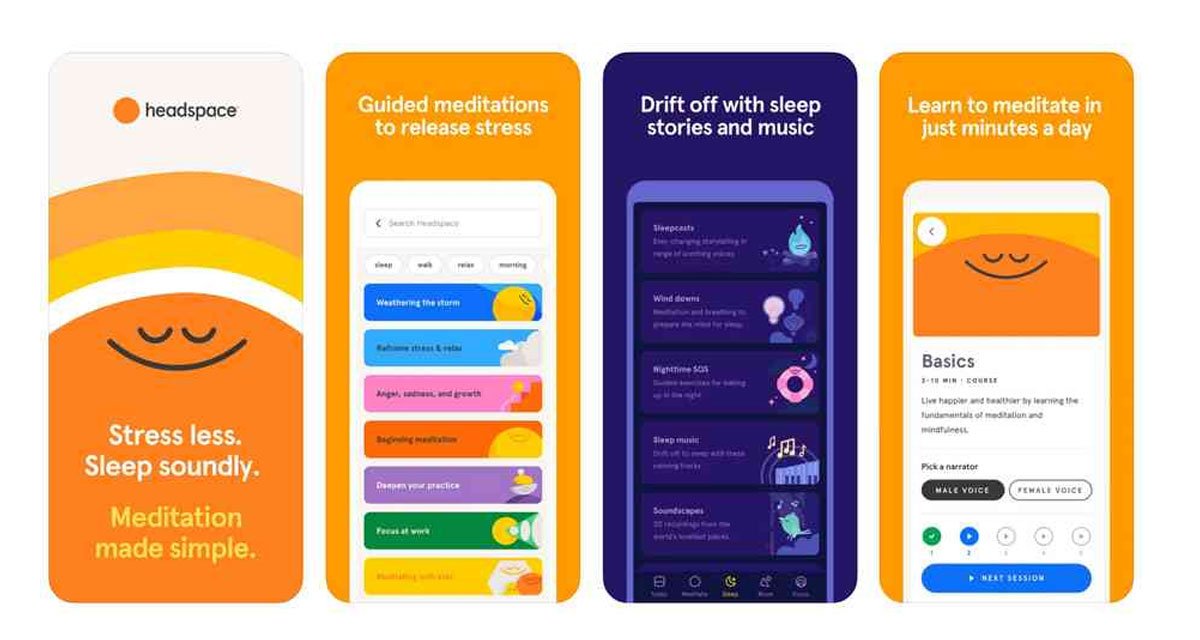
Medito costs nothing and gives you everything. Insight Timer’s free tier covers about 90 percent of its catalog. Balance and Calm sit near Headspace’s price, and Waking Up is the premium tier.
These are the real prices next to Headspace’s $69.99 baseline.
| App | Price | Free content | Best for |
|---|---|---|---|
| Medito | $0 | Everything | A budget of zero |
| Insight Timer | $0, or $60/year | ~90% of 275,000+ tracks | The largest library |
| Balance | ~$70/year, frequent discounts | Limited | Structured courses |
| Calm | ~$70/year, 50% off first year common | Limited | Sleep stories |
| Waking Up | $130/year, or $60 scholarships | 7-day trial | Deep theory |
| Headspace | $69.99/year | Limited free tier | Meditation plus therapy |
Two patterns show up across these prices. The free options are concentrated at the top, and each paid app justifies its fee with one narrow specialty.
Build the habit free first, then pay for the one specialty you actually use.
Two Money Traps: Insurance and Auto-Renewal
“Before paying for anything, check on the app for your health insurance. Many of these are covered by your insurance or through an EAP. It will be under a section labeled ‘Other Benefits’ or something similar”
– r/UninfluencedReviews, May 2026 (22 upvotes)
The tip in that thread is worth checking before any payment. Headspace itself advertises insurance partnerships on its App Store page, with sessions as low as $0, and several of the apps above participate in similar programs. The option usually sits under a benefits or “Other Benefits” section in your insurance portal.
The second trap is auto-renewal. Wirecutter notes that customers have reported difficulty opting out of a renewed Headspace subscription, a pattern also collected in a r/Headspace thread. The workaround is counterintuitive: sign up, then cancel immediately. The subscription stays active through the paid period, but the renewal is dead.
A canceled renewal is a subscription you re-evaluate in a year instead of a charge you dispute.
Apps Like Headspace: Quick Answers
Is Calm or Headspace better?
Calm is better for sleep content, while Headspace is better for structured courses and therapy access. Both cost about $70 a year. Choose Calm when falling asleep is the goal and Headspace when you want a curriculum with built-in counseling options.
Is Aura or Headspace better?
Aura is built for short daily sessions and mood tracking; Headspace offers deeper structured courses. Aura works as a three-minute daily check-in that charts your mood over time. A full curriculum with courses and coaching is Headspace’s territory.
What is the best meditation app for ADHD?
For ADHD beginners, Headspace offers structure; for skeptics, Happier Meditation offers direct guidance. Structure and short sessions matter most for this group. Balance and Headspace both run clear multi-day plans with sessions under 15 minutes, which fits better than open-ended libraries.
Is Andy no longer with Headspace?
Andy Puddicombe has stepped away from Headspace; subscribers on r/Headspace noted his and Eve’s departure in October 2025. The change surfaced in a 51-upvote subreddit thread.