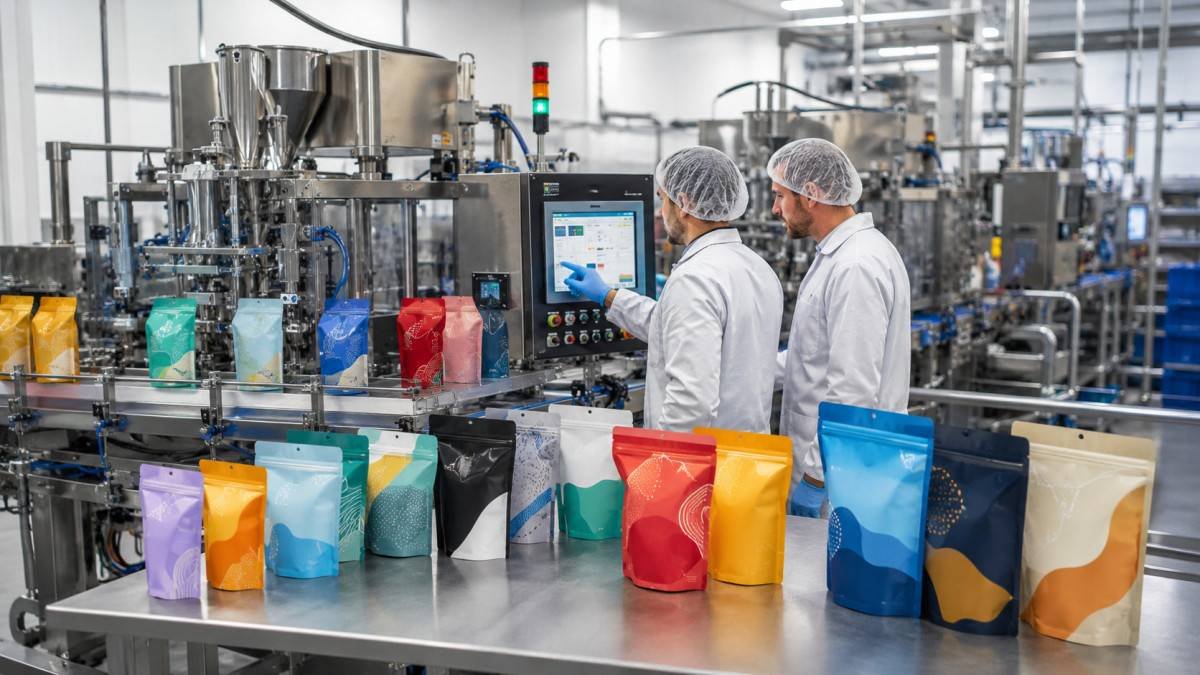
Buying packaging equipment is not only a machine-purchasing decision. It is a production-planning project that connects the product, pouch material, filling method, floor space, utilities, labor, quality standards, and future sales goals. When these details are studied early, a manufacturer is more likely to build a line that works reliably after installation.
Modern Pouch Packaging Machines can combine pouch feeding, opening, filling, sealing, coding, and discharge within an organized workflow. However, the most suitable system is not necessarily the one with the highest advertised speed. It is the one that handles the real product and pouch consistently, fits the factory, and supports the company’s production plan.
Begin With a Clear Packaging Brief
A successful project starts with accurate information. Before contacting an equipment supplier, the manufacturer should prepare a packaging brief explaining what needs to be packed and how the finished product should look.
The brief should include the product type, target fill weight, pouch dimensions, packaging material, expected daily output, number of varieties, and required coding. It should also identify any zipper, spout, valve, hanging hole, or special sealing feature.
Clear information allows technical teams to recommend a suitable configuration instead of making assumptions.
Study How the Product Behaves
Two products that appear similar can behave very differently inside a packaging system. Fine flour can create dust, sticky powder may collect on surfaces, fragile chips can break during transfer, and thick sauce may continue dripping after filling.
Manufacturers should consider flow, density, particle size, temperature, moisture, stickiness, and sensitivity to pressure. These characteristics affect the feeding system, filler, speed, cleaning method, and sealing conditions.
Real product samples should be used during testing whenever possible. A trial with substitute material may not reveal problems that appear during normal production.
Select the Filling System Carefully
The filling unit controls how much product enters each pouch. Different products require different dosing methods.
Multihead or linear weighing systems may suit granules and individual pieces. Auger fillers are often used for powders, while pumps or piston fillers can handle liquids and pastes. Some projects may need counting, cup dosing, or a customized solution.
The decision should not be based only on speed. Accuracy, product damage, dripping, dust, cleaning, and changeover requirements must also be considered. A slower filler that remains stable may deliver better daily output than a faster unit that causes repeated stops.
Confirm the Pouch Before Finalizing the Machine
The pouch should be treated as a working machine component, not simply as a printed marketing item. Its width, height, thickness, surface finish, opening quality, zipper position, and sealing layer can influence performance.
Small dimensional differences may affect pickup or alignment. A pouch that is difficult to open may reduce speed, while unsuitable film may produce weak or wrinkled seals.
Manufacturers should send final or near-final samples for testing. Ordering a large quantity of printed pouches before confirming compatibility can create an expensive problem.
Set a Realistic Production Target
Equipment speed is often presented as a maximum number of pouches per minute. Real output depends on the product, fill amount, pouch style, operator experience, upstream feeding, downstream equipment, and frequency of cleaning or changeovers.
A useful target should be based on acceptable finished packages per shift rather than maximum cycles under ideal conditions. Planned breaks, sanitation, material loading, quality checks, and normal adjustments should be included.
This provides a more realistic view of capacity and helps prevent the factory from buying a system that is too small or unnecessarily complex.
Plan the Full Line, Not Only the Main Machine
The pouch machine cannot operate efficiently without reliable equipment around it. Product may need to be elevated, conveyed, mixed, stored in a hopper, or supplied at a controlled level. Finished pouches may need coding, inspection, checkweighing, metal detection, conveying, cartoning, or case packing.
A line diagram can show how every stage connects. It should include material flow, operator positions, cleaning access, waste collection, maintenance space, and the route used to remove finished goods.
Planning the full system early helps prevent bottlenecks and reduces costly changes after installation.
Review Factory Space and Utilities
A machine may fit within the stated dimensions but still be difficult to operate. Doors, columns, ceiling height, drains, walkways, nearby equipment, and maintenance access all affect the layout.
The project team should confirm electrical power, compressed air, water, ventilation, drainage, and network requirements. Some products may also require dust extraction, temperature control, or additional hygiene measures.
Enough space should remain for loading pouches, supplying product, opening guards, removing parts, and performing repairs.
Make Changeovers Part of the Design
Many factories use one line for several products, weights, or pouch sizes. Each change can involve cleaning, replacing parts, adjusting guides, selecting recipes, and checking the first finished packs.
At the middle of the project, buyers should evaluate whether the proposed Pouch Packaging Machines can support the required range without excessive downtime. The supplier should explain which adjustments are automatic, which require tools, and which need replacement components.
A clear changeover plan makes scheduling easier. It also helps management decide whether one flexible line is practical or separate equipment would be more efficient.
Include Quality-Control Requirements
Quality checks should be designed into the process rather than added after a problem occurs. Important inspection points may include fill weight, pouch appearance, seal strength, leakage, code readability, contamination, and product damage.
The line may require checkweighing, metal detection, vision inspection, or rejection equipment, depending on the product. Even when inspections are manual, employees need clear standards and a consistent sampling schedule.
Quality data should be recorded by batch. These records can reveal whether a problem is connected to a material lot, machine setting, maintenance issue, or particular product.
Prepare for Cleaning and Sanitation
Cleaning requirements can have a major effect on daily output. Product-contact parts should be accessible, removable where necessary, and suitable for the factory’s cleaning method.
The project team should ask how long normal cleaning takes, which parts require tools, and whether residues can collect in difficult areas. Allergen changes, strong flavors, oils, powders, or sticky materials may require more detailed procedures.
Sanitation employees should be involved before the machine is approved. Their experience can identify access issues that may not be obvious in a technical drawing.
Test With Real Materials Before Approval
A factory acceptance test should reproduce normal production as closely as possible. The trial should use the actual product, pouch, fill weight, and expected speed.
Testing only a few packages may not reveal repeated issues. A longer run gives the team time to observe pouch feeding, filling accuracy, seal stability, coding, product buildup, and equipment stops.
The buyer should agree on measurable acceptance criteria in advance. These may include output, accuracy, rejection level, seal quality, and changeover performance.
Train the People Who Will Run the Line
Installation is only the beginning. Operators need to understand safe startup, pouch loading, recipe selection, normal adjustments, quality checks, alarm response, cleaning, and shutdown.
Maintenance employees need additional training on inspection, lubrication, wear parts, troubleshooting, and replacement. More than one person should be trained so production does not depend on a single employee.
Procedures should match the delivered machine and actual factory process. Clear, equipment-specific instructions are more useful than generic guidance.
Consider Support and Spare Parts
Packaging equipment will need technical support and replacement parts during its working life. Buyers should ask how support is provided, what information is required when reporting a fault, and which spare parts should be kept on site.
Common wear parts should be identified before production begins. Keeping essential items available can prevent a small failure from causing a long shutdown.
Electrical drawings, parts lists, maintenance schedules, operating instructions, and approved settings also help the factory manage the line confidently.
Leave a Practical Path for Growth
Future planning does not mean buying the largest or most expensive system. It means avoiding choices that make reasonable expansion unnecessarily difficult.
A company may later introduce larger pouches, new fillers, extra inspection equipment, or a faster downstream process. The layout, controls, and utilities should allow practical upgrades where possible.
Modular planning can help the business invest in what it needs today while keeping options open. However, future features should be discussed clearly because not every upgrade can be added easily later.
Final Thoughts
A reliable pouch packaging line begins long before the machine reaches the factory. Product behavior, filling technology, pouch compatibility, realistic capacity, layout, utilities, cleaning, quality control, training, and support all influence the final result.
Manufacturers that prepare accurate information and test real materials are better equipped to avoid expensive surprises. The right system should not only produce attractive pouches during a demonstration; it should remain stable through daily production, changeovers, sanitation, and future growth.
Businesses researching flexible packaging equipment and complete line options can review further information through pallasmt.com.