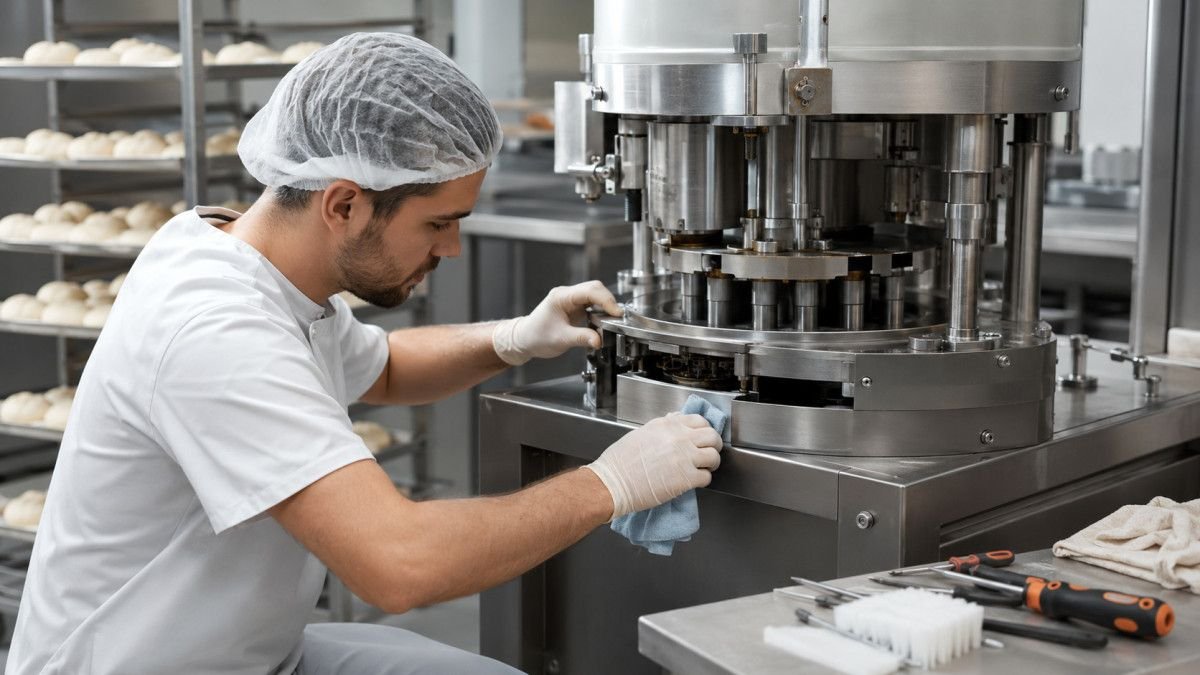
Supplying bread, buns, rolls, pizza dough, or other baked products to supermarkets, restaurants, hotels, and food distributors requires a different level of control than selling directly from a small bakery counter. Wholesale customers usually expect every delivery to follow agreed standards for product weight, size, appearance, packaging, and quantity. Even small differences can create problems when products must fit specific trays, boxes, menus, or retail shelves.
A commercial Dough Divider can help bakeries create more consistent dough portions before shaping and baking. By reducing repeated manual cutting and weighing, the machine supports a more controlled production process. This can be especially useful when a bakery needs to complete large orders while maintaining the same product specifications across every batch.
Wholesale Customers Expect Repeatable Results
A customer buying one loaf from a local shop may accept a small difference in size. A wholesale buyer ordering hundreds or thousands of products usually has stricter expectations.
Restaurants may need burger buns that fit a particular patty size. Hotels may require dinner rolls of a consistent weight for portion control. Supermarkets may expect packaged bread to fit standard bags, labels, and shelf displays.
When products vary too much, the buyer may experience problems with presentation, food cost, storage, or customer complaints. Repeated inconsistency can weaken the relationship between the bakery and its commercial clients.
Reliable production helps the bakery become a dependable supplier rather than simply a seller of baked goods.
Product Specifications Should Be Clearly Defined
Before accepting a wholesale order, the bakery should agree on clear product standards. These may include dough weight, finished weight, diameter, height, colour, texture, ingredient requirements, packaging format, and expected shelf life.
Written specifications help both sides understand what will be delivered. They also give production staff a clear target during mixing, dividing, shaping, proofing, baking, and packing.
A product specification may include:
- Target dough weight before baking
- Acceptable weight variation
- Finished product dimensions
- Required crust colour
- Number of pieces per package
- Label and delivery instructions
Without clear standards, employees may rely on personal judgment. This can lead to different results between workers, shifts, or production days.
Accurate Dough Weight Supports Cost Control
Wholesale pricing is often based on high volume and relatively narrow profit margins. A small amount of extra dough in every product can become expensive when repeated across a large order.
For example, if each roll contains several grams more dough than required, the difference may appear unimportant. Across thousands of rolls, however, the bakery may use a significant amount of extra flour, water, yeast, oil, sugar, and other ingredients.
The customer receives more product, but the bakery does not necessarily receive more payment.
Portions that are too small create a different risk. The customer may reject the delivery or claim that the product does not meet the agreed standard.
Controlled dividing helps the bakery protect both ingredient costs and customer satisfaction.
Consistency Makes Large Orders Easier to Plan
Wholesale production requires accurate calculations. Managers need to know how much dough to prepare, how many trays will be needed, how much oven space is required, and how many finished pieces should be packed.
These calculations become unreliable when dough portions vary significantly.
If the bakery plans to produce 1,000 buns from a prepared batch, overweight portions may reduce the final count. The team may discover the shortage only after most of the dough has already been processed.
This can result in an emergency extra batch, delayed delivery, or incomplete order.
More consistent portions allow managers to estimate output more accurately. They can plan ingredients, labour, proofing space, oven schedules, packaging materials, and transport with greater confidence.
Standard Size Supports Uniform Shaping
Dough weight affects the final shape of a bakery product. Even skilled employees may struggle to create equal-looking pieces when the starting portions are different.
A larger piece may spread beyond the expected diameter, while a smaller one may not fill the required mold or tray space. This can be a serious issue when products must fit commercial packaging or food-service equipment.
Uniform portions give shaping staff a more consistent starting point. They can follow the same method for every piece and achieve a cleaner, more professional appearance.
This is useful for products such as burger buns, sandwich rolls, dinner rolls, pizza dough balls, flatbread portions, and small bread loaves.
Baking Results Must Remain Consistent
Wholesale buyers do not only judge product size. They also expect similar colour, texture, moisture, and internal structure across each delivery.
Uneven dough portions may bake at different speeds. Smaller products can become dry or dark before larger products are fully baked. Mixed sizes may force the bakery to remove pieces at different times or accept inconsistent results.
Similar portions are more likely to respond evenly to the same proofing and baking conditions. This makes it easier to use standard oven temperatures and baking times.
A dependable Dough Divider can support this consistency by preparing portions that are closer to the bakery’s target weight. The machine should still be used with properly mixed dough, correct settings, and regular quality checks.
Packaging Depends on Product Dimensions
Wholesale packaging is usually designed around a fixed number of products. A box may need to hold twelve buns, a bag may contain six rolls, or a tray may be arranged in a specific pattern.
When products vary in size, packages may look overcrowded or partly empty. Larger items can become compressed, while smaller items may move around during transport.
Consistent sizing makes packaging faster and improves presentation. Employees spend less time rearranging products or selecting pieces that look similar.
It can also reduce damage during delivery. Products that fit correctly inside their packaging are less likely to be crushed, bent, or broken.
For retail customers, neat packaging supports a more professional shelf appearance and may strengthen consumer confidence.
Batch Records Improve Accountability
Wholesale bakeries should record important production information for each batch. This may include ingredient quantities, mixing time, dough temperature, portion weight, proofing conditions, baking time, finished yield, and quality observations.
Batch records help managers identify the cause of a problem. If a customer reports that one delivery contained smaller products, the bakery can review the relevant production information.
Without records, the team may have to guess whether the issue came from mixing, dividing, fermentation, shaping, baking, or packaging.
Good records also support continuous improvement. Managers can compare successful batches and adjust procedures when results begin to change.
Portion checks should be included in these records so that accuracy can be monitored over time.
Random Weight Checks Should Continue
Using dividing equipment does not mean quality checks are no longer required. The bakery should regularly weigh selected pieces from each batch.
Random checks confirm that the machine continues to produce portions within the accepted range. They may also reveal changes caused by dough temperature, hydration, fermentation, loading methods, or machine condition.
The bakery can establish a simple checking routine. For example, employees may weigh several portions at the beginning, middle, and end of a batch.
If the results fall outside the approved range, production can be paused and the cause investigated before the entire order is affected.
This is more efficient than discovering a problem during packaging or after delivery.
Staff Should Follow One Standard Procedure
Wholesale consistency is difficult to achieve when every employee uses a different method.
The bakery should create a clear operating procedure covering dough preparation, batch loading, machine settings, weight checks, shaping, proofing, baking, cooling, and packaging.
New employees should be trained according to the same procedure. Experienced workers should also follow documented standards rather than relying entirely on habit.
Standard procedures make it easier to maintain quality across multiple shifts. They also reduce the impact of staff changes, holidays, or busy production periods.
When everyone understands the required product specification, the bakery is less dependent on one individual employee.
Cleaning Helps Protect Product Quality
Food-contact equipment must be cleaned regularly. Dough residue can dry on surfaces, collect around dividing areas, or interfere with smooth operation.
Poor cleaning may affect hygiene and portion accuracy. It can also increase the risk of cross-contact when the bakery changes between recipes containing different ingredients.
Operators should follow approved cleaning instructions and switch off the machine safely before beginning. Removable parts and accessible surfaces should be cleaned according to the recommended routine.
The production area around the equipment should also remain organized. Flour, water, and loose dough should not be allowed to build up on the floor or nearby work surfaces.
A clean environment supports safer work and more reliable results.
Maintenance Reduces Delivery Risk
A machine breakdown during a large wholesale order can create serious delays. The bakery may need to switch to manual portioning, reduce output, or change the delivery schedule.
Preventive maintenance lowers this risk. Operators should report leaks, unusual sounds, weak pressure, slower movement, or changes in portion accuracy.
Maintenance records can help managers plan servicing before an important production period. Replacement parts should be obtained in advance when possible, especially if they are not locally available.
Reliable equipment supports reliable delivery. Commercial customers are more likely to continue working with a bakery that completes orders correctly and on time.
Capacity Should Match Contract Volume
Before accepting a new supply contract, the bakery should confirm that its equipment, staff, oven space, cooling area, and packaging process can handle the required quantity.
A large order may appear profitable, but it can create operational pressure if the bakery lacks sufficient capacity.
Managers should calculate the time required for every stage, including dividing. They should also consider existing customers and normal retail production.
The bakery should avoid relying on overtime as a permanent solution. A stronger production system should be able to manage regular contract volume without exhausting employees or lowering quality.
Choosing suitable equipment based on actual batch size and daily output can make expansion more manageable.
Handling Different Customer Requirements
A wholesale bakery may supply several customers with different specifications. One restaurant may need 80-gram buns, while another requires smaller portions. A supermarket may request a different shape, package count, or finished colour.
The bakery should keep each customer’s specification clearly documented. Employees must confirm the correct settings and production instructions before beginning a batch.
Products for different customers should not be mixed during cooling or packaging. Labels, trays, and order documents should be checked carefully.
A controlled dividing process makes it easier to switch between agreed portion weights, provided the equipment is suitable and correctly adjusted.
Clear separation between orders reduces packing errors and protects customer relationships.
Consistency Strengthens the Bakery Brand
Wholesale buyers often value reliability as much as product creativity. They need confidence that the bakery can deliver the same quality every week.
A supplier that regularly provides uniform products, correct quantities, secure packaging, and on-time delivery becomes easier to work with. This can lead to repeat orders, larger contracts, and positive business referrals.
Consistency also reduces complaints and product returns. Instead of spending time correcting problems, the bakery can focus on improving recipes, expanding production, and serving more customers.
Professional equipment supports this goal by making important production stages easier to control.
Final Thoughts
Meeting wholesale bakery standards requires accurate planning and repeatable production. Product weight, size, texture, packaging, quantity, and delivery timing must remain consistent across large orders.
Controlled dough dividing helps bakeries protect ingredient costs, predict batch yield, improve shaping, support even baking, and meet packaging requirements. It also makes quality checks and production records more useful because one major source of variation is reduced.
The strongest results come from combining suitable equipment with clear product specifications, trained employees, regular weight checks, proper cleaning, preventive maintenance, and organized batch records.
For commercial bakeries seeking dependable dough-processing equipment for wholesale and food-service production, mirabake.com provides solutions designed to support consistent, high-volume operations.