Children’s shoes deal with far more than ordinary dust. They are exposed to playground dirt, food spills, wet grass, school corridors, mud, and constant movement. Without regular care, even a good pair can quickly begin to look worn or develop unpleasant odors. A simple cleaning routine can help footwear remain comfortable, presentable, and useful for longer.
Properly caring for Kids Sneakers does not require expensive products or complicated equipment. The most important steps are cleaning stains early, using methods suitable for the material, drying shoes correctly, and checking them regularly for damage. Small habits can make a noticeable difference in both appearance and durability.
Why Regular Sneaker Care Matters
Children often wear sneakers for several hours each day. During that time, sweat, dust, and moisture can collect inside and outside the shoe.
If dirt is ignored, it may become harder to remove later. Moisture trapped inside the lining can also create odors and make the shoes uncomfortable to wear.
Regular care helps parents notice early signs of wear, such as loose stitching, weakened fastenings, or separation around the sole. Addressing small issues early may prevent them from becoming larger problems.
Start by Checking the Care Instructions
Not every sneaker should be cleaned in the same way. Materials such as mesh, fabric, synthetic leather, suede, and natural leather may respond differently to water and cleaning products.
Parents should check the manufacturer’s care guidance before washing or applying any product. Some sneakers can tolerate gentle hand cleaning, while others may require only surface wiping.
Using a strong cleaner on a delicate material can cause fading, stiffness, peeling, or permanent marks. A small hidden area should be tested first when trying a new cleaning solution.
Remove Dry Dirt Before Using Water
Wet cleaning should not be the first step when shoes are covered in dry mud, sand, or dust. Adding water too early can spread the dirt and push it deeper into the material.
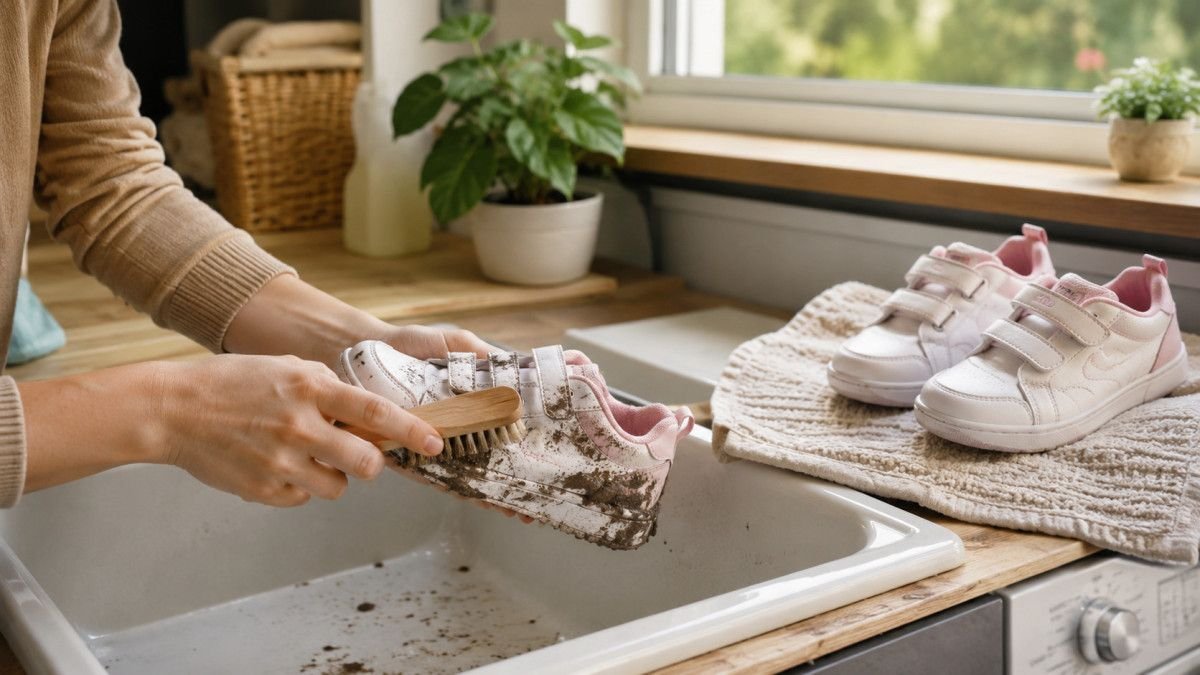
Allow mud to dry, then gently remove it with a soft brush or dry cloth. Tap the soles together outside to release loose soil, but avoid using excessive force.
A small brush can be useful for cleaning grooves in the outsole. Removing loose dirt first makes the rest of the cleaning process faster and more effective.
Clean the Soles Separately
The outsole usually collects the heaviest dirt because it remains in direct contact with the ground. Cleaning it separately prevents mud from spreading onto the upper part of the shoe.
Use a damp cloth or soft brush with mild soapy water. Pay attention to the grooves, where stones, dried mud, and other debris may become trapped.
Avoid soaking the entire shoe while cleaning the sole. A controlled amount of water is usually enough to remove normal dirt.
Use a Gentle Method for the Upper Material
For many everyday sneakers, a mixture of lukewarm water and a small amount of mild soap is enough. Dip a soft cloth or brush into the solution and clean the surface gently.
Avoid scrubbing too hard, particularly on mesh or fabric. Strong pressure may damage fibers, spread stains, or change the texture.
Work on one small area at a time and remove soap residue with a clean damp cloth. The goal is to clean the material without making the shoe completely wet.
Deal with Stains as Early as Possible
Fresh stains are generally easier to remove than marks that have been left for several days. Parents should wipe away spills, mud, or food residue soon after noticing them.
Blot liquid stains rather than rubbing them aggressively. Rubbing can spread the mark and push it deeper into the fabric.
For difficult stains, repeat a gentle cleaning process instead of immediately using bleach or strong chemicals. Harsh products may damage the color and weaken the material.
Clean Laces and Removable Insoles
Laces often become dirty before the rest of the sneaker. If they are removable, take them out and wash them separately in mild soapy water.
Gently rub the laces between the fingers, rinse them, and allow them to dry naturally. They should be completely dry before being placed back into the shoes.
Removable insoles can also be taken out for airing. If the care instructions allow cleaning, wipe them gently rather than soaking them. Wet insoles may lose shape or take a long time to dry.
Prevent Odors Through Daily Airing
Odor is often caused by trapped moisture rather than visible dirt alone. After a long school day or active play, sneakers should be placed in a ventilated area.
Loosen the laces or open the straps so air can circulate inside. Removing the insoles, when possible, can help the interior dry more effectively.
Shoes should not be placed immediately in a closed cupboard or bag while they are still warm or damp. Giving them time to air out is one of the simplest ways to maintain freshness.
Choose Socks That Support Freshness
Clean socks help protect the inside of the shoe. They absorb moisture and create a barrier between the child’s foot and the lining.
Children should wear a fresh pair each day, especially during warm weather or active routines. Damp socks should be changed as soon as possible.
Breathable socks that fit correctly may reduce rubbing and moisture buildup. Socks that are too thick can also affect shoe fit, so the thickness should suit the available space.
Rotate Shoes When Possible
Wearing the same pair every day gives the sneakers little time to dry fully. A simple rotation between two suitable pairs can help each pair air out between uses.
When selecting Kids Sneakers, parents may consider choosing one dependable everyday pair and a second option for days when the main shoes are wet or being cleaned.
A rotation does not require a large shoe collection. Even one suitable backup pair can make care easier and reduce pressure on the shoes used most frequently.
Dry Wet Sneakers Safely
Wet sneakers should be dried naturally in a well-ventilated place. Direct heat from radiators, heaters, or hair dryers may damage adhesives, shrink certain materials, or change the shape of the shoe.
Remove the laces and insoles when appropriate. Loosely place clean paper inside the shoes to absorb moisture and help them maintain their form.
The paper should be changed if it becomes very wet. Shoes should not be worn again until the interior is fully dry.
Avoid Common Cleaning Mistakes
Some cleaning methods may appear convenient but can shorten the life of the footwear.
Common mistakes include:
- Using bleach or strong household chemicals
- Soaking the entire shoe unnecessarily
- Scrubbing delicate mesh with a hard brush
- Drying sneakers directly against intense heat
- Wearing shoes before the lining is dry
- Ignoring mud until it becomes deeply set
A gentle and consistent routine is usually safer than occasional aggressive cleaning.
Be Careful with Machine Washing
Parents may be tempted to place dirty sneakers in a washing machine. However, machine washing is not suitable for every design.
The movement, water, and detergent may weaken glue, damage decorative details, or affect the shoe’s structure. Machine drying can be even more damaging because of the heat.
Only use a washing machine when the official care instructions clearly allow it. Even then, a gentle setting and protective laundry bag may be recommended.
Store Sneakers in a Dry Area
Clean shoes can still develop odors or damage if they are stored in a damp space. Sneakers should be kept in a cool, dry, and ventilated area.
Avoid placing wet footwear in closed plastic boxes. A breathable shoe rack or open storage area is usually more suitable for pairs worn regularly.
Shoes should also be stored in their natural shape. Heavy objects placed on top of them may crush the heel or change the upper structure.
Teach Children Simple Care Habits
Children can take part in basic sneaker care. This helps protect their shoes while teaching responsibility for personal belongings.
Young children can learn to place shoes neatly, open the fastening before removing them, and avoid stepping on the heel. Older children can brush away dry dirt or wipe small marks with supervision.
Making shoe care part of the normal routine is more effective than waiting until the sneakers become extremely dirty.
Check Fastenings and Stitching Regularly
Cleaning provides a good opportunity to inspect the entire shoe. Parents should look at the straps, laces, eyelets, stitching, sole, and heel.
Loose threads should not be pulled because this may cause further damage. Worn laces can be replaced, and small issues may sometimes be repaired before they affect comfort.
If the sole begins separating or the fastening no longer holds securely, the shoes may not be reliable for active use.
Know When Cleaning Is No Longer Enough
Cleaning can improve appearance, but it cannot restore shoes that are too small or structurally worn out. A pair may look fresh while no longer providing a secure fit.
Watch for smooth soles, compressed cushioning, damaged lining, heel collapse, or repeated complaints of discomfort. These signs may mean the sneakers need to be replaced.
Children’s feet also grow quickly, so fit should be checked regularly even when the shoes remain in good condition.
Create a Simple Weekly Care Routine
Sneaker care becomes easier when it is divided into small tasks. Parents can remove visible dirt after outdoor play, air the shoes daily, and perform a more complete check once a week.
A basic routine may include wiping the uppers, brushing the soles, checking the interior, and inspecting the fastenings. This usually takes less time than dealing with deeply set stains later.
Consistent care also helps parents prepare shoes before school mornings rather than discovering dirt, moisture, or damage at the last moment.
Final Thoughts
Children’s sneakers can remain cleaner, fresher, and more comfortable when they receive simple but regular care. Removing dirt early, using gentle cleaning methods, drying shoes naturally, and allowing the interior to air out can all help protect the materials.
Parents should follow the care instructions for each design and avoid strong chemicals, unnecessary soaking, or direct heat. Clean socks, suitable storage, and occasional rotation can also reduce odor and wear.
Most importantly, footwear should be checked for both cleanliness and condition. A clean shoe still needs to fit correctly and provide a secure base for daily movement. Families looking for practical children’s footwear that can support school, play, and everyday routines can explore available choices at bebenelle.com.