Most nursery accent wall guides eventually lead to the same two options: choose a paint color or pick a wallpaper pattern.
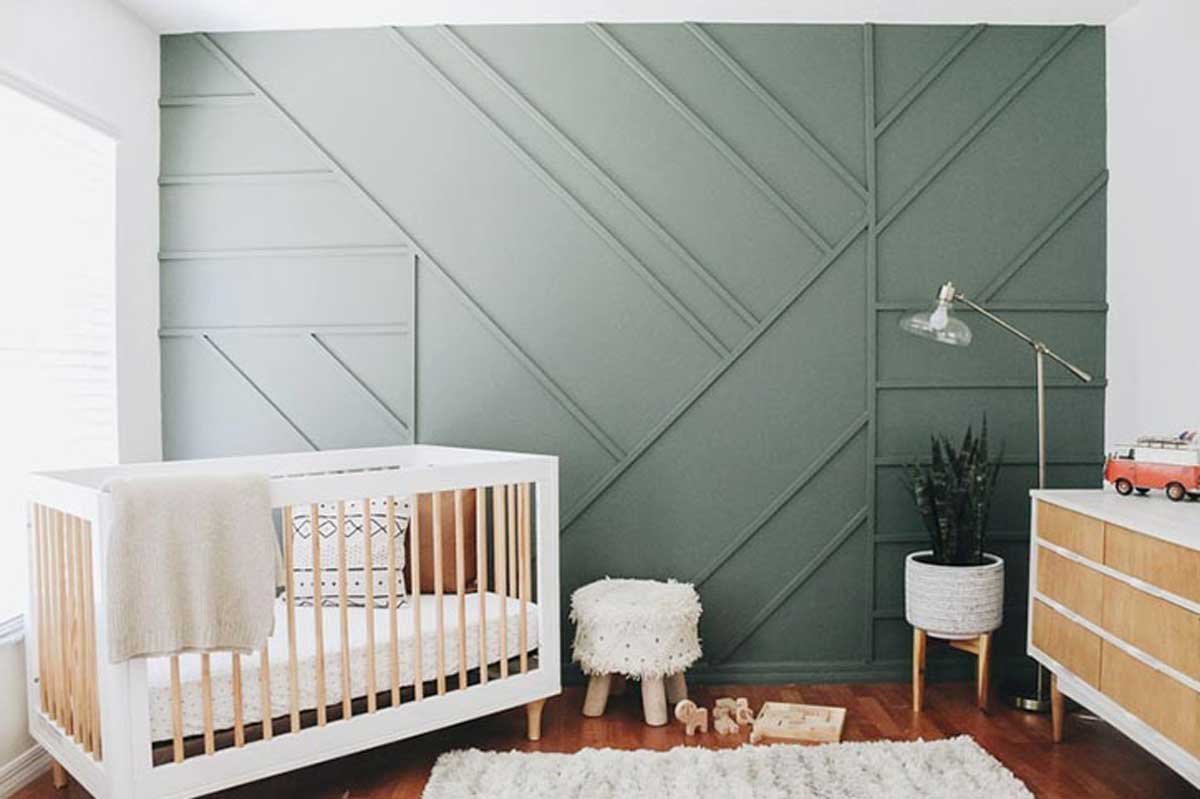
There is nothing wrong with either. A soft sage wall can look beautiful. A delicate wallpaper print can completely change the mood of a room. But both are still mostly flat. Once the paint dries or the wallpaper is up, the wall becomes one fixed surface.
Texture changes that.
A nursery accent wall with physical dimension responds to the room throughout the day. Morning light catches it one way. Evening light softens it. Small shadows appear, move, and disappear again. It is a quiet detail, but in a room where a baby may spend so much time looking around, that kind of visual softness matters more than people often realize.
Why dimension works so well in a nursery
A flat wall reflects light evenly. It usually looks almost the same at 9 a.m. as it does at 9 p.m.
A wall with raised details behaves differently. Even a shallow trim line, a woven piece, or a row of ceramic letters creates small changes in shadow and contrast. The result is not loud or overstimulating. Done well, it simply makes the room feel more alive.
That is also why textured nursery walls often photograph better than flat ones. The camera catches the same thing the eye does in person: depth. It is not only a styling trick. It is the way light works across a surface.
For parents planning a nursery, this is worth thinking about early. Paint sets the mood, but texture gives the wall a reason to keep being interesting after the first reveal.
Three simple ways to add texture
Board and batten is often the easiest entry point. It is relatively affordable, paintable, and adds structure without making the room feel busy. It works especially well if you want the nursery to feel clean, classic, and easy to update later.
Fabric or woven wall hangings bring a softer kind of texture. They can make a nursery feel warmer and more relaxed, especially above a reading corner or beside a cot. The trade-off is practical: fabric collects dust, and some materials fade if they sit in direct sunlight for too long.
Then there are raised individual elements, such as ceramic letters, small shapes, or handmade wall pieces. These create a deeper shadow than paint or wallpaper, and they add something more personal. A name, an initial, or a short word can become part of the room without feeling like a fixed mural that the child may outgrow quickly.
If you want to compare different directions before committing, this collection of nursery accent wall ideas is a helpful starting point. The strongest examples are the ones that do not treat the wall as a one-season decoration, but as something that can grow with the room.
What ceramic elements does paint lack
Handmade ceramic pieces bring texture in two ways.
First, they stand slightly away from the wall, so they create real dimension. Second, the pieces themselves have surface variation. They are not perfectly identical in the way printed wallpaper or mass-produced decals usually are.
According to Letters of Clay, each piece starts with a bisque base that is fired for strength, then hand-glazed and fired again. That process gives the finished surface its subtle variation. One letter may catch the light a little differently from the next. A glaze may sit slightly deeper in one curve than another.
Those small differences are exactly the point. Up close, they make the wall feel made, not simply decorated.
For a nursery, that can be the difference between a wall that looks nice in a photo and a wall that still feels special when you walk into the room months later.
A practical note on mixing textures
Texture works best when it has room to breathe.
One main texture feels intentional. Two can work beautifully if they balance each other. Three or four often start to feel like a craft-supply shelf moved onto the wall.
A good rule is to pair one soft element with one harder, more structured detail. For example, a woven hanging beside ceramic letters on a muted wall color. Or board and batten with a small set of raised decorative pieces above a dresser.
The background should stay calm. The focal point should be clear.
That does not mean the room has to be plain. It just means the eye needs somewhere to rest. In a nursery, especially, a little restraint usually ages better than a wall packed with every idea at once.
Where to start
Choose the background first. Keep it quiet enough that the texture can do the work.
Then pick one element to lead: trim, fabric, ceramic letters, or another raised detail. Add a second texture only if it supports the first rather than competing with it.
If you want the wall to stay relevant as the child grows, choose details that can be moved, rearranged, or added to later. Individual letters are a good example because they can start as a name wall and later become part of a reading corner, shelf display, or playroom detail.
Paint gives a nursery its color. Texture gives it presence. And when it is done with restraint, it turns an accent wall from a backdrop into something genuinely worth looking at.