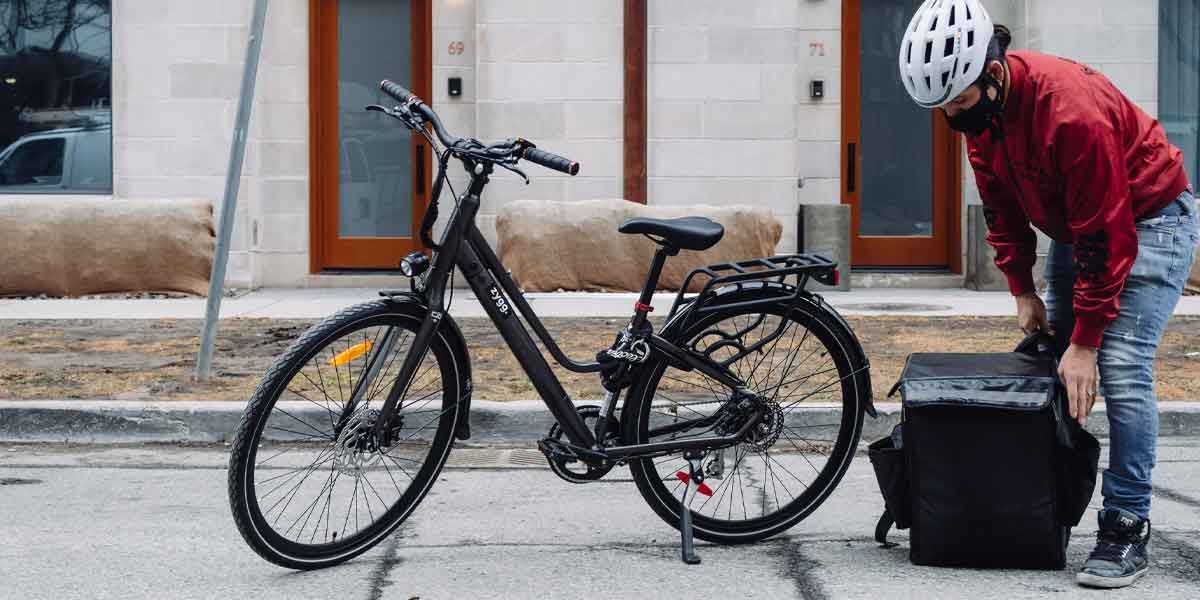
If you have ever spent a Saturday night running app-based food deliveries in a Canadian city, you already know the bike is everything. The wrong machine makes the work miserable and your hourly take-home minimal. The right one makes the difference between a side hustle that feels worth doing and one that quietly grinds you down. Long shifts on a poorly suited bike are not glamorous, and the wear shows up in your knees, your back, and your bank account.
Food delivery has become a real category of e-bike use, with specific demands that look nothing like the recreational riding most e-bike marketing is built around. A casual commuter rides 20 minutes a day. A delivery rider may spend six to ten hours on the bike, climbing on and off dozens of times, in every kind of weather, with a heavy thermal bag adding load and aerodynamic drag. The bike that survives that life is built differently.
If you are looking at long-range delivery electric bikes for serious work use, the buying criteria are very different from what you would prioritize for casual riding. Range matters more, durability matters more, and serviceability matters way more. The goal is a tool that earns money, not a fun weekend ride. Get the specs right and the bike pays for itself faster than you’d think.
Commercial delivery is the fastest-growing e-bike segment
This is not anecdotal. Commercial delivery fleets in the Canadian e-bike market are projected to accelerate at a 13.72 percent compound annual growth rate, according to Mordor Intelligence, with corporate fleets recognizing the cost advantages of two-wheel electric over vans in dense urban areas. The same forces are pulling app-based gig workers into purpose-built delivery bikes. The category exists because the use case is real, and the bikes are being designed accordingly.
Range: the single most important spec
On a recreational ride, range is a feature. On a delivery shift, it is the constraint that defines how much you can earn. Every minute spent off the road charging is a minute not earning. Every order declined because the battery is low is real money lost.
A few practical realities for delivery-focused range:
- Published range is optimistic. Expect 60 to 75 percent of the advertised number under real working conditions: heavier loads, frequent stops, hills, weather, and the constant accelerate-decelerate pattern of urban riding.
- Cold cuts range significantly. Winter shifts in Canadian cities lose meaningful battery capacity. Plan for it.
- Spare batteries are usually worth the investment. A hot-swappable spare battery turns an eight-hour shift from impossible to comfortable. Many serious delivery riders keep a charged spare in their delivery bag.
- Aim for 80 to 120 km of real-world range. That covers most urban delivery shifts with margin for unexpected longer trips.
Durability separates the workers from the toys
Recreational e-bikes are designed for a few hours of riding a week. Delivery bikes get used hard, every day, in every condition. The components that fail first under that load are predictable:
Drivetrain. Constant torque under acceleration wears chains and cassettes fast. Look for bikes with robust drivetrains and budget for replacement chains every few months under heavy use.
Brakes. Stop-and-go traffic and frequent emergency stops are hard on pads and rotors. Hydraulic disc brakes are essential, and pad replacement becomes a regular maintenance item.
Tires. Urban roads with potholes, debris, and gravel destroy cheap tires. Puncture-resistant tires with reinforced sidewalls cost more but save hours of downtime per month.
Frame. Mounting and dismounting dozens of times a day stresses frames at the welds and joints. Solid aluminum or steel construction with reinforcement at high-stress points lasts. Cheap frame design develops cracks within months of heavy use.
The cargo question
Delivery riders need somewhere to put the bag. The options range from a heavy-duty rear rack with bungee mounting, to integrated frame mounts for thermal boxes, to dedicated cargo platforms front and rear. The right answer depends on what you deliver.
Pizza and other large items often need front cargo boxes for stability. Smaller orders work fine with a rear rack and bag. Multi-order runs benefit from larger cargo capacity. Whatever you choose, make sure the bike is designed to carry the weight you’ll regularly put on it. Bolting a 20 kg thermal bag onto a bike designed for 5 kg rear loads is asking for early frame failure.
Comfort matters when you ride eight hours
On a 20-minute commute, comfort is nice but optional. On a delivery shift, comfort is the difference between finishing the day and going home early because your hands are numb. A few features worth paying for:
- Front suspension at minimum, full suspension for rough roads. Eight hours of vibration without suspension is brutal.
- Cheap stock seats are usually awful for long hours. A good gel or saddle that fits you is one of the cheapest upgrades and the most impactful.
- Grips and bar position. Ergonomic grips and adjustable bars prevent hand numbness and wrist fatigue. Worth taking the time to dial in.
- Step-through frame. If you are mounting and dismounting constantly, a step-through frame saves significant effort over a shift.
Weather readiness is non-negotiable
Delivery work doesn’t stop for rain or cold. The bike needs to function in conditions a recreational rider would just stay home in:
Fenders that actually keep the rider clean. Integrated lights that meet legal requirements and work in heavy rain. Sealed connections on the electrical system. A battery rated for cold-weather performance. Tires that grip in wet conditions.
These details show up on the spec sheet only if you know to look. Ask specifically about weather sealing, cold-weather battery performance, and lighting integration before buying.
Serviceability is the long-term cost driver
A delivery bike that requires a specialty shop for every repair will cost you more in downtime than in parts. Look for bikes with standard components (common chain types, standard brake parts, off-the-shelf tire sizes) so any local bike shop can keep you running. Proprietary parts and obscure components are warning signs.
Buy from a dealer with a real service department, ideally one familiar with high-use commercial riders. They’ll catch maintenance issues early and keep your downtime measurable in hours rather than days.
The math usually works out
Serious delivery riders often hesitate at the price of a proper purpose-built delivery e-bike. The math, once you actually run it, usually works in favor of buying right. A bike that fails frequently costs you both repair bills and lost work time. A bike that requires charging breaks mid-shift costs you orders. The cheap option is rarely cheap once the working life starts adding up the hidden costs.