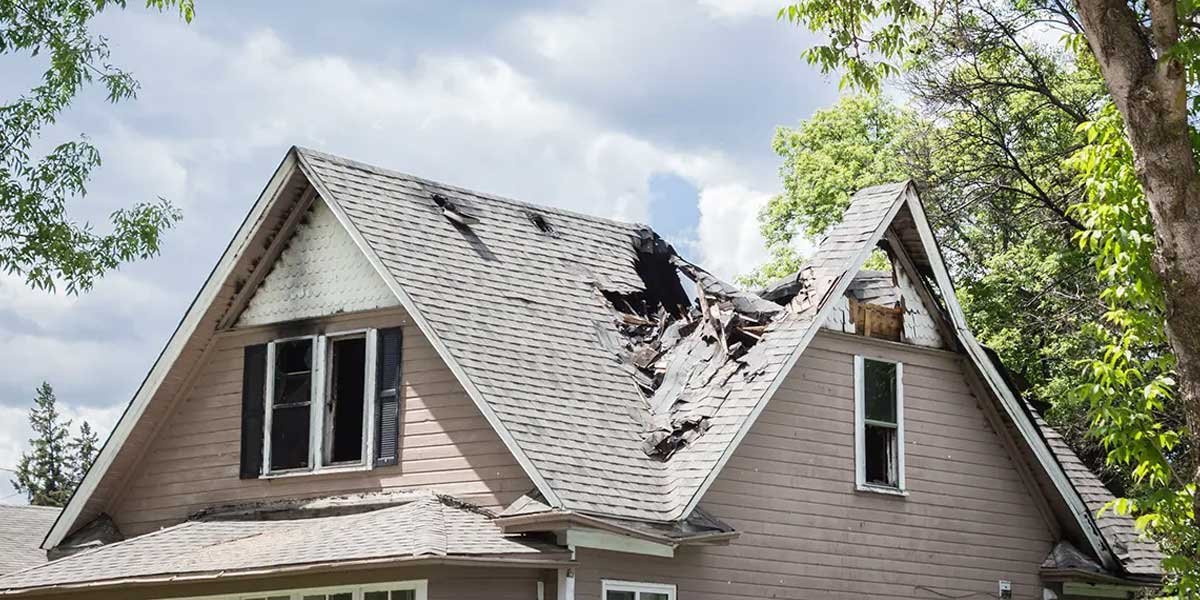
No. Renters insurance does not cover the roof of the building you rent. The roof is part of the dwelling structure, which is owned by the landlord — not by the tenant — and renters insurance does not insure structures the policyholder does not own. The landlord’s property insurance covers the roof. Your renters insurance covers what you own inside the apartment and your liability if you cause damage to the building.
The confusion arises when a roof leak damages the renter’s personal property — a wet ceiling drips onto a laptop, soaks a couch, or ruins a collection of books. The renters insurance does not pay to fix the roof. It does pay to replace the laptop, the couch, and the books, provided the cause of the leak is a covered peril under the policy. The roof is the landlord’s problem. The waterlogged furniture is your problem — and your renters insurance handles that, assuming the water came from a sudden and accidental event, not a slow leak that you failed to report.
What Renters Insurance Covers When a Roof Leaks
| Damage Type | Covered by Renters Insurance? | Who Pays |
|---|---|---|
| Roof structure (shingles, decking, flashing) | No | Landlord’s property insurance |
| Tenant’s personal property damaged by sudden roof leak | Yes (if covered peril) | Renters insurance (minus deductible) |
| Tenant’s personal property damaged by long-term leak | Usually no (neglect/gradual) | Tenant |
| Temporary housing if unit is uninhabitable | Yes (loss of use coverage) | Renters insurance |
| Tenant liability for damage they caused to the roof | Yes (liability coverage) | Renters insurance |
| Damage to the building from tenant negligence | Yes (liability coverage) | Renters insurance |
Renters insurance is built around three coverage types: personal property coverage (your stuff), liability coverage (your fault), and loss of use coverage (your temporary housing). None of them cover the building itself — the walls, the floors, the roof, the plumbing, the electrical system. That is the landlord’s responsibility and the landlord’s insurance policy.
The most relevant coverage when a roof leaks is personal property. If a windstorm tears shingles off the roof and rain pours through the gap onto your furniture, renters insurance covers the damaged furniture — after your deductible, which is typically $500 or $1,000. If the same leak happened because the roof was 30 years old and the landlord never replaced it, and the ceiling has been slowly staining for six months before it finally dripped onto your couch, the claim may be denied. Insurance covers sudden, accidental events. A slow leak from deferred maintenance is a maintenance issue, not an insured event.
The Landlord’s Responsibility for Roof Damage
The landlord is legally responsible for maintaining the roof and repairing any damage to it. This is not an insurance question — it is a habitability question. Under the implied warranty of habitability, which exists in some form in every state, a landlord must provide a dwelling that is fit for human habitation, and a roof that leaks water into the living space violates that standard.
When a roof leak appears in a rental unit, the tenant’s obligations are:
- Notify the landlord in writing immediately. A text message is better than nothing. An email with photographs is better than a text. A certified letter is the gold standard. The written notice starts the clock on the landlord’s obligation to repair. In most states, the landlord has a “reasonable time” — typically 7 to 30 days depending on the severity — to make the repair after receiving written notice.
- Document the damage to your personal property. Photograph everything before you move it, clean it, or throw it away. The photographs are the evidence for your renters insurance claim.
- Mitigate further damage. Move your belongings away from the leak. Place a bucket under the drip. If the ceiling is bulging with water, poke a small hole to drain it before the drywall collapses. The landlord is responsible for the roof repair. You are responsible for protecting your own property from further damage — and your renters insurance policy requires you to take reasonable steps to do so.
What if the landlord refuses to fix the roof? If the landlord ignores written notice and the leak continues, the tenant’s options vary by state. In most jurisdictions, the tenant can: (1) withhold rent until the repair is made (following strict legal procedures — do not simply stop paying), (2) make the repair themselves and deduct the cost from the rent (called “repair and deduct,” legal in most states with limits), or (3) break the lease without penalty if the unit is uninhabitable. None of these options should be exercised without consulting a tenants’ rights organization or an attorney in your state, because the legal requirements for each are specific and the penalties for getting them wrong are severe.
Loss of Use Coverage: When a Roof Leak Makes Your Rental Uninhabitable
If a roof leak — or the mold that follows a long-term leak — makes the rental unit uninhabitable, the loss of use coverage in a renters insurance policy pays for temporary housing. This coverage, also called additional living expenses (ALE), covers hotel stays, restaurant meals (above your normal food budget), and other costs incurred because you cannot live in your rental.
The trigger for loss of use coverage is a covered peril that makes the unit uninhabitable. If a windstorm rips off part of the roof and the apartment floods, loss of use coverage activates. If the roof leaked slowly for years and the resulting mold makes you sick, the claim is more complicated — the insurance company will argue that the mold is a maintenance issue, not a sudden event, and may deny the loss of use claim.
Loss of use coverage is typically capped at 20% to 30% of the personal property coverage limit. A $25,000 personal property policy provides roughly $5,000 to $7,500 in loss of use coverage — enough for a month or two of hotel stays, depending on the local market.
If the Tenant Causes Roof Damage
Renters insurance includes liability coverage — typically $100,000 to $300,000 — that covers damage the tenant causes to the building. If you are on the roof to retrieve a drone, step through a rotted section of decking, and create a hole that leaks during the next rain, your renters insurance liability coverage pays for the roof repair. If you attempt a DIY satellite dish installation, drive lag bolts through the shingles into the deck, and the roof leaks at every bolt hole, your liability coverage pays for that too.
Liability coverage does not require a sudden event — it covers negligence. If you were careless and your carelessness damaged the building, the insurance pays the landlord for the cost of the repair. Your personal property is not covered under liability — that falls under your personal property coverage, and the standard rules about covered perils apply.
FAQ: Common Questions About Renters Insurance and Roof Damage
My landlord says I should file a claim on my renters insurance for the roof leak. Is that right?
No. Your landlord is either confused or trying to avoid filing a claim on their own property insurance — which would increase their premium. Your renters insurance does not cover the building structure. Direct your landlord to their own property insurance policy and remind them — in writing — that the roof is their responsibility under the lease and under state habitability law.
Does renters insurance cover mold from a roof leak?
Usually not. Mold is considered a maintenance and prevention issue, not a sudden accidental loss. Most renters insurance policies contain a mold exclusion or a low sub-limit — typically $1,000 to $5,000 — for mold remediation, and only if the mold results from a covered peril (a sudden water leak, not a slow one). Mold that developed over months from a slow roof leak is excluded. Mold that resulted from a sudden pipe burst is more likely to be covered, up to the sub-limit.
The Roof Is the Landlord’s Problem, Not Yours
Renters insurance exists to protect the renter’s personal property, liability, and temporary housing needs. It does not insure a building the renter does not own, and it does not pay to fix a roof that belongs to someone else. When a roof leak damages your belongings, file a claim with your renters insurance for the damaged property. When the roof itself needs repair, notify the landlord. The two insurance policies — the landlord’s property policy and your renters policy — cover two different things, and the roof falls on the landlord’s side of the line every time.