
Your electric furnace is blowing cold air because the blower is running while the heat circuit is not producing heat, or because the system is moving air between heat cycles. Start with the thermostat fan setting, breaker, filter, vents, and a single safe reset before assuming the heating elements have failed.
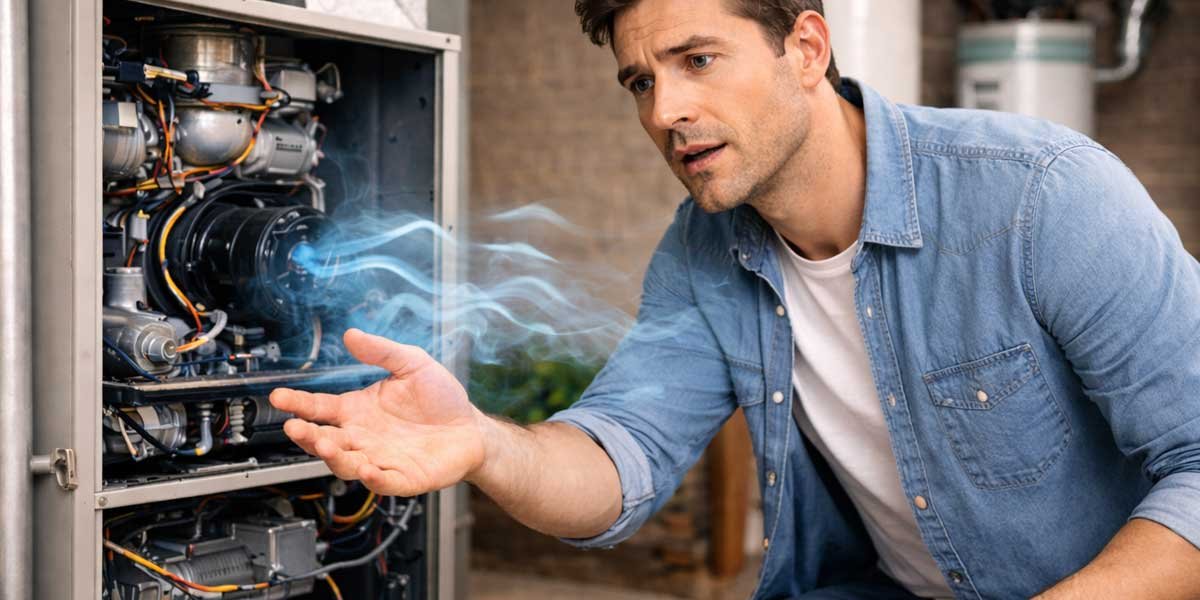
The big distinction is simple: air movement is not the same thing as heat. If you are standing at a register thinking, “Why is my electric furnace blowing cold air?”, the furnace may have a perfectly healthy blower motor while the thermostat, heating elements, airflow safety circuit, or control parts are not completing the heat call.
The Quick Answer: Blower Works, Heat Does Not
An electric furnace blowing cold air usually means the fan circuit is active but the resistance heat circuit is not. The safest first checks are thermostat mode, fan mode, breakers, filter condition, open vents, and whether the furnace restarts normally after one power reset.
A forced-air electric furnace has two jobs: make heat and move air. The blower moves air through the ductwork. Heating elements, sequencers or relays, safety limits, and internal fuses decide whether that air gets warmed before it leaves the registers.
Per the U.S. Department of Energy, electric furnaces use blowers to move air across staged resistance elements, and airflow problems can trigger limit controls. That matters here because a thermostat or airflow issue can feel like a dead furnace even when the main equipment still runs.
Do not open the furnace cabinet to test live electrical parts unless you are trained to work around 240-volt equipment. A homeowner can check settings, filters, registers, and breakers. Testing elements, relays, sequencers, limit switches, and internal wiring belongs to a licensed HVAC technician or electrician.
First Safe Checks Before You Call for Repair
Most no-heat calls start with ordinary settings or airflow restrictions, not a burned-out furnace. These checks take about ten minutes, cost nothing, and keep you away from live internal components while still ruling out the most common non-repair causes.
- Set the thermostat to Heat. Raise the set temperature at least 3 to 5 degrees above the room temperature and wait several minutes.
- Change the fan from On to Auto. When the fan is set to On, the blower can run even when the heating elements are off.
- Check the breaker once. An electric furnace often uses a double-pole breaker. If it is tripped, reset it one time only. If it trips again, stop and call a pro.
- Replace or inspect the air filter. A clogged filter can reduce airflow enough to overheat the furnace and open a safety limit.
- Open supply and return vents. Closed registers and blocked returns can create the same overheating cycle as a dirty filter.
- Try one full power reset. Turn the thermostat off, switch off furnace power or the breaker, wait about 60 seconds, restore power, and call for heat again.
Carrier’s residential furnace guidance also points to the fan setting as a common reason a furnace seems to blow cold air: Auto lets the blower run with heat calls, while On circulates air continuously. That one setting is boring, but it is exactly the kind of boring that saves a service call.
“I had the heat off for a few days… flipped the heat on and noticed it’s only blowing cold air.”
– r/hvacadvice, April 2026
That kind of complaint often appears after an outage, thermostat change, long off period, or sudden cold snap. It does not prove a major failure, but it does point to a good order of operations: settings first, power next, airflow after that, then professional diagnosis.
Cold-Air Cause Table: What It Means and What to Do
The fastest way to narrow the fault is to match the symptom to the part of the system involved. A blower that never stops points somewhere different from a furnace that trips the breaker or heats briefly and then goes cool.
| Symptom | Likely cause | Safe homeowner action | Call a technician when… |
|---|---|---|---|
| Air is cool, blower runs constantly | Thermostat fan set to On | Set fan to Auto and system mode to Heat | The thermostat does not respond or wiring was recently changed |
| No warm air after thermostat calls for heat | Tripped breaker, blown fuse, failed relay, or failed sequencer | Reset the breaker one time | The breaker trips again or the furnace hums without heating |
| Heat starts, then turns cool | Dirty filter, blocked vents, overheated furnace, open limit switch | Replace filter and open vents | The problem repeats after airflow is corrected |
| Weak airflow and little heat | Clogged filter, return blockage, blower problem, duct leak | Check filter, returns, and registers | Airflow remains weak with a clean filter |
| Breaker trips as soon as heat starts | Shorted element, wiring fault, motor issue, or overloaded circuit | Leave the breaker off | Immediately, because repeated resets can be unsafe |
| Outdoor unit runs and indoor air feels lukewarm | Heat pump operation, defrost mode, or auxiliary heat issue | Confirm whether you have a heat pump or electric furnace | Auxiliary heat never engages in very cold weather |
A table like this is useful because “cold air” is a feeling, not a diagnosis. The exact clue is whether the blower runs continuously, whether the breaker trips, whether the unit warms briefly, and whether airflow is weak or normal.
Electric Furnace Parts That Commonly Stop Heat
When settings, breakers, and airflow are normal, the likely fault moves inside the furnace. Electric heat depends on high-voltage heating elements and controls, so these failures usually require instruments, wiring knowledge, and safe access procedures.
Heating Elements
Heating elements are resistance coils that convert electrical energy into heat. If one or more elements fail, the blower may still move air, but the discharge temperature can be cool or only mildly warm.
A failed element is not always visually obvious from outside the cabinet. Some furnaces have multiple heat strips, so the home may get weak heat instead of no heat at all. That is one reason a room can lose temperature slowly while the system sounds as if it is working.
When the homeowner’s question is exactly “Why is my electric furnace blowing cold air?”, heating elements are one of the first internal parts a technician will consider after the safe external checks are done.
Sequencer or Relay
A heat sequencer or relay stages electric heating elements on and off so the furnace does not energize every strip at the same instant. If that control fails, the blower can run without one or more heat stages.
This is a classic “fan works, heat does not” fault. It is also a bad place for guesswork. The part may be inexpensive compared with a full furnace, but diagnosing it involves live-voltage testing and should be treated as professional work.
Limit Switch or Overheat Safety
A limit switch is a safety control that opens when the furnace gets too hot. Dirty filters, blocked returns, closed registers, weak blower performance, and duct restrictions can all cause enough heat buildup to shut the elements down.
If replacing the filter makes the furnace heat again, do not ignore what happened. A limit event is the furnace saying airflow was wrong or heat was not leaving the cabinet properly. Repeated overheating can damage components and shorten equipment life.
Internal Fuses, Low-Voltage Wiring, and Control Board
Some electric furnaces and air handlers have internal fuses or control boards that protect the low-voltage circuit. A shorted thermostat wire, miswired smart thermostat, loose connection, or failed transformer can leave the blower operating while heat calls do not complete correctly.
Honeywell Home’s heating troubleshooting guidance separates thermostat setup, airflow, wiring, and equipment response because each symptom points to a different control path. That split is worth keeping in mind: cold airflow usually means the heating call is not being completed or heat is being interrupted.
Make Sure It Is Not a Heat Pump Acting Normally
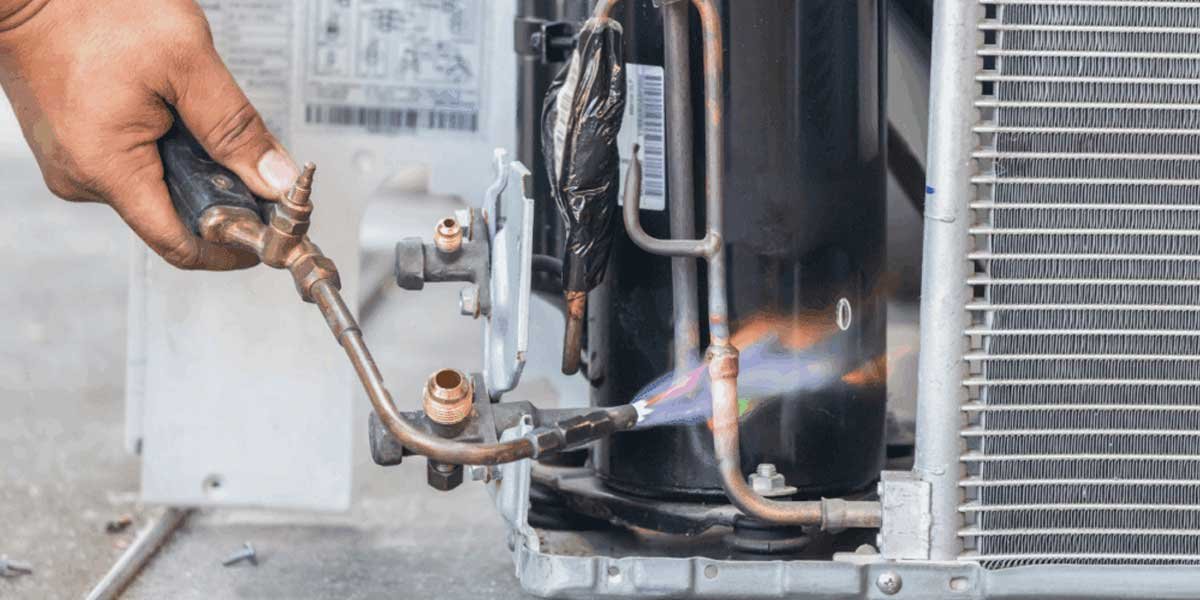
Many homes have an electric air handler paired with a heat pump, not a standalone electric furnace. In that setup, slightly cool or lukewarm supply air can be normal during mild operation, defrost, or before auxiliary heat engages.
A heat pump can feel strange because it may deliver air that is warmer than the room but cooler than the blast from a gas furnace or electric heat strips. Your hand at the vent is a poor thermometer. A supply-air temperature check is better, but most homeowners can first identify the system type.
Understanding the differences in equipment configuration helps clarify why a system might feel like it is underperforming during extreme weather. For property owners planning an upgrade or replacing an inefficient configuration entirely, a professional heat pump installation in Wilmington ensures the system is calibrated correctly for regional climates. This specialized setup improves year-round indoor comfort and maintains overall energy efficiency.
| Question | Electric furnace | Heat pump with electric auxiliary heat |
|---|---|---|
| Is there an outdoor unit used for heating? | Usually no | Yes |
| Does the thermostat show Aux Heat or Emergency Heat? | Usually no | Often yes |
| Can supply air feel lukewarm during normal operation? | Less likely | Yes, especially in heat pump mode |
| What failure causes very cold air? | Elements, sequencer, breaker, limit, wiring | Aux heat failure, defrost issue, refrigerant or outdoor-unit fault |
If your thermostat recently changed, this section matters even more. A thermostat configured for the wrong equipment type can energize the blower without bringing on electric heat correctly. Smart thermostats are useful, but setup menus for heat pump, conventional electric heat, auxiliary heat, and fan control are not interchangeable.
When to Stop Troubleshooting and Call a Technician
Call a technician when the problem involves repeated breaker trips, burning smells, hot electrical panels, no heat after one reset, or suspected internal component failure. Electric furnaces are serviceable machines, but their heat circuits are not good DIY test benches.
- The breaker trips again after one reset.
- You smell burning plastic, see scorch marks, or hear buzzing from the cabinet.
- The blower runs but the furnace never warms after settings, filter, vents, and power are checked.
- The furnace starts hot, shuts down, and repeats the pattern.
- A thermostat was recently replaced and the heating behavior changed immediately afterward.
- You need access to heating elements, sequencers, relays, internal fuses, or the control board.
The practical line is not “simple part” versus “expensive part.” It is exposed electrical risk versus external checks. Resetting a breaker once is reasonable. Measuring high-voltage heat-strip circuits while the unit is calling for heat is a different world.
Keep the Furnace From Repeating This
Prevention is mostly airflow, controls, and early attention to small symptoms. A clean filter, open vents, correct thermostat setup, and annual service reduce the chances that the furnace shuts heat off while the blower keeps running.
Replace the filter on the schedule recommended for your filter type and home conditions. A house with heavy dust, renovation work, or high runtime may need more frequent changes than a clean home in mild weather. The filter should fit snugly, with the airflow arrow pointing toward the furnace.
Keep return grilles clear, do not close large numbers of supply vents, and listen for changes. A new buzz, a repeated click without heat, or a breaker that feels warm deserves attention before the next cold night. Small electrical and airflow problems rarely become kinder when ignored.
FAQ
Why does my electric furnace blow cold air when the fan is on?
The fan On setting runs the blower continuously, even when the heating elements are off. Set the fan to Auto so the blower runs mainly during heating calls.
Should I reset my electric furnace if it blows cold air?
You can try one full power reset after checking the thermostat, filter, vents, and breaker. If the furnace still blows cold air or the breaker trips again, stop troubleshooting and schedule service.
Can a dirty filter make an electric furnace blow cold air?
Yes. A dirty filter can restrict airflow, overheat the furnace, and trigger a safety limit that shuts off the heating elements while the blower continues to run.
How do I know if my electric furnace heating elements are bad?
Weak heat or no heat with normal airflow can point to failed heating elements, but confirmation requires electrical testing. That diagnosis should be handled by a qualified HVAC technician.
Why is my heat pump blowing cool air instead of hot air?
A heat pump may deliver lukewarm air during normal operation, but very cold air can indicate auxiliary heat, defrost, refrigerant, or outdoor-unit trouble. Confirm whether your system is a heat pump before treating it like a standalone electric furnace.
Is it dangerous if an electric furnace keeps blowing cold air?
Cold air itself is not the danger. Repeated breaker trips, burning smells, hot wiring, buzzing electrical parts, or overheating cycles are the warning signs that require immediate professional help.
Why is my electric furnace blowing cold air if the blower sounds normal?
A normal-sounding blower only proves the fan can move air. The heat circuit can still be interrupted by thermostat setup, a tripped breaker, a failed sequencer, bad heating elements, or an open safety limit.
The Practical Judgment
If your electric furnace is blowing cold air, do the simple outside-the-cabinet checks first: Heat mode, Auto fan, clean filter, open vents, one breaker reset, and one full power reset. Those steps catch the easy fixes without turning the furnace into a risky project.
If the blower still runs cold after that, the likely problem has moved into the heat circuit: element, sequencer, relay, limit switch, internal fuse, thermostat wiring, or control board. That is the moment to stop poking at it and get the right instruments on the system.
You Might Also Like...
 Why Is My Furnace Blowing Cold Air Instead of Heat?
 Why Air Conditioner Compressor Not Working? The Usual Causes, Safe Checks, and the Signs It Is Time to Stop Troubleshooting
 What Size Gas Furnace Do I Need? The 4-Method Framework for Getting It Right
 The Complete Guide to Smart Thermostat Installation for Homeowners
