A wall air conditioner usually leaks water indoors because condensate cannot drain outside fast enough. The common causes are a clogged drain path, a unit tilted the wrong way, a dirty filter that freezes the coil, a cracked pan, or a condensate pump problem.
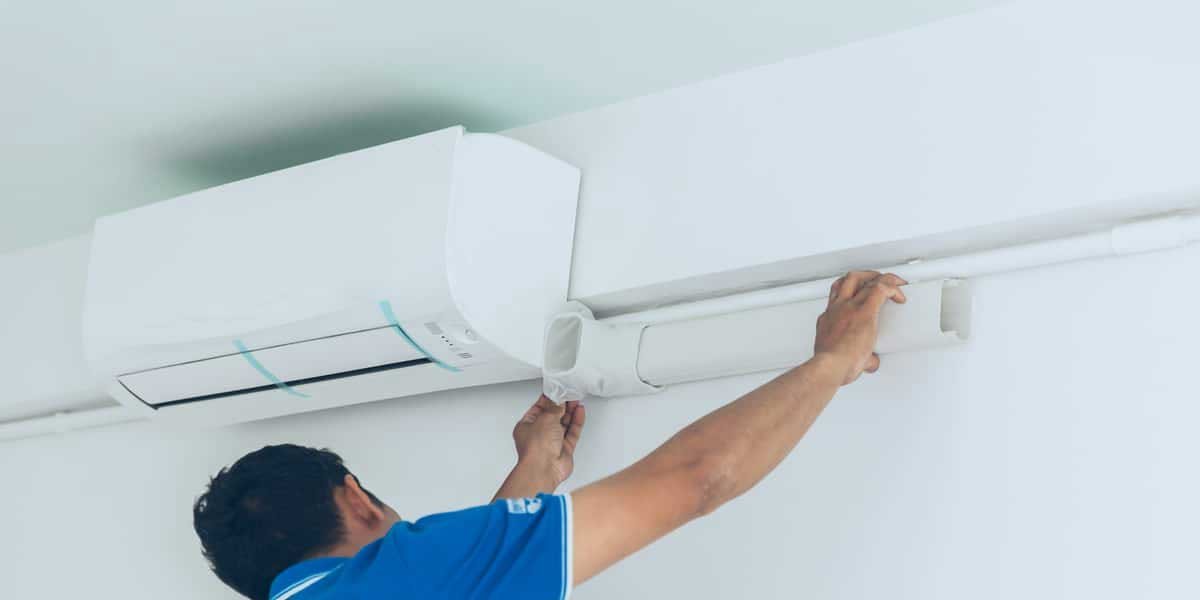
Turn the unit off first if water is dripping onto a wall, outlet, carpet, floor, or furniture. Cooling can wait. Wet drywall, swollen trim, and damp carpet get expensive quickly, and the leak often keeps feeding itself until the condensate path is clear again.
Why Is My Wall Air Conditioner Leaking Water Indoors?
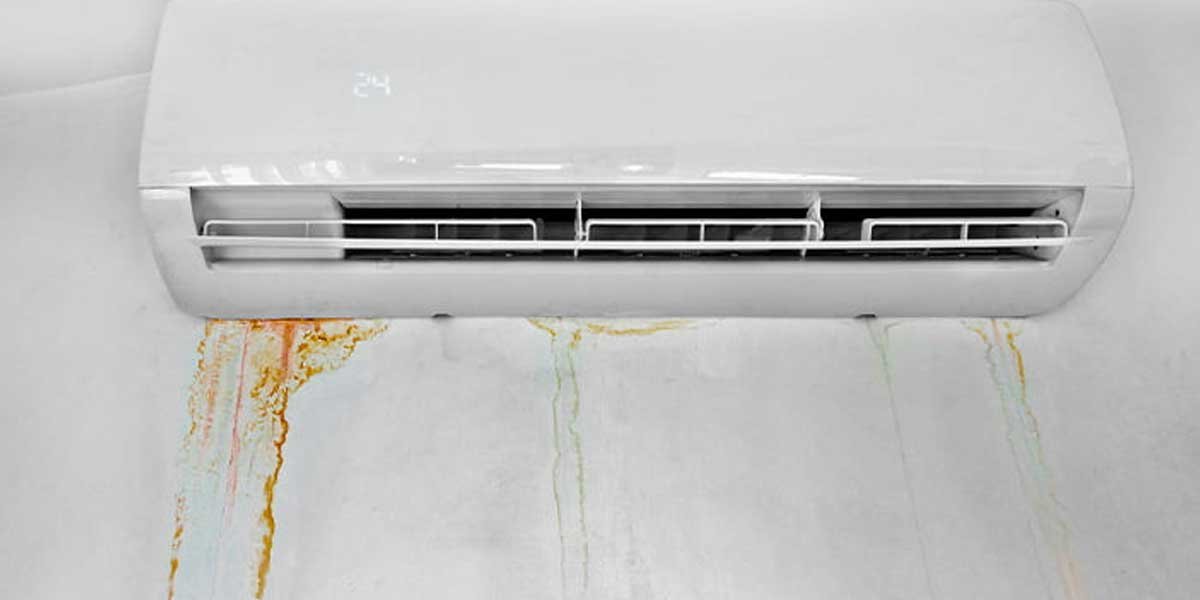
Indoor water from a wall AC means normal condensation is ending up in the wrong place. The system is supposed to collect moisture on the cold coil, move it into a pan, and send it outdoors through a drain.
That process is not a defect by itself. Air conditioners remove humidity as they cool. The problem starts when the water backs up, misses the pan, spills from the front cover, runs down the wall, or appears after the coil has iced over and then melted.
The U.S. Department of Energy says air conditioner filters, coils, fins, and condensate drains all need regular maintenance; it specifically recommends clearing drain channels periodically to prevent clogs and overflow damage. That single maintenance note explains a large share of wall AC leak calls.
| What you see | Most likely cause | First safe move |
|---|---|---|
| Water dripping from the front or bottom edge | Clogged drain pan outlet or blocked condensate line | Turn off cooling and inspect the drain opening |
| Water runs down the indoor wall | Wall unit tilted inward, drain hose pitched wrong, or mini-split drain backed up | Check whether the unit slopes slightly toward the outside |
| Ice on the coil, then a sudden puddle | Dirty filter, blocked airflow, dirty coil, or low refrigerant | Shut it off and let ice thaw before restarting |
| Water returns days after a cleaning | Drain line reblocked, pan not fully cleaned, or pump issue | Recheck the pan and the drain route, not just the filter |
Shut It Off First, Then Control The Water
If your wall air conditioner is leaking inside, stop the cooling cycle before you start troubleshooting. Power and water are a bad mix, and a running unit can keep making condensate while you are trying to find the source.
Use towels or a shallow pan to protect the floor, but do not treat towels as the fix. If the water is near an outlet, power strip, ceiling below, or soaked carpet, switch the unit off at the control and avoid opening electrical covers. When in doubt, shut power at the breaker and call a technician.
The U.S. Environmental Protection Agency says the key to mold control is moisture control and advises drying wet materials within 24 to 48 hours when possible. That matters here because a wall AC leak can hide water behind trim or under carpet pad long after the visible dripping stops.
Most Common Reasons A Wall AC Leaks Water
The causes fall into two groups: drainage failures and airflow failures. Drainage failures send normal condensate indoors. Airflow failures make the coil too cold, create ice, and release extra water when the ice melts.
1. The Condensate Drain Is Clogged
A condensate drain is the channel, hole, tube, or hose that carries AC water away from the indoor side. Dust, algae, lint, insect debris, and sludge can narrow that path until the pan overflows.
On a through-the-wall unit, the drain may be a small opening near the rear base pan. On a ductless mini-split, it is usually a flexible drain hose that runs through the wall and slopes outdoors. If that hose has a dip, a kink, or a slime plug, water backs up into the indoor head.
“Clear the condensate line.”
– r/AirConditioners, June 2025
That short community answer is blunt because it is often right. The annoying detail is that a quick rinse can make the leak disappear for a week, then the remaining sludge moves and blocks the outlet again.
2. The Unit Or Drain Hose Is Sloped The Wrong Way
Most wall and window-style units rely on gravity. The indoor side should not lean forward into the room, and a mini-split drain hose should not climb uphill after leaving the indoor head.
A slight outdoor pitch lets condensate move away from the room. If the sleeve sags, the mounting bracket shifts, or the unit was installed level when the manual requires a rearward pitch, water can pool in the wrong corner and spill indoors.
3. A Dirty Filter Or Coil Is Freezing The Evaporator
A dirty filter reduces airflow across the evaporator coil. When airflow drops, the coil can get cold enough to freeze moisture into ice instead of draining it steadily.
When that ice melts, the drain pan may receive more water than it can handle. The leak may look sudden even though the cause built up slowly. The Department of Energy recommends cleaning or replacing filters every month or two during the cooling season, and more often when the unit runs constantly, sees dust, or shares the home with pets.
4. Low Refrigerant Or A Dirty Coil Is Making Ice
Low refrigerant can also freeze the evaporator coil, but it is not a homeowner cleaning task. Refrigerant does not get used up like fuel. If the charge is low, the system likely has a leak that needs proper diagnosis and repair.
Dirty evaporator coils create a similar symptom because dirt insulates the coil and disrupts heat transfer. If the filter is clean but ice keeps returning, stop running the unit. Repeated freeze-thaw cycles are hard on the equipment and can overflow the pan.
5. The Drain Pan, Hose, Or Pump Is Damaged
A drain pan is the shallow tray that catches condensate below the coil. Older wall units can develop rust, cracks, missing plugs, or separated seams. Mini-split systems may also use a condensate pump when gravity drainage is impossible.
If a pump fails, the indoor head may leak even when the hose is clean. Listen for a pump that runs constantly, does not run at all, or cycles with a buzzing sound. That is a service call, not a toothpick-and-tape afternoon.
A Safe Fix Sequence That Actually Narrows The Cause
Start with low-risk checks before touching panels, coils, or wiring. The goal is to restore drainage and airflow without pushing debris deeper into the unit or bending fragile fins.
- Turn the unit off. Let the fan and compressor stop. If you see ice, leave the unit off until the ice fully melts.
- Remove and clean the filter. Wash a reusable filter with mild soap and water, rinse it well, and let it dry completely before reinstalling it.
- Inspect the front and bottom edge. Look for water trails, slime, dust mats, or dripping from one corner. The wettest trail often points to the blocked side of the pan.
- Check the outdoor drain exit. If you can safely reach it, confirm water can leave the unit. A wet/dry vacuum on the outside drain may pull out sludge from some condensate lines.
- Confirm the slope. A through-wall or window-style unit should drain outward according to its installation manual. A mini-split drain hose should fall continuously after it exits the indoor head.
- Restart on fan mode first. Fan-only operation can help dry the coil after a thaw. If water or ice returns quickly in cooling mode, stop and call an HVAC technician.
A stiff wire can clear some drain channels, which is consistent with DOE maintenance guidance, but use a light touch. Jamming metal blindly into a plastic pan or flexible hose can puncture the part you are trying to save.
When To Call A Technician Instead Of Fixing It Yourself
Call for service when the leak is electrical, recurring, hidden inside the wall, linked to ice that keeps coming back, or tied to a pump, refrigerant, or installation problem. Those issues can look like simple drainage from the outside.
You should also call a technician if the unit cools poorly, hisses, shows oily residue near refrigerant lines, trips a breaker, smells musty after cleaning, or leaks through the wall sleeve. A homeowner can clean a filter. A homeowner should not open a sealed refrigerant system.
| DIY-friendly | Better handled by a pro |
|---|---|
| Cleaning the removable filter | Testing refrigerant charge and repairing leaks |
| Checking for an obvious blocked exterior drain opening | Opening the indoor head of a mini-split beyond basic access panels |
| Drying visible water and protecting flooring | Repairing a cracked drain pan or failed condensate pump |
| Verifying that a sleeve has not visibly shifted | Correcting an installation pitch or drain route inside the wall |
Keep Air Moving And Water Moving
Prevention is mostly about keeping air moving and water moving. A wall AC with a clean filter, clean coil area, clear drain, and correct slope has far fewer reasons to drip indoors.
During cooling season, check the filter monthly if the unit runs often. Look at the outdoor drain point after a humid day; steady drainage outside is usually a good sign. If water used to drain outside and suddenly stops, do not wait for the indoor drip to announce the clog.
- Clean or replace the filter every month or two during heavy use.
- Keep curtains, furniture, and dust buildup away from the return grille.
- Have the evaporator coil and blower cleaned when you see grime, smell mustiness, or notice weak airflow.
- Make sure the wall sleeve or mounting plate has not shifted after storms, remodeling, or vibration.
- Ask for the drain pan and drain line to be cleared during seasonal service, not just the filter washed.
- Dry any wet wall, trim, or carpet promptly so the AC leak does not become a moisture problem in the room.
The useful test is whether water can leave the unit after the cleaning, not whether the plastic cover looks clean. If the technician uses a wash bag on a mini-split, ask whether the drain pan and drain hose were flushed too. A shiny front cover does not prove the drain path is clear.
FAQ
Is it normal for a wall AC to drip water outside?
Yes, outdoor dripping is usually normal because the unit is removing humidity from indoor air. Indoor dripping is the warning sign.
Should I turn off my AC if it is leaking water inside?
Yes, turn it off if water is leaking indoors, especially near outlets, carpet, drywall, or furniture.
Can a dirty filter make a wall air conditioner leak water?
Yes, a dirty filter can restrict airflow, freeze the evaporator coil, and cause extra water when the ice melts.
Why does my wall AC leak again after cleaning?
A leak that returns after cleaning often means the drain line reblocked, the pan was not cleared, or the slope is wrong.
Can I pour vinegar into a wall AC drain?
Sometimes, but only if the manufacturer allows it and you can access the drain safely. Never pour liquid into electrical areas.
How much water from a wall AC is too much?
Any water dripping indoors is too much. Outdoor condensate can vary with humidity, but indoor leakage needs attention.
Final Judgment
When a wall air conditioner leaks water, do not start with the most expensive theory. Start with the path the water is supposed to take: coil, pan, drain, slope, and outdoor exit.
If that path is clear and the leak still returns, the problem has moved beyond basic cleaning. Ice, refrigerant trouble, a cracked pan, a failed pump, or a bad installation angle can all imitate a simple clog. That is the moment to stop feeding the leak and bring in a qualified HVAC technician.
Sources used: U.S. Department of Energy, Air Conditioner Maintenance; U.S. Environmental Protection Agency, A Brief Guide to Mold, Moisture and Your Home.