Transforming a simple outdoor area into a cozy gathering place often starts with the right ideas for backyard fire pit design. Whether you want a modern smokeless feature for a patio or a rustic stone ring for a larger lawn, a well-planned fire element can quickly become the heart of the home during cooler seasons. The warmth and ambiance of a flickering flame create an inviting setting for conversation, relaxation, and entertaining. This guide, notes TrueDoor PM Temecula experts, explores current trends, safety considerations, and construction approaches to help homeowners choose the right fit.
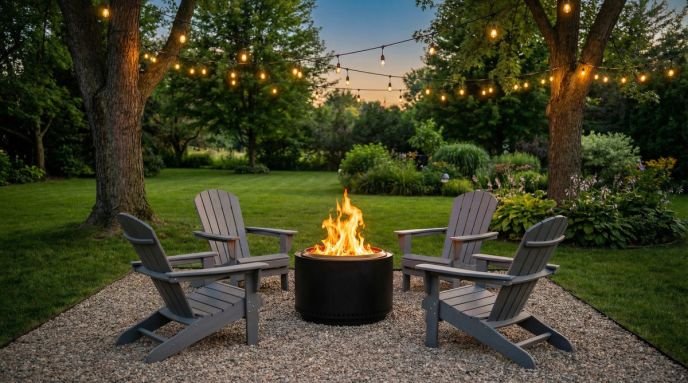
Modern Smokeless Technology for Urban Backyards
Smokeless fire pits utilize secondary combustion technology to significantly reduce the amount of smoke produced during a burn. By pulling air through bottom vents and heating it between double walls, these units inject oxygen into the top of the fire, burning off smoke particles before they escape. This innovation makes fire pits much more practical for small backyards and urban environments where traditional smoke might disturb neighbors or cling to outdoor furniture.
The rise of smokeless technology has revolutionized how homeowners approach outdoor heating. Traditional wood fires often result in shifting smoke that forces guests to move their seats constantly to avoid irritation. However, with secondary combustion, the flame is not only cleaner but also hotter and more efficient. According to OutdoorGearLab (2026), the Solo Stove Yukon 2.0 remains a top-tier choice for large groups due to its 360-degree airflow design that minimizes smoke while maximizing heat output for groups of up to eight people.
When selecting a smokeless model, it is essential to consider the material and portability. Most high-end units are constructed from 304 stainless steel, which offers excellent durability against the elements. Some models even feature removable ash pans, making the cleanup process significantly easier than traditional in-ground pits. For those with limited space, compact versions like the Solo Stove Bonfire 2.0 provide the same clean-burn benefits in a more manageable footprint that can be easily stored when not in use.
Integrating these high-tech pits into your landscaping requires a focus on non-combustible surfaces. Placing a smokeless pit on a heat-resistant mat or a stone paver base is crucial to protect your deck or lawn from the intense heat generated by the secondary burn. As urban outdoor living continues to grow in popularity, these efficient and neighbor-friendly designs are becoming the standard for modern residential landscapes.
Creative Hardscaping and Landscaping Designs
Effective fire pit landscaping uses non-combustible materials like gravel, pavers, or natural stone to create a safe and aesthetic “fire zone.” By designating a specific area for the fire feature, homeowners can minimize the risk of fire spread while creating a visually distinct focal point in their backyard. This “hardscaping” approach not only enhances safety but also provides a durable foundation for seating and decor.
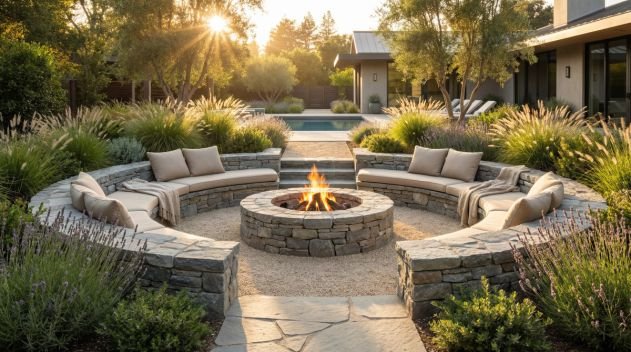
The most successful fire pit designs often incorporate a combination of textures and materials to achieve a balanced look. For instance, pairing a smooth concrete fire bowl with a rustic gravel base creates a modern yet organic feel. Sunken seating areas are also gaining popularity, as they provide a more intimate and sheltered environment for gathering around the fire. These designs often use retaining walls to create built-in benches, which can be topped with weather-resistant cushions for added comfort and style.
Choosing the right materials for your fire pit area is a critical step in the design process. Different materials offer varying levels of heat resistance, durability, and aesthetic appeal. The following table compares three of the most common materials used in fire pit construction to help you determine the best fit for your needs.
| Material | Durability | Heat Resistance | Maintenance | Aesthetic Style |
|---|---|---|---|---|
| Natural Stone | High | Excellent | Low | Rustic / Traditional |
| Cast Concrete | Medium | Good | Moderate | Modern / Industrial |
| Powder-Coated Steel | Moderate | High | High (Rust potential) | Contemporary / Portable |
When planning your layout, consider the flow of traffic and the proximity to other outdoor features. A fire pit should be easily accessible but placed far enough away from high-traffic areas to avoid accidental contact with the flames. Incorporating soft lighting, such as string lights or low-voltage path lights, can further enhance the ambiance and safety of the space during the evening. By carefully selecting your materials and layout, you can create a fire pit area that is both functional and beautiful for years to come.
DIY Fire Pit Projects on a Budget
Building a DIY fire pit can cost under $100 using basic materials like retaining wall blocks and lava rocks from local hardware stores. By following a few simple steps, homeowners can create a custom fire feature that is both safe and stylish without the high price tag of pre-built units. This hands-on approach allows for greater customization in size and material, ensuring the final product perfectly fits the intended space.
The most popular DIY fire pit project is the classic stone ring. This design uses interlocking concrete blocks to create a circular or square pit that is then filled with a layer of gravel or lava rock for drainage and heat dispersion. According to Instructables (2026), a simple stone ring construction begins with a level base of crushed stone to prevent the pit from shifting or cracking over time. This foundational step is crucial for the longevity of the structure, especially in areas with significant freeze-thaw cycles.
Safety is the most important consideration when building your own fire pit. Using the correct type of stone is essential, as some porous rocks can explode when heated if they contain trapped moisture. Fire-rated bricks or stones are highly recommended for the inner lining of the pit to withstand the intense heat of a wood fire. Additionally, the height of the pit should be kept between 12 and 18 inches to ensure it is comfortable for seating while still providing a safe barrier for the flames.
For those on a tight budget, repurposing materials like old washing machine drums or metal truck rims can provide a unique and industrial look for a fire pit. These metal inserts can be surrounded by stone or left exposed for a more minimalist feel. Regardless of the design, ensuring a clear radius of at least 10 feet from any flammable structures or low-hanging branches is a mandatory safety precaution for all DIY builds.
Essential Safety Regulations and Maintenance
Most local ordinances require fire pits to be at least 10 to 15 feet away from any structure or combustible material. This distance is critical to prevent embers from igniting nearby decks, fences, or trees. Before lighting your first fire, it is essential to check with your local fire department or homeowners association for any specific regulations or burn bans in your area.
Adhering to safety rules is the most effective way to enjoy a backyard fire without incident. FEMA (2026) emphasizes the importance of maintaining a “safe zone” around the fire pit, which should be kept clear of dry leaves, pine needles, and other debris that could easily catch fire. Having a dedicated fire extinguisher or a garden hose nearby is also a standard safety practice for any outdoor fire.
Fuel choice plays a significant role in both the safety and environmental impact of your fire pit. Using seasoned hardwoods like oak or hickory is recommended, as they burn cleaner and produce fewer sparks than softwoods like pine. For those in urban areas, propane or natural gas fire pits offer a smoke-free alternative that can be easily turned off with the flick of a switch. These gas-powered units are often safer for use on wooden decks, provided they are placed on a heat-resistant base.
Maintaining your fire pit is essential for its longevity and performance. Regularly removing ash and soot from the bottom of the pit prevents moisture from being trapped, which can lead to rust or structural damage. For metal pits, applying a high-heat spray paint can help protect the surface from the elements and keep it looking new. By following these safety and maintenance guidelines, you can ensure your backyard fire pit remains a safe and enjoyable feature for many seasons.
Frequently Asked Questions
What is the best thing to put around a backyard fire pit?
The best thing to put around a backyard fire pit is a non-combustible material like gravel, river rock, or concrete pavers. These materials create a safe barrier between the fire and any flammable structures or landscaping, such as dry grass or wooden decks. Additionally, these materials provide a stable and level surface for seating and decor.
What are some cheap fire pit ideas?
Some cheap fire pit ideas include building a simple stone ring using retaining wall blocks or repurposing a metal washing machine drum. These DIY projects can often be completed for under $100 using basic materials from a local hardware store. Another budget-friendly option is to use a portable metal fire bowl, which can be easily moved and stored when not in use.
How do I design a fire pit area in my backyard?
To design a fire pit area in your backyard, start by selecting a safe location that is at least 10 to 15 feet away from any structures or combustible materials. Then, choose a non-combustible base material like gravel or pavers to create a defined “fire zone.” Incorporate comfortable seating, such as Adirondack chairs or built-in benches, and add soft lighting to enhance the ambiance and safety of the space.
Is it worth putting a fire pit in your backyard?
Yes, it is worth putting a fire pit in your backyard as it provides a cozy and inviting focal point for outdoor gatherings and relaxation. A well-designed fire feature can also increase the value of your home and extend the usability of your outdoor space into the cooler months. Whether you choose a high-tech smokeless model or a rustic DIY pit, a fire feature is a versatile addition to any backyard.
What is the safest distance for a fire pit from a house?
The safest distance for a fire pit from a house is at least 10 to 15 feet. This distance is critical to prevent embers from igniting nearby structures, such as decks, fences, or roof overhangs. Always check with your local fire department or homeowners association for any specific regulations or burn bans in your area before lighting a fire.
Conclusion
Incorporating the right ideas for backyard fire pit integration can transform your outdoor space into a year-round retreat for family and friends. From the clean-burning efficiency of modern smokeless technology to the rustic charm of a DIY stone ring, there is a fire feature to suit every style and budget. By prioritizing safety, choosing durable materials, and creating a comfortable seating area, you can enjoy the warmth and ambiance of a flickering flame for many seasons to come. Whether you are roasting marshmallows with the kids or unwinding with a glass of wine, a backyard fire pit is the perfect way to enhance your outdoor living experience.
References
- Yardzen (2026), 61 Fire Pit Landscaping Ideas Our Designers Love
- Architectural Digest (2026), 38 Outdoor Fire Pit Ideas To Transform Your Backyard
- OutdoorGearLab (2026), The Best Fire Pits of 2026 | Tested & Ranked
- Instructables (2026), DIY Fire Pit and Seating Area
- FEMA (2026), Outdoor Fire Safety