Planning a trip to Canada and wondering if you can legally enjoy a drink? The answer isn’t as simple as you might think. Unlike many countries with a single, nationwide law, Canada’s approach to the legal drinking age is a patchwork of provincial and territorial rules. This means the age at which you can purchase or consume alcohol changes depending on where you are in the country.
This guide provides a comprehensive overview of Canada’s drinking age laws for 2026. We will cover everything from the specific age in each province and territory to the history behind these laws, the ongoing public health debates, and practical tips for travelers and residents alike.
Canada’s Legal Drinking Age by Province & Territory (The Official List)
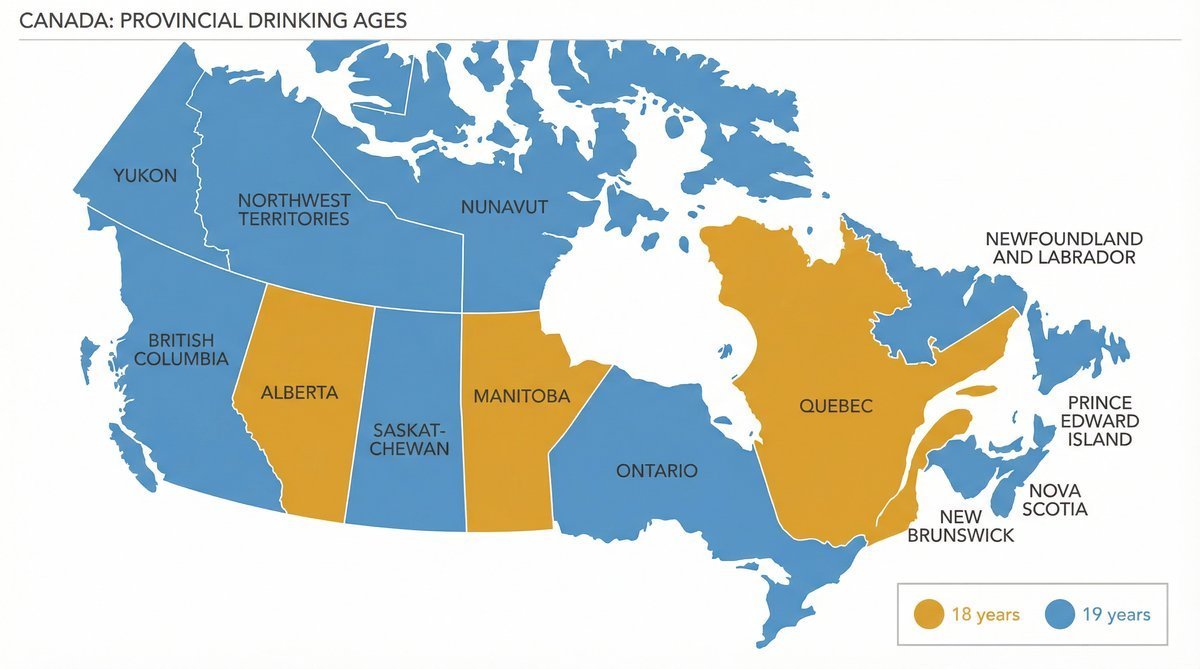
Here is the definitive list of the Minimum Legal Drinking Age (MLDA) across Canada as of 2026. It is crucial to remember that this is the age for both purchasing alcohol and consuming it in licensed venues like bars and restaurants.
| Province/Territory | Legal Drinking Age | Key Notes |
|---|---|---|
| Alberta | 18 | One of three provinces with a drinking age of 18. |
| British Columbia | 19 | The age of majority is 19. |
| Manitoba | 18 | The age of majority is 18. |
| New Brunswick | 19 | The age of majority is 19. |
| Newfoundland and Labrador | 19 | The age of majority is 19. |
| Northwest Territories | 19 | The age of majority is 19. |
| Nova Scotia | 19 | The age of majority is 19. |
| Nunavut | 19 | The age of majority is 19. |
| Ontario | 19 | The age of majority is 18, but the drinking age is 19. |
| Prince Edward Island | 19 | The age of majority is 18, but the drinking age is 19. |
| Quebec | 18 | The age of majority is 18. |
| Saskatchewan | 19 | The age of majority is 18, but the drinking age is 19. |
| Yukon | 19 | The age of majority is 19. |
Why Isn’t There a National Drinking Age in Canada?
The reason for this provincial patchwork lies in the Canadian Constitution. The Constitution Act, 1867, grants provinces the exclusive power to legislate on matters of “Property and Civil Rights.” Historically, courts have interpreted this to include the regulation of alcohol sales and consumption.
This stands in contrast to the United States, where the National Minimum Drinking Age Act of 1984 effectively pressured all states to adopt a minimum drinking age of 21. In Canada, the federal government’s role is limited to aspects like production and inter-provincial trade, leaving the provinces to set the age based on their own local culture, public health concerns, and political considerations.
A Brief History of Canada’s Drinking Age Laws
Canada’s current drinking age landscape is the result of a significant shift that occurred several decades ago. Following the end of nationwide prohibition in the 1920s, most provinces established a minimum drinking age of 20 or 21.
This remained the standard until the early 1970s, a period of social change across North America. During this time, the age of majority—the age at which a person is considered a legal adult—was lowered from 21 to 18 in many provinces. To align with this new definition of adulthood, most provinces and territories subsequently lowered their drinking ages to 18 or 19.
However, this change was not permanent everywhere. In the late 1970s and early 1980s, some provinces, including Ontario and Saskatchewan, raised their drinking age from 18 back to 19. This reversal was a direct response to a perceived increase in alcohol-related problems, particularly among high school students.
The Debate: Should Canada Raise the Drinking Age to 21?
The debate over the optimal drinking age is not just a matter of history; it is an ongoing public health discussion in Canada. A key piece of research fueling this debate is a 2014 study led by Dr. Russell Callaghan at the University of Northern British Columbia (UNBC).
The study found a sharp and immediate increase in mortality among young men right after they reach the legal drinking age. The most significant jumps were in deaths from motor vehicle accidents and other injuries. Based on this data, the study estimated that raising the drinking age to 19 in Alberta, Manitoba, and Quebec would prevent approximately seven deaths of 18-year-old men each year. More dramatically, raising the drinking age to 21 across the entire country would prevent about 32 deaths of young men aged 18-20 annually.
Proponents of a higher drinking age argue this evidence demonstrates a clear public health benefit. However, opponents often raise arguments about personal freedom, suggesting that if an 18-year-old is considered an adult with the right to vote and serve in the military, they should also have the right to consume alcohol.
Underage Drinking in Canada: The Latest Statistics (2024 Data)
Recent data provides a clear picture of alcohol consumption among Canadian youth. The 2023–24 Canadian Student Alcohol and Drugs Survey (CSADS), conducted by Health Canada, offers some sobering statistics on students in grades 7 to 12. Overall, 37% of students reported consuming alcohol in the past year. A concerning 21% of students engaged in high-risk drinking, defined as having five or more drinks on a single occasion. Perhaps most striking is that the average age for a first alcoholic drink was just 13 years old.
These figures highlight the public health challenges associated with underage drinking and underscore the importance of age-related alcohol laws and prevention strategies. Alcohol remains the most widely used substance by students in Canada, ahead of vaping and cannabis.
Enforcement, ID, and Penalties: What You Need to Know
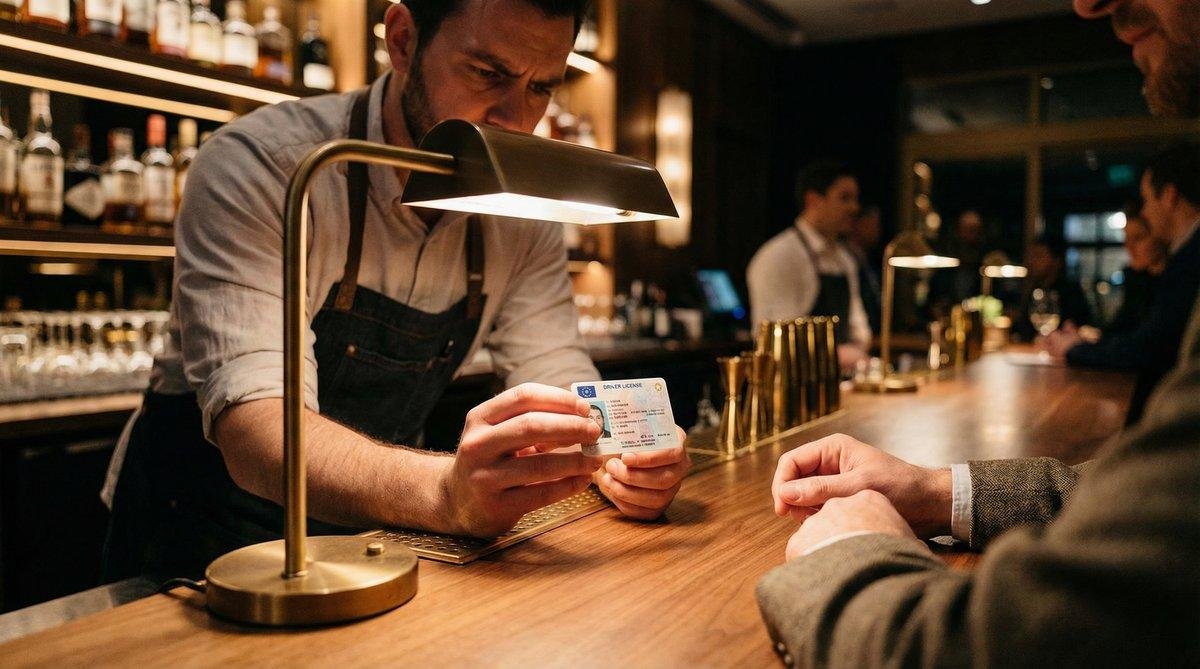
Understanding the law is one thing; knowing how it is enforced is another. In Canada, licensed establishments are strict about checking for valid identification to verify age. The Alcohol and Gaming Commission of Ontario (AGCO) specifies that valid identification must be current, government-issued, and include a photo of the person and their birth date.
Accepted Forms of ID
To purchase alcohol or enter a bar, you will need to present a government-issued photo ID. While specific policies can vary slightly by province, the following are generally accepted across Canada: a provincial or territorial Driver’s Licence, a Canadian Passport, a Canadian Citizenship Card, a Canadian Armed Forces Identification Card, a Secure Indian Status Card, a Permanent Resident Card, or a provincial Photo Card (such as Ontario’s BYID card). Student IDs are not considered valid proof of age. While some establishments may accept foreign driver’s licenses, a passport is the most reliable form of ID for international visitors.
Fake IDs and Penalties
Using a fake ID is treated as a serious offense in Canada. It is not simply a matter of being denied entry to a bar. If caught, an individual can face fines and, more significantly, potential criminal charges for possessing a forged document. This can have long-term consequences, including impacting future travel or professional opportunities. Penalties for underage possession or consumption of alcohol typically involve fines, which can vary by province.
Bringing Alcohol Across Provincial Borders
For those traveling within Canada, it is important to know that transporting large quantities of alcohol across provincial borders is restricted. While there have been recent political pushes to remove these barriers, as of 2026, individuals are generally not permitted to bring alcohol from one province to another without authorization from the destination province’s liquor control board.
Frequently Asked Questions (FAQ)
Can an 18-year-old American drink in Canada?
Yes, but only in Alberta, Manitoba, and Quebec, where the legal drinking age is 18. In all other provinces and territories, you must be 19 to legally purchase or consume alcohol.
Can minors drink at home with their parents?
This is a legal grey area and varies by province. Some provinces have limited exemptions for consuming a small amount of alcohol in a private residence under parental supervision, but this is not a blanket rule and is generally discouraged.
What is the drinking age in Toronto vs. Montreal?
The drinking age in Toronto (Ontario) is 19. The drinking age in Montreal (Quebec) is 18. This is one of the most common points of confusion for visitors traveling between Canada’s two largest cities.
Do I need my passport to buy alcohol in Canada?
If you are a visitor, your passport is the most reliable form of ID. While some venues may accept a foreign driver’s license, it is not guaranteed. Carrying your passport is always the safest option.
What happens if I get caught drinking underage as a tourist?
You will be subject to the same penalties as a Canadian resident, which typically includes a fine and confiscation of the alcohol. Being a tourist does not exempt you from local laws.
Can I drink on a train or bus in Canada?
Consumption of personal alcohol is generally not permitted on buses or trains. Some licensed train cars may serve alcohol, but it must be consumed in that specific designated car.
Is open alcohol allowed on the street in Canada?
Generally, no. Most municipalities have bylaws prohibiting open containers of alcohol in public spaces, though some cities have pilot projects for designated public drinking areas. Always check local regulations before drinking outdoors.
Conclusion
Canada’s legal drinking age is a complex issue, defined by provincial and territorial authority rather than a single national standard. While the age is 18 in Alberta, Manitoba, and Quebec, it is 19 everywhere else. This framework reflects a balance between granting adults the right to consume alcohol and addressing the significant public health concerns associated with underage and high-risk drinking.
For residents and visitors alike, understanding these laws is key to navigating the country safely and responsibly. Always carry valid government-issued ID, be aware of the specific rules in the province you are in, and consume alcohol in a responsible manner.